You’ve built a Retrieval-Augmented Generation (RAG) system. It works, mostly. But when you look at your infrastructure bill or the latency spikes during peak hours, something feels off. You might be blaming the database or the network, but often the culprit is hiding in plain sight: your embedding dimensionality.
Most developers pick an embedding model based on a leaderboard score and ignore the vector size until it hurts. They assume bigger is better because more dimensions mean more information. That’s true, but only up to a point. Beyond that, you’re paying a heavy tax in storage costs and search speed for marginal gains in accuracy. Choosing the right embedding dimensionality is not just a technical detail; it’s a strategic decision that balances precision against performance.
The Core Trade-Off: Accuracy vs. Cost
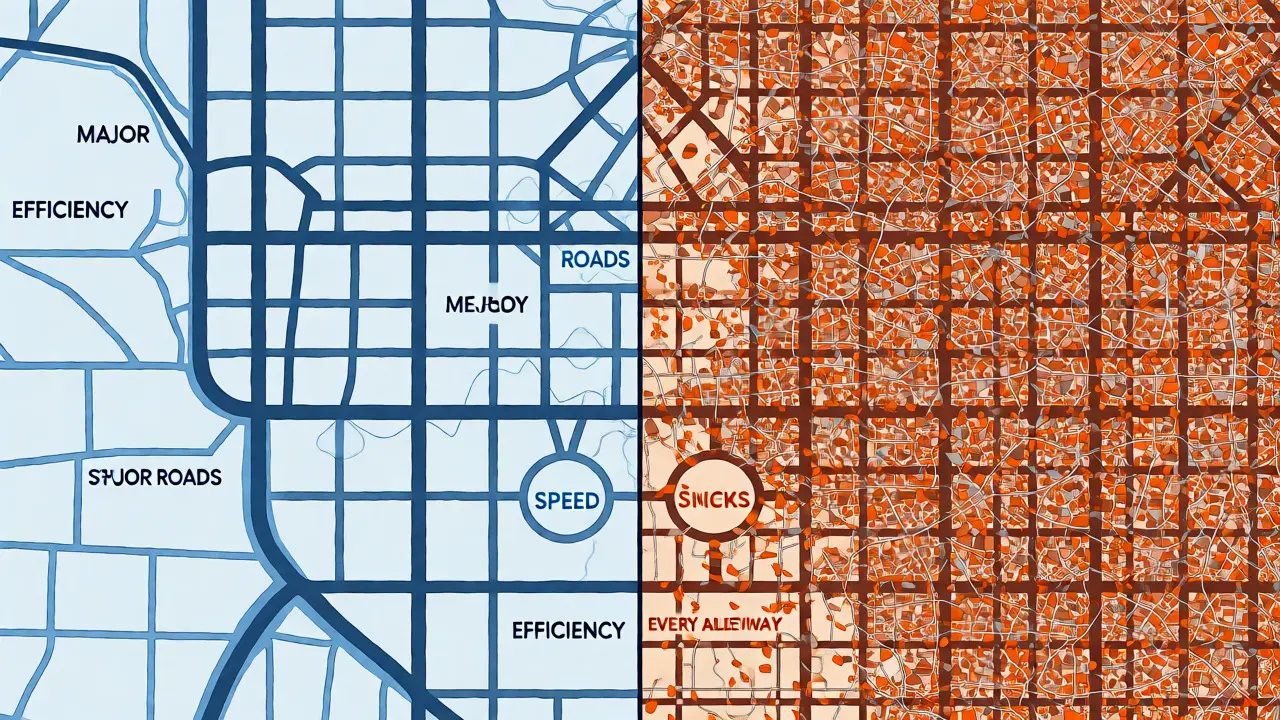
Think of embeddings as maps of meaning. A low-dimensional map (like 384 dimensions) gives you the major roads and cities. It’s fast to navigate and easy to store. A high-dimensional map (like 3072 dimensions) shows every alleyway, building facade, and street sign. It’s incredibly precise but massive to store and slow to render.
The relationship between dimensionality and quality isn’t linear. Going from 128 to 512 dimensions usually yields a huge jump in retrieval accuracy. Going from 1536 to 3072 might give you a tiny bump-maybe 1-2% on benchmarks like MTEB-but doubles your storage requirements. For most general-purpose chatbots, that extra 1% isn’t worth the doubled infrastructure cost.
Here is the reality check: higher-dimensional vectors capture richer semantic nuances, which helps with complex queries. However, they also introduce noise if your dataset isn’t large enough to justify that complexity. If you have 10,000 documents, a 3072-dimension vector might be overkill. If you have 10 million, you might need that granularity to distinguish between similar concepts.
Common Dimensionalities and Where They Fit
There are standard sizes used across the industry, each serving a specific purpose. Understanding these tiers helps you skip the guesswork.
| Dimensionality | Typical Use Case | Storage Impact | Retrieval Speed | Example Models |
|---|---|---|---|---|
| 384 | Lightweight apps, mobile edge devices, simple keyword matching | Low | Very Fast | BAAI/bge-small-en-v1.5 |
| 768 | General-purpose RAG, balanced performance/cost | Moderate | Fast | Nomic/nomic-embed-text-v1.5, MiniLM |
| 1024 - 1536 | Enterprise search, complex documentation, multi-lingual support | High | Moderate | Cohere Embed v3, E5-large |
| 3072+ | Scientific literature, legal discovery, high-precision academic search | Very High | Slow | OpenAI text-embedding-3-large |
768 dimensions is currently the sweet spot for many production systems. It offers enough semantic depth to handle nuanced questions without exploding your memory usage. Models like Nomic embed or older BERT-based variants often live here.
If you are dealing with highly specialized domains-like medical records or legal contracts-you might lean toward 1536 or higher. In these fields, the difference between "myocardial infarction" and "angina" matters deeply. Lower dimensions might blur these distinctions because they lack the resolution to separate closely related terms.
The Hidden Costs of High Dimensions
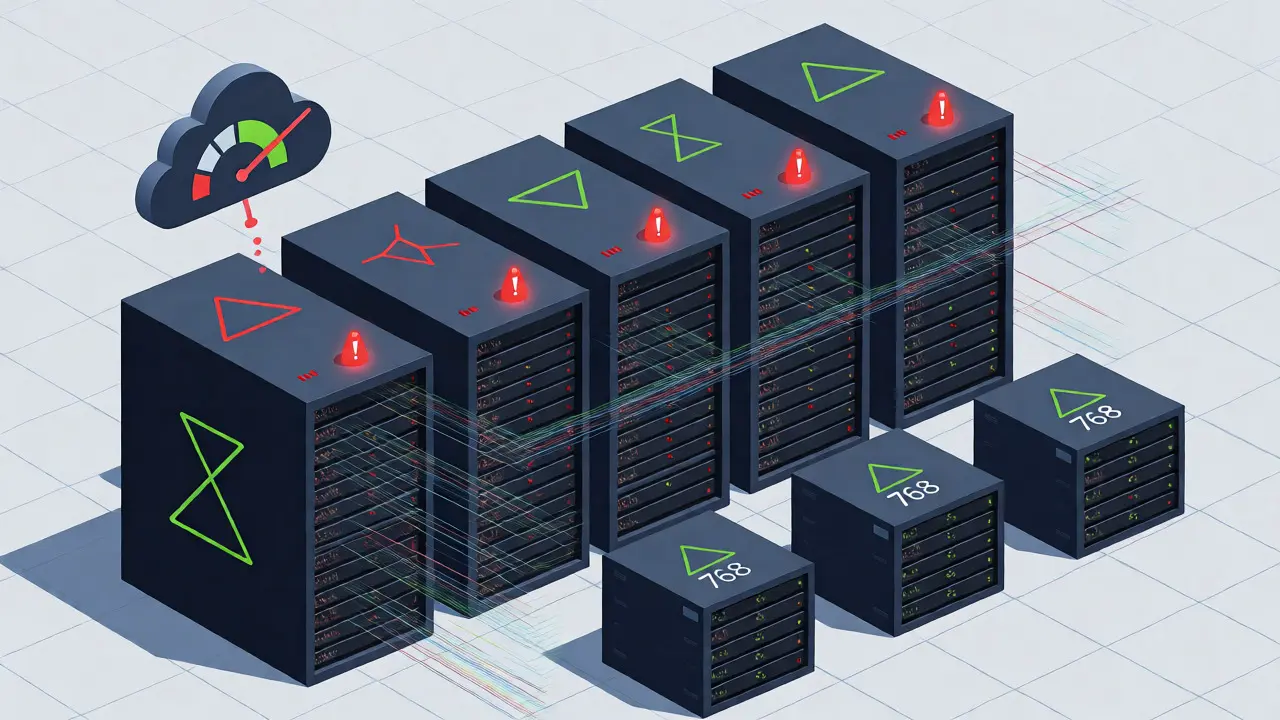
Why does everyone care about vector size? Because vector databases don’t just store numbers; they build indexes to search them quickly. Algorithms like HNSW (Hierarchical Navigable Small World) become significantly more expensive as dimensions increase.
- Memory Footprint: A single 3072-dimension float32 vector takes roughly 12KB. Multiply that by 1 million documents, and you’re looking at 12GB just for the raw vectors. Add index overhead, and you might need 30-40GB of RAM per shard.
- Search Latency: Distance calculations (like cosine similarity) scale with dimensionality. Searching 100 million vectors in 3072 dimensions takes noticeably longer than in 768 dimensions.
- Network Bandwidth: If your embedding service is remote, sending larger payloads back and forth adds latency. This matters if you’re re-embedding queries on the fly.
I once saw a startup burn through their cloud budget because they chose OpenAI’s 3072-dimension model for a simple customer support bot. Their query volume was high, but their document base was small. They didn’t need the precision; they needed speed and low cost. Switching to a 768-dimension open-source model cut their infrastructure costs by 60% with negligible impact on user satisfaction.
Techniques to Optimize Without Sacrificing Quality
You don’t always have to choose between high accuracy and low cost. Modern techniques allow you to have both, or at least get closer.
Quantization
Instead of storing every number as a full 32-bit float, you can compress them. Converting vectors to int8 (8-bit integers) reduces size by 75%. The trick is that modern models are robust enough to handle this loss of precision. Research shows that higher-dimensional models degrade more gracefully under quantization than lower-dimensional ones. So, if you use a 1536-dimension model and quantize it to int8, you might retain 95% of the original performance while cutting storage by three-quarters.
Matryoshka Representation Learning (MRL)
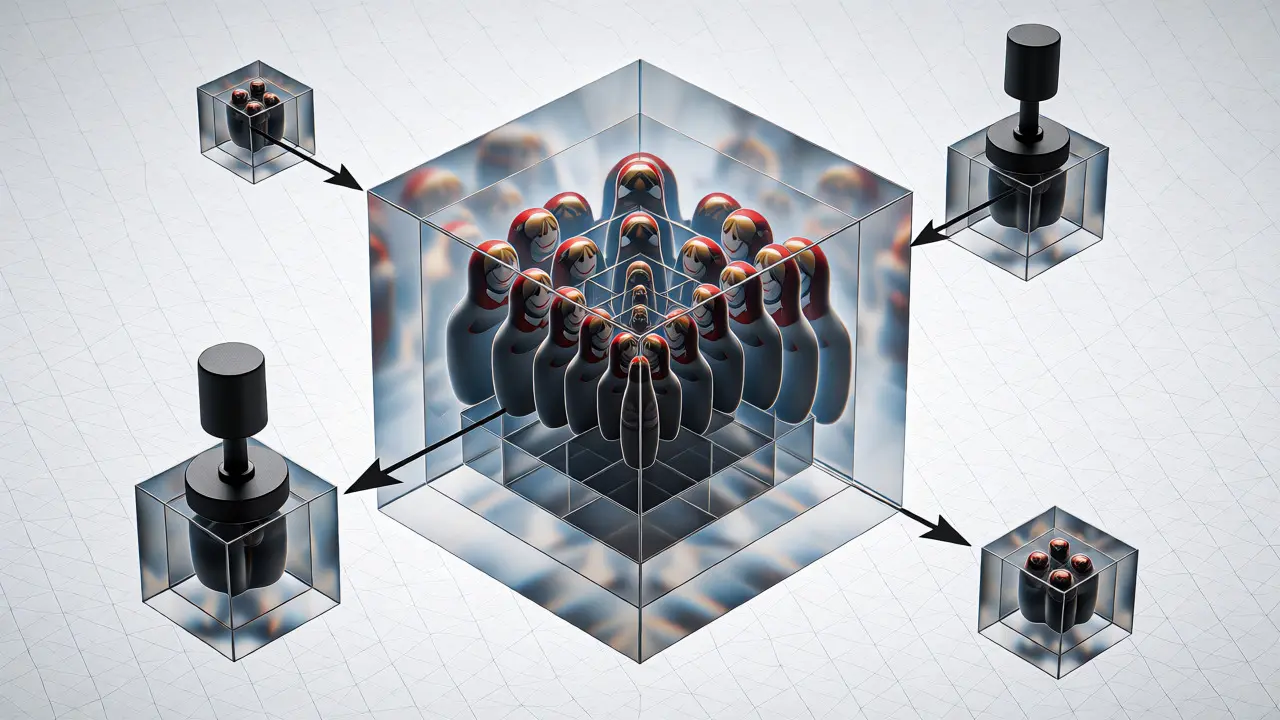
This is one of the coolest recent developments. Traditional methods force you to pick a dimension size before training. MRL allows a model to be trained so that its first few dimensions contain the most important information, and subsequent dimensions add refinement. This means you can train a 1536-dimension model but use only the first 512 dimensions at runtime for speed, then expand to 1536 for difficult queries. It’s dynamic scaling baked into the model itself.
Post-Hoc Reduction
Techniques like PCA (Principal Component Analysis) can reduce dimensions after generation. However, this is risky. You might discard subtle features that matter for your specific domain. Always validate reduced vectors against your ground-truth data before deploying.
How to Choose: A Decision Framework
Don’t guess. Test. Here’s a practical workflow I use when helping teams optimize their RAG stacks.
- Start with a Baseline: Pick a mid-range model (e.g., 768 dimensions). Run your evaluation set. Note the recall@k and MRR (Mean Reciprocal Rank).
- Test Higher Resolution: Swap in a higher-dimensional model (e.g., 1536 or 3072). Measure the accuracy gain. Is it significant?
- Measure the Cost Delta: Calculate the increase in storage and latency. If accuracy improved by 0.5% but costs rose by 40%, the trade-off likely fails.
- Try Compression: Apply quantization or MRL to the high-performing model. See if you can recover the cost savings while keeping the accuracy.
- Pareto Optimization: Plot accuracy vs. resource usage. Find the "knee" of the curve-the point where adding more resources stops yielding meaningful improvements.
Remember, there is no universal "best" dimension. A legal tech firm needs different vectors than a e-commerce recommendation engine. Your choice must align with your specific data complexity and infrastructure constraints.
Pitfalls to Avoid
One common mistake is mixing embedding models. If you embed some documents with a 384-dimension model and others with a 768-dimension model, you cannot compare them directly. You must re-embed everything when switching models. This migration cost is often underestimated.
Another trap is ignoring the context window. Some newer models offer long-context embeddings (8K-32K tokens). These are great for summarizing whole PDFs, but they often come with higher computational demands. Don’t confuse context length with vector dimensionality-they are separate axes of optimization.
Finally, beware of "dimensionality reduction" hype. Just because you can shrink vectors doesn’t mean you should. Aggressive reduction strips away nuance. If your users complain about irrelevant results, check if your compression level is too high before tweaking your prompt engineering.
Does higher embedding dimensionality always improve RAG performance?
No. While higher dimensions capture more semantic detail, they also increase noise and computational cost. Performance often plateaus after a certain point (typically around 1024-1536 dimensions for general tasks). Beyond that, you may see diminishing returns or even degradation if the model overfits to minor variations in the training data.
What is the best embedding dimension for a startup?
For most startups, 768 dimensions is the optimal starting point. It offers a strong balance between retrieval quality and infrastructure cost. Models like Nomic embed or BGE-base operate at this level and provide excellent performance for general knowledge bases without requiring enterprise-grade hardware.
Can I change my embedding dimension after deployment?
Yes, but it requires a full re-indexing process. Since vectors from different models or dimensions are not compatible, you must regenerate all embeddings for your existing documents. Plan for downtime or a parallel indexing strategy to avoid service interruption during the switch.
How does quantization affect embedding accuracy?
Quantization reduces vector precision (e.g., from float32 to int8), which saves memory. Modern embedding models are designed to be robust to this. Typically, int8 quantization retains over 95% of the original retrieval accuracy while reducing storage size by 75%. Binary quantization saves even more space but may drop accuracy below 90% for complex queries.
What is Matryoshka Representation Learning?
Matryoshka Representation Learning (MRL) is a technique where a model is trained to produce nested representations. The first few dimensions contain the core semantic meaning, while additional dimensions add refinement. This allows you to dynamically adjust the effective dimensionality at runtime-using fewer dimensions for speed and more for precision-without retraining the model.