Category: AI Technology

How Non-Developers Use Vibe Coding to Launch Real Applications
Discover how non-developers are using vibe coding to build real apps. Learn about top platforms like Knack and Replit, practical workflows, and common pitfalls.
Read more
Localization and Accessibility in Vibe-Coded Interfaces: A Practical Guide
Discover how vibe coding impacts accessibility and localization. Learn practical strategies to ensure AI-generated interfaces are inclusive and globally ready.
Read more
Hardware Constraints Limiting Large Language Model Scaling
Discover the physical hardware constraints limiting LLM scaling, from GPU memory bottlenecks and power demands to interconnect speeds. Learn why adding more GPUs doesn't always mean faster results.
Read more
Memory-Augmented Transformers: How External Stores Fix LLM Amnesia
Discover how Memory-Augmented Transformers solve LLM amnesia with external stores. Learn about Titans, MemGPT, and persistent knowledge architectures.
Read more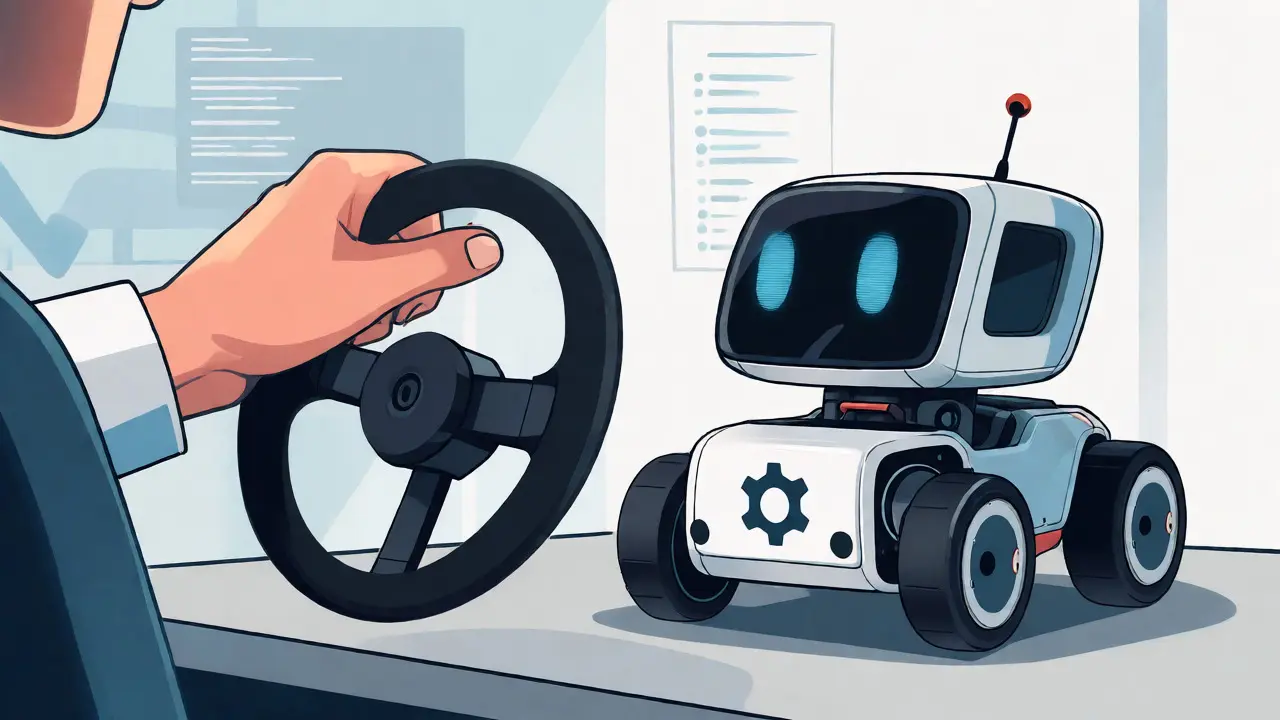
Levels of Autonomy in LLM Agents: From L1 to L4 Explained
Understand the L1 to L4 framework for LLM agent autonomy. Learn how control shifts from human operators to autonomous systems, and discover practical strategies for implementing higher levels of AI independence safely.
Read more
Low-Latency Models for Realtime Vibe Coding in the IDE
Discover how low-latency AI models enable realtime vibe coding in the IDE. Learn why sub-50ms response times boost developer flow, compare top tools like Cursor and Tabnine, and optimize your hardware for seamless AI-assisted development.
Read more
Toolformer-Style Self-Supervision: How LLMs Learn to Use Tools
Discover how Toolformer teaches LLMs to use tools via self-supervision. Learn why small models with APIs beat big ones, and explore its limits.
Read more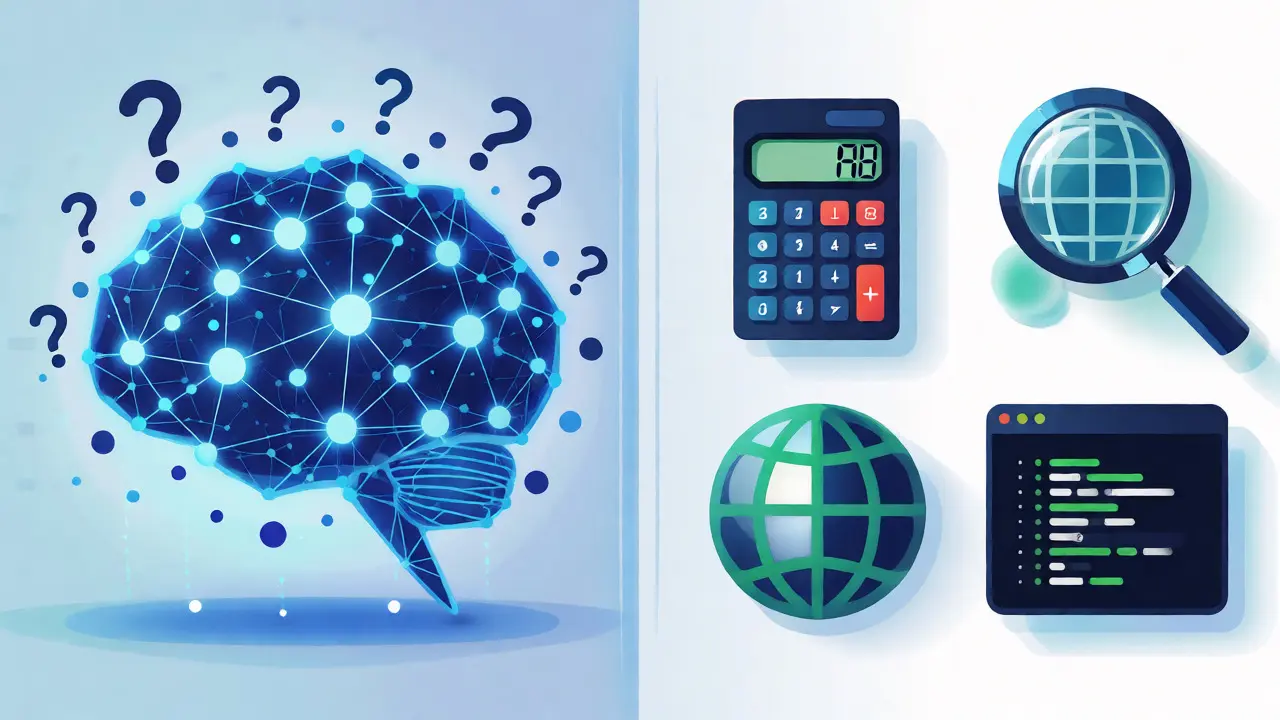
Tool-Use Integration: How Calculators, Search, and Code Fix LLM Hallucinations
Discover how tool-use integration fixes LLM inaccuracies. Learn how calculators, web search, and code execution enhance factuality control and real-time reasoning.
Read more
The Next Wave of Vibe Coding Tools: What's Missing Today
Current vibe coding tools accelerate prototyping but fail at architectural planning and governance. Discover the critical gaps in AI software development and what the next wave must deliver for enterprise adoption.
Read more
From Markov Models to Transformers: The Technical History of Generative AI
Trace the technical evolution of Generative AI from early Markov chains to modern Transformers. Discover how neural networks, GANs, and massive computing power shaped today's AI boom.
Read more
Ensembling Generative AI Models: Cross-Checking Outputs to Reduce Hallucinations
Discover how ensembling generative AI models reduces hallucinations by 35%. Learn implementation strategies, cost trade-offs, and real-world case studies.
Read more
Reducing Hallucinations in Large Language Models: A Practical Guide
Learn how to reduce LLM hallucinations using prompt engineering, RAG, and fine-tuning. Discover practical strategies to improve AI factuality and reliability.
Read more