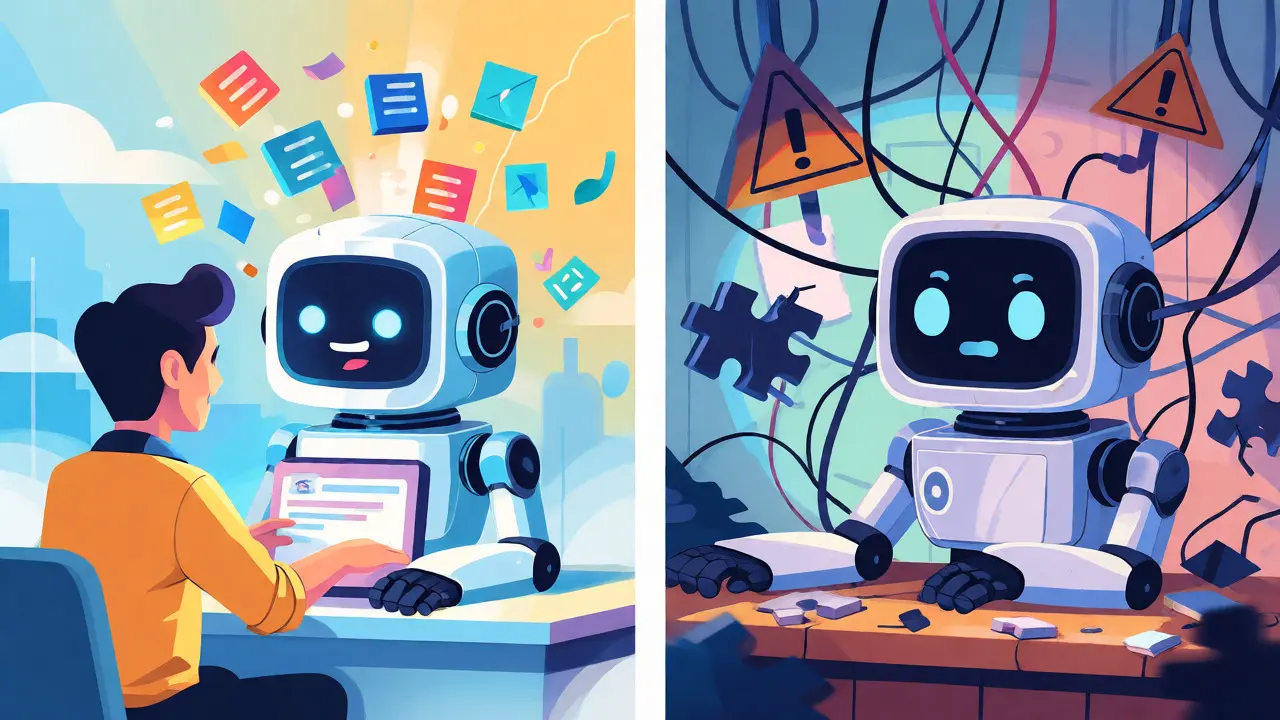
You’ve probably heard the hype. You type a sentence like “build me a dashboard for tracking sales,” and an AI spits out working code in seconds. It feels like magic. But if you’ve actually tried to ship a real product using today’s vibe coding tools, you know the magic fades fast. The moment your app needs complex logic, database relationships, or strict security compliance, the AI starts hallucinating. You end up spending more time debugging generated code than writing it yourself.
As of early 2026, the market is flooded with platforms promising to democratize coding. Yet, a massive gap remains between generating a simple component and building a scalable system. This article breaks down exactly what’s missing in the current wave of AI-driven development tools and why the next breakthrough won’t be about faster code generation, but smarter architectural reasoning.
The Reality Check: Where Current Tools Excel and Fail
Let’s look at the data. According to Gartner’s December 2025 analysis, there are roughly 15-20 specialized vibe coding platforms serving over 4 million active users. These tools have undeniably accelerated prototyping. Forrester’s Q4 2025 study found that enterprise teams cut prototyping cycles by 63% on average. That’s huge for speed-to-market on landing pages or internal admin panels.
But here is the catch. All major platforms currently struggle with anything beyond 500 lines of complex logic without human intervention. A January 2026 IEEE study confirmed this limitation. If you ask Replit’s Autonomous AI Agent 3 (which boasts 89.7% accuracy on small blocks) to refactor a legacy payment gateway integration, it often breaks dependencies it can’t see. Similarly, Vercel’s v0 is praised for its deployment flow, but as Technically.dev noted in December 2025, it requires you to already think like a developer to get the best results.
The consensus among experts is stark. Dr. Alan Liu from Stanford’s Human-Computer Interaction Lab stated in Wired that these tools operate in a "narrow context window." They see the trees-the individual functions-but miss the forest-the entire ecosystem. This leads to the primary pain point reported by developers: coherent architectural planning.
The Architectural Gap: Why AI Can’t Design Systems Yet
This is the single biggest missing piece in today’s vibe coding landscape. Stack Overflow’s January 2026 survey revealed that 78% of developers feel AI handles component-level tasks well but fails completely at system design. When you use a tool like Betty Blocks or Retool AI, you’re essentially asking a junior developer to build a skyscraper without giving them the blueprints.
Consider a real-world scenario shared on Reddit’s r/programming. A user tried building a simple e-commerce app using Softr’s AI. It worked until they needed custom payment logic. The AI couldn’t maintain the state across multiple components correctly. The user had to hire a developer for $1,200 just to fix the generated code. That’s not democratization; that’s a bottleneck.
Why does this happen? Current Large Language Models (LLMs) predict the next token based on local context. They don’t inherently understand long-term structural integrity. MIT Professor Amy Chen highlighted this in a recent assessment, noting that major platforms generate code with only 32-41% test coverage on average. Without robust architectural reasoning, the AI creates brittle systems that collapse under scale.

The Governance Void: Enterprise Readiness is Lagging
If you’re in a startup, broken architecture is annoying. If you’re in a Fortune 500 company, it’s a liability. Gartner predicts that by 2027, 60% of enterprises will require vibe coding platforms with integrated compliance frameworks. Currently, none provide this at scale.
Regulatory pressure is mounting. The EU’s draft AI Act from January 2026 mandates "human oversight for critical system components." Most current vibe coding tools treat every line of code equally, whether it’s a button color change or a GDPR-compliant data handling function. There is no native way to tag code segments for audit trails or enforce security policies during the generation phase.
Betty Blocks attempts to address this with governance-focused features, holding 15% of the enterprise market share. However, Capterra reviews indicate a steep learning curve for non-technical staff, with a 2.8/5 rating for ease of use among business users. The tension lies in balancing accessibility with control. As Gartner analyst David Smith put it, we face a "governance gap" that prevents widespread adoption for customer-facing applications.
Context Switching and Workflow Friction
It’s not just about what the AI generates; it’s about how you interact with it. One of the most consistent complaints from users is context switching. 61% of respondents in Stack Overflow’s survey reported friction moving between planning interfaces and coding environments. You describe a feature in natural language, the AI generates code, and then you have to manually adjust version control conflicts when your changes clash with the AI’s output.
Documentation quality exacerbates this issue. DevDocs.io rated documentation from 4.5/5 for established players like Replit down to 2.8/5 for emerging platforms. Poor error diagnosis guidance means when the AI fails, you’re left guessing. PixelPulse, a marketing agency, documented reducing landing page development from 3 days to 4 hours using v0, but they still spent 2 hours manually refining responsive behavior. The "last mile" of refinement remains stubbornly manual.
| Platform | Market Share | Primary Strength | Critical Limitation | Best For |
|---|---|---|---|---|
| Replit | 38% | Feature-rich environment & collaboration | Requires moderate technical literacy | Full-stack prototypes & team projects |
| Vercel v0 | 22% | Seamless Next.js deployment flow | Less accessible for non-developers | React/Next.js UI components |
| Betty Blocks | 15% | Enterprise governance focus | Steep learning curve for business users | Internal enterprise apps |
| Retool AI | 12% | Internal tool specialization | Requires JavaScript for complex logic | Admin dashboards & CRUD apps |
What the Next Wave Must Deliver
So, what does the future look like? The next generation of tools won’t just be better at typing code; they’ll be better at thinking about structure. Here are the three critical capabilities we need to see emerge by late 2026:
- Project Blueprint Intelligence: We need tools that can ingest existing project documentation and maintain architectural awareness across the entire lifecycle. Replit’s announced "Project Blueprint" feature aims to do this, offering AI-assisted system design rather than just component generation.
- Governance-Native Generation: Compliance shouldn’t be an afterthought. Future platforms must allow users to define policy constraints (e.g., "use encrypted storage for PII") before generation begins. Forrester forecasts that "governance-first" platforms will capture 25% of the enterprise market by 2027.
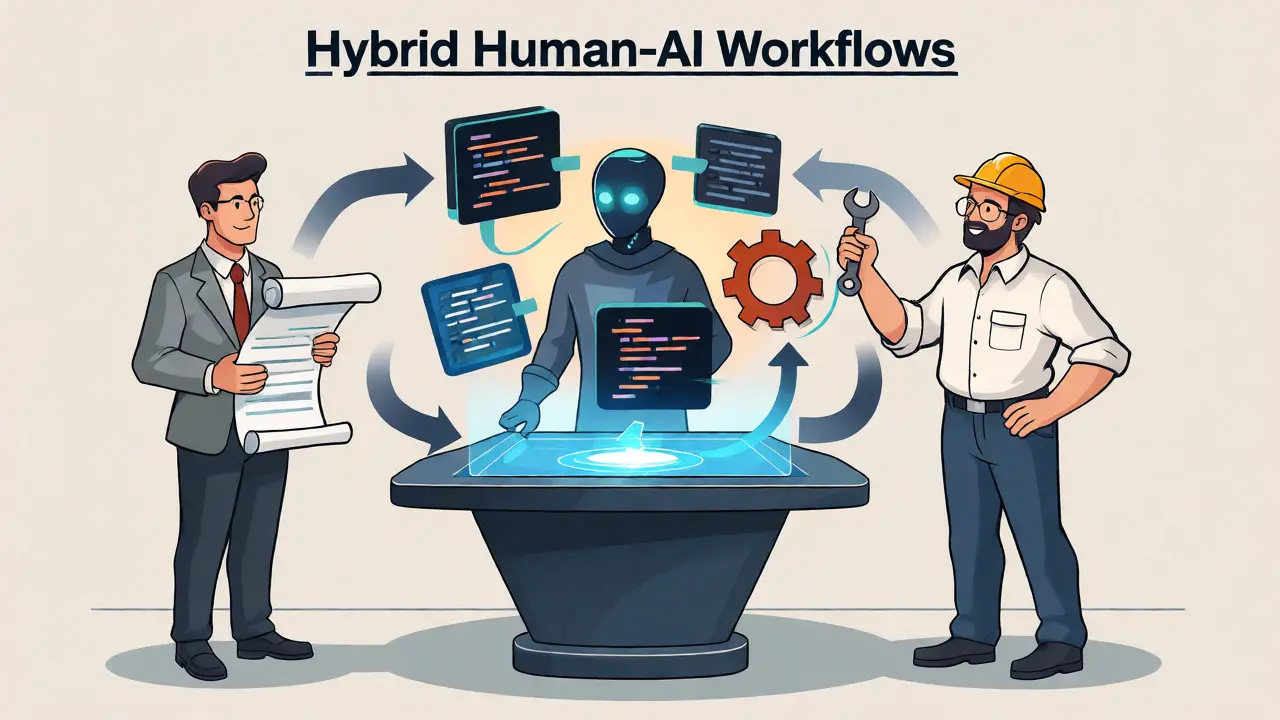
- Hybrid Human-AI Workflows: The idea of fully autonomous coding is largely a myth for complex systems. Successful implementations today follow a hybrid model: business analysts define requirements, AI generates components, and senior developers oversee architecture. Tools need to support this workflow natively, reducing the friction between these roles.
How to Navigate the Current Landscape
If you’re evaluating vibe coding tools today, don’t buy into the hype of full automation. Instead, adopt a pragmatic approach. Use these tools for what they are good at: accelerating boilerplate creation, generating UI components, and speeding up prototyping.
For complex backend logic, keep a human architect in the loop. Assign clear boundaries. Let the AI handle the "what" (the interface), while humans handle the "how" (the system structure). And always budget time for manual refinement. The goal isn’t to eliminate developers, but to elevate them from typists to architects.
Can vibe coding tools replace human developers entirely?
No, not for complex systems. While they excel at generating components and prototypes, current tools lack the architectural reasoning required for large-scale applications. Human developers remain essential for system design, security, and maintaining long-term code health.
Which vibe coding platform is best for beginners?
Softr and similar low-code hybrids often offer the lowest barrier to entry for basic tasks, requiring only 3.7 hours on average to reach proficiency compared to 11.3 hours for enterprise-grade tools like Betty Blocks. However, their capabilities may be insufficient for complex applications.
What is the biggest risk of using AI-generated code in production?
The primary risks are poor test coverage (averaging 32-41%) and lack of architectural coherence. This can lead to brittle systems that fail under load or contain hidden security vulnerabilities that automated tests might miss.
How do regulatory laws affect vibe coding adoption?
Regulations like the EU’s AI Act require human oversight for critical components. Current vibe coding tools often lack built-in governance features to track this oversight, making them risky for regulated industries unless paired with strict manual review processes.
Is vibe coding suitable for enterprise companies?
Yes, but primarily for internal tools and non-critical applications. Enterprise adoption stands at 34% across Fortune 500 companies, but mostly for prototyping and internal dashboards due to concerns about scalability and compliance.
LoriBeth Blair
September 29, 2026 AT 15:50Everyone is missing the point. It's not about "architectural reasoning," it's about lazy developers wanting to skip learning fundamentals. If you can't design a schema, AI won't save you.
Charles Reah
September 29, 2026 AT 23:22I appreciate this nuanced take. As someone who has mentored many junior devs through these tools, I think we need to balance the excitement with realistic expectations for teams.
The hybrid workflow mentioned here is exactly what I've been advocating for in my workshops. We must ensure that while AI handles the boilerplate, human oversight remains central to system integrity and security compliance.
SHANNON GRUBER
October 1, 2026 AT 06:10Lol another hype piece. None of these tools work without constant babysitting. Waste of time reading this.
Prayagraj Medicose
October 2, 2026 AT 17:12Dude, wake up! They are pushing this so they can fire all the coders and replace them with cheap offshore labor using these dumb bots. The "governance gap" is just an excuse to keep us paying for consultants. 🕵️♂️💸
Howard Hurd
October 3, 2026 AT 00:02This is why America needs its own stack. We don't need some EU regulation slowing down our innovation. Let the market decide. 🇺🇸🚀
Manoj Kumar
October 4, 2026 AT 13:40The statistical probability of these platforms maintaining data integrity across distributed systems remains negligible given current LLM token limitations. One must consider the long-term maintenance debt incurred by such architectural negligence. It is merely a matter of time before catastrophic failure occurs in production environments relying on these unproven methodologies.
Hemali Jaiswal
October 5, 2026 AT 19:08What a beautifully articulated analysis! 💖 The metaphor of asking a junior dev to build a skyscraper without blueprints really hits home. We must nurture our developers' skills rather than let them atrophy. Let's champion those who understand both code and context! 🌟
Sean Eagen
October 6, 2026 AT 08:12Stop trying to automate ethics. Code has moral weight. Humans must stay in loop. Always.
Kieran Mitchell
October 6, 2026 AT 22:26OMG!!! Finally someone said it!! 😱😱 The hallucinations are TERRIBLE!!! I spent 3 DAYS debugging a simple auth flow because the AI kept changing variable names randomly!!! It’s absolute chaos out here!!! Who even designed these prompts?!?! 🤯🤯🤯
Brad Walker
October 8, 2026 AT 18:22We stand on the precipice of a new era, yet we cling to the old ways. Is it progress if it destroys the craft? Or is it liberation from the drudgery of syntax? The soul of programming is at stake. 🎭✨