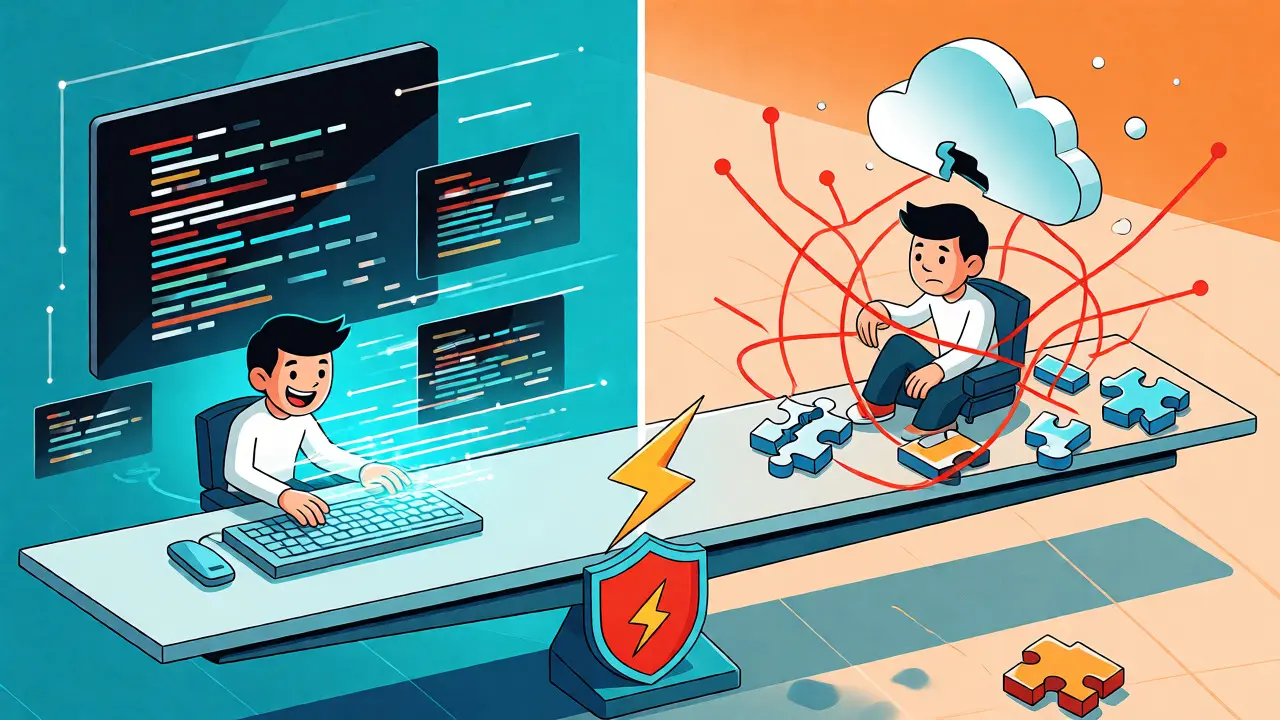
Imagine asking a room full of developers if they use vibe coding. You might get a chorus of enthusiastic "yes" from half the room and confused silence from the other. This isn't just anecdotal noise; it's the reality of our current tech landscape. In 2025, while 74% of developers reported productivity boosts with AI-assisted workflows, a staggering 72% in the Stack Overflow Developer Survey explicitly stated they weren't using vibe coding at all. That gap is where the truth hides. If you're trying to understand why your team resists new tools or why adoption stalls despite flashy demos, standard surveys fail you. They ask binary yes/no questions that miss the nuance of trust, fear, and workflow friction.
To truly grasp the state of an engineering methodology grounded in large language models where humans collaborate with coding agents via natural language, you need better questions. You need to dig into the psychological and practical barriers preventing widespread acceptance. This article breaks down exactly what to ask in your next developer sentiment survey and, more importantly, why those specific questions matter for accurate data collection in late 2026.
The Paradox of Productivity vs. Trust
Here is the core tension every leader faces: Vibe coding promises speed, but delivers anxiety. Recent data shows teams completing tasks 51% faster when implementing these methodologies. Yet, 63% of developers admit they have spent more time debugging AI-generated code than writing it from scratch. This contradiction confuses traditional metrics. If you only ask, "Did this tool save you time?", you get misleadingly positive answers because the initial generation feels instant. But if you ask, "How much time did you spend fixing the output?", the picture shifts dramatically.
Your survey needs to capture this hidden cost. Don't just measure velocity; measure reliability. When Escape Tech scanned over 4,000 applications built with platforms like Lovable, they found more than 2,000 vulnerabilities. For a senior engineer, that statistic is terrifying. It explains why many refuse to adopt these tools for mission-critical systems. Your questions must probe this security concern directly. Are developers avoiding vibe coding because they don't know how to prompt effectively, or because they fear exposing API keys and PII?
Key Questions to Uncover Real Adoption Barriers
Most surveys fail because they assume technical capability is the primary hurdle. It isn't. The biggest barrier is trust. To uncover this, structure your survey around three pillars: Confidence, Context, and Consequences.
- Confidence: Instead of asking if they like the tool, ask, "On a scale of 1-5, how confident are you deploying this code to production without manual review?" Data from Bubble’s 2025 survey showed only 9% of builders deploy vibe-coded apps for business-critical tasks, compared to 65% for visual development. This confidence gap is your most valuable metric.
- Context: Ask, "For which specific task types do you feel comfortable using AI assistance?" Developers often love GitHub Copilot for boilerplate code (87% usage) but hate it for complex logic. Segmenting their answers reveals that rejection isn't total; it's selective.
- Consequences: Pose this question: "Have you ever shipped a bug caused by an AI hallucination?" This moves the conversation from abstract preference to concrete experience. It validates the fears of skeptics who worry about edge cases.
Why does this matter? Because generic feedback leads to generic solutions. If you think people dislike the tool, you might buy a different one. But if you learn they distrust the security model, you invest in scanning protocols instead. Precision saves money.
Segmenting the Developer Persona
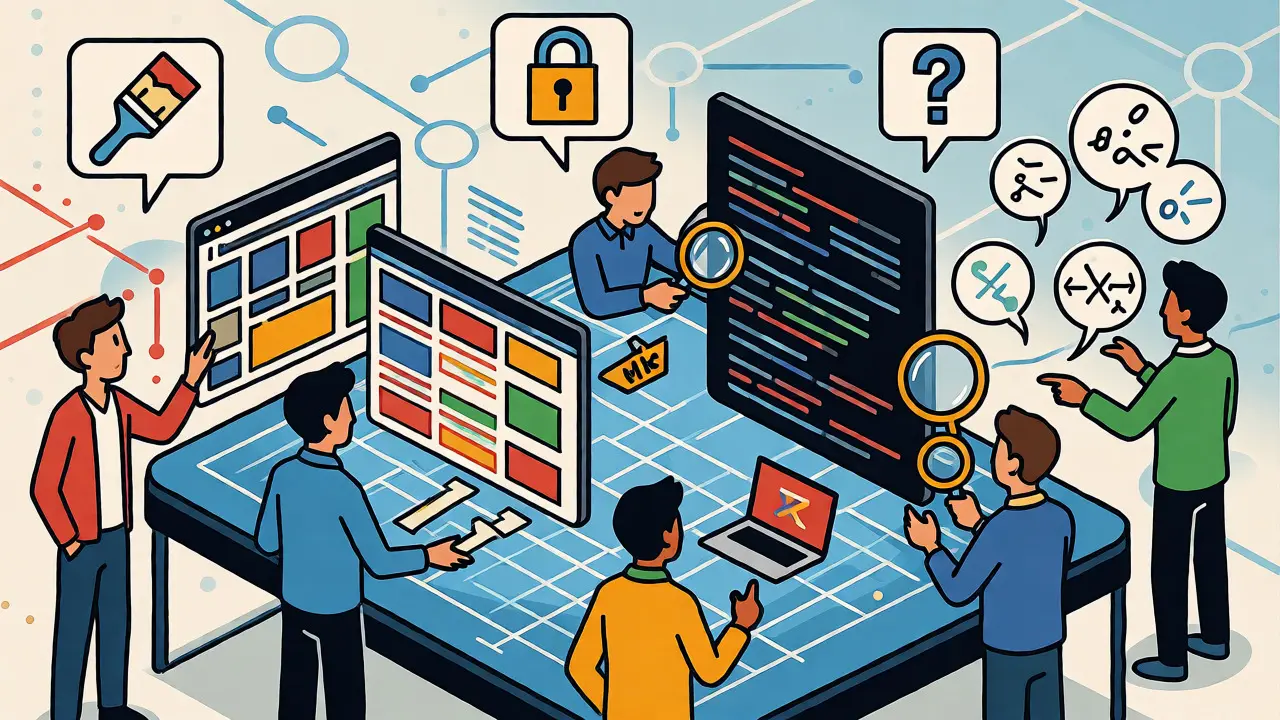
You cannot treat all developers as a monolith. A junior frontend developer has vastly different needs than a backend architect. According to Second Talent’s 2026 report, 63% of vibe coding users are actually non-developers creating UIs. Meanwhile, backend engineers prefer tools like Amazon CodeWhisperer for its integration with existing infrastructure. Your survey must segment respondents by role and experience level to make sense of the data.
| Role | Top Preferred Tool | Adoption Rate | Primary Concern |
|---|---|---|---|
| Frontend | v0 by Vercel / Cursor | High (UI focus) | Design consistency |
| Backend | GitHub Copilot | Moderate | Security & Logic errors |
| Data Scientist | JupyterAI / Copilot | Low | Hallucinated math/logic |
| Non-Dev Builder | Lovable / Bolt.new | Very High | Scalability limits |
Notice the pattern? Frontend devs embrace the speed because visual feedback is immediate. Backend devs hesitate because errors are silent until runtime. Non-devs dive in because they lack the skill to write the code manually anyway. By tailoring questions to these segments, you stop averaging out critical insights. You might find that your "resistant" backend team would actually adopt vibe coding if you provided automated unit test generation alongside the code.
Measuring the Hidden Costs of AI Hallucinations
Productivity stats lie if they ignore rework. The arXiv survey on vibe coding highlights five distinct models, from unconstrained automation to context-enhanced collaboration. Most users drift between these without realizing it. One day they use Cursor for autocomplete; the next, they paste entire files into Claude for refactoring. This inconsistency makes measurement hard.
Ask developers to estimate the "Debugging Tax." How many minutes per hour do they spend verifying AI output? If the answer exceeds 20%, the net productivity gain evaporates. Remember, 75% of developers still seek human help specifically when they don't trust AI answers. This isn't laziness; it's risk management. Your survey should quantify this trust threshold. At what point does an AI suggestion become trustworthy enough to skip review? Is it based on complexity? Language? Or past failure rates?
Consider the case of a Reddit user who used Bolt.new to build a functional app in ten minutes. Sounds great, right? But when they tried to add complex filtering logic, they had to rewrite significant portions manually. The initial win masked the long-term maintenance burden. Surveys that only capture the "wow factor" of the first commit miss the "ugh factor" of the third refactor.
Security and Governance: The Enterprise Blocker
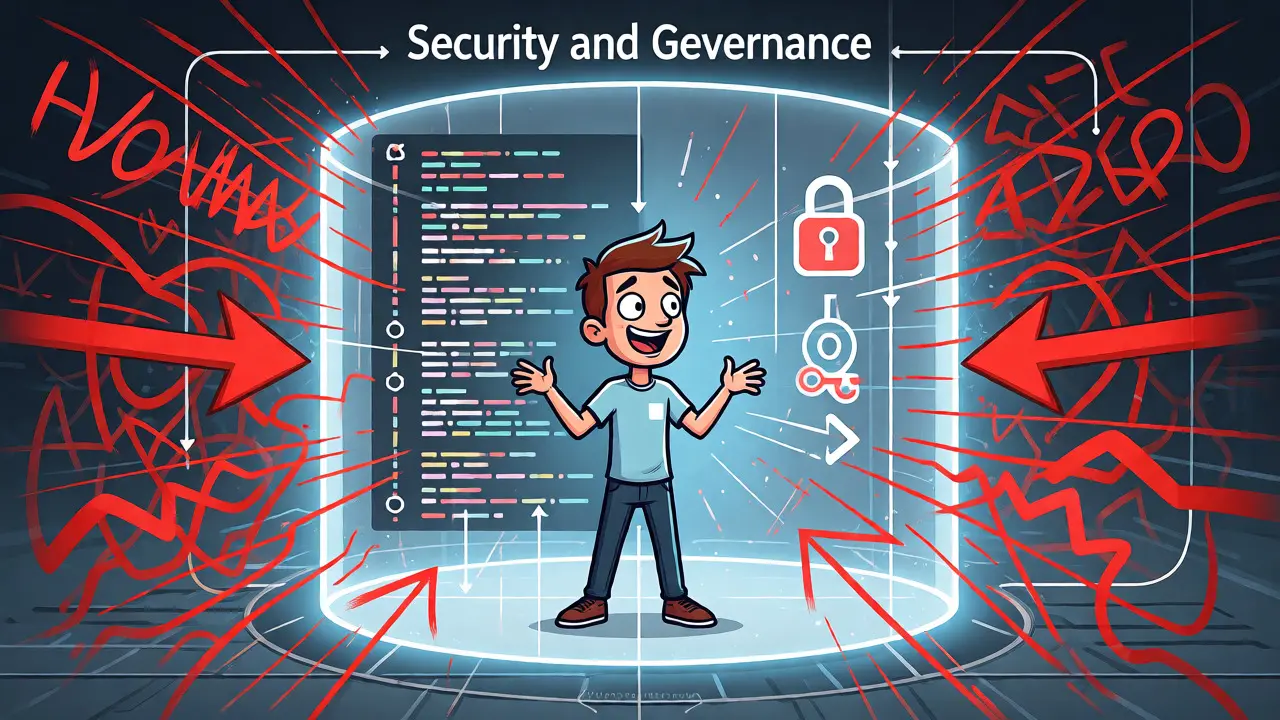
If you work in enterprise environments, security isn't a feature; it's a gatekeeper. 75% of R&D leaders express deep concern about data privacy with AI code generation. This fear is well-founded. Escape Tech’s research revealed exposed secrets and anonymous JWT tokens across thousands of vibe-coded apps. Platforms relying heavily on Supabase were particularly vulnerable due to misconfigured API routes.
Your survey must include governance questions. Do developers know where their prompts go? Are they pasting proprietary algorithms into public LLMs? Many don't realize that free tiers of tools like Create.xyz or Base44 may retain training rights. Asking "Do you check the license agreement before pasting code?" yields surprisingly low compliance rates. This insight helps you decide whether to ban these tools or provide enterprise-grade wrappers that handle compliance automatically.
From Sentiment to Strategy: Making Sense of the Noise
So, what do you do with this data? First, stop looking for a single verdict on vibe coding. It’s not universally loved or hated; it’s context-dependent. Use your survey results to map adoption maturity. Identify the early adopters who thrive with iterative conversational models. Then, identify the skeptics who need planning-driven workflows with strict test coverage.
Second, address the confidence gap head-on. If your team trusts visual development more than vibe coding, bridge that gap by integrating visual previews into your AI workflow. Show them the result before they accept the code. Third, tackle the security anxiety. Implement mandatory secret scanning, similar to what Lovable introduced in version 2.4. When developers see that safety nets exist, resistance drops.
Finally, recognize that vibe coding is evolving from a novelty to a fundamental toolkit component, much like IDEs became decades ago. But unlike IDEs, it requires active human judgment. Your goal isn't to force adoption but to remove friction. Ask the right questions, listen to the nuanced answers, and build a workflow that respects both the speed of AI and the caution of experienced engineers.
What is vibe coding?
Vibe coding is a software development approach where programmers use natural language prompts to guide Large Language Models (LLMs) in generating code, rather than writing syntax line-by-line. It involves a dynamic collaboration between human developers and AI coding agents.
Why do some developers reject vibe coding?
Common reasons include concerns about security vulnerabilities (such as exposed API keys), fear of hallucinations leading to bugs, and a lack of trust in AI-generated logic for complex systems. Many prefer maintaining full control over the codebase.
Which tools are most popular for vibe coding?
Popular platforms include GitHub Copilot for general assistance, Cursor for integrated editing, v0 by Vercel for UI generation, and standalone builders like Lovable, Bolt.new, and Create.xyz for full application scaffolding.
Is vibe coding secure for enterprise use?
It depends on implementation. Studies show high vulnerability rates in unmonitored deployments. Enterprises mitigate risks through mandatory secret scanning, private LLM instances, and rigorous code review processes before deployment.
Does vibe coding actually increase productivity?
Yes, for initial drafting and boilerplate, often speeding up tasks by 51%. However, debugging AI-generated code can offset these gains, especially if the developer lacks strong verification skills or if the problem domain is highly complex.