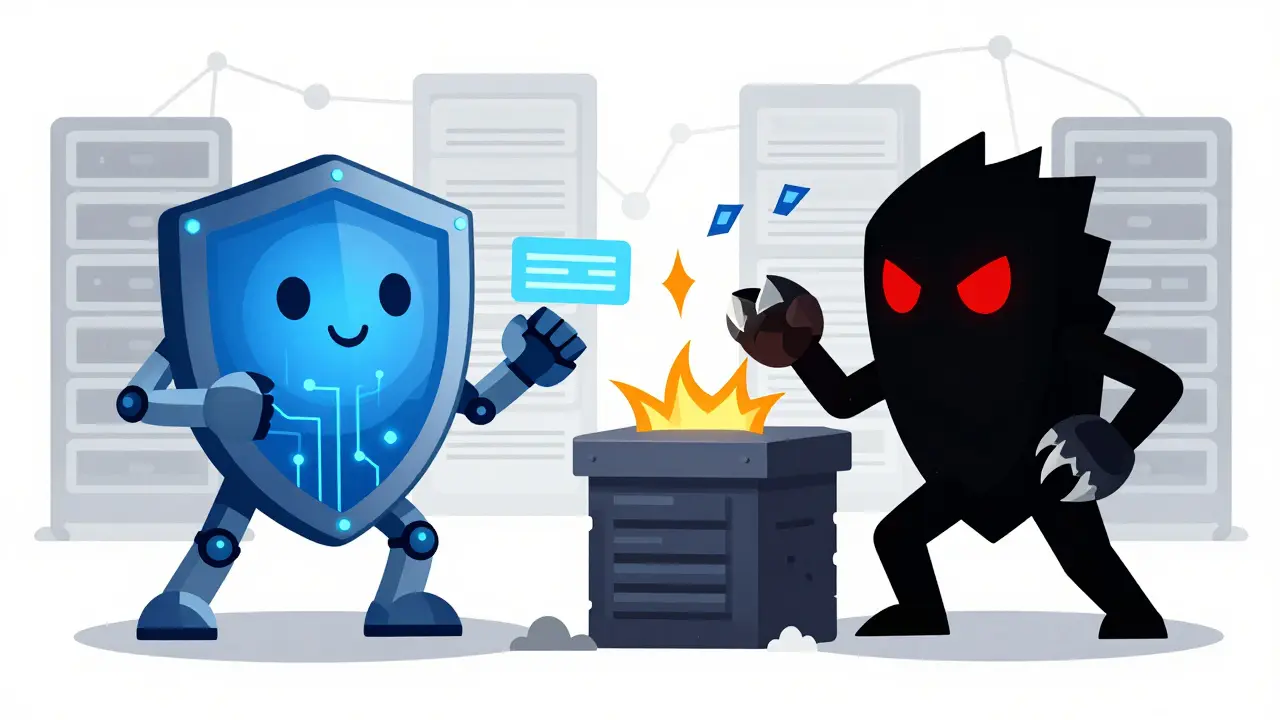
The landscape of digital defense has shifted beneath our feet. If you are still treating cybersecurity as a static checklist of firewall rules and password policies, you are already behind. In 2026, the battlefield is defined by speed, scale, and autonomy. The World Economic Forum’s Global Cybersecurity Outlook 2026 confirms what many of us have felt in our daily operations: 94% of security executives now identify artificial intelligence as the single most significant driver of change in their field. This isn't just about using new tools; it's about defending against an enemy that thinks, learns, and attacks faster than any human team can manually respond.
We are no longer discussing theoretical risks. We are managing operational realities where generative AI powers both the shields we build and the swords our adversaries wield. The gap between adopting AI for business efficiency and securing those same systems is widening. With 73% of organizations reporting significant operational impact from AI-powered threats, according to Darktrace’s State of AI Cybersecurity 2026 report, the question is no longer if you will face an AI-driven attack, but when. This article breaks down how to navigate this new era using concrete threat reports, actionable playbooks, and realistic simulations.
Understanding the Dual Nature of AI in Security
To secure your environment, you first need to understand the two faces of AI in 2026. On one side, you have defensive AI, which helps teams process vast datasets to spot anomalies that would take humans weeks to find. On the other, you have offensive AI, used by threat actors to automate every stage of the attack kill chain-from initial intrusion to data exfiltration.
The statistics paint a clear picture of this duality. While 77% of organizations have adopted AI for cybersecurity defense purposes, the attackers are not standing still. They are leveraging large language models (LLMs) to craft convincing phishing emails, generate malicious code, and orchestrate campaigns at a scale previously impossible. The result? A cat-and-mouse game played at machine speed. Your defenders use AI to correlate information across networks and geographic regions simultaneously, revealing coordinated campaigns. Meanwhile, attackers use AI to customize payloads for specific targets in seconds. Understanding this balance is crucial because it dictates why traditional signature-based defenses are failing. You cannot block what you haven't seen before, and AI generates novel threats constantly.
Key Insights from 2026 Threat Reports
Threat intelligence has evolved from simple malware hashes to complex behavioral analysis. The reports circulating in early 2026 highlight three critical areas of concern that every security leader must address immediately.
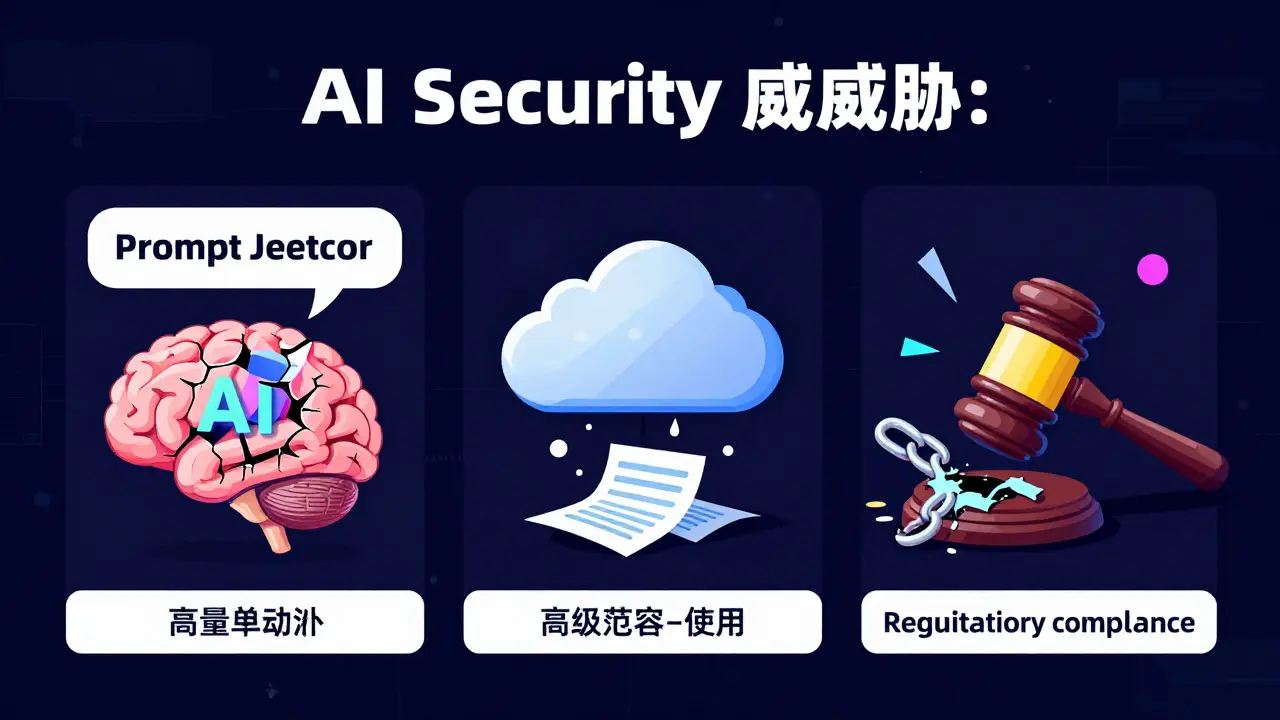
- Prompt Injection Attacks: Sophos experts predict major breaches from these attacks within the next year. As organizations deploy internet-facing AI applications connected to sensitive data, they create a new attack surface. Attackers manipulate the input prompts to trick the AI into bypassing safety filters or executing unauthorized actions. This is not a hypothetical risk; it is the leading vector for compromising agentic AI systems.
- Sensitive Data Exposure: According to Darktrace, 61% of security leaders cite this as their top generative AI concern. Employees embedding generative AI into everyday workflows often paste confidential data into public models. When combined with autonomous agents that have organizational permissions, the risk of accidental leakage skyrockets.
- Regulatory Compliance Violations: With 56% of leaders identifying compliance as a major issue, the legal fallout from AI mishaps is becoming a primary business risk. Regulations around data privacy and AI governance are tightening globally, meaning a technical failure can quickly become a legal crisis.
The WEF report adds another layer of complexity: geopolitical volatility. 91% of the largest organizations have changed their cybersecurity strategies due to geopolitical factors. Nation-state actors are increasingly using AI to enhance their capabilities, making supply chain attacks more sophisticated and harder to detect. Your threat model must now include state-sponsored AI actors, not just criminal syndicates.
Building Effective AI Security Playbooks
A playbook is only useful if it guides action during chaos. Traditional incident response plans often fail against AI-driven threats because they assume human-paced decision-making. You need playbooks specifically designed for the speed and opacity of AI systems. Here is how to structure them effectively.
1. The Prompt Injection Response Plan
When an AI application behaves unexpectedly, your first step should not be to shut it down immediately, as this might destroy forensic evidence. Instead, isolate the instance. Document the input prompt and the output behavior. Check if the model was manipulated via direct injection (user input) or indirect injection (malicious content in external data sources). Use logging tools that capture full conversation histories. Then, update your input validation filters to block similar patterns. Remember, the goal is to restore trust in the system while containing the breach.
2. The Shadow Agent Containment Protocol
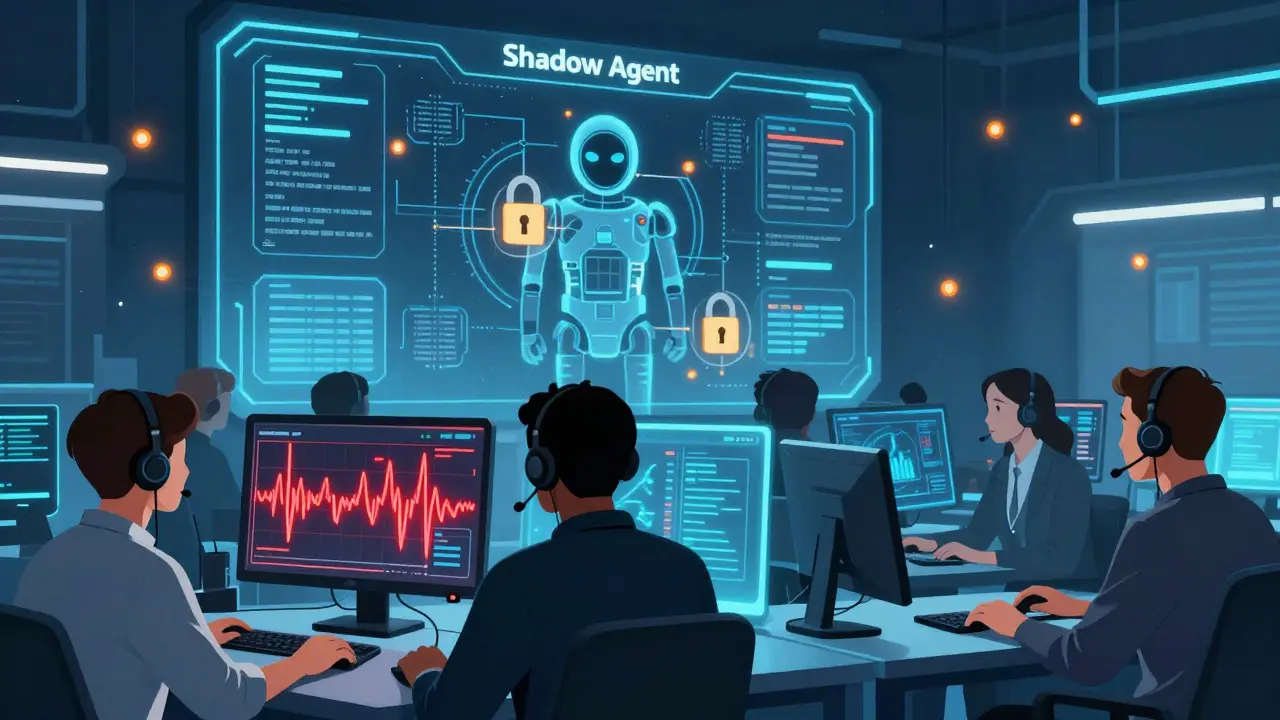
Google Cloud’s 2026 forecast highlights the "Shadow Agent" risk-unmonitored AI agents operating with organizational permissions. Your playbook must include steps to audit agent permissions regularly. If an agent begins accessing data outside its normal scope, trigger an automatic revocation of access rights. Investigate the agent’s decision log to determine if it was compromised or simply misconfigured. Ensure that all AI agents operate under strict identity and access management (IAM) policies, adhering to the principle of least privilege.
3. The Deepfake Verification Workflow
Business Email Compromise (BEC) campaigns are becoming more convincing thanks to deepfake audio and video. Your playbook needs a verification step for high-value transactions. If a request comes via voice or video, verify through a secondary channel, such as a pre-established secure messaging app or a phone call to a known number. Train employees to look for subtle artifacts in media files, though note that AI-generated media is improving rapidly, so procedural verification is more reliable than technical detection alone.
Simulating AI-Driven Attacks for Real Preparedness
You cannot prepare for what you do not practice. Tabletop exercises focused on ransomware are no longer sufficient. You need simulations that mimic the unique characteristics of AI-driven attacks: speed, automation, and social engineering at scale.
Start with a Prompt Injection Simulation. Create a safe sandbox environment where red teams attempt to manipulate your internal AI assistants. Test whether they can extract sensitive data or execute commands. This reveals gaps in your input filtering and output monitoring. Next, run a Phishing Scale Simulation. Use AI to generate personalized phishing emails for your employees based on publicly available information. Measure the click-through rate and compare it to previous non-AI campaigns. You will likely see a dramatic increase in success rates, highlighting the urgent need for user training.
Finally, simulate a Supply Chain Compromise. Assume a third-party vendor’s AI model has been poisoned with malicious training data. Trace how this affects your own systems. Does your anomaly detection catch the subtle changes in behavior? Do your integrity checks flag the altered outputs? These simulations help you identify weak points in your dependencies, which are often the easiest targets for attackers.
| Feature | Traditional Security | AI-Enhanced Security |
|---|---|---|
| Detection Method | Signature-based (known threats) | Behavioral analysis (anomalies) |
| Response Speed | Hours to days (manual review) | Seconds to minutes (automated) |
| Scalability | Limited by analyst capacity | High (processes vast datasets) |
| Vulnerability to Novel Attacks | High (fails against zero-days) | Lower (identifies patterns) |
| Risk of False Positives | Moderate | Variable (requires tuning) |
Implementing Governance and Frameworks
Technology alone won’t save you. You need governance. The OWASP Gen AI Security Project has released the 'OWASP Top 10 for Agentic Applications 2026,' a globally peer-reviewed framework that identifies the most critical security risks facing autonomous AI systems. This is your starting point. It addresses technical vulnerabilities like training data poisoning, model inversion attacks, and excessive agency.
Integrate this framework into your development lifecycle. Shift left on security by testing AI models for vulnerabilities before deployment. Establish cross-functional teams including security professionals, data scientists, and compliance officers. ECCU’s analysis notes that professionals must now master cloud security, AI governance, Zero Trust, and DevSecOps to effectively secure AI systems. Training is not optional; it is a survival mechanism.
Also, consider the concept of "Deepening Cyber Inequity." Large enterprises are changing their strategies rapidly, while smaller organizations struggle to keep pace. If you are a smaller organization, leverage managed security service providers (MSSPs) that offer AI-driven threat detection. You cannot afford to build everything in-house, so partner with vendors who specialize in AI security. Ensure they adhere to strict data handling policies to avoid becoming a liability yourself.
Looking Ahead: The Future of AI Defense
The trajectory for 2026 and beyond points to continued acceleration. Google Cloud predicts that 2026 will usher in a new era where AI agents supercharge security operations. However, Darktrace warns that AI will continue to introduce new risks around opaque decision-making. As AI systems become more autonomous, understanding why they made a certain decision becomes harder. This "black box" problem complicates incident response and regulatory compliance.
Quantum computing also looms on the horizon, introducing long-term concerns about encryption vulnerabilities. While immediate, organizations must start planning for post-quantum cryptography alongside their AI security efforts. The intersection of AI and quantum computing will eventually break current encryption standards, so begin assessing your cryptographic inventory now.
In summary, securing generative AI requires a shift from reactive to predictive models. Use threat reports to stay informed, build specific playbooks for AI-driven scenarios, and simulate attacks to test your readiness. The tools are available, but the discipline to implement them consistently is what separates secure organizations from vulnerable ones.
What is the biggest risk associated with generative AI in 2026?
The biggest risk is sensitive data exposure, cited by 61% of security leaders. This occurs when employees inadvertently share confidential information with public AI models or when autonomous agents leak data due to poor permission controls. Prompt injection attacks are also a top technical concern, allowing attackers to manipulate AI systems into bypassing security measures.
How can I protect my organization from prompt injection attacks?
Protect against prompt injection by implementing strict input validation and sanitization. Use the OWASP Top 10 for Agentic Applications framework to identify common vulnerabilities. Isolate AI applications from sensitive internal networks unless absolutely necessary. Regularly test your systems with red team simulations to ensure your filters catch malicious prompts. Additionally, monitor output logs for unexpected behaviors that may indicate a successful injection.
What is a "Shadow Agent" in cybersecurity?
A Shadow Agent refers to an unmonitored AI agent operating within an organization’s network with granted permissions. These agents can perform actions autonomously without human oversight, creating new vulnerabilities. If compromised, they can exfiltrate data or disrupt services silently. To mitigate this, enforce strict identity and access management (IAM) policies and continuously audit agent activities.
Why are traditional security tools insufficient against AI threats?
Traditional tools rely on known signatures and patterns, which fail against novel, AI-generated attacks. AI threats evolve rapidly and can customize payloads for each target, bypassing static defenses. AI-enhanced security uses behavioral analysis to detect anomalies in real-time, allowing for faster response to unknown threats. The speed and scale of AI attacks also overwhelm manual review processes, necessitating automated defense mechanisms.
How should small businesses approach AI security given limited resources?
Small businesses should leverage managed security service providers (MSSPs) that offer AI-driven threat detection. Avoid building complex AI security infrastructure in-house. Focus on basic hygiene: strong access controls, regular employee training on AI risks, and using reputable AI vendors with robust security practices. Prioritize protecting sensitive data and ensuring compliance with relevant regulations to minimize legal and financial risks.