
You built a slick customer portal in an afternoon. It looks great, the buttons work, and your users love the interface. But did you just accidentally create a data privacy nightmare? If you’re a "vibe coder"-someone who builds apps using intuitive tools, AI assistants, or low-code platforms without deep computer science training-you are likely walking into a minefield of regulatory fines and security breaches. The democratization of development is fantastic for speed, but it doesn’t automatically handle the heavy lifting of keeping user data safe.
Here’s the reality: Gartner reported that low-code technologies hit $26.9 billion in revenue recently, with projections suggesting two-thirds of enterprise apps will use these platforms by next year. That means millions of people are shipping code who’ve never written a SQL query by hand. While this speeds up innovation, it creates massive blind spots. IBM estimates the average cost of a data breach at $4.45 million. For a small business or startup, one overlooked consent form or exposed API key can be fatal. Let’s break down exactly where vibe coders trip up and how to fix it before the regulators come knocking.
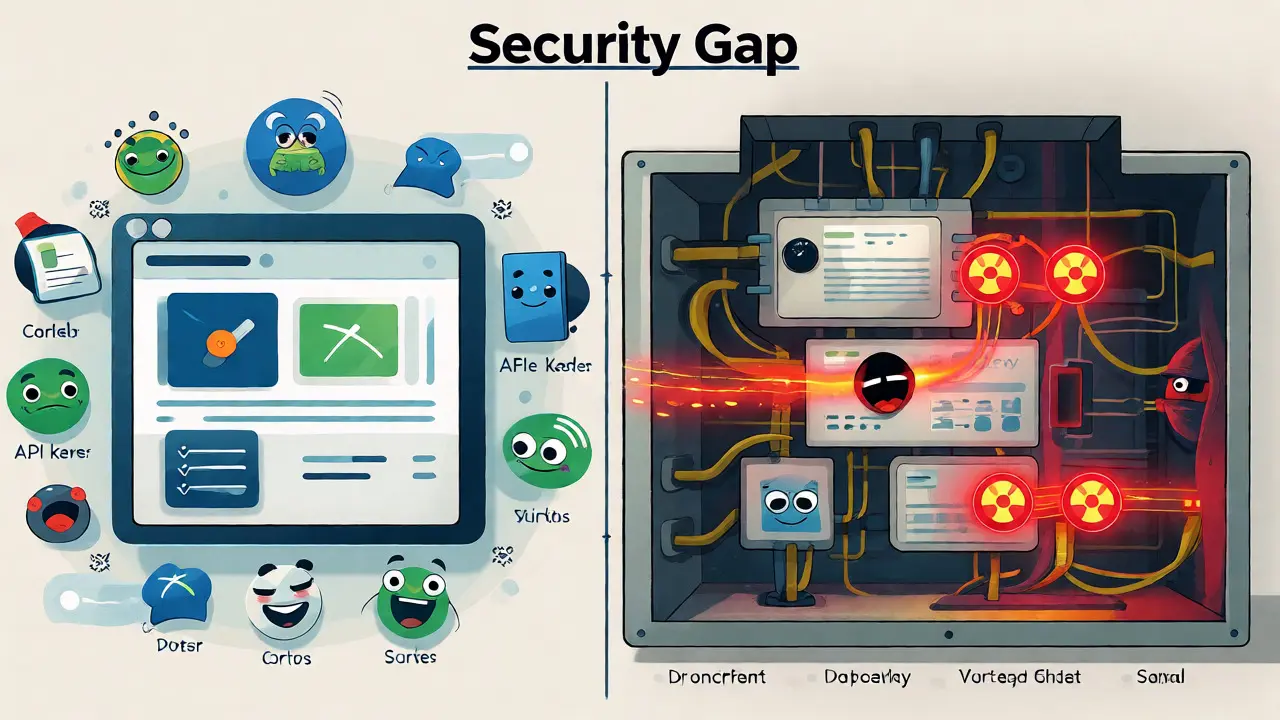
The Rise of the Vibe Coder and the Security Gap
Who exactly is a vibe coder? Think of them as developers who prioritize user experience and rapid iteration over architectural rigor. They might use tools like Bubble, Retool, or Zapier, or rely heavily on AI code generators. These folks are often designers, marketers, or product managers who have learned enough technical logic to build functional applications. They excel at creating interfaces that feel natural and responsive. In fact, Gartner found that apps built on modern low-code platforms achieve 32% higher user satisfaction scores because the focus remains on the human element rather than backend plumbing.
But here is the catch: that same ease of use hides complexity. When you drag and drop a database connector, you aren’t seeing the underlying data flow. You don’t see where the encryption keys live or how permissions are granted. Traditional developers spend years learning why input validation matters. Vibe coders often assume the platform handles it all. Spoiler alert: it doesn’t always. A study by the Ponemon Institute showed that teams without formal security training were 3.7 times more likely to ship critical vulnerabilities. The gap isn’t about intelligence; it’s about visibility. You can’t fix what you can’t see, and most no-code dashboards hide the security controls behind layers of abstraction.
Common Technical Traps: Input Validation and Secrets
Let’s get specific. What actually breaks? The biggest culprit is poor input handling. According to OWASP’s 2024 Top 10 report, nearly 66% of web application vulnerabilities stem from improper input validation. Vibe coders often rely on client-side checks-like making a field "required" in the UI builder. That stops a lazy user from submitting empty forms, but it does nothing to stop a malicious actor sending weird characters directly to your server. This opens the door to SQL injection or Cross-Site Scripting (XSS). If you’re building a search bar, you need server-side sanitization, not just a pretty placeholder text.
Then there’s the issue of secrets management. How many times have you pasted an API key directly into a configuration box or hard-coded it in a script? GitGuardian found that 31% of public GitHub repositories still contain hardcoded secrets. In the vibe coding world, this is rampant because copying and pasting is faster than setting up environment variables. If your frontend code is visible to anyone with a browser, your secret is leaked. This isn’t just a hygiene issue; it’s a compliance failure under regulations like GDPR Article 32, which mandates appropriate technical measures to ensure security.
| Security Area | Traditional Developer Approach | Vibe Coder Common Pitfall | Compliance Risk |
|---|---|---|---|
| Input Validation | Server-side sanitization + Client-side UX | Client-side only or none | High (SQLi/XSS) |
| Secrets Management | Environment variables/Vaults | Hardcoded in source/config | Medium (Credential Leak) |
| Data Encryption | AES-256 at rest, TLS in transit | Assumed by platform, rarely verified | High (GDPR/HIPAA Violation) |
| Access Control | Granular RBAC implementation | Default "Admin" or open access | High (Unauthorized Access) |
Regulatory Blind Spots: GDPR, CCPA, and HIPAA
Compliance isn’t just a checkbox; it’s a legal obligation. Many vibe coders mistakenly believe that if they are a small business, big regulations like the General Data Protection Regulation (GDPR) or the California Consumer Privacy Act (CCPA) don’t apply to them. Wrong. If you collect email addresses from EU citizens, GDPR applies. Period. The European Data Protection Board issued guidelines in April 2024 explicitly stating that the ease of development does not diminish compliance obligations.
One major hurdle is "Privacy by Design." GDPR Article 25 requires that data protection be integrated into the development process from day one. Vibe coders often treat this as an afterthought. An audit revealed that 89% of applications built on no-code platforms lacked proper consent management mechanisms. Imagine collecting user data for a newsletter but having no way to prove they agreed to it, or worse, no easy way to delete their data when they ask. Under CCPA, users have the "right to be forgotten." If your app stores data in three different third-party integrations and you don’t know where it lives, you can’t fulfill that request. IAPP research shows that 67% of low-code apps lack proper data mapping, making compliance practically impossible.
Healthcare adds another layer. If you’re building a patient intake form using a tool like Airtable or Glide, you are handling Protected Health Information (PHI). HIPAA requires strict safeguards. A 2024 HHS Office for Civil Rights audit found that 63% of no-code healthcare applications violated HIPAA requirements. Why? Because the default settings of these platforms are often designed for convenience, not confidentiality. Sharing links publicly instead of requiring login, or exporting data to unencrypted spreadsheets, can trigger massive fines.
The Illusion of Platform Safety
It’s tempting to think, "The platform guarantees security." Tools like Microsoft Power Platform or Salesforce Lightning do offer robust features. However, they provide guardrails, not autopilot. Martin Fowler, Chief Scientist at ThoughtWorks, argued that while low-code platforms can improve compliance through standardized implementations, this only works when properly constrained. Without active configuration, those guardrails remain dormant.
Consider dependency management. Your app might pull in libraries or connectors that haven’t been updated in months. Snyk’s 2024 State of Open Source Security report found that 83% of applications contain at least one known vulnerable component. As a vibe coder, you likely didn’t choose that library; the platform did, or a previous developer added it. If that library has a known CVE (Common Vulnerabilities and Exposures), your app is vulnerable, regardless of how clean your UI looks. Automated scanning tools exist, but are you running them? Most non-technical builders skip this step entirely.
Furthermore, role-based access control (RBAC) is frequently misconfigured. Forrester’s 2024 Low-Code Security Assessment noted that 43% of low-code applications have excessive permissions. It’s easier to give everyone "Admin" rights than to define specific roles for "Viewer," "Editor," and "Manager." This leads to situations where a junior employee can download the entire customer database simply because they needed to edit one profile. Least privilege principle-the idea that users should have only the access necessary for their job-is often ignored in favor of simplicity.

Actionable Steps to Secure Your Vibe
So, how do you keep the speed of vibe coding without losing your shirt to fines? You don’t need to become a cybersecurity engineer overnight. Start with these practical steps.
- Map Your Data: Before you build, list every piece of personal data you collect. Where does it go? Who sees it? Use tools like OneTrust or simple spreadsheets to track data flows. You cannot protect what you haven’t mapped.
- Enforce Server-Side Validation: Never trust the browser. Ensure your backend validates every input. If you’re using a no-code platform, check if it supports custom logic for validation. If not, consider adding a middleware layer.
- Harden Secrets: Move API keys out of your code and into environment variables or a dedicated secrets manager. Most platforms support this now. Take five minutes to set it up correctly rather than risking a leak.
- Implement Granular Consent: Don’t bury terms in a footer link. Use clear, affirmative checkboxes for data collection. Make sure users can withdraw consent easily. Platforms like Usercentrics help automate this, even for non-coders.
- Review Default Permissions: Audit your user roles. Can a regular user delete records? Can they view admin settings? Tighten these permissions immediately. Start restrictive and loosen only when necessary.
Education is also key. The IAPP found that developers without security training needed 83 hours to reach basic GDPR competence, compared to 42 hours for those with some background. You don’t need 83 hours of reading, but you do need targeted training. Look for resources specifically aimed at low-code security. The OWASP Foundation released a Quick Reference Guide in September 2024 with sections tailored for low-code developers. It’s a 47-point checklist that covers the most common pitfalls. Print it out. Stick it on your wall.
The Future: Automated Compliance and AI Guardrails
The good news? The industry is catching up. Gartner predicts that by 2026, 70% of low-code platforms will incorporate automated compliance checks. We are already seeing this happen. Microsoft introduced automated GDPR scanning in mid-2024, identifying over a million potential violations in its first month. OutSystems announced AI-powered compliance assistants that flag privacy issues during development. These tools act as a safety net, catching mistakes before they go live.
However, technology alone won’t solve everything. The SANS Institute warns that without proper developer education, the attack surface will expand faster than controls can be implemented. The best approach combines platform features with human oversight. Organizations that combine low-code platforms with mandatory security training reduced compliance incidents by 63%, according to Ponemon. So, invest in knowledge. Treat security as part of the design process, not a final step.
Vibe coding is here to stay. It empowers more people to solve problems with software. But with great power comes great responsibility-especially when that power touches personal data. By understanding the hidden risks and implementing basic safeguards, you can build fast, beautiful apps that are also secure and compliant. Don’t let the "vibe" obscure the facts.
Do small businesses really need to worry about GDPR?
Yes. GDPR applies to any organization processing personal data of individuals in the EU, regardless of company size or location. If your website collects emails or cookies from EU visitors, you must comply. Fines can reach up to €20 million or 4% of global annual turnover, whichever is higher.
What is the biggest security mistake made by no-code developers?
Relying solely on client-side validation and default permission settings. Many assume the platform handles all security, leading to exposed APIs and excessive user privileges. Always verify server-side validation and restrict access based on the principle of least privilege.
How can I manage API keys securely in a low-code app?
Avoid hardcoding keys in your front-end code. Use the platform's environment variable feature or a dedicated secrets management service. Ensure keys are rotated regularly and have limited scopes (permissions) so that if one leaks, the damage is contained.
Does using a reputable platform guarantee compliance?
No. Platforms provide tools and infrastructure, but compliance depends on how you configure them. Features like data deletion workflows, consent logging, and encryption settings must be actively enabled and tested. Shared responsibility models mean you are liable for your application's data handling practices.
What is "Privacy by Design" in the context of vibe coding?
It means integrating data protection into the early stages of development rather than adding it later. For vibe coders, this involves choosing minimal data fields, planning for data export/deletion from the start, and selecting platforms that offer granular control over data storage and access.