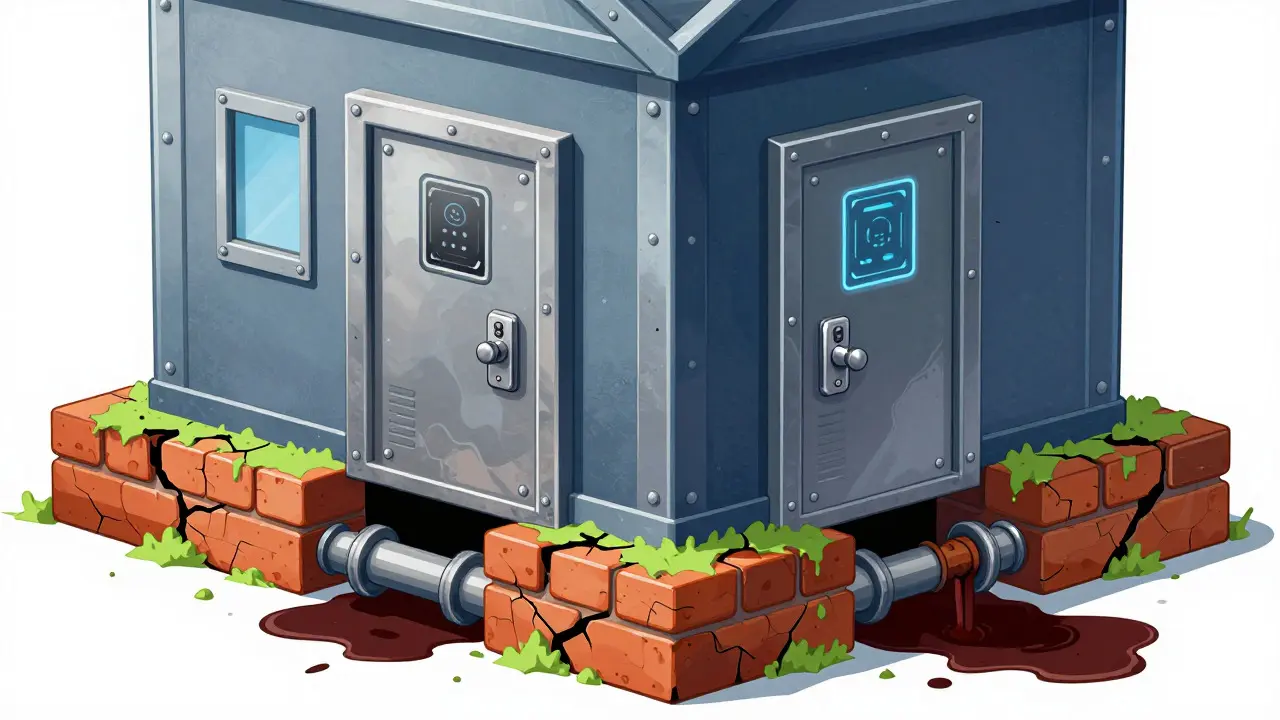
Imagine you built a secure house with reinforced doors and high-tech locks. But what if the bricks were hollow, the paint contained toxic lead, or the plumber left a hidden pipe connected to your neighbor’s sewer? That is exactly what happens when organizations deploy Large Language Models (LLMs) without securing their supply chain. It is not just about protecting the model itself; it is about protecting every layer that supports it.
In 2025, OWASP elevated "Supply Chain" to a critical risk category in its Top 10 for LLM Applications. This shift reflects a harsh reality: attackers are no longer trying to break into the model directly. Instead, they are sneaking in through the containers, weights, and dependencies that make up the deployment environment. If you are deploying LLMs in production, ignoring these layers is like leaving the back door unlocked while obsessing over the front gate.
Why the LLM Supply Chain Is Different
Traditional software supply chains deal with code libraries and binaries. LLM supply chains are messier. They include trained parameters (weights), preprocessing scripts, inference engines, and third-party plugins. Dr. Jane Smith, Chief AI Security Officer at Cobalt.io, notes that the LLM supply chain is 3.7 times more vulnerable than traditional software due to these complex interdependencies.
The attack surface has expanded significantly. In 2024, researchers documented a "LoRA adapter compromise" where attackers infiltrated a third-party supplier to deliver malicious Low-Rank Adaptation components. These adapters acted as covert entry points, allowing data exfiltration without touching the core model. According to Cycode's 2025 survey of 350 organizations, 78% of enterprises now identify supply chain risks as their top security concern for AI deployments. The problem isn't hypothetical; it is happening now.
Securing the Container Layer
Your LLM doesn't run in a vacuum. It runs inside containers, usually managed by Docker and orchestrated by Kubernetes. These environments are the runtime home for your inference services. If the container image is compromised, your model is compromised.
Here is how to tighten this layer:
- Isolate Inference Environments: Use containerization to limit interactions between the LLM and critical systems. An LLM should have minimal access to your database or internal APIs unless absolutely necessary.
- Verify Base Images: Never trust a base image blindly. Scan them for known vulnerabilities before building your application on top. Tools like Grype can automate this check.
- Enforce Least Privilege: Run containers with read-only file systems wherever possible. Disable privileged mode. Every permission granted is a potential attack vector.
Docker and Kubernetes are used by 89% of enterprises deploying LLMs, according to Wiz Academy. However, popularity does not equal security. Many teams use default configurations that leave ports open or allow excessive resource usage. Regularly audit your container policies to ensure they align with current best practices.
Protecting Model Weights and Integrity
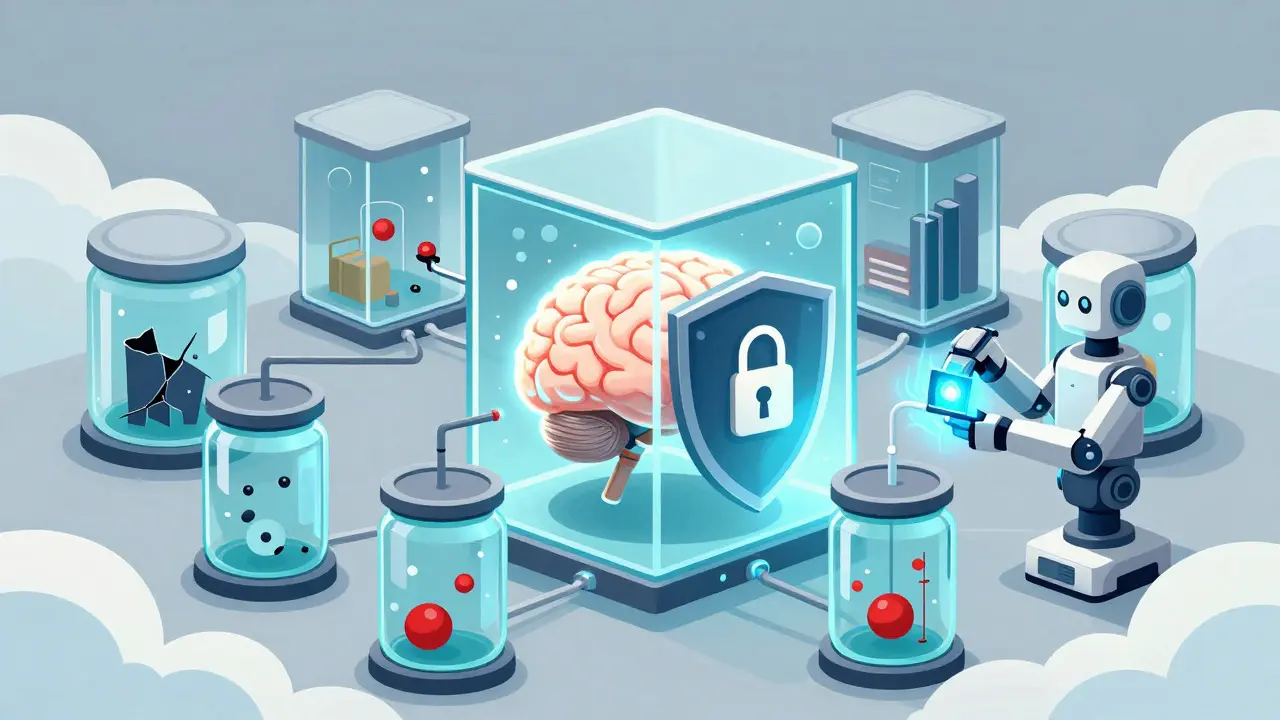
The model weights are the brain of your LLM. If an attacker swaps out your fine-tuned weights for a poisoned version, your outputs could change subtly but dangerously. For example, a customer service bot might start recommending competitor products or leaking private user data.
To protect weights, you need cryptographic verification. Here is the standard approach:
- Sign Your Artifacts: Use SHA-256 checksums to verify the integrity of model files. When you download a model from Hugging Face or another hub, compare the checksum against the official one.
- Emit Attestations: For every inference request, record the model hash and runner version. This creates an audit trail linking user actions to specific model states. Datadog reports a 63% reduction in compromise incidents among customers implementing this practice.
- Track Provenance: Only 32% of publicly available models include verifiable source information. If you are using a community model, assume it is unverified until proven otherwise. Look for models with clear lineage and contributor history.
Model signing is still maturing. Sixty-three percent of developers cite "lack of standardized model signing practices" as their top challenge. Until standards solidify, manual verification and automated hashing are your best defenses.
Managing Dependencies and SBOMs
An LLM deployment typically involves 1,200+ dependencies. From the Python runtime to the transformers library, each component is a potential weak link. Alex Johnson, Principal Security Researcher at Wiz, points out that most enterprises focus on securing the model interface but neglect these dependencies, creating massive blind spots.
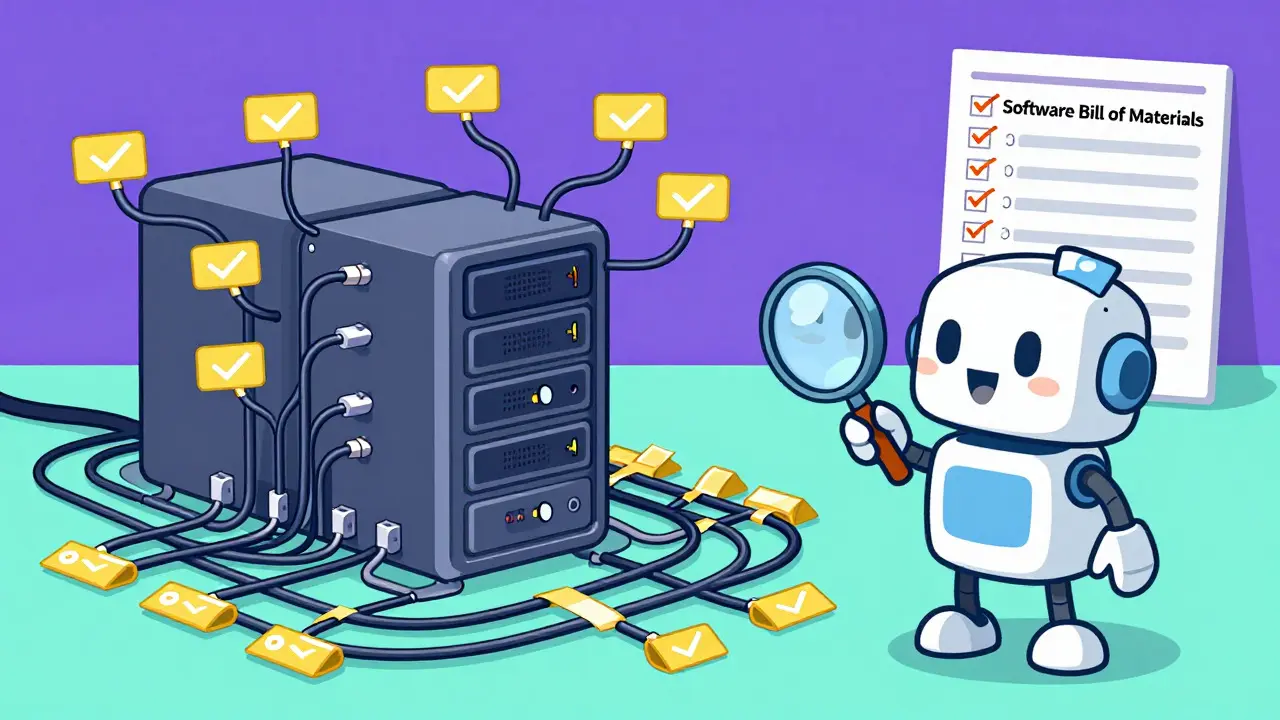
The solution is a Software Bill of Materials (SBOM). An SBOM is a comprehensive inventory of all third-party components in your stack, including their versions and patch status. CycloneDX has emerged as the preferred SBOM format for LLM applications, recommended by OWASP.
Implementing an SBOM workflow looks like this:
- Generate Inventory: Use tools like Syft to scan your build artifacts and generate a CycloneDX SBOM.
- Integrate with CI/CD: Automate scanning in your pipeline. Every pull request should trigger a vulnerability scan.
- Monitor Continuously: Vulnerabilities appear daily. Set up alerts for critical CVEs in your dependencies.
According to Sonatype's analysis of 2.1 million LLM component scans, comprehensive supply chain security scanning adds 15-22% to build times but reduces deployment vulnerabilities by 76%. The trade-off is worth it. One team reported reducing their vulnerable component count by 68% after integrating SBOMs, though it took three weeks of engineering time to set up.
Comparing Security Tools: Open Source vs. Commercial
You have two main paths for securing your LLM supply chain: open-source tools or commercial platforms. Each has distinct trade-offs.
| Feature | Open Source (e.g., OWASP Dependency-Track) | Commercial (e.g., Sonatype, Cycode) |
|---|---|---|
| Cost | Free (license) | $12,000 - $18,500+ annually |
| Setup Time | 35-40 hours per deployment | 8-12 hours per deployment |
| Detection Accuracy | Standard scanning methods | AI-powered detection (23% more malicious components found) |
| Documentation Quality | 2.9/5 average rating | 4.1/5 average rating |
| Best For | Teams with strong DevOps expertise and low budget | Enterprises needing automation and compliance support |
Commercial tools like Sonatype and Cycode offer automated remediation and AI-driven detection of counterfeit components. Sonatype's enterprise offering starts at $18,500 annually for teams of 25 developers. While expensive, these tools save significant time in configuration and provide deeper insights into the open-source ecosystem. Open-source alternatives are powerful but require more hands-on tuning and carry a steeper learning curve.
Practical Implementation Steps
Getting started doesn't require a full overhaul. You can begin with these immediate actions:
- Audit Current State: List all containers, models, and libraries in your deployment. Identify which ones lack version pinning or checksum verification.
- Pin Versions: Stop using "latest" tags for dependencies. Pin specific versions in your Dockerfiles and requirements.txt files.
- Add Basic Scanning: Integrate a free scanner like Trivy or Grype into your CI pipeline. Start with critical vulnerabilities only to reduce noise.
- Generate Initial SBOM: Use Syft to create a baseline CycloneDX file for your main application artifact.
- Train Your Team: Allocate 22 hours for key engineers to learn SBOM generation and vulnerability triage. Cross-functional collaboration between ML engineers and security specialists is critical for success.
Comprehensive integration typically takes 6-8 weeks in enterprise environments. Don't expect overnight results. Focus on reducing the blast radius first, then expand coverage.
Regulatory Drivers and Future Trends
Security is no longer just a best practice; it is becoming a legal requirement. The EU AI Act requires "demonstrable supply chain integrity" for high-risk AI systems. In the US, Executive Order 14110 mandates software bills of materials for federal AI deployments by September 2026. These regulations will push more companies to adopt rigorous supply chain controls.
The market is responding. The LLM supply chain security segment is growing at 34% year-over-year, reaching $2.1 billion in 2025. Gartner predicts that supply chain security will account for 45% of enterprise LLM security budgets by 2026, up from 28% in 2024. As tools mature, we can expect more automation. NIST predicts that by 2027, 85% of enterprise LLM deployments will incorporate automated supply chain validation at every stage of the ML lifecycle.
Frequently Asked Questions
What is the biggest risk in LLM supply chains?
The biggest risk is compromised dependencies or model weights. Unlike traditional software, LLMs rely on large, opaque binary files (weights) and numerous third-party libraries. If a dependency is poisoned or a weight file is swapped, the impact can be subtle and hard to detect without cryptographic verification.
Do I need a commercial tool to secure my LLM deployment?
Not necessarily. Open-source tools like OWASP Dependency-Track and Syft are effective if you have the engineering resources to configure and maintain them. Commercial tools are better suited for enterprises that need faster setup, automated remediation, and compliance reporting features.
How often should I scan my LLM dependencies?
Ideally, on every build or pull request in your CI/CD pipeline. Additionally, run continuous monitoring to catch newly discovered vulnerabilities in existing dependencies. Critical vulnerabilities should trigger immediate alerts and patch cycles.
What is an AI Bill of Materials (AI BOM)?
An AI BOM is an extension of the traditional SBOM specifically designed for machine learning models. Released by OWASP in May 2025, it tracks model components, training data sources, and hyperparameters alongside standard software dependencies, providing a complete view of the model's lineage.
How much overhead does supply chain security add to build times?
Comprehensive scanning typically adds 15-22% to build times. For most teams, this is an acceptable trade-off given the 76% reduction in deployment vulnerabilities. Optimizing scan thresholds and caching results can help minimize this impact.