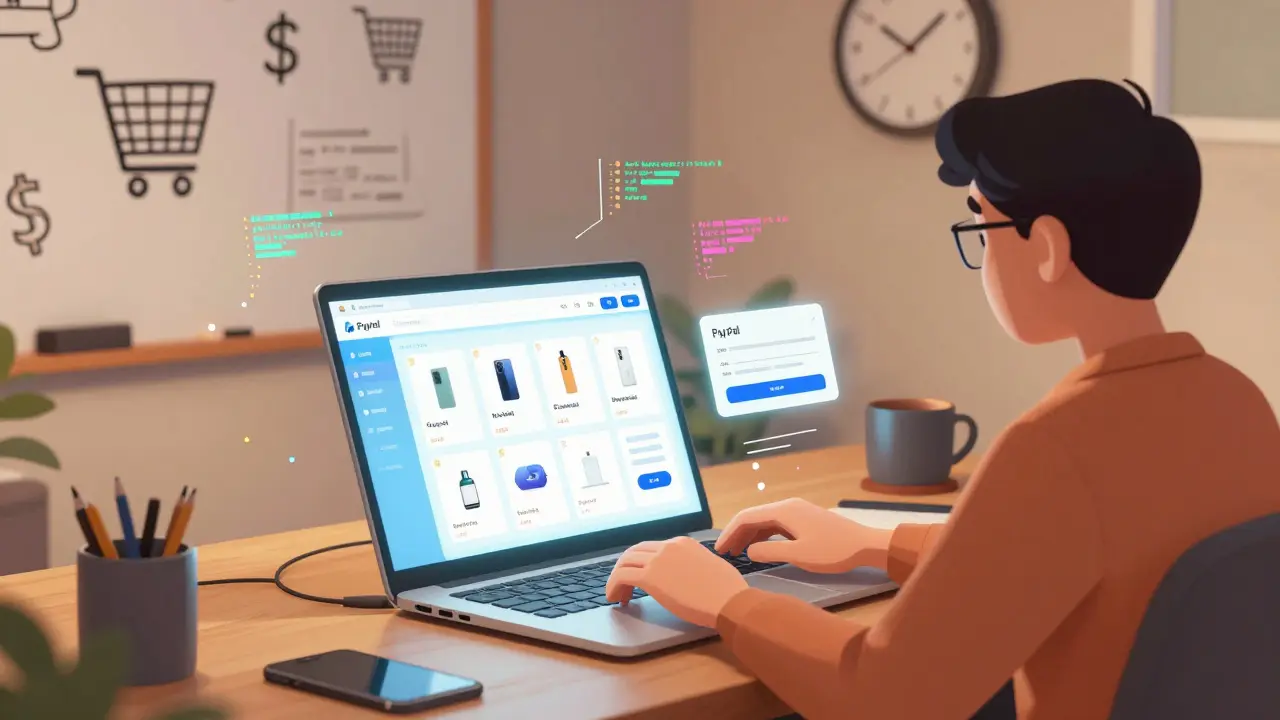
Imagine building a fully functional online store - complete with a product catalog, filtering options, and a working checkout - in less than four hours. No hiring a developer. No waiting weeks for a custom build. Just typing a simple prompt like "create a product catalog with price filters and a PayPal checkout button," and watching it come to life. This isn’t science fiction. It’s vibe coding, and it’s changing how small businesses launch e-commerce sites today.
Before vibe coding, setting up an online store meant choosing between two painful options: use a no-code platform like Shopify and be stuck with templates, or hire a developer and wait months while paying thousands. Vibe coding flips that. It’s not about replacing developers. It’s about giving merchants, marketers, and even part-time entrepreneurs the power to build functional e-commerce tools themselves - fast.
What Is Vibe Coding, Really?
Vibe coding isn’t magic. It’s a mix of natural language prompts, AI-generated code, and pre-built integrations. Think of it like using a smart assistant that writes code for you based on plain English instructions. Platforms like Replit and Lovable now let you type things like "add a discount banner that pops up after 30 seconds," and they generate the HTML, CSS, and JavaScript for you - complete with live PayPal or Stripe API connections.
This approach exploded in 2025 after PayPal partnered with Replit to embed direct API access into their browser-based coding environment. Suddenly, you didn’t need to juggle ten tabs to get an API key, configure webhooks, and test a payment flow. Everything happened in one place. The result? A product catalog that used to take a team two weeks to build can now be up and running in under four hours.
How Fast Is It? Real Numbers
Let’s get concrete. A 2026 study by Tech.co tracked 127 e-commerce teams building checkout flows. Here’s what they found:
- Traditional development: 17.3 hours average to first working prototype
- Vibe coding: 3.2 hours average
That’s an 81% time reduction. And it’s not just speed - it’s completeness. Vibe-coded prototypes start with 78-85% functionality right out of the gate. Most need just 3-5 tweaks to go live. Compare that to no-code platforms like Wix or Squarespace, where you’re locked into fixed layouts. Vibe coding gives you 43% more customization while keeping 89% of the speed.
One user on Reddit built a custom product page with variant selectors (size, color, quantity) and dynamic pricing rules in just three hours. Their dev team would’ve taken two weeks. But here’s the catch - they spent another eight hours fixing a broken webhook that didn’t send order confirmations. That’s the trade-off.
What Can You Actually Build?
Vibe coding shines in specific use cases:
- Temporary promo stores - Launch a holiday sale site in under four hours, then shut it down after Cyber Monday.
- A/B testing layouts - Test two different checkout buttons in 90 minutes. No developer needed.
- Niche product catalogs - Build a store for handmade pet collars with custom filters (breed, material, price) - something Shopify themes don’t support out of the box.
- Mock data generation - Need 500 fake products to test your UI? Type "generate 500 realistic product entries with images, prices, and descriptions," and you’ve got a dataset in 15 minutes.
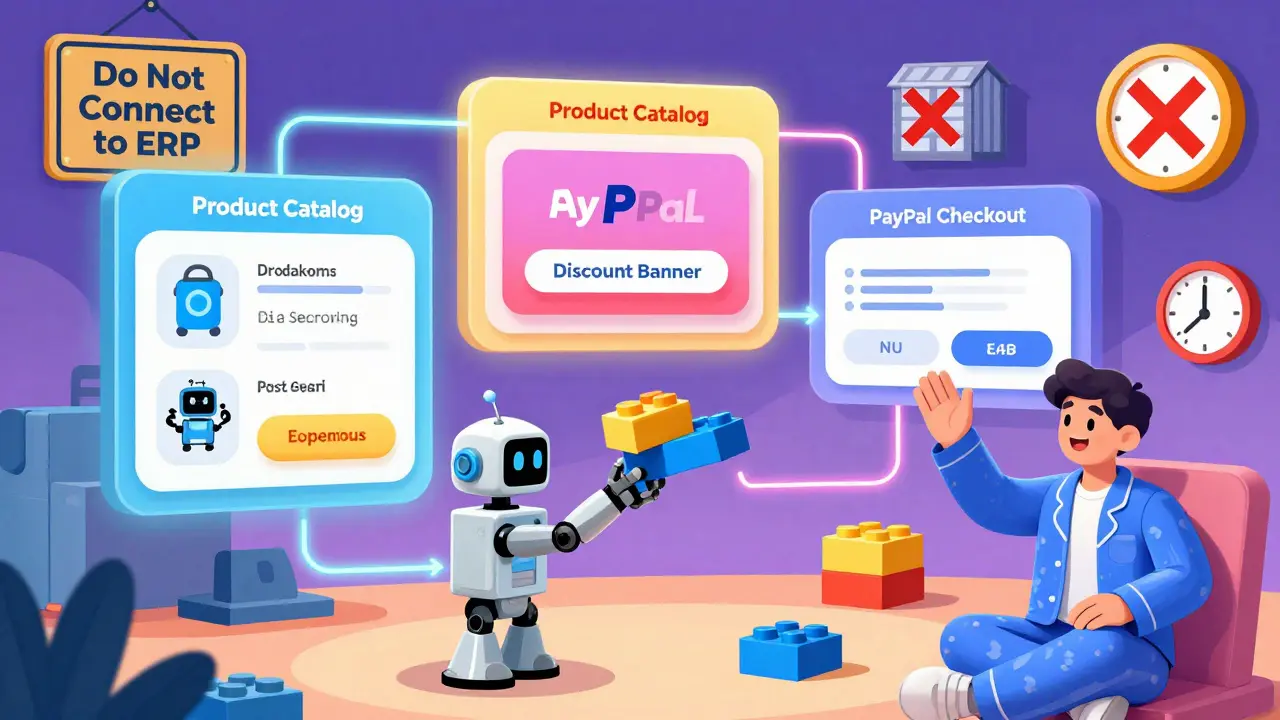
But there are limits. If you’re trying to connect your vibe-coded checkout to your warehouse inventory system, or automate complex tax calculations across 12 states, you’re going to hit walls. PayPal’s own guidelines warn: "Vibe-coded projects in the Green Zone must never connect directly to core business systems."
That means: don’t use vibe coding for your real-time stock tracking or ERP sync. It’s great for front-end interfaces, not back-end engines. Not all vibe coding platforms are equal. Here’s what’s working in early 2026: Replit leads for developers who want full control. Lovable is the go-to for Shopify users who want to tweak themes without touching code. And if you’re just starting out? Stick with Replit - their documentation is clear, and their PayPal integration is rock-solid. You don’t need to be a coder. But you do need to understand a few basics: According to Replit’s onboarding data, users with basic HTML/CSS knowledge get comfortable in under five hours. Complete beginners take around 11 hours. The learning curve is real - but shallow. Most people who struggle aren’t stuck on code. They’re stuck on what they want to build. Start simple. Try this prompt: "Create a product page with three items, a "Add to Cart" button, and a PayPal checkout link. Make it mobile-friendly." Run it. See what it generates. Tweak the colors. Add a discount banner. That’s how you learn. Vibe coding isn’t flawless. Here’s what breaks most often: PayPal’s developer forum had 12,000 test transactions accidentally appear in live merchant accounts in February 2026. Why? Someone used a sandbox API key in production. It was a simple mistake - but it cost real money. The fix? Always test in sandbox mode. Never skip it. And always ask the AI: "Generate unit tests for this checkout flow." Google’s Gemini can do that. It’ll write tests that simulate cart additions, failed payments, and timeout errors. Use vibe coding if you: Avoid vibe coding if you: As Dr. Elena Rodriguez from MIT puts it: "Vibe coding democratizes e-commerce development. It lets someone with $50 and a laptop build what used to cost $10,000."
But Shopify’s Marcus Chen warns: "68% of vibe-coded projects need a real developer to fix them before going live." So don’t think of it as a replacement. Think of it as a prototype engine. PayPal just rolled out automatic PCI compliance checks for vibe-coded checkout flows. That’s huge - it means your payment page won’t fail security scans. Lovable’s February 2026 update lets you create a full Shopify storefront in under 90 seconds using pre-built templates. And Google’s Gemini Commerce Assistant? It’s coming this fall, trained on millions of e-commerce transactions. By 2027, Gartner predicts 70% of e-commerce platforms will have vibe coding built in. It’s not going away. It’s becoming standard - like Excel for spreadsheets. You don’t need to be a programmer to use Excel. You just need to know what you’re trying to calculate. Same here. Vibe coding doesn’t make you a developer. But it makes you a builder. No. Vibe coding doesn’t replace platforms like Shopify or WooCommerce - it complements them. You still need those platforms to handle hosting, security, and scalability. Vibe coding helps you build custom features on top of them faster. Think of it as a turbocharger for your existing store, not a new engine. Not at first. Most platforms generate working code from simple prompts. But if you want to tweak the design, fix bugs, or add custom logic, you’ll need to understand basic JavaScript and HTML. It’s like driving a car - you don’t need to know how the engine works to drive it. But if something breaks, you’ll need to understand the basics to fix it. Yes - if you follow best practices. Platforms like Replit now auto-check for PCI compliance and block insecure code. Always use sandbox environments for testing. Never use live API keys during development. And never connect vibe-coded interfaces directly to your inventory or ERP systems. When used correctly, vibe-coded payment flows are as secure as any other modern e-commerce setup. Most platforms are free to start. Replit’s basic plan lets you build and test e-commerce projects at no cost. Lovable offers free Shopify integrations for small stores. You only pay if you need advanced features like custom domains, team access, or priority support - and even then, it’s usually under $20/month. Compare that to hiring a developer, which can cost $50-$150/hour. That’s common - and fixable. Most vibe-coded sites are built on top of stable platforms like Shopify or Stripe, so the core infrastructure stays intact. If your custom checkout fails, you can revert to a default theme while you fix the code. Many users keep a backup version of their site. The key is to treat vibe-coded elements as modular components, not permanent foundations.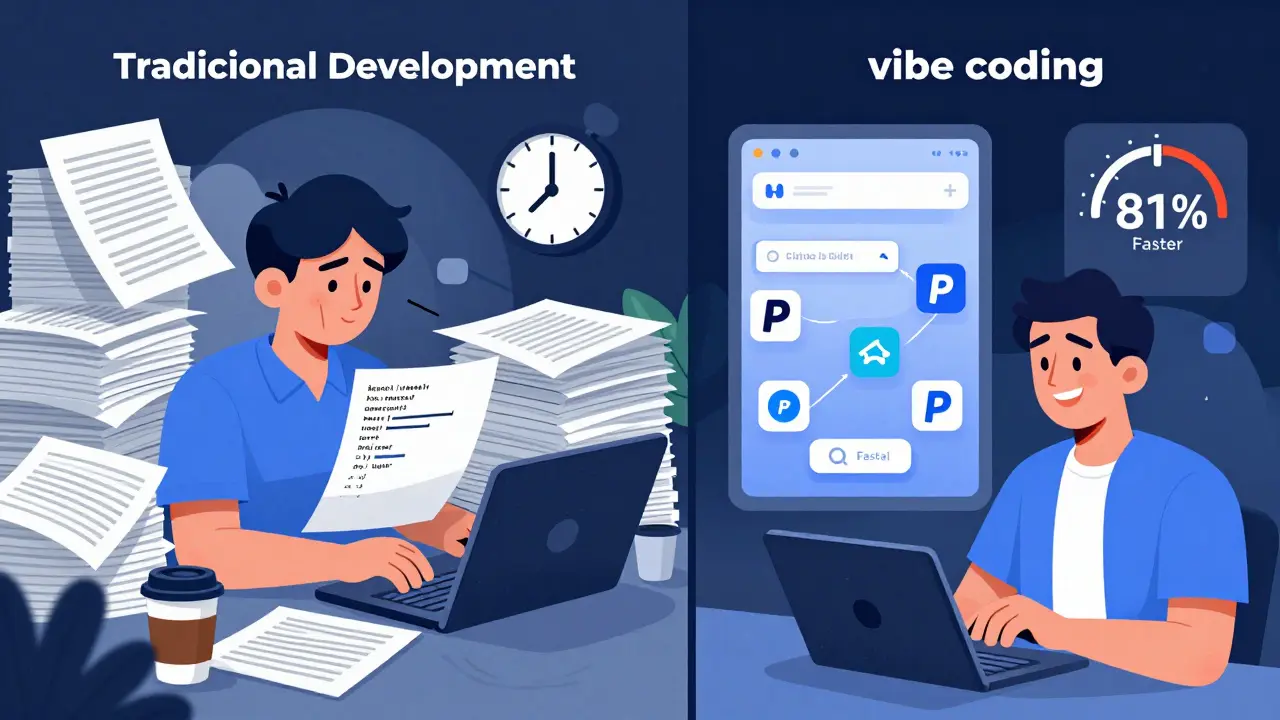
Tools You Can Use Right Now
Platform
Best For
Key Integration
Time to First Prototype
User Rating (2026)
Replit
Developers, technical users
PayPal API, Stripe
2-4 hours
4.3/5
Lovable
Shopify merchants
Shopify Theme API
90 seconds (templates)
4.1/5
Cursor
Enterprise teams
Custom API connectors
4-6 hours
3.9/5
Base44
Beginners
Stripe only
3-5 hours
2.8/5
What Skills Do You Need?
The Dark Side: What Goes Wrong?
Who Should Use Vibe Coding? Who Should Avoid It?
The Future: What’s Coming in 2026-2027
Can vibe coding replace Shopify or WooCommerce?
Do I need to know JavaScript to use vibe coding?
Is vibe coding secure for payments?
How much does vibe coding cost?
What if my vibe-coded site breaks after launch?
Frank Piccolo
February 7, 2026 AT 15:07Also, Replit? The same platform that let a 14-year-old host a crypto scam site last year? Yeah, I'm trusting my PayPal API keys to that.
James Boggs
February 8, 2026 AT 19:37Abert Canada
February 10, 2026 AT 15:38Xavier Lévesque
February 11, 2026 AT 22:06Rakesh Kumar
February 13, 2026 AT 12:30Bill Castanier
February 13, 2026 AT 13:37