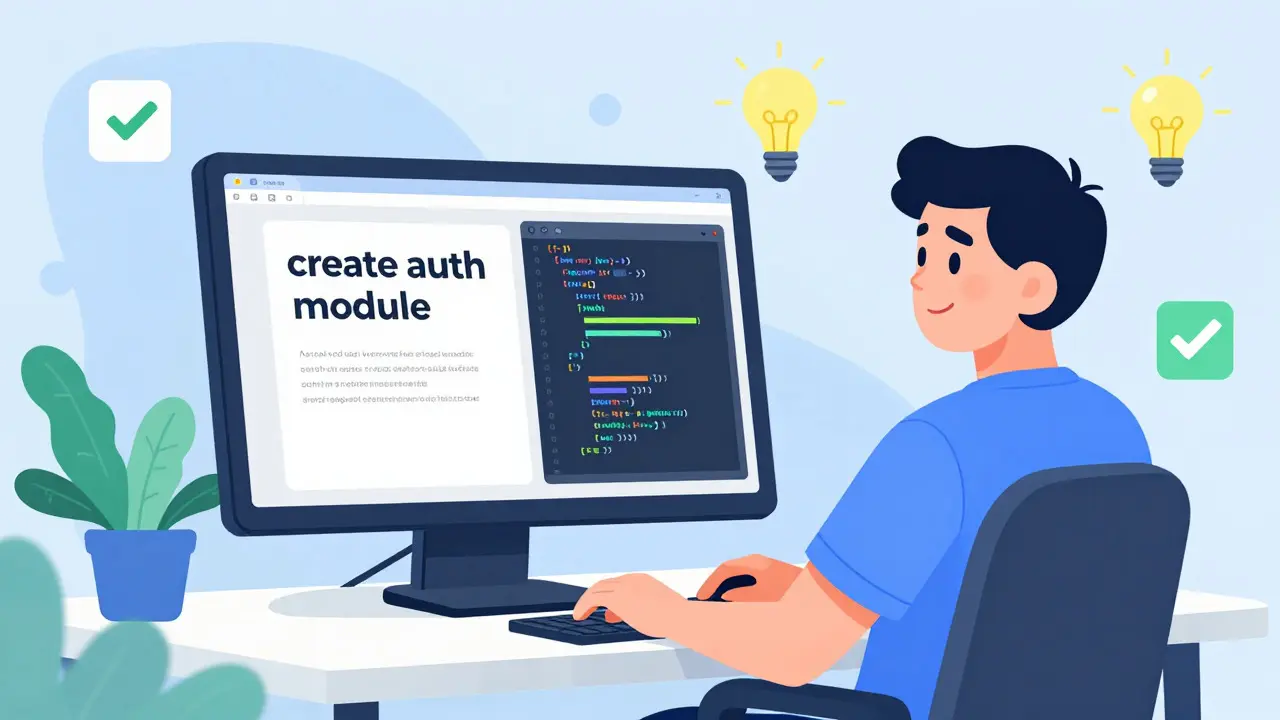
Picture this: you’re staring at a blank screen, needing to build a user authentication module. Instead of typing out every line of logic from scratch, you type a plain English prompt into your editor. The AI generates the code in seconds. You review it, tweak a variable name, and hit save. This is vibe coding, defined as a development approach where engineers use natural language prompts to generate code via large language models rather than writing syntax manually.
If you’ve been following tech news lately, you’ve probably seen headlines claiming that vibe coding is revolutionizing software development. Recent data suggests that roughly 74% of developers report some form of productivity uplift when using these tools. But here’s the catch: that number hides a massive divide between who actually gets faster and who ends up stuck debugging AI hallucinations for days.
The reality isn’t just about typing less. It’s about understanding how large language models (LLMs) think, where they fail, and how to manage the context window so they don’t spit out syntactically correct but logically broken code. Let’s break down what’s really happening under the hood, why experience levels matter more than ever, and how you can actually get those productivity gains without drowning in technical debt.
What Exactly Is Vibe Coding?
The term "vibe coding" gained traction around 2023-2024, largely popularized by OpenAI co-founder Andrej Karpathy. He described it not as traditional programming, but as a loop of seeing things, saying things, running things, and copy-pasting results that mostly work. It represents a shift from manual syntax construction to conversational development.
At its core, vibe coding relies on Large Language Models (LLMs) such as GitHub Copilot, Amazon CodeWhisperer, and Google Gemini Advanced. These tools have become embedded in modern IDEs, allowing developers to treat code generation like a dialogue. Instead of memorizing library functions or API endpoints, you describe the outcome you want. The model predicts the next tokens based on its training data, which includes billions of lines of public code.
This approach lowers the barrier to entry for citizen developers-people with business logic knowledge but limited coding skills. However, for professional engineers, it changes the job description. You spend less time writing boilerplate and more time reviewing, testing, and integrating machine-generated snippets. The skill set shifts from "how do I write this function?" to "is this function safe, efficient, and compatible with my existing system?"
The 74% Statistic: Perception vs. Reality
When we say 74% of developers report productivity uplift, we need to look closer at what "uplift" means. Surveys from Atlassian and Fastly in mid-2025 show high satisfaction rates, but controlled studies tell a different story. A randomized controlled trial by METR involving 16 experienced open-source developers found something startling: while developers expected a 24% speed increase, they actually experienced a 19% slowdown in completion time for complex tasks.
This creates a significant perception-reality gap. Why does this happen?
- Cognitive Load: Reading and understanding code written by an AI requires more mental energy than writing it yourself. You don’t know the intent behind every line because you didn’t create it. IBM case studies indicate that debugging AI-generated code can take 2.7 times longer than developing the original solution manually.
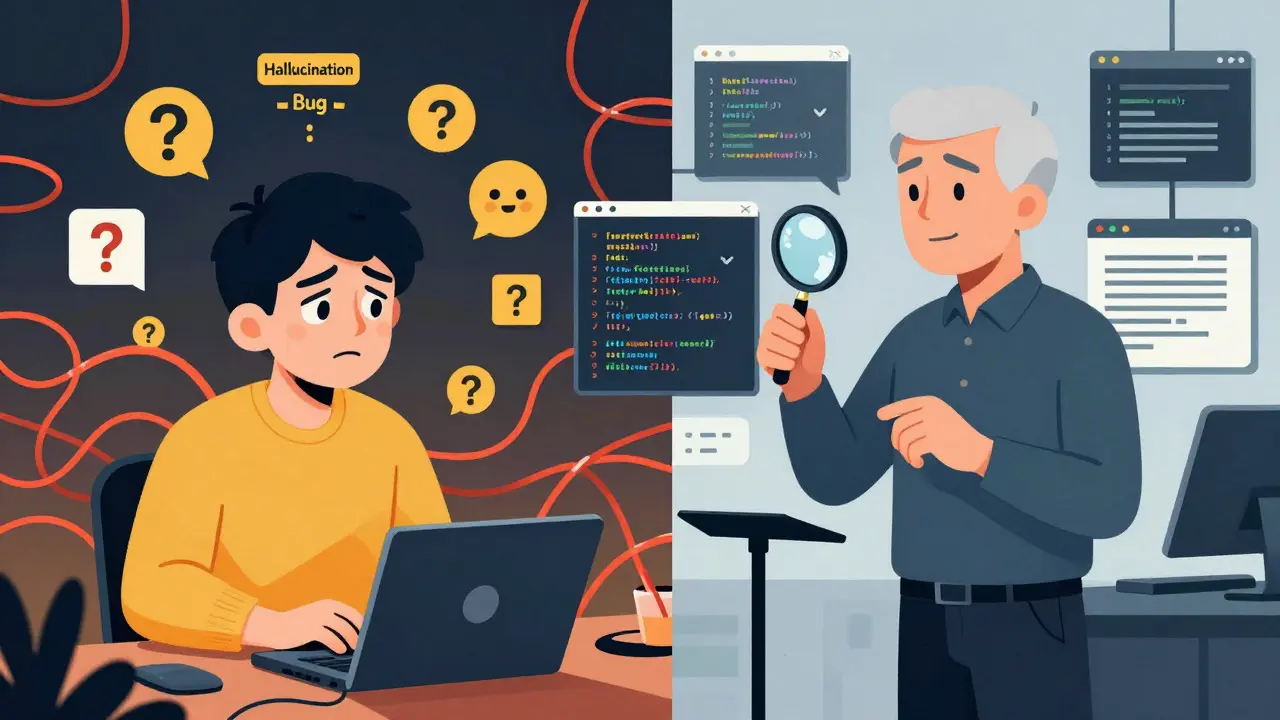
- Hallucinations: LLMs often produce code that looks perfect syntactically but fails logically. For example, an AI might invent a non-existent library method or misinterpret a business rule. Finding these subtle bugs is time-consuming.
- Integration Friction: Generating a standalone function is easy. Making that function fit seamlessly into a legacy brownfield application with strict dependency constraints is hard. Stanford University’s analysis shows success rates drop from 87% in greenfield projects to just 42% in complex legacy systems.
So, who are the people reporting the 74% gain? They are likely those working on straightforward tasks, prototyping, or internal tools where speed matters more than long-term maintainability. For them, vibe coding is a force multiplier. For others, it’s a trap if used incorrectly.
Experience Level: The Great Divider
One of the most critical factors in vibe coding success is seniority. Data from Fastly’s July 2025 survey reveals a stark contrast between junior and senior developers.
| Metric | Junior Developers (0-2 years) | Senior Developers (10+ years) |
|---|---|---|
| Percentage of AI-generated code shipped | 13% | 32% |
| Reported productivity benefit | 49% | 59% |
| Rework rate on PRs | High (40% more requests) | Low (focused on edge cases) |
| Primary Use Case | Boilerplate & basic logic | Complex integration & refactoring |
Junior developers often rely too heavily on AI, assuming the output is correct. This leads to higher rework rates because they lack the foundational knowledge to spot logical flaws. Senior developers, on the other hand, use AI as a pair programmer. They know exactly what the code should do, so they can quickly identify when the AI goes off track. Gary Marcus, an AI researcher at NYU, notes that AI amplifies the productivity of developers who already know what they’re doing. If you don’t know what you’re doing, the AI just gives you confident wrong answers faster.
Context Engineering: The New Core Skill
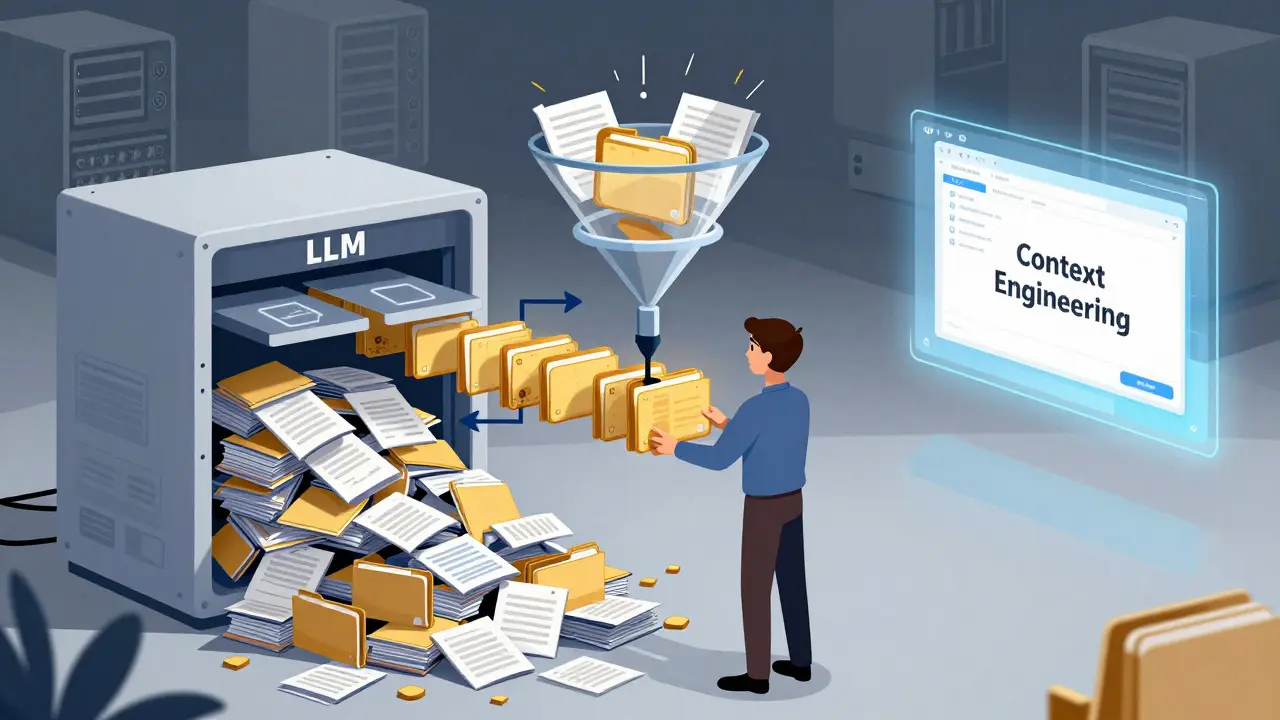
If vibe coding is the new normal, then Context Engineering is the essential skill required to make it work. LLMs have limited context windows. Even with recent advancements, performance degrades significantly when you feed them entire codebases. Stanford’s analysis shows accuracy drops from 90% to around 50% when context exceeds certain token limits.
Effective vibe coders don’t dump their whole project into the chat. They curate the input. Here’s how top performers do it:
- Selective Injection: Provide only the relevant files, interfaces, and error messages. Strip away unrelated modules.
- Explicit Constraints: Tell the AI what *not* to do. Specify design patterns, forbidden libraries, or performance requirements.
- Iterative Refinement: Don’t expect perfection in one shot. Generate a draft, critique it, ask for specific fixes, and repeat.
IBM’s internal training program highlights this clearly. Developers who completed a 32-hour certification in Context Engineering shipped 28% more AI-generated code with 40% fewer defects. Those who skipped the training and just started prompting saw minimal gains or even slowdowns. The difference lies in treating the AI as a tool that needs precise instructions, not a magic wand.
Language Matters: Python vs. COBOL
Not all programming languages benefit equally from vibe coding. The quality of the AI’s output depends heavily on the size and quality of its training data. Popular, modern languages like Python and JavaScript dominate the internet’s code repositories. As a result, LLMs perform exceptionally well with them, showing productivity gains of 35-40%.
In contrast, legacy languages like COBOL or older versions of Java have much smaller footprints in public datasets. The AI has seen less of this code, so its predictions are weaker. Improvements in these areas are modest, ranging from only 8-12%. If you’re maintaining a mainframe system, vibe coding won’t be a game-changer yet. It’s best suited for web development, mobile apps, and data science workflows where modern frameworks reign supreme.
Technical Debt and the Debugging Trap
The biggest risk of widespread vibe coding adoption is technical debt. When 30-50% of your codebase is generated by AI, maintaining it becomes challenging. Experienced engineers report reviewing 37% more code now than before AI adoption. The volume increases, but the complexity doesn’t decrease.
AI-generated code can be overly verbose, inefficient, or inconsistent with team standards. Without strict governance, your repository becomes a patchwork of styles and approaches. This makes future updates harder and increases the risk of security vulnerabilities. Many companies are now implementing mandatory AI code audits. Decimal Solutions’ 2025 survey found that 67% of adopting firms have introduced specialized review protocols to catch AI-specific issues like hardcoded secrets or insecure default configurations.
To mitigate this, teams are shifting toward "Literate Coding" modes, pioneered by platforms like IBM Bob. This approach forces developers to review AI changes in a structured format before applying them, ensuring human oversight remains central to the process. It’s not about replacing developers; it’s about making them better editors.
How to Adopt Vibe Coding Successfully
If you want to join the 74% who see real benefits, start with discipline. Don’t let the AI write everything. Use it for specific, bounded tasks:
- Boilerplate Generation: CRUD operations, test scaffolding, and configuration files. These are repetitive and low-risk.
- Refactoring Assistance: Ask the AI to suggest cleaner ways to structure existing code, but verify every change manually.
- Documentation: Generate docstrings and comments for existing functions. This is a high-value, low-risk use case.
Avoid using AI for complex algorithmic logic or critical security modules unless you have a senior engineer double-checking every line. Remember the METR study: for complex tasks, the initial learning curve and debugging overhead can outweigh the speed gains. Give your team 3-4 weeks to practice effective prompting. Expect a dip in velocity initially as everyone learns to trust but verify the output.
The Future: From Assistants to Partners
By 2027, Gartner predicts vibe coding will evolve into context-aware development environments. Tools will understand your entire project structure automatically, reducing the need for manual context injection. The goal is to close the perception-reality gap entirely, stabilizing productivity gains at 25-30% for skilled practitioners.
For now, though, the hype cycle is still active. Be skeptical of claims that AI will replace programmers. It won’t. It will replace programmers who refuse to adapt. The developers who thrive will be those who master the art of directing the AI, managing context, and maintaining rigorous quality standards. Vibe coding isn’t about laziness; it’s about leverage. Use it wisely, and you’ll find that 74% statistic reflects your own workflow.
Is vibe coding suitable for beginners?
It can be risky. Beginners often lack the foundational knowledge to detect logical errors in AI-generated code. While it helps with syntax, it may lead to bad habits and higher rework rates. Juniors should use it as a learning aid, not a crutch, and always seek mentorship reviews.
Which programming languages benefit most from AI coding tools?
Modern, widely-used languages like Python, JavaScript, TypeScript, and Go see the highest productivity gains (35-40%) due to abundant training data. Legacy languages like COBOL or niche proprietary languages show minimal improvement (8-12%).
Why do some developers experience slower productivity with AI?
The "debugging trap" occurs when developers spend more time fixing AI hallucinations and integrating flawed code than writing it themselves. This is common in complex legacy systems or when users provide poor context to the model.
What is Context Engineering?
Context Engineering is the practice of carefully selecting and formatting the information provided to an LLM to maximize output accuracy. It involves stripping irrelevant code, specifying constraints, and iteratively refining prompts rather than dumping entire codebases.
Does vibe coding increase technical debt?
Yes, if unchecked. AI can introduce inconsistent styles, inefficient algorithms, or security vulnerabilities. Teams must implement strict code review processes and AI-specific audits to prevent long-term maintainability issues.