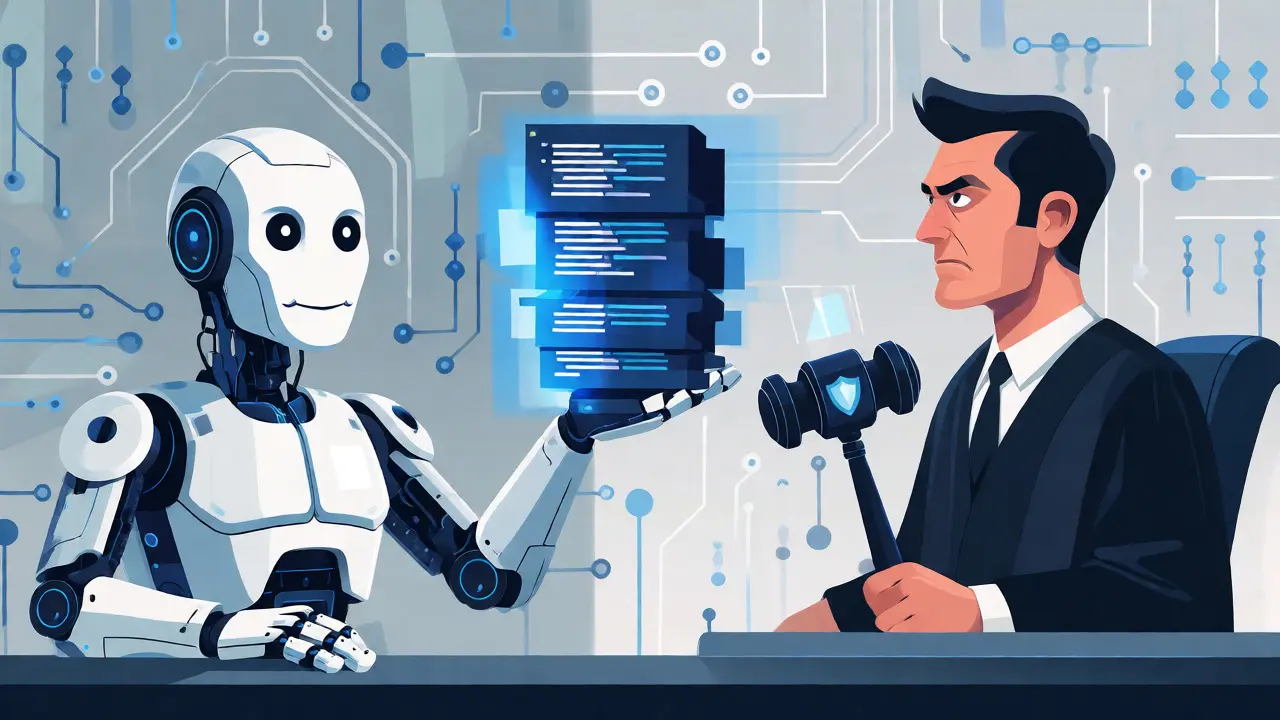
Imagine handing a junior developer a stack of code they didn't write, asking them to deploy it to production without reading a single line. Sounds reckless, right? Yet, that is exactly what happens in many modern software teams every day when they integrate AI-generated code into their applications. We treat these snippets as magic bullets for productivity, often skipping the rigorous scrutiny we’d apply to human-written logic. But here’s the hard truth: AI models don’t understand context, business rules, or subtle security implications. They predict tokens. And if you aren’t treating that output as "guilty until proven secure," you’re gambling with your company’s data and reputation.
The Myth of Inherently Safe AI Code
There’s a dangerous assumption floating around tech circles that because an AI model was trained on billions of lines of high-quality open-source code, its output must be inherently safe. The data says otherwise. A 2023 report from the Center for Security and Emerging Technology (CSET) found that nearly half of the code snippets generated by major Large Language Models (LLMs) contained bugs, many of which were potentially exploitable. These weren’t just syntax errors; they were missing input validations, weak authentication checks, and unsafe memory handling patterns.
Why does this happen? LLMs are probabilistic engines. They optimize for syntactic correctness and functional plausibility, not necessarily security best practices. If a training dataset contains insecure patterns-which it does, because real-world code is messy-the model will replicate them. Worse, AI can hallucinate libraries or functions that don’t exist, or use deprecated methods that introduce vulnerabilities. When you combine this with the sheer volume of code AI can produce, the attack surface expands rapidly. You aren’t just reviewing one feature; you’re reviewing ten times the code in half the time. Without a strict policy, quality control collapses under the weight of velocity.
Defining the "Guilty Until Proven Secure" Framework
So, what does this framework actually look like? It’s not about banning AI tools. It’s about shifting the burden of proof. Under this policy, any code snippet suggested by an AI assistant is treated as untrusted input by default. It cannot enter the main branch or production environment until it passes specific, automated, and manual security gates. This approach adapts the zero-trust principle from network security directly into the Software Development Life Cycle (SDLC).
This stance requires three layers of defense:
- Discovery and Classification: You need to know where AI is being used. Is it generating boilerplate? Or is it writing authentication logic? Not all AI usage carries the same risk.
- Automated Verification: Before a human even looks at the code, static analysis tools should scan it for known vulnerability patterns.
- Contextual Human Review: Developers must review AI output with heightened skepticism, specifically looking for logic errors and security gaps that scanners miss.
This isn’t bureaucracy for the sake of it. It’s a recognition that speed without safety creates technical debt that compounds exponentially. By formalizing this process, you turn security from a bottleneck into a predictable step in the workflow.
Risk Categories: Where AI Code Fails
To build effective policies, you need to understand exactly what goes wrong. Industry leaders like Contrast Security and Checkmarx have categorized these risks into distinct buckets. Understanding these helps you tailor your controls.
| Risk Category | Description | Example Vulnerability |
|---|---|---|
| Insecure Code Generation | Models output code with common flaws due to training data biases. | Missing SQL injection protections; hardcoded API keys. |
| Model-Level Threats | The AI model itself is vulnerable to manipulation or poisoning. | Prompt injection causing unexpected code execution. |
| Systemic Supply Chain Risks | Insecure AI code enters libraries, propagating flaws downstream. | A flawed utility function copied into hundreds of projects. |
| Business Logic Errors | Code works technically but fails to enforce complex business rules. | Allowing negative values in a payment calculation. |
The first category is the most immediate threat. LLMs often prioritize getting the code to run over making it secure. For instance, they might skip sanitizing user inputs because the example they learned from didn’t require it. The second category is more abstract but critical: if your prompt is manipulated, the model might generate malicious code intentionally. The third category highlights the long-term danger-if your team copies insecure AI patterns into shared libraries, those flaws spread across your entire organization.

Implementing Technical Controls
You can’t rely on human vigilance alone. The volume of AI-assisted development demands automation. Successful teams integrate security checks directly into the developer’s workflow, ideally within the Integrated Development Environment (IDE) and the Continuous Integration/Continuous Deployment (CI/CD) pipeline.
Start with Static Application Security Testing (SAST). Tools like Checkmarx or SonarQube can scan AI-generated snippets for known vulnerabilities before the code is even committed. However, traditional SAST often struggles with context. That’s why newer approaches, such as Cisco’s Project CodeGuard, are emerging. These frameworks use rule-based validators that check AI output against predefined security policies in real-time. If the AI suggests a function that violates a security rule-say, using a non-cryptographic random number generator for session IDs-the tool flags it immediately.
Beyond static analysis, consider runtime protection. Since AI can generate code that only fails under specific conditions, Dynamic Application Security Testing (DAST) and Runtime Application Self-Protection (RASP) become vital. RASP sits inside the application and monitors behavior, blocking attacks that bypass pre-deployment scans. This layered approach ensures that if a vulnerability slips through the net, it doesn’t automatically compromise the system.
Governance and the Shared Responsibility Model
Technology alone won’t save you. You need a governance structure that defines who owns security in an AI-assisted world. The NIST AI Risk Management Framework (AI RMF) provides a solid scaffold here, emphasizing four core functions: Govern, Map, Measure, and Manage. Apply this to your codebase.
First, define your AI usage policy. Which components are off-limits for AI generation? Many organizations prohibit AI-generated code in authentication modules, cryptographic functions, or financial transaction logic. These areas require deep contextual understanding that current LLMs lack. Second, establish a shared responsibility model. Developers are responsible for validating AI suggestions; AppSec teams are responsible for maintaining the scanning tools and policies; Product owners must accept the trade-offs between speed and rigor.
Documentation is key. Every piece of AI-generated code should be tagged or identified in the repository. This allows you to audit the impact of AI tools over time. Are teams using AI primarily for boilerplate or for complex logic? Tracking this data helps you refine your policy. If you see a spike in security incidents linked to AI code in a specific module, you can restrict AI usage there without halting adoption elsewhere.
Cultural Shift: Training Developers for Skepticism
Here is the hardest part: changing mindsets. Developers love AI assistants because they reduce cognitive load. Asking them to scrutinize every suggestion feels like extra work. To overcome this resistance, training must go beyond generic secure coding tips. Developers need to understand how LLMs work-and fail.
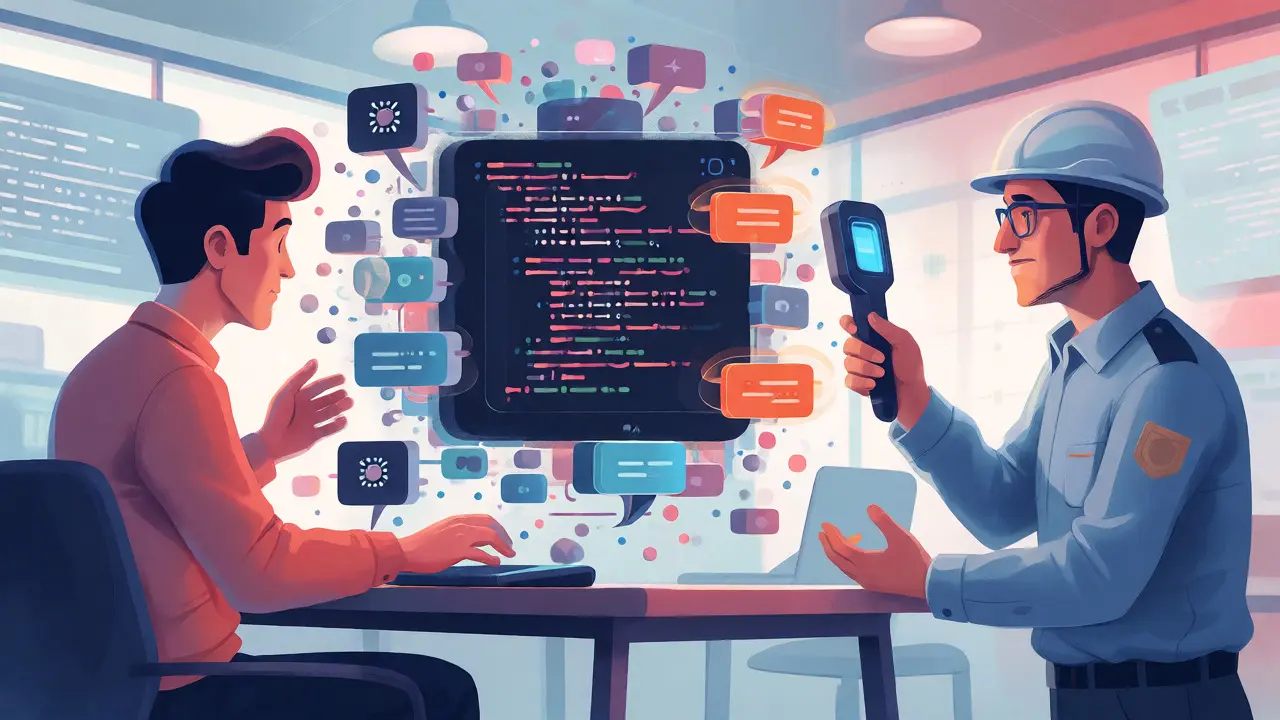
Show them examples of insecure code generated by AI. Let them see the subtle mistakes, like incorrect error handling or improper privilege checks. Encourage a culture of "trust but verify." Frame the review process not as policing, but as professional diligence. Just as a senior engineer wouldn’t merge a junior’s pull request without reading it, no one should merge AI code without understanding it.
Also, address the fear of slowing down. Implement guardrails that catch obvious issues automatically so humans only spend time on complex logic. Use risk-based prioritization: not every finding needs an immediate fix. Focus on high-severity vulnerabilities that affect sensitive data or critical paths. This prevents "alert fatigue" and keeps delivery pipelines moving.
Looking Ahead: The Future of Secure AI Coding
The landscape is evolving fast. Vendors are racing to build specialized "AI Code Security" platforms that combine threat modeling, code analysis, and policy enforcement. We’re moving toward a future where AI coding agents themselves are embedded with security contexts. Imagine an AI assistant that knows your company’s specific architecture and compliance requirements, suggesting code that is already aligned with your internal standards.
Regulatory pressure will also increase. As AI becomes central to software supply chains, auditors will demand evidence that organizations assessed the risks of AI-generated code. Having a documented "guilty until proven secure" policy now positions you ahead of the curve. It demonstrates due diligence and a proactive approach to emerging risks.
Ultimately, adopting this framework isn’t about resisting innovation. It’s about ensuring that innovation doesn’t outpace safety. By treating AI code with appropriate caution, you protect your users, your brand, and your engineering team from preventable disasters. Start small: implement mandatory reviews for AI-generated logic, integrate automated scanners, and train your team. Then, scale your controls as your confidence grows.
Is AI-generated code always less secure than human-written code?
Not necessarily, but it is statistically more likely to contain certain types of vulnerabilities, particularly those related to input validation and authentication. Studies show that while AI code is often syntactically correct, it frequently lacks the nuanced security context that experienced human developers provide. Therefore, it should not be assumed to be secure without verification.
How do I identify AI-generated code in my repository?
Many IDE plugins and AI assistants offer settings to add metadata or comments to generated code. You can also enforce commit message conventions where developers tag commits containing AI assistance. Additionally, some enterprise-grade security tools can detect stylistic patterns typical of LLM outputs, though this method is less reliable than explicit tagging.
Should we ban AI tools entirely for critical security components?
A complete ban is rarely necessary or beneficial. Instead, adopt a risk-based approach. For highly sensitive components like authentication, encryption, or payment processing, require mandatory peer review by a security expert or limit AI usage to boilerplate generation. For less critical UI components, standard automated scanning may suffice.
What tools help enforce a "guilty until proven secure" policy?
Look for solutions that integrate Static Application Security Testing (SAST) with AI-specific rulesets. Examples include Checkmarx, Contrast Security, and open-source frameworks like Cisco’s Project CodeGuard. These tools can be configured to flag insecure patterns commonly produced by LLMs before the code reaches production.
Does this policy slow down development significantly?
Initially, yes, as teams adjust to new workflows. However, automated controls minimize friction. Over time, the reduction in post-production bug fixes and security incidents often leads to faster overall delivery. The goal is to shift security left, catching issues early when they are cheaper and quicker to fix.