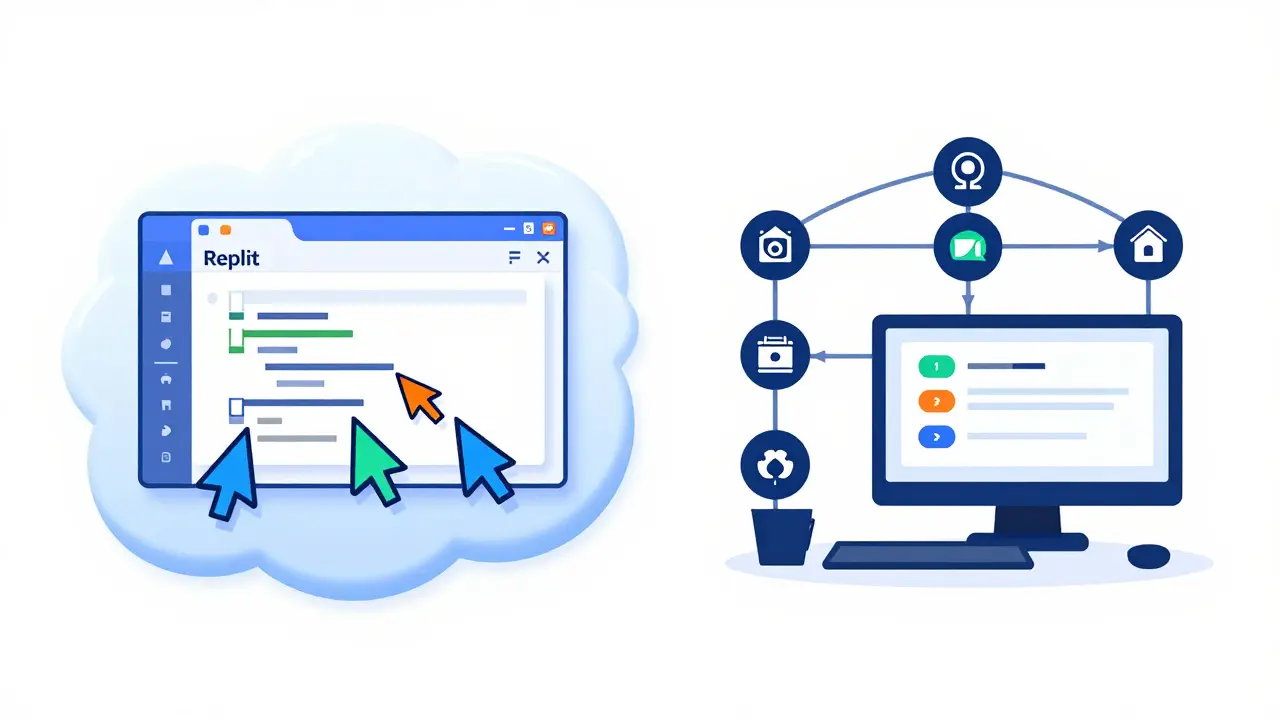
Choosing between Cursor is a fork of Visual Studio Code designed for AI-native development and Replit is a cloud-native, browser-based IDE that enables real-time collaborative coding isn't just about which AI is smarter. It is about how your team actually works together. If you need a "Google Docs for code" where three people can type in the same file at once, you are looking at one tool. If you are managing a massive enterprise codebase with strict audit trails and regulatory requirements, you are looking at another.
Real-Time Sync vs. Git-Based Collaboration
The biggest divide here is how these tools handle the act of collaborating. Replit uses a multiplayer architecture. This means you can generate a "Join Link," send it to a teammate, and instantly see their cursor moving across your screen. It is a zero-install experience; there is no fighting with environment variables or spending two days onboarding a new hire. Everything from dependency installation to database provisioning happens in the cloud with one click.
On the flip side, Cursor doesn't do real-time co-editing. Instead, it leans heavily into the traditional Git workflow. You work on your local machine, create a branch, and submit a pull request. For many professional teams, this is a feature, not a bug. It provides a structured way to track changes and prevents the "too many cooks in the kitchen" problem that can happen in live shared docs.
| Feature | Replit | Cursor |
|---|---|---|
| Editing Style | Real-time Multiplayer | Asynchronous / Git-based |
| Setup Time | Seconds (Browser-based) | Minutes/Hours (Local Install) |
| Change Control | Instant / All-or-nothing | Granular / Diff-first |
| Ideal For | Prototyping, Education | Enterprise, Large Codebases |
Managing Shared Context and Codebase Awareness
When you ask an AI to "fix this bug," the quality of the answer depends on the shared context-how much of the project the AI actually understands. Cursor has a significant edge here for large projects. It uses a local indexing system that scans your entire directory, allowing the AI to understand dependencies across dozens of different modules. If you change a function signature in one file, Cursor can help you update the corresponding tests and documentation across the rest of the app.
Replit's approach is more fluid but can hit a wall with very large projects. While Ghostwriter 2.0 improved how the AI handles project context, users often find they have to manually transfer information between projects once they hit certain context limits. It is fantastic for a rapid prototype, but if you are managing a monorepo with thousands of files, the local indexing of Cursor is far more reliable.

The Art of the AI Code Review
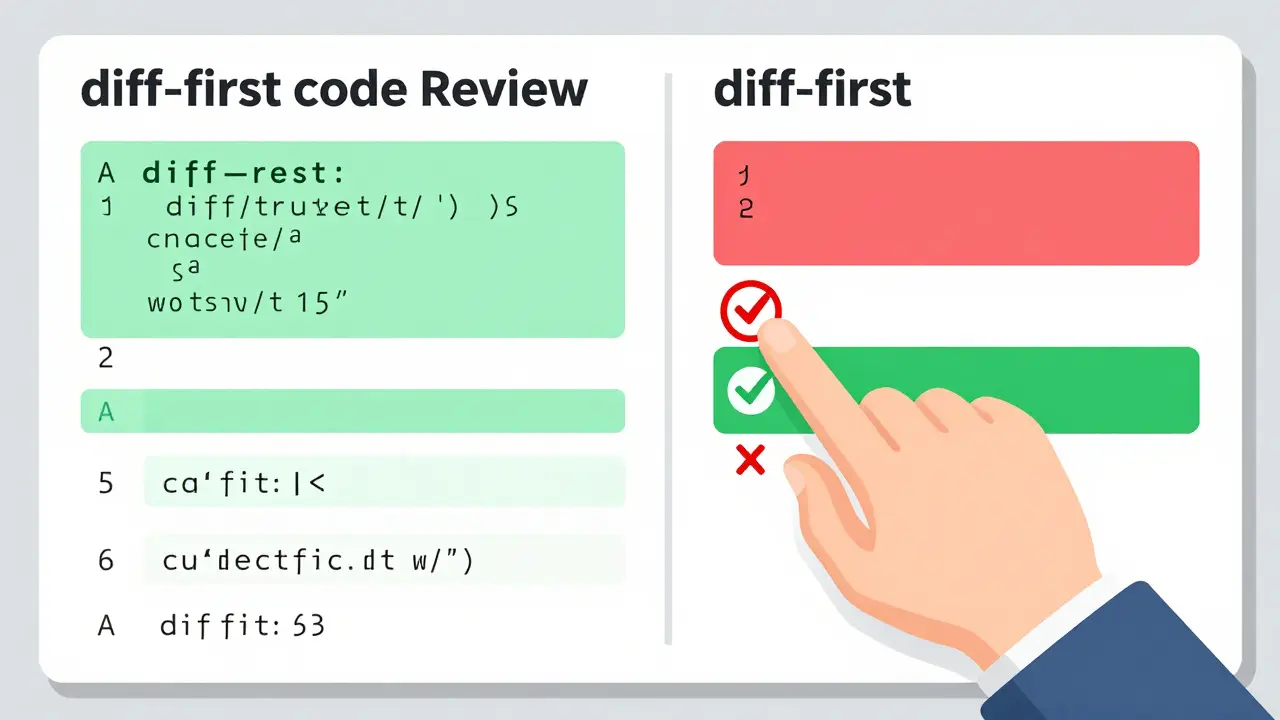
Reviewing code is where the "safe change" happens. In Replit, accepting or rejecting AI suggestions often feels like an all-or-nothing deal. It is fast and efficient for a small team building a MVP, but it lacks the precision required for high-stakes environments.
Cursor implements a diff-first workflow. This means you can review AI changes piece-by-piece. You can accept one line of a refactor and reject the next. This granularity is critical for fintech or healthcare companies where an unverified change could lead to a compliance failure. Furthermore, Cursor's AI can act as a reviewer, highlighting risky patterns in the code before it ever hits the main branch. It works within your existing guardrails rather than bypassing them.
Enterprise Governance and Security
Security needs change based on where the code lives. Because Replit is a managed platform, it handles secrets management and runtime environments centrally. This is a dream for educators-students can start pair programming in under 30 seconds without breaking their local OS. However, some enterprise security teams find this "black box" approach too permissive.
Cursor takes the opposite path. Since it runs locally, it integrates with your existing security toolchains. With the release of Cursor 1.7, the introduction of Hooks (beta) allows organizations to set org-wide policies. You can actually block certain AI commands or redact secrets from being sent to the model, giving the company a level of oversight that is mandatory for regulated industries.
Which One Should Your Team Pick?
The choice boils down to your primary goal. If you are in a classroom, running a hackathon, or building a prototype with a small, agile team, Replit is the clear winner. The ability to eliminate "onboarding friction" saves days of wasted time. You don't need to explain how to install a library or configure a database; you just share a link and start typing.
But if you are a senior developer at a company with an established CI/CD pipeline and a massive codebase, Cursor is the better tool. It doesn't try to replace your workflow; it enhances it. It respects the pull request and the audit trail, which are the bedrock of professional software engineering at scale.
Does Cursor have a real-time "Live Share" mode like Replit?
No, Cursor does not offer native real-time multiplayer co-editing. It relies on Git-based collaboration, meaning you push changes to a repository and your teammates review them via pull requests. This is intended to maintain a rigorous audit trail for professional development.
How does Replit handle environment setup for new team members?
Replit handles environment setup automatically in the cloud. When a new member joins via a Join Link, the dependencies, runtime, and database configurations are already provisioned, eliminating the need for manual local installation.
Is Cursor better for very large codebases?
Generally, yes. Cursor's local indexing system provides deeper codebase awareness across many files and dependencies compared to Replit, which can struggle with context limits in extremely large projects.
Can I implement company-wide AI policies in these tools?
Cursor provides a more robust framework for this through its "Hooks (beta)" feature, allowing organizations to audit usage and block specific commands. Replit Enterprise offers SSO and seat management, but Cursor is more geared toward granular runtime guardrails.
Which tool is better for teaching programming?
Replit is widely considered superior for education due to its zero-install, browser-based nature and instant multiplayer collaboration, allowing students to pair program immediately without configuration hurdles.
Elmer Burgos
April 4, 2026 AT 18:14honestly both have their place and its just about what works for the team vibe
Jason Townsend
April 6, 2026 AT 05:04cloud native just means your code is on their servers where they can feed it into the machine learning hive mind without you knowing
local indexing is the only way to actually keep a grip on your intellectual property before some corp entity decides to "update" your permissions
Angelina Jefary
April 7, 2026 AT 01:57Exactly. The "black box" approach isn't just permissive; it's a security nightmare waiting to happen. Also, the author's use of "isn't" in the first paragraph is grammatically clunky given the sentence structure, but the point stands. Keep your data local or prepare for the inevitable leak.
Jennifer Kaiser
April 8, 2026 AT 19:17We must consider the deeper implication of how these tools shape our cognitive approach to creation. By choosing a real-time multiplayer environment, we are essentially sacrificing the solitary reflection that allows a developer to truly inhabit their logic. The asynchronous nature of Git is not merely a "corporate requirement," but a psychological boundary that protects the integrity of the individual's thought process against the noise of immediate collaboration. It is a struggle between the collective impulse and the disciplined mind. When we prioritize speed over structure, we risk creating a generation of coders who can execute but cannot deeply contemplate the architecture of their own work. The friction of a pull request is where the actual growth happens because it forces a confrontation with one's own errors in a detached, objective space. Without that gap, we lose the meditative quality of engineering. We are essentially trading wisdom for velocity, and in the long run, that is a deficit that no AI can fill. True mastery requires the silence of a local environment and the slow burn of a peer review, not the chaotic energy of a shared cursor. We should be wary of any tool that makes the hard parts of thinking too easy.
Antwan Holder
April 10, 2026 AT 13:35My soul aches at the thought of this digital divide! We are merely puppets in a play where the script is written by silicon gods who feast on our productivity while we argue over the minutiae of a diff-first workflow! The tragedy of the modern developer is the illusion of choice between two different brands of the same golden cage!
TIARA SUKMA UTAMA
April 12, 2026 AT 10:23Do you use Cursor at home? I bet your home setup is messy.
Jasmine Oey
April 12, 2026 AT 15:37Oh honey, it's just so adorabel that people think local installs are still a thing in 2024
I only use the most expensiv tools because anything else is just... gauche. Replit is cute for litle babies and students, but for those of us with actual taste and high standards, the only way to work is with a perfectly curated local environment that reflects our superior intellect!