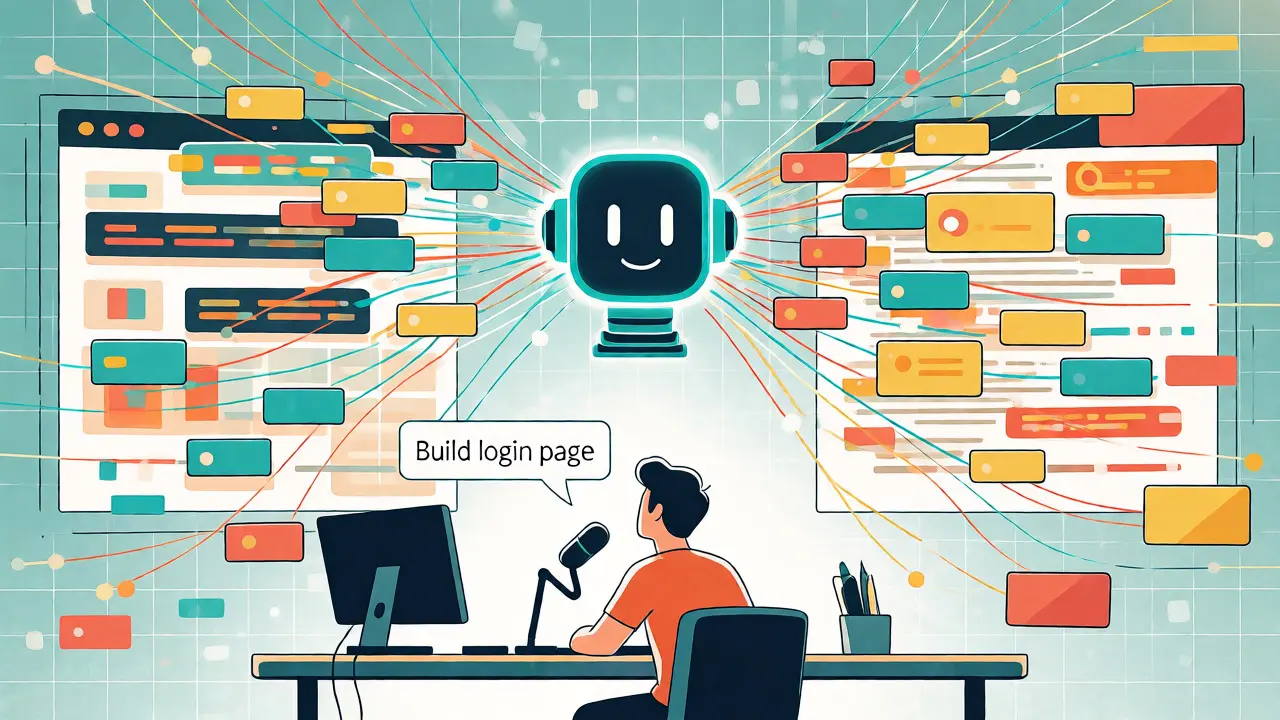
Imagine launching a startup where almost every line of code is written by an AI. Sounds like science fiction? For one-quarter of the startups in Y Combinator’s Winter 2025 batch, this is reality. Jared Friedman, a managing partner at the prestigious accelerator, revealed that 25% of these companies have codebases that are 95% AI-generated. This statistic isn't just a curiosity; it signals a massive shift in how software gets built. We are witnessing the rise of "vibe coding," a term coined by Andrej Karpathy in early 2025. But what does it actually mean for founders, developers, and the future of tech? Are we building robust products or fragile houses of cards?
What Exactly Is Vibe Coding?
Vibe coding is a software development paradigm where developers use natural language prompts to instruct Large Language Models (LLMs) to generate code, often accepting the output without deep structural review. Unlike traditional programming, where you write syntax line-by-line, vibe coding treats English as the primary interface. You describe what you want-"build a login page with OAuth"-and the AI spits out the React or Python code. Karpathy described this approach as fully giving in to the vibes, embracing exponential capabilities, and forgetting that the code even exists.
But here is the catch. Simon Willison, a prominent developer, draws a sharp line in the sand. If you read, test, and understand every line the AI produces, you aren’t vibe coding. You’re just using an advanced autocomplete tool. True vibe coding implies a level of trust-or perhaps negligence-where the human acts more like a product manager than an engineer. The goal is speed and iteration, not necessarily architectural purity. This distinction matters because it changes who can build software and how quickly they can do it.
The Y Combinator Adoption Surge
Why is this happening now? The technology finally caught up with the promise. In March 2025, Y Combinator leadership confirmed that a significant portion of their new cohort was relying heavily on AI for development. It wasn’t just a few experimental projects; it was institutional adoption. Garry Tan, CEO of Y Combinator, along with partners Harj Taggar and Diana Hu, discussed this trend openly, framing it as the future of startup execution.
This isn't about lazy developers cutting corners. It’s about resource allocation. Early-stage startups are desperate to ship MVPs (Minimum Viable Products). Hiring senior engineers is expensive and slow. Vibe coding allows a solo founder or a small team to prototype complex features in hours instead of weeks. The barrier to entry for technical execution has plummeted. If you can articulate your idea clearly, you can build it. This democratization of coding is reshaping the startup landscape, favoring those with strong product sense over those with deep syntactic knowledge.
Quality Concerns: The Hidden Costs of Speed
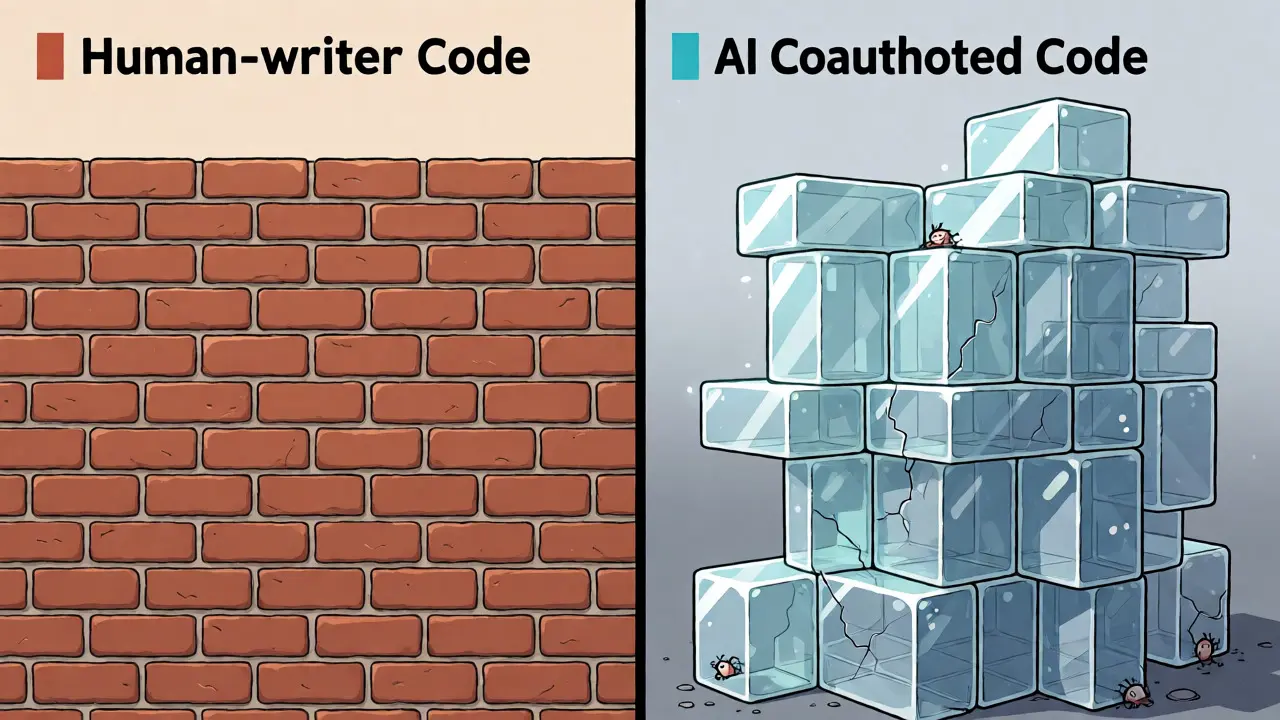
Speed comes at a price. A December 2025 analysis by CodeRabbit examined 470 open-source GitHub pull requests and found troubling patterns. Code co-authored by generative AI contained approximately 1.7 times more major issues compared to human-written code. These weren’t just typos. The study highlighted logic errors, incorrect dependencies, and flawed control flow occurring 75% more frequently in AI-generated segments.
| Metric | Human-Written Baseline | AI Co-authored Code | Difference |
|---|---|---|---|
| Major Issues Frequency | 1.0x | 1.7x | +70% |
| Security Vulnerabilities | 1.0x | 2.74x | +174% |
| Logic Errors & Control Flow | 1.0x | 1.75x | +75% |
| Readability & Formatting | High | Inconsistent | Naming errors common |
Most alarming is the security implication. Security vulnerabilities appeared 2.74 times more frequently in AI-generated code. Why? Because LLMs predict the next token based on probability, not security best practices. They might choose a convenient library that is vulnerable, or implement authentication in a way that looks correct but misses edge cases. For a fintech startup handling sensitive data, this is a nightmare scenario waiting to happen.
Scalability: When Prototypes Meet Production
Garry Tan raised a critical question during a panel discussion: What happens when a startup with 95% AI-generated code hits 100 million users? Does the product fall over? Current reasoning models struggle with debugging complex, large-scale systems. They are excellent at generating snippets but poor at understanding the holistic state of a massive codebase.
Developers on Hacker News reported that as codebases grow, the quality of AI output varies wildly. Simple tasks work great. Ask an AI to fix a Sequelize query, and it nails it. Ask it to refactor a complex `forwardRef` component in React, and it might insist on leaving bad code alone. The complexity of the prompt required to get useful results eventually exceeds the effort of writing the code manually. This is the "scaling wall." Vibe coding works beautifully for weekend projects and MVPs. It struggles when you need deep system integration, performance optimization, and long-term maintainability.
The Role of Human Taste and Judgment
Does this mean developers are obsolete? Not quite. Diana Hu, a general partner at Y Combinator, emphasized that "you have to have the taste and enough training to know that an LLM is spitting bad stuff or good stuff." This is the new core skill. Developers are shifting from writers to editors. They need to recognize subtle bugs, anticipate security risks, and judge architectural soundness.
Cognitive scientist Gary Marcus offers a skeptical view, arguing that AI doesn't solve novel problems; it remixes existing patterns. If your problem is unique, the AI might hallucinate a solution that sounds plausible but fails in practice. Therefore, foundational programming knowledge remains essential. You don't need to memorize every C++ pointer rule, but you do need to understand memory management, concurrency, and data structures to debug what the AI creates. The "taste" Hu mentions is essentially experience-based intuition that no current model possesses.
Ecosystem Impact: Homogenization of Software
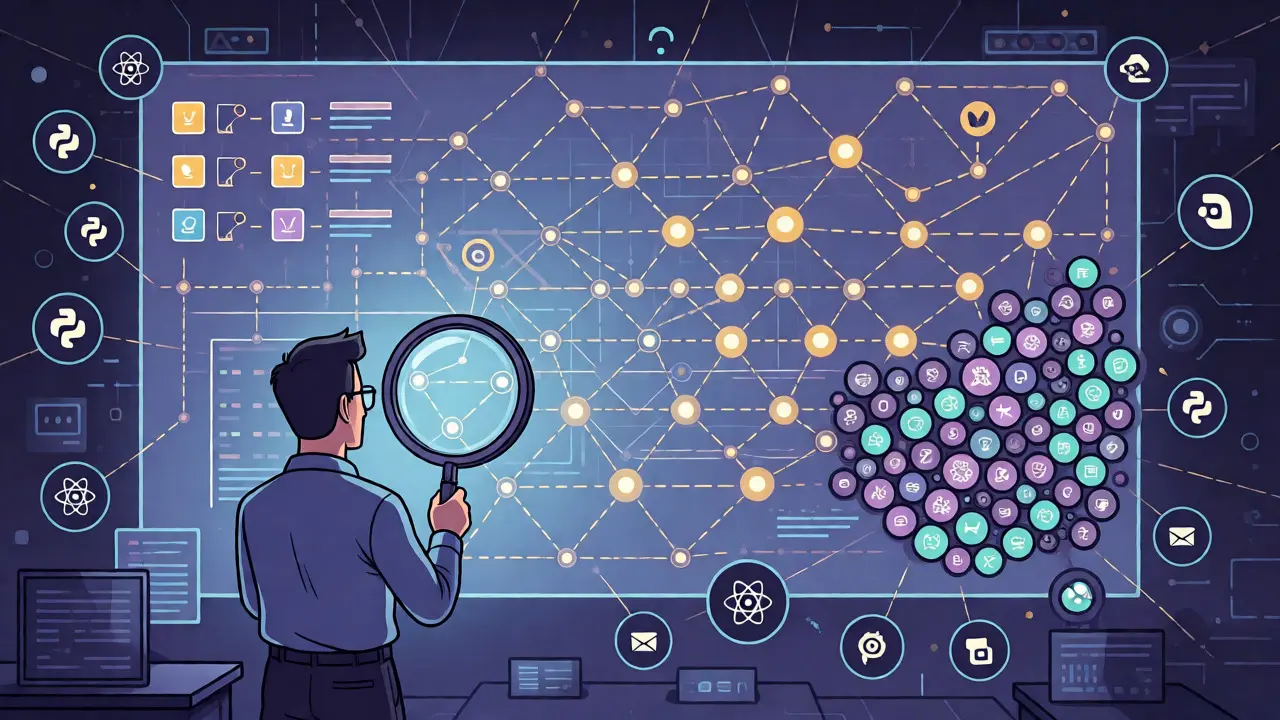
Beyond individual code quality, vibe coding affects the broader software ecosystem. Maya Posch noted a "homogenization" effect. LLMs are trained on popular libraries like React, Django, and Express. Consequently, AI tends to recommend these established tools, ignoring newer, potentially better alternatives. This reduces the organic selection process for open-source tools. New libraries struggle to gain traction because they aren't in the training data yet.
Furthermore, AI cannot submit bug reports. If a library has a quirk, a human developer notices it and files an issue. An AI just works around it silently. This reduces feedback loops to maintainers, potentially slowing down the improvement of the open-source ecosystem itself. We risk creating a monoculture of software stacks driven by what was popular five years ago, rather than what is optimal today.
Key Takeaways for Founders and Developers
- Use for Velocity, Not Stability: Leverage vibe coding for rapid prototyping and MVPs. Do not rely on it for mission-critical infrastructure without rigorous testing.
- Invest in Testing: Since AI introduces more bugs, automated test coverage becomes non-negotiable. You must verify behavior, not just structure.
- Hire for Debugging Skills: Look for engineers who excel at reading and fixing code, not just writing it from scratch. Troubleshooting skills are now more valuable than syntax memorization.
- Audit Security Regularly: Given the higher vulnerability rate, integrate security scanning into your CI/CD pipeline immediately. Do not assume AI-generated auth flows are secure.
- Refactor Aggressively: AI code can be messy. Schedule regular refactoring cycles to simplify logic and improve readability before technical debt accumulates.
Is vibe coding suitable for production environments?
It depends on the scale. For early-stage prototypes and low-risk features, yes. For high-stakes production systems with millions of users, current evidence suggests caution. Studies show higher rates of security vulnerabilities and logic errors, requiring extensive manual review and automated testing to ensure reliability.
Do I still need to know how to code if I use vibe coding?
Yes, absolutely. While you may write less syntax, you need deep conceptual understanding to debug, optimize, and secure the generated code. Experts argue that "taste" and the ability to judge code quality are critical skills that pure non-programmers lack.
How does vibe coding affect open-source software?
It leads to homogenization. LLMs favor popular, well-documented libraries present in their training data. This makes it harder for new or niche open-source tools to gain adoption, as developers default to the most statistically probable options rather than exploring innovative solutions.
What is the main difference between AI-assisted coding and vibe coding?
The key difference is comprehension. AI-assisted coding involves reviewing and understanding every line generated. Vibe coding accepts AI output with minimal review, prioritizing speed and functional results over structural correctness or deep understanding of the implementation details.
Can AI handle complex debugging tasks?
Current models struggle with complex debugging in large codebases. They excel at local fixes but lack the global context to understand systemic issues. As Y Combinator’s Garry Tan noted, first-generation reasoning models are not yet good at deep, multi-step debugging required for scaled products.