
Imagine a world where writing a performance review takes minutes instead of hours, and every employee has a clear, data-backed roadmap for their next promotion. That is not a distant dream; it is the reality for many organizations today. Generative AI is transforming human resources by automating complex tasks like drafting feedback and mapping career trajectories. According to the Lattice 2025 State of People Strategy Report, this technology has moved from experimental novelty to essential tool, with 68% of surveyed organizations now using it for performance reviews.
The shift is driven by large language models (LLMs) that can process vast amounts of structured and unstructured data. These systems analyze performance metrics, skills assessments, and even meeting notes to generate personalized insights. But how does this actually work in practice, and what does it mean for your career or your team?
How Generative AI Redefines Performance Reviews
Traditionally, performance reviews have been a source of stress for both managers and employees. Managers struggle to recall specific examples from months past, while employees often feel the feedback is biased or generic. Generative AI changes this dynamic by acting as an intelligent assistant that synthesizes data into coherent narratives.
Platforms like Lattice AI use features such as Performance Insights to draft reviews based on continuous feedback and project outcomes. This reduces the time spent on writing by 47%, according to Lattice’s 2025 case studies. More importantly, it increases employee satisfaction with the review process by 32%. Why? Because the AI helps ensure every employee receives fair, personalized feedback rather than vague generalizations.
| Metric | Traditional Process | AI-Assisted Process |
|---|---|---|
| Time to Write Review | Average 3 weeks | Average 4 days |
| Employee Satisfaction | Baseline | +32% increase |
| Rating Inflation | Common issue | -19% reduction |
The key benefit here is standardization. AI helps reduce rating inflation by 19% by ensuring managers apply consistent criteria across all employees. However, it is not a replacement for human judgment. As Josh Bersin noted in January 2026, AI handles the "complex, multi-step processes" but requires human oversight to address bias and maintain empathy.
Building Personalized Career Paths with AI
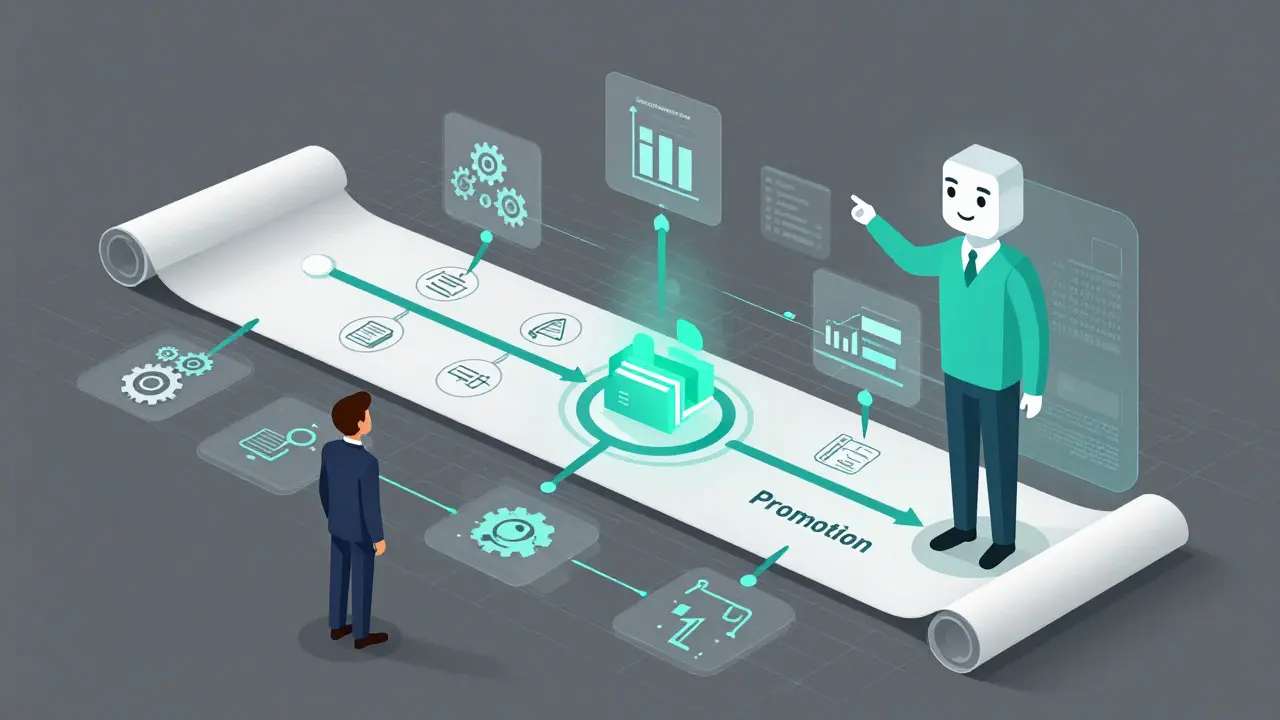
Career pathing has historically been a black box. Employees rarely know what skills they need for the next role, and managers often lack the bandwidth to guide everyone individually. Generative AI brings transparency and speed to this process.
Systems like Eightfold AI and Lattice’s Recommended Growth Plans analyze years of performance data, skills assessments, and internal mobility patterns. They identify skills gaps and suggest relevant internal opportunities 83% faster than manual methods, according to Assessio’s 2026 research. For example, if an employee shows strong leadership potential but lacks technical certification, the AI might recommend a specific training course and connect them with a mentor who has taken that path before.
This approach shifts HR from being a "data gatekeeper" to a strategic partner. By democratizing insights, AI allows managers to act on validated data rather than gut feelings. The result? A 27% increase in internal mobility within 12 months at one Fortune 500 tech company, as documented in Lattice’s January 2026 case study.
Key Players and Technologies in the Market
The market for generative AI in HR is growing rapidly, projected to triple from $2.1 billion in 2025 to $6.3 billion by 2030. Several key players are leading this charge:
- Lattice: Known for integrating performance data with career pathing through features like Performance Insights and Recommended Growth Plans.
- Eightfold AI: Focuses on skills intelligence, helping organizations map talent to future needs.
- The Hackett Group: Offers tools like ZBrain™ Builder and AI Hubble for workflow assessment and implementation support.
These platforms typically integrate with existing HRIS systems like Workday, SAP SuccessFactors, and Oracle HCM. Proper integration is crucial because the AI needs access to clean, structured data to generate accurate insights. Companies using modern cloud HRIS platforms report 30% faster adoption compared to those with legacy systems.
Challenges and Risks to Watch
Despite the benefits, implementing generative AI in HR is not without risks. One major concern is bias amplification. If historical performance data contains biases, the AI might replicate or even worsen them. HR Acuity’s 2026 analysis warns that without proper validation, these systems can create "unintended barriers to advancement" for underrepresented groups.
Data privacy is another critical issue. With regulations like the EU AI Act (effective February 2026) requiring transparency in AI-assisted decisions, companies must ensure compliance with GDPR and CCPA frameworks. This means implementing new validation protocols and maintaining human oversight for sensitive career discussions.
User feedback also highlights practical challenges. While 73% of Reddit users in r/humanresources praised AI for reducing manager bias, 27% complained about feedback feeling "impersonal." Technical glitches during high-volume review periods are also common. To mitigate these issues, successful organizations dedicate 20+ hours to customizing AI models to their specific competency frameworks.
Implementation Best Practices
So, how do you get started? AIHR’s January 2026 research suggests investing 8-12 weeks in preparation before full deployment. Here are some steps to follow:
- Assess Your Data: Ensure your HRIS data is clean and comprehensive. Garbage in, garbage out applies heavily to AI.
- Train Your Team: HR professionals need new skills, including prompt engineering for HR contexts (rated essential by 82% of leaders) and data literacy.
- Pilot Small: Start with a single department or function, such as performance reviews, before expanding to career pathing.
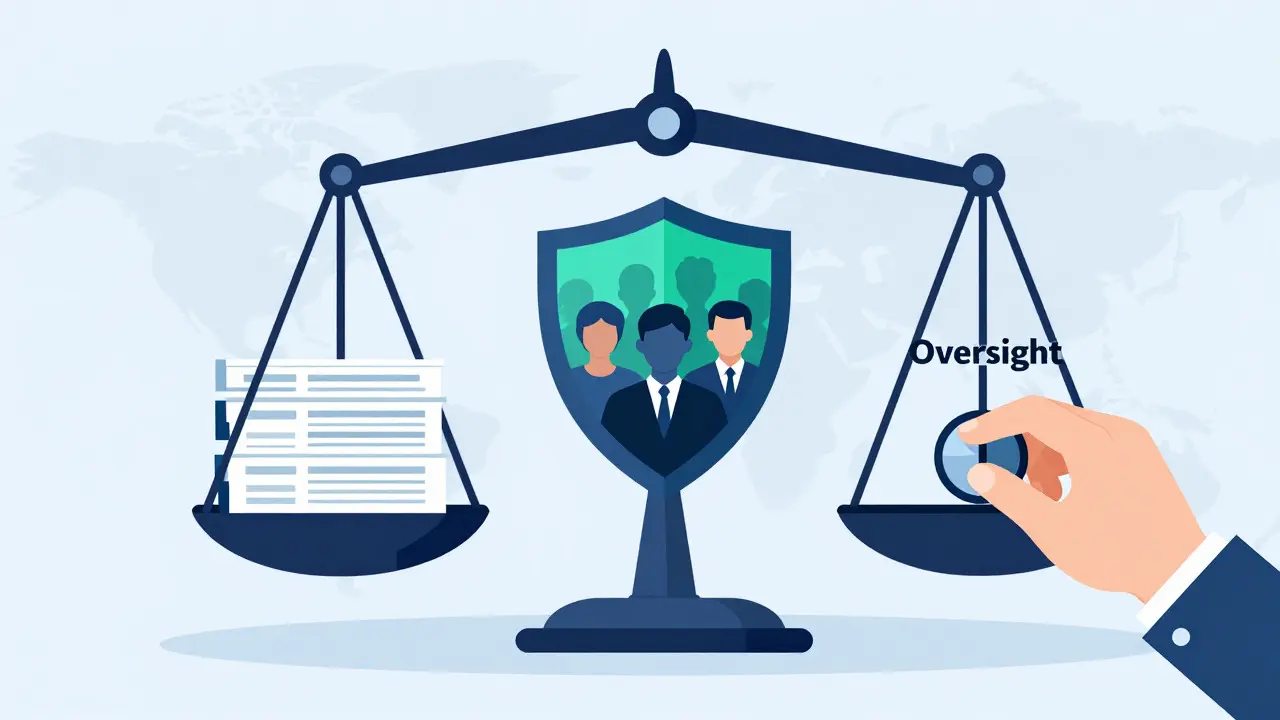
- Maintain Human Oversight: Use AI as a drafting tool, not a decision-maker. Managers should always review and personalize AI-generated feedback.
Change management is equally important. Address employee concerns about privacy and fairness upfront. Transparency builds trust, which is essential for adoption.
The Future of AI in HR
Looking ahead, the trend is toward "secure AI agents" that fuse predictive analytics with human empathy. Gartner forecasts that by 2028, 75% of performance review feedback will be AI-assisted but human-validated. This shift will likely increase HR salaries due to the need for specialized oversight roles, contrary to fears that AI will eliminate jobs.
As Natalie Kroll emphasized in her January 2026 analysis, the real advantage lies not in replacing people, but in empowering them with intelligent systems that enhance empathy, equity, and agility. By leveraging generative AI effectively, organizations can create more equitable, data-informed career development pathways that drive business performance.
Is generative AI replacing HR professionals?
No, it is augmenting them. While AI automates tactical tasks like drafting reviews, it creates demand for specialized roles focused on oversight, bias mitigation, and strategic people science. Josh Bersin notes that HR salaries may actually rise due to the need for these higher-value skills.
How much does it cost to implement generative AI in HR?
Costs vary widely depending on the platform and organization size. The overall market is projected to reach $6.3 billion by 2030. Implementation timelines average 14 weeks for mid-sized organizations, with costs covering software licenses, integration with HRIS, and training. Expect significant ROI through reduced review cycle times and increased internal mobility.
What are the biggest risks of using AI for performance reviews?
The primary risks are bias amplification and data privacy violations. If historical data contains biases, AI may replicate them. Additionally, regulations like the EU AI Act require transparency in AI-assisted decisions. Mitigation involves rigorous validation protocols, human oversight, and regular audits of AI outputs.
Which platforms are best for AI-driven career pathing?
Leading platforms include Lattice (with Recommended Growth Plans), Eightfold AI (skills intelligence), and solutions from The Hackett Group. Choice depends on your existing HRIS (e.g., Workday, SAP) and specific needs. Lattice excels in integrating performance data with career pathing, while Eightfold focuses on deep skills mapping.
How long does it take to see results from AI in HR?
Organizations typically invest 8-12 weeks in preparation before full deployment. Once live, improvements in review cycle time (from 3 weeks to 4 days) and internal mobility (up to 27% increase) can be seen within the first year. Success correlates strongly with dedicating time to customize AI models to specific competency frameworks.