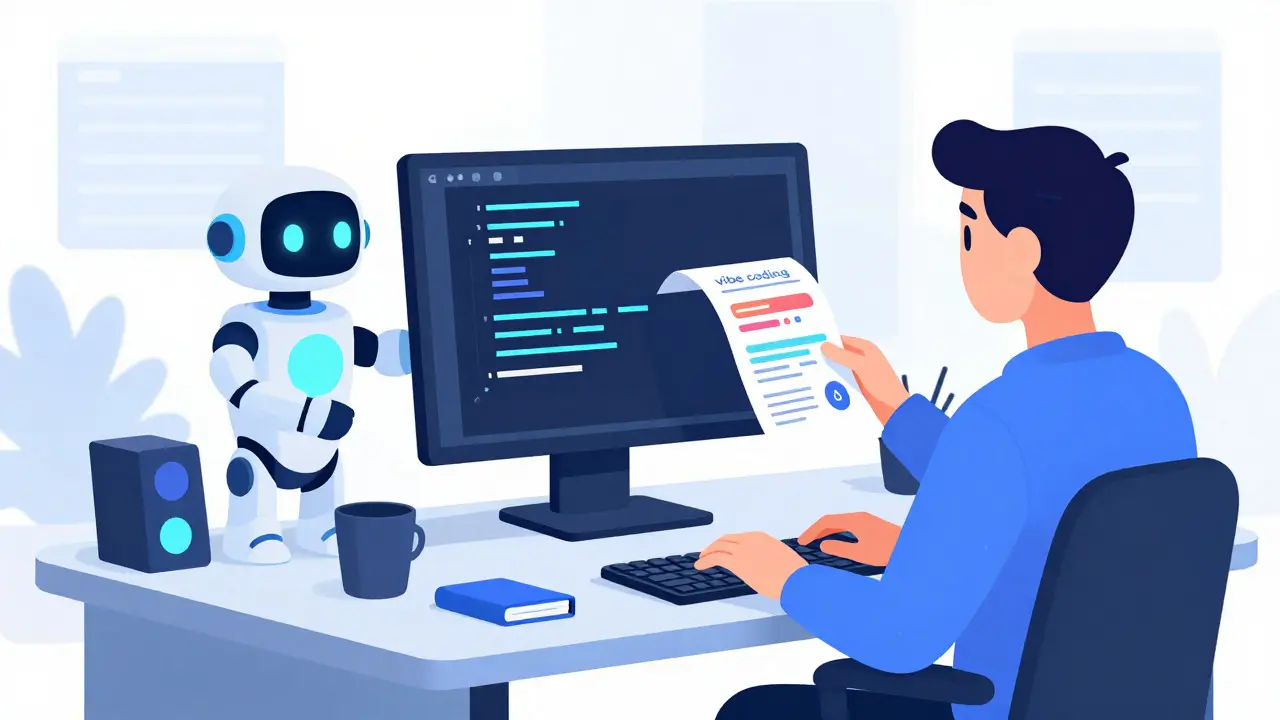
You describe an app idea to a chatbot. Within minutes, you have a working prototype. This is vibe coding, a term popularized by computer scientist Andrej Karpathy in February 2025. It represents a massive shift in how software is built, moving from manual syntax writing to natural language prompting. But while the technical barrier has vanished, the legal landscape remains murky. Who owns the code? Is it even copyrightable? What happens when your AI-generated app infringes on someone else’s patent?
If you are building products using this method, you cannot just focus on the user interface. You need to understand the underlying intellectual property (IP) rights. The law has not caught up with the speed of large language models (LLMs), but courts and regulators are starting to make moves. Here is what you need to know to protect your business today.
The Copyright Conundrum: Can You Own AI-Generated Code?
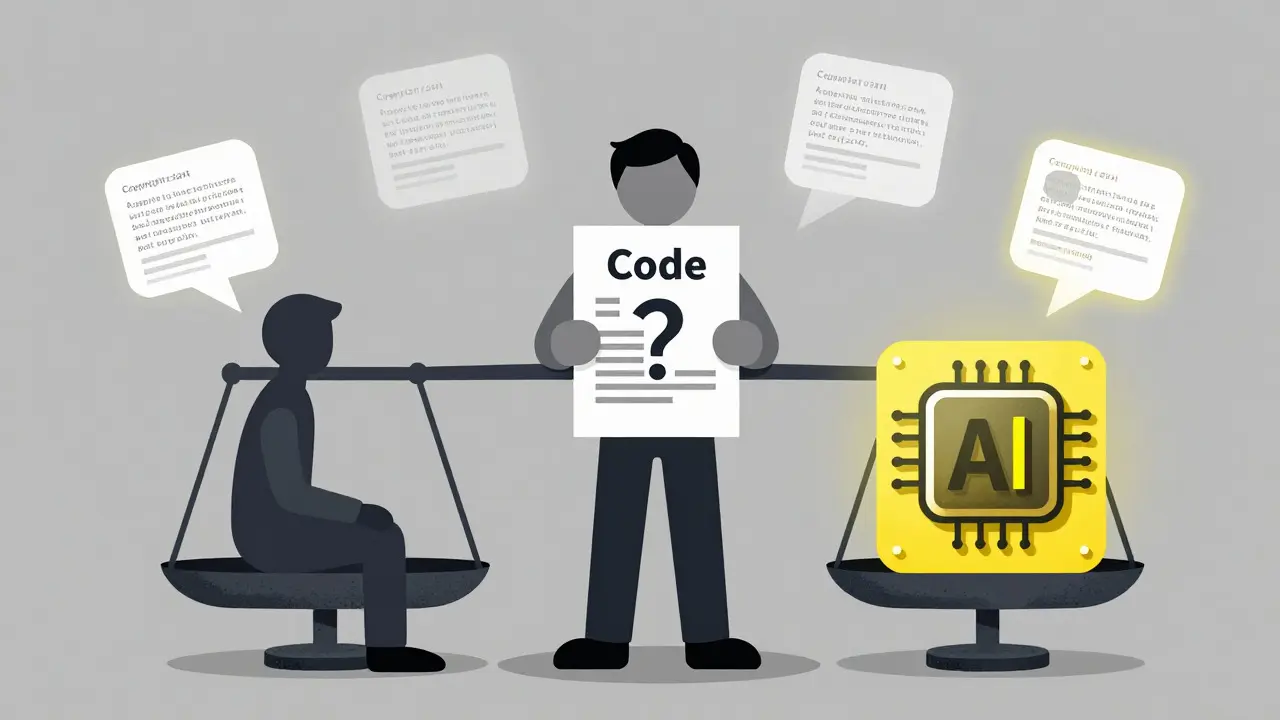
The most immediate question for any founder is simple: Do I own what the AI wrote? The short answer, based on current precedents in the United States and many other jurisdictions, is often no-not entirely.
Copyright law generally requires human authorship. In the landmark case Thaler v. Perlmutter, the U.S. Court of Appeals for the Federal Circuit upheld that works created solely by artificial intelligence without human creative control are not eligible for copyright protection. This logic applies to text, images, and increasingly, source code.
When you use tools like GitHub Copilot, Cursor, or Replit Agent, you are engaging in a collaborative process. If you merely type "build me a todo list" and hit enter, the resulting code might lack the necessary human creativity for copyright protection. However, if you iteratively refine prompts, select specific outputs, modify the structure, and integrate components into a larger system, you build a stronger case for owning the compilation or the unique human contributions within the codebase.
This creates a risky middle ground. Your competitors could theoretically copy your vibe-coded app, run it through their own LLMs, and create a similar product without infringing on your copyright, because the core code itself might be considered public domain material due to its non-human origin.
Licensing Traps: The Open Source Ghost in the Machine
Even if you establish some level of ownership over your application’s structure, the individual lines of code generated by AI come with baggage. Most modern coding assistants are trained on vast datasets scraped from the internet, including millions of open-source repositories.
Here is the danger: An LLM might regurgitate code snippets that are subject to copyleft licenses, such as the GNU General Public License (GPL). If your AI-generated app includes GPL-licensed code, you may be legally required to release your entire proprietary application’s source code under the same license. This is known as "license contamination" or "viral licensing."
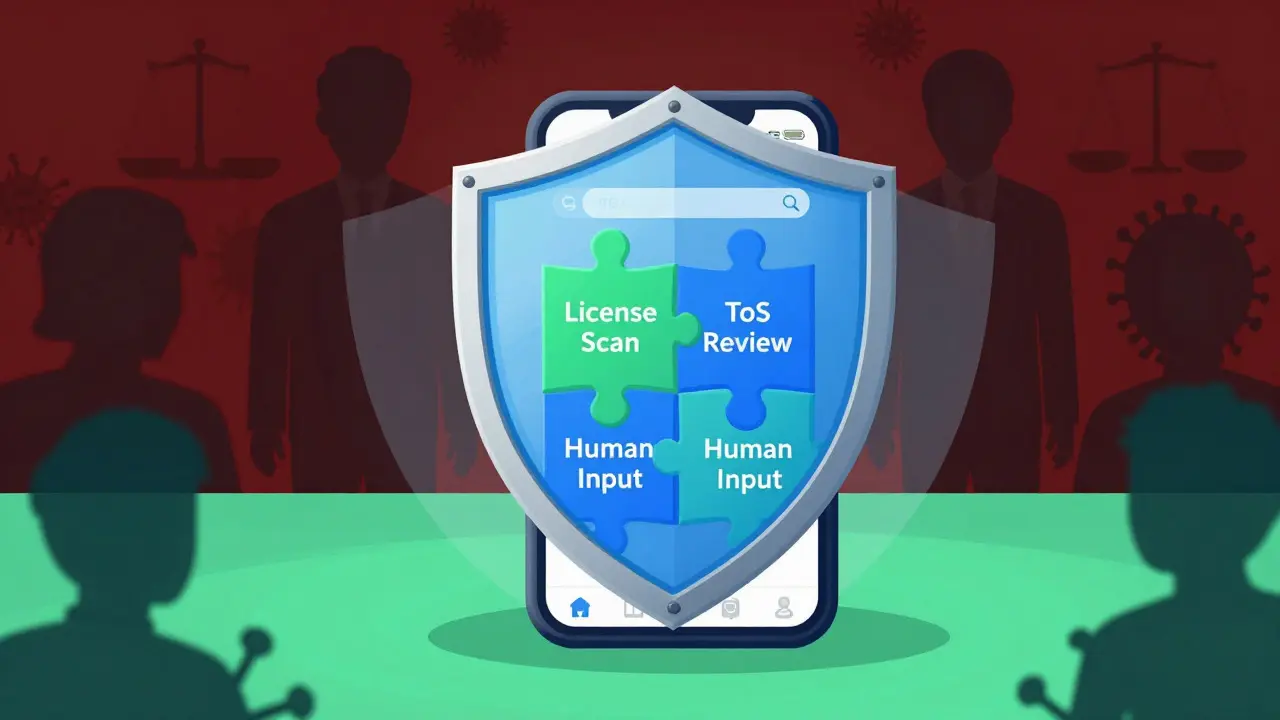
Unlike traditional developers who manually import libraries and check licenses, vibe coders often rely on the AI to fetch dependencies automatically. You might not see the license header in the generated output. To mitigate this, you must treat AI-generated code as potentially licensed material until proven otherwise. Use static analysis tools to scan your final repository for known open-source strings and verify compliance before deployment.
Terms of Service: Who Actually Holds the Keys?
Before worrying about federal copyright law, look at the contract you signed with the tool provider. The Terms of Service (ToS) dictate your initial rights to the output.
| Platform | User Ownership of Output | Key Restrictions |
|---|---|---|
| GitHub Copilot | Yes, users own commercial rights | Must comply with underlying open-source licenses; Microsoft retains broad usage data rights |
| OpenAI Codex / GPT-4 | Yes, users own outputs | Subject to acceptable use policies; no guarantee of non-infringement |
| Anthropic Claude | Yes, users own outputs | Users bear responsibility for ensuring outputs do not infringe third-party IP |
| Replit Agent | Yes, for paid plans | Free tiers may have more restrictive sharing or attribution requirements |
Note that while these platforms grant you ownership, they rarely indemnify you against third-party claims. If a developer sues you claiming your vibe-coded app stole their algorithm, the AI provider will likely point to your ToS agreement stating you are responsible for the final product.
Patent Risks and Trade Secrets
Copyright protects expression; patents protect function. If your vibe-coded app introduces a novel, useful, and non-obvious process, you might want to patent it. However, patent offices require detailed disclosure of the invention. Explaining that "an AI agent built this via prompt X" is rarely sufficient. You must demonstrate human ingenuity in the design architecture.
More critically, consider trade secrets. When you paste proprietary business logic into a public LLM interface to generate code, you risk leaking sensitive information. Many enterprise-grade AI coding tools now offer private instances where data is not used for training, but free-tier consumer tools often retain logs. Always sanitize inputs. Never feed customer data, secret algorithms, or unreleased feature specs into a generic public model unless you have verified the data privacy policy explicitly excludes training usage.
Jurisdictional Differences: Global Implications
IP law is not universal. While the U.S. leans heavily toward requiring human authorship, other regions are experimenting with different frameworks. The European Union’s recent AI Act focuses more on transparency and liability than strict ownership definitions, but national laws vary. In some Asian jurisdictions, there is ongoing debate about whether the person who curated the prompt holds derivative rights. If you plan to launch globally, assume the strictest standard applies: treat AI-generated code as having weak IP protection and rely on contractual agreements with clients and partners to define ownership rather than statutory copyright alone.
Practical Steps for Protecting Your Vibe-Coded App
To navigate this complex terrain, adopt a proactive legal strategy alongside your development workflow:
- Document Human Contribution: Keep records of your prompts, iterations, and manual edits. Show that you exercised creative control over the selection, coordination, and arrangement of the code.
- Scan for Licenses: Integrate automated scanning tools into your CI/CD pipeline to detect open-source license headers in generated files.
- Review ToS Regularly: AI providers update their terms frequently. A change in ownership clauses can impact your existing projects.
- Use Enterprise Plans: If IP security is critical, pay for plans that guarantee data privacy and clear commercial ownership rights.
- Consult Legal Counsel: For high-stakes applications, hire an attorney specializing in technology law to draft custom IP assignment agreements with contractors and clarify your ownership stance.
Vibe coding democratizes development, but it does not democratize legal safety. By understanding the nuances of copyright, licensing, and ownership, you can build innovative apps without exposing yourself to unnecessary litigation risks.
Can I copyright an app built entirely with AI?
Generally, no. Current U.S. law requires human authorship for copyright protection. If an AI generates the code without significant human creative input, the code itself may fall into the public domain. However, you may copyright the unique human modifications, structure, and compilation of the code.
Does GitHub Copilot own my code?
No. According to GitHub’s Terms of Service, users retain commercial ownership of the code suggestions they accept and integrate into their projects. However, you must still ensure the code does not violate third-party open-source licenses.
What is the risk of GPL contamination in vibe coding?
If an AI generates code snippets that are identical to GPL-licensed open-source code, your entire proprietary project may become subject to the GPL license. This forces you to release your source code publicly. Scanning tools are essential to prevent this.
Is my data safe when using free AI coding tools?
Not necessarily. Free tiers of many AI coding assistants may use your input data to train future models. For sensitive intellectual property, always use enterprise or private instances that guarantee data isolation and no-training policies.
Who is liable if my AI-coded app infringes a patent?
You are. AI providers typically disclaim liability for infringement in their Terms of Service. As the deployer of the software, you bear the responsibility for ensuring your product does not violate existing patents or copyrights.