
Imagine an AI that doesn't just guess, but actually knows when it's guessing. For most of us, the biggest frustration with Large Language Models is the "hallucination"-that moment where the AI sounds incredibly confident while being completely wrong. The root of this problem is a lack of Post-Training Calibration is the process of adjusting a model's output distributions so its predicted probability of correctness matches the actual likelihood of being right . If a model says it is 80% sure about an answer, it should be correct exactly 80% of the time. When it isn't, we have a calibration problem.
Most of the focus in AI development goes into the massive pretraining phase, but the real polish happens during post-training. This is where we move beyond simple next-token prediction and start teaching the model how to be honest about its own limitations. By implementing calibration and abstention, we can move toward systems that simply say "I don't know" instead of making up a fake legal precedent or a non-existent historical date.
The Mechanics of Confidence and Abstention
When we talk about Post-Training Calibration, we are essentially trying to solve the gap between accuracy and confidence. A model can be accurate but overconfident, or accurate but timid. Neither is ideal for production environments. Abstention is the logical next step: it's the model's ability to refuse to answer when its confidence score falls below a certain threshold.
There are two main ways researchers currently tackle this. First, some use an external approach by training a separate, smaller neural network. This auxiliary model looks at the input, the LLM's proposed output, and the internal activations of the model's hidden layers to predict if the answer is likely correct. It's like having a supervisor double-checking the work of a junior employee.
The second method is more introspective. Here, the LLM is queried directly to assess its own confidence. While this seems simpler, it's often harder because models tend to "double down" on their mistakes. To make this work, developers often use specialized prompting or a secondary pass where the model evaluates its own reasoning chain before committing to a final answer.
How Calibration Fits Into the Post-Training Pipeline
Calibration doesn't happen in a vacuum; it's part of a broader pipeline that transforms a raw base model into a reliable product. Typically, this starts with Supervised Fine-Tuning (SFT) is a process where a model is trained on a curated dataset of high-quality prompt-response pairs to learn specific task formats . Once the model knows how to answer, we use alignment techniques to ensure those answers are safe and helpful.
One of the most common alignment methods is Reinforcement Learning from Human Feedback (RLHF) is a post-training technique that uses human rankings of model outputs to train a reward model, which then optimizes the LLM via algorithms like PPO . While RLHF is great for steering behavior, it can actually hurt calibration. This is because the model learns to provide the answer the human *prefers* rather than the one that is mathematically most likely to be true. This leads to "reward hacking," where the model sounds plausible even when it's wrong.
To fix this, newer methods like ORPO (Odds Ratio Preference Optimization) is a streamlined preference optimization method that combines task accuracy and alignment into a single loss function, removing the need for a separate reward model are being used. By simplifying the objective, ORPO can sometimes maintain better factual grounding and calibration than traditional RLHF pipelines.
| Method | Primary Goal | Impact on Calibration | Complexity |
|---|---|---|---|
| SFT | Task Adaptation | Neutral/Low | Low |
| RLHF | Human Alignment | Can increase overconfidence | High |
| ORPO | Preference Steering | Better factual stability | Medium |
| Calibration | Confidence Accuracy | Directly improves reliability | Medium |

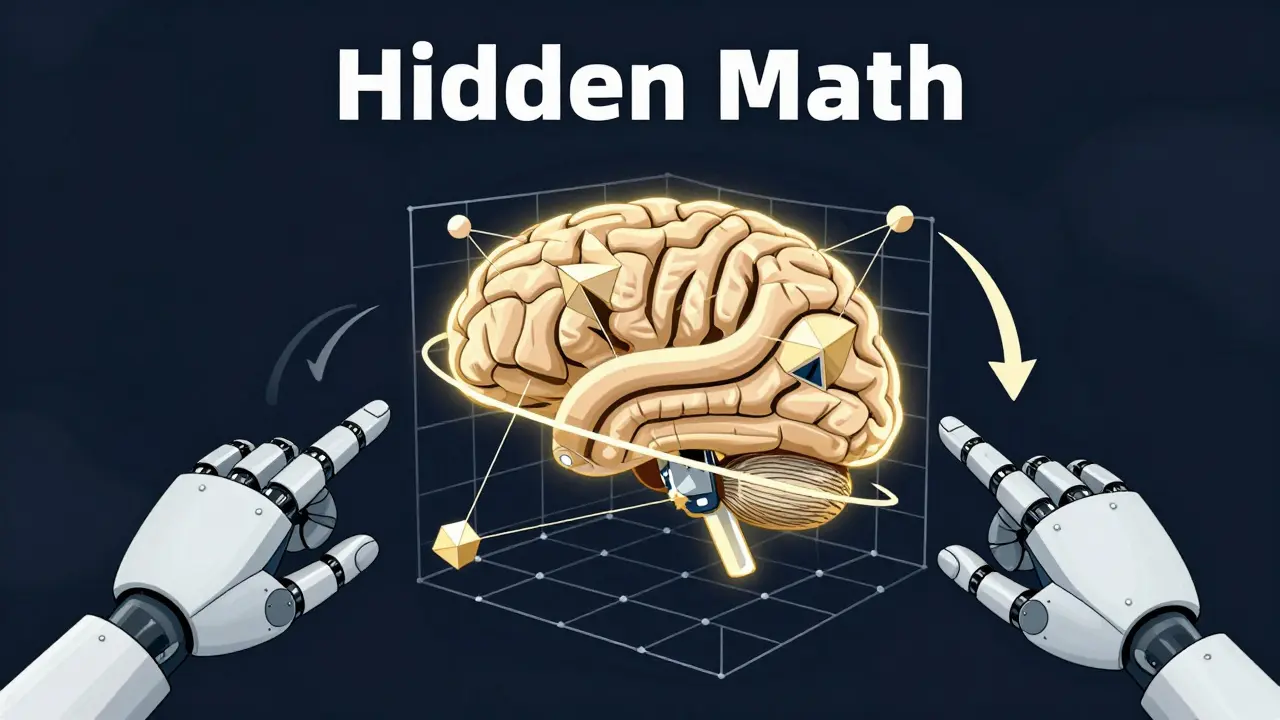
The Hidden Math: SVD and Parameter Rotation
If you peel back the layers, calibration is more than just "tuning a dial." Recent research using Singular Value Decomposition (SVD) is a matrix factorization method used to analyze the linear layers of a neural network by breaking them into singular values and vectors reveals something fascinating. Post-training doesn't actually rewrite the model's brain; instead, it reparameterizes the existing space.
When we calibrate a model, we see two things happen in the math. First, there's a geometric scaling of singular values across layers, which acts similarly to adjusting the temperature of the model to sharpen or flatten the probability distribution. Second, and more importantly, there's a coordinated rotation of singular vectors. This orthogonal transformation is the "secret sauce" that allows a model to refine its knowledge without forgetting everything it learned during pretraining.
This is why we see "catastrophic forgetting" when fine-tuning goes wrong. If the orthogonal consistency of these transformations is disrupted, the model's performance collapses. Successful calibration maintains this structural integrity while nudging the model toward a more honest representation of its own uncertainty.
Calibration in the Context of Quantization
For those deploying models on the edge (like on a phone or a laptop), calibration takes on a different meaning during Post-Training Quantization (PTQ) is the process of converting model weights from high-precision floating-point numbers to lower-precision integers to reduce memory and latency . To shrink a model without breaking it, you need to know the dynamic range of the activations.
A basic approach is min-max calibration, where you run a few samples through the model to see the highest and lowest values. But this is risky because a single outlier can skew the entire scale, leading to massive accuracy drops. This is why advanced techniques have emerged:
- SmoothQuant is a technique that migrates the quantization difficulty from activations to weights by smoothing out outliers .
- AWQ (Activation-aware Weight Quantization) is a method that protects the most important weights by scaling them based on the observed activation ranges .
In these cases, calibration is about mathematical range rather than confidence, but both are essential for a model that behaves predictably in the real world.
The Human Side of Uncertainty
Even a perfectly calibrated model can fail if the human using it doesn't understand what "70% confidence" means. People are notoriously bad at processing risk and probability. If a model says, "I am 60% sure this is the correct medication dosage," a tired doctor might interpret that as "it's probably right," while another might see it as "too risky to trust."
This means the technical work of calibration must be paired with smart UI/UX design. Instead of just showing a percentage, some systems use linguistic markers (e.g., "Very likely" vs "Possibly") or visual cues. The goal is to trigger the user's critical thinking and encourage them to verify the output when the model's internal calibration signals uncertainty.
What is the difference between accuracy and calibration?
Accuracy is simply how often the model is correct. Calibration is whether the model's confidence matches that accuracy. A model could be 90% accurate but 100% confident in every answer; that model is accurate but poorly calibrated. A well-calibrated model would be 90% confident when it's right and significantly less confident when it's wrong.
Does RLHF make models more or less calibrated?
Often, RLHF makes models less calibrated. Because RLHF rewards models for producing answers that humans like, the model may learn to sound authoritative and confident even when the facts are shaky, a phenomenon closely linked to reward hacking.
How does abstention help prevent hallucinations?
Abstention is the act of the model refusing to answer. By setting a confidence threshold (e.g., only answer if confidence > 80%), you can effectively eliminate most hallucinations, though this comes at the cost of the model being less "helpful" by admitting it doesn't know.
What is a calibration dataset?
A calibration dataset is a small, representative set of examples (often 128 to 512 samples) used during post-training or quantization to observe how the model behaves and to set scaling factors or confidence thresholds without needing the full training set.
Can you calibrate a model without retraining it?
Yes. You can use "test-time calibration" or "temperature scaling," which adjusts the final output probabilities (logits) using a scalar value to better align the confidence scores with actual accuracy.
Next Steps for Implementation
If you're building a production LLM app, don't just trust the raw output. Start by implementing a confidence score using an auxiliary model or a self-reflection prompt. Set a conservative abstention threshold and monitor your "refusal rate" versus your "hallucination rate." For those deploying on limited hardware, prioritize AWQ or SmoothQuant over basic min-max quantization to ensure that your precision loss doesn't destroy the model's remaining calibration.
Ian Cassidy
April 16, 2026 AT 10:35SVD rotations are the real MVP here. Just tweaking logits via temp scaling is a band-aid, but actual parameter rotation is where the magic happens to stop catastrophic forgetting during the post-train phase.
Zach Beggs
April 16, 2026 AT 20:04I definitely agree that moving toward a system that admits when it's guessing is the right move for production. It's a much better user experience than getting a confident lie.
Kenny Stockman
April 17, 2026 AT 12:15Nice breakdown of the whole pipeline. It's a bit of a journey from SFT to ORPO, but it's cool to see how the math actually supports the vibe of the model's honesty.
Antonio Hunter
April 18, 2026 AT 12:02It is quite fascinating to consider how the intersection of mathematical range calibration in quantization and confidence calibration in post-training essentially serve the same master, which is the predictability of the system, and while it might seem redundant to some, the nuances of how AWQ protects those specific weights while maintaining the overall distribution is really the key to making this work on edge devices without a total collapse in reasoning capabilities.
Paritosh Bhagat
April 19, 2026 AT 09:37It is truly a shame that some people struggle with basic grammar in these technical fields, though I must say the explanation of the reward model is quite helpful for those who might not have the intellectual fortitude to grasp it on their own. I am just trying to help everyone be a bit more precise with their language for the sake of the community!
Aaron Elliott
April 20, 2026 AT 01:08One must concede that the notion of a model "knowing" its own ignorance is a mere anthropomorphic projection; in reality, we are simply observing a stochastic process whose output probability is being shifted by a linear transformation. To suggest the model possesses a form of honesty is philosophically naive, as it is merely a mathematical alignment of distributions.
Chris Heffron
April 21, 2026 AT 03:20The comparison table is super helpful for keeping the different methods straight :)
Adrienne Temple
April 22, 2026 AT 13:34I wonder how this works with different model sizes! Does a tiny model calibrate as well as a giant one? 🧐 It seems like the bigger they are, the more they might just double down on mistakes because they've seen so much data. Using a separate supervisor model sounds like a really smart way to handle that! ✨
Sandy Dog
April 23, 2026 AT 21:46OMG the part about the tired doctor is literally my nightmare!! 😱 Imagine the absolute chaos if a model is just "60% sure" and someone actually trusts it with a medical dosage, I cannot even wrap my head around how scary that is and why the UI/UX needs to be like, actually intuitive so people don't accidentally end up in the ER because of a badly calibrated LLM!! 😭😭