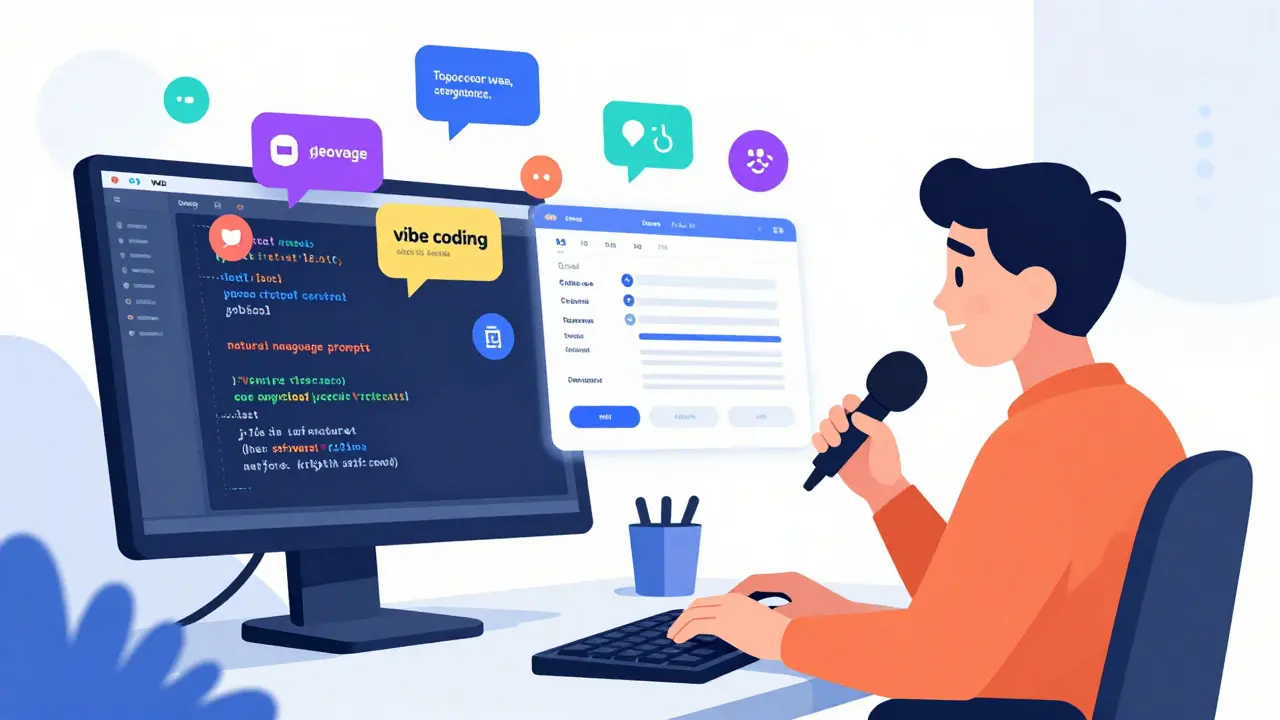
Imagine building a working web application without writing a single line of syntax. You just describe what you want in plain English, watch the code appear, and run it. This is vibe coding, a term coined by Andrej Karpathy in February 2025 to describe a new paradigm where developers interact with AI through natural language prompts rather than manual typing. While the concept sounds like magic, the industry is flooded with exaggerated claims and deep-seated skepticism. Is this the death of traditional programming, or just another overhyped trend that will fade away? The reality lies somewhere in the middle, defined by specific use cases, technical constraints, and a fundamental shift in how we view software creation.
The Origin and Core Definition
To understand the hype, we first need to look at the source. Karpathy, a prominent figure in the AI community, described vibe coding as a state where you "fully give in to the vibes, embrace exponentials, and forget that the code even exists." He noted that it isn't really coding in the traditional sense; instead, you see stuff, say stuff, run stuff, and copy-paste stuff, and it mostly works. Red Hat Developer expands on this, defining it as the practice of building software by conversing with AI rather than writing every line yourself. The developer describes the desired outcome in plain English, and the AI agent generates the underlying code. The focus shifts from syntax and structure to the running system itself. This approach aims to democratize software creation, allowing product managers, designers, and domain experts to turn business needs directly into working applications without needing deep expertise in specific programming languages.
Myth 1: Vibe Coding Is Lazy Programming
A persistent misconception is that vibe coding represents lazy programming. Critics argue that if you aren't typing out the logic, you aren't truly understanding the problem. However, this view fundamentally misunderstands the goal of software development. Software projects are ultimately about learning business needs and automating solutions to solve real problems. Code is merely the automated representation of that learning. If you truly understand what needs to be done, the code is secondary to getting the requirements right. Vibe coding extends the automation developers have always embraced. It allows people to focus on work that genuinely requires human insight rather than boilerplate code writing. By removing the friction of syntax, the barrier to entry drops, but the intellectual rigor required to define the problem remains high.

Myth 2: It Will Replace Skilled Developers
Another major myth is that vibe coding will replace skilled developers. The data suggests the opposite. Rather than replacing experienced engineers, it expands who can participate in software creation while making those experienced developers more valuable. AI tools function as force multipliers, not replacements. The critical factor for success is human technical knowledge. Without it, the AI output is often unusable. Technical knowledge determines effectiveness in three key areas: guiding the AI with precise terminology, validating the output for correctness and efficiency, and optimizing solutions based on domain understanding. For example, one developer built a Network Monitor project using AI. The AI helped build it quickly, but the developer's knowledge of Rust, GTK4, and system programming enabled significant optimization when migrating from Python to Rust. The actual magic in vibe coding lies in knowing exactly what you want and expressing it clearly enough that even the AI cannot misinterpret it.
Where Vibe Coding Excels and Where It Fails
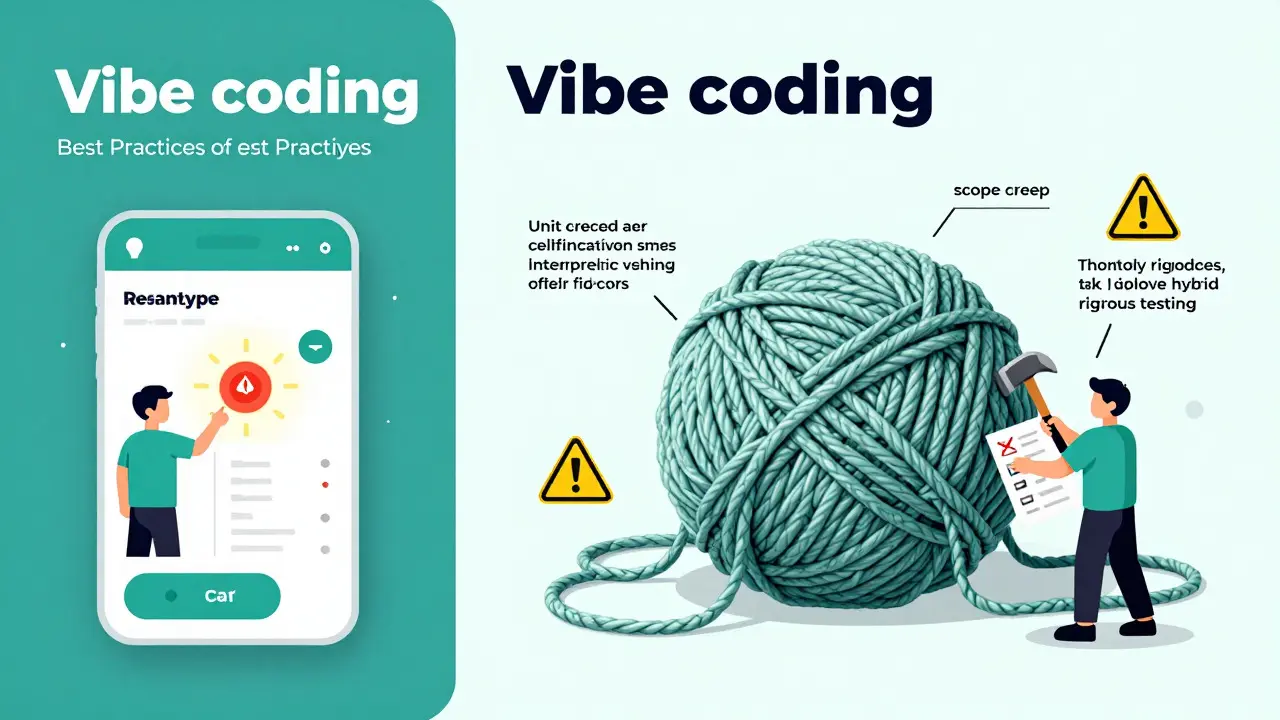
Vibe coding is not a one-size-fits-all solution. It excels in specific scenarios, particularly for quick prototypes, flashcard apps, and landing pages. According to Red Hat Developer, developers can go from idea to working code in minutes. One developer reported creating five concepts and three minimum viable products (MVPs) in just a few months using only prompts. However, there are defined limitations. Vibe coding belongs at the unit level, where developers can write unit or functional tests to validate the output. For larger scope work, specifications are necessary. This prevents the "whack-a-mole trap," where each piece must be verified in isolation before joining the larger system. When you vibe code, instructions become obsolete the moment code is generated. The code itself becomes the only source of truth for system behavior. Therefore, rigorous testing practices and clear specifications for components beyond the unit level are essential for maintaining quality.
| Feature | Traditional Coding | Vibe Coding |
|---|---|---|
| Primary Input | Syntax and Logic | Natural Language Prompts |
| Focus Area | Code Structure and Efficiency | Running System and Business Value |
| Best For | Complex Systems and Large Scale Apps | Prototypes, MVPs, and Unit Level Tasks |
| Required Skill | Deep Language Expertise | Domain Knowledge and Clear Communication |
| Risk Profile | Slow Iteration Speed | Unverified Output and Scope Creep |
The Role of AI Tools and Benchmarks
The effectiveness of vibe coding depends heavily on the AI tool used. According to the Gosu benchmark, Claude Code currently appears to be the best option for vibe coding, though alternatives are not far behind. The choice of tool matters, but it is less important than the user's ability to guide the process. AI coding agents are becoming sophisticated, capable of handling complex tasks like database integration and API calls. However, they still require human oversight. The tools act as accelerators, reducing the time spent on repetitive tasks. This allows teams to prioritize value delivery over code quality in certain contexts. Businesses are increasingly adopting this philosophy, recognizing that the speed of iteration and the ability to test ideas quickly outweigh the perfection of the underlying code structure in early stages.
Practical Tips for Effective Vibe Coding
If you want to adopt vibe coding, start small. Use it for unit-level tasks where you can easily verify the output. Write unit or functional tests to validate the AI's work. Do not rely solely on the AI's confidence; check the results. Keep your specifications clear and concise. Avoid vague prompts that leave room for interpretation. Remember that the code is the source of truth once generated. Review the generated code regularly to ensure it aligns with your architectural goals. Combine vibe coding with rigorous testing practices. This hybrid approach allows you to benefit from the speed of AI while maintaining the reliability of traditional engineering standards. As the technology evolves, the line between traditional coding and vibe coding will blur further, but the core principle remains: human insight drives the value, and AI provides the leverage.
Who coined the term vibe coding?
The term was coined by Andrej Karpathy in February 2025. He used it to describe a new kind of coding where developers fully give in to the vibes and forget that the code even exists.
Is vibe coding suitable for large-scale enterprise applications?
It is generally recommended for unit-level tasks and prototypes. For large-scale systems, clear specifications and rigorous testing are necessary to avoid the whack-a-mole trap where isolated pieces fail to integrate properly.
Does vibe coding require knowing how to code?
While non-programmers can use it, technical knowledge significantly increases effectiveness. Understanding the domain, being able to validate output, and guiding the AI with precise terminology are crucial for successful outcomes.
What is the best AI tool for vibe coding according to benchmarks?
According to the Gosu benchmark, Claude Code is currently considered the best option for vibe coding, although other alternatives are close behind in performance.
How does vibe coding change the role of a software developer?
It elevates the developer's role from writing code to defining problems and validating solutions. Developers become architects and validators, using AI as a force multiplier to accelerate development cycles.
Iva Grekova
August 18, 2026 AT 23:00I think the biggest myth here is that it replaces thinking. It just moves the thinking up the stack.
You still need to know what you want, but you don't have to wrestle with semicolons at 2am.
Onyinyechi Nwosu
August 19, 2026 AT 01:40finally someone saying it out loud
i used this for a small side project last week and it felt like cheating but in a good way
Chandan Singh
August 19, 2026 AT 19:33To be fair, if you can't read the code the AI spits out, you're not really an engineer, you're a prompt operator. The article glosses over the fact that 'vibe coding' often leads to spaghetti logic that no human can maintain six months later. It's fine for throwaway scripts, but calling it a 'paradigm shift' is doing a lot of heavy lifting for what is essentially autocomplete on steroids.
Brannen Hall
August 21, 2026 AT 04:38Oh great, another take that says we should all stop learning how things work under the hood. I'm sure my production database won't crash because the LLM decided to optimize away a crucial index. Vibe coding is just lazy engineering with a marketing budget behind it.
tiffany King
August 22, 2026 AT 12:31I love the energy here! Honestly, for non-technical folks trying to build MVPs, this is a game changer. You don't need to become a senior dev overnight, you just need to learn how to talk to the machine clearly. The barrier to entry dropping is a beautiful thing for innovation.
Brenna Gonedrman
August 22, 2026 AT 17:31The 'whack-a-mole trap' phrase stuck with me. It’s like building a house where every brick is placed by a different person who only sees their own square inch. Without a blueprint (spec), the whole structure feels wobbly. But for sketching out the vibe? Absolutely essential.
Courtney Wagstaff
August 23, 2026 AT 00:52Wait so basically we are all just directors now instead of actors?? This is huge. Stop worrying about the syntax and start focusing on the story. If the code works and the user is happy, who cares if the variable names are weird? Let the vibes flow people!
Elisabeth Ballet
August 23, 2026 AT 08:43Let's get one thing straight: this isn't about replacing developers, it's about empowering them to do less busywork. I've seen teams use these tools to cut sprint times in half while actually improving code quality because they spend more time reviewing logic than typing boilerplate. Don't let the fear of change blind you to the efficiency gains. Embrace the hybrid model, test rigorously, and watch your velocity skyrocket. The future isn't coming, it's already here and it's faster than you think.