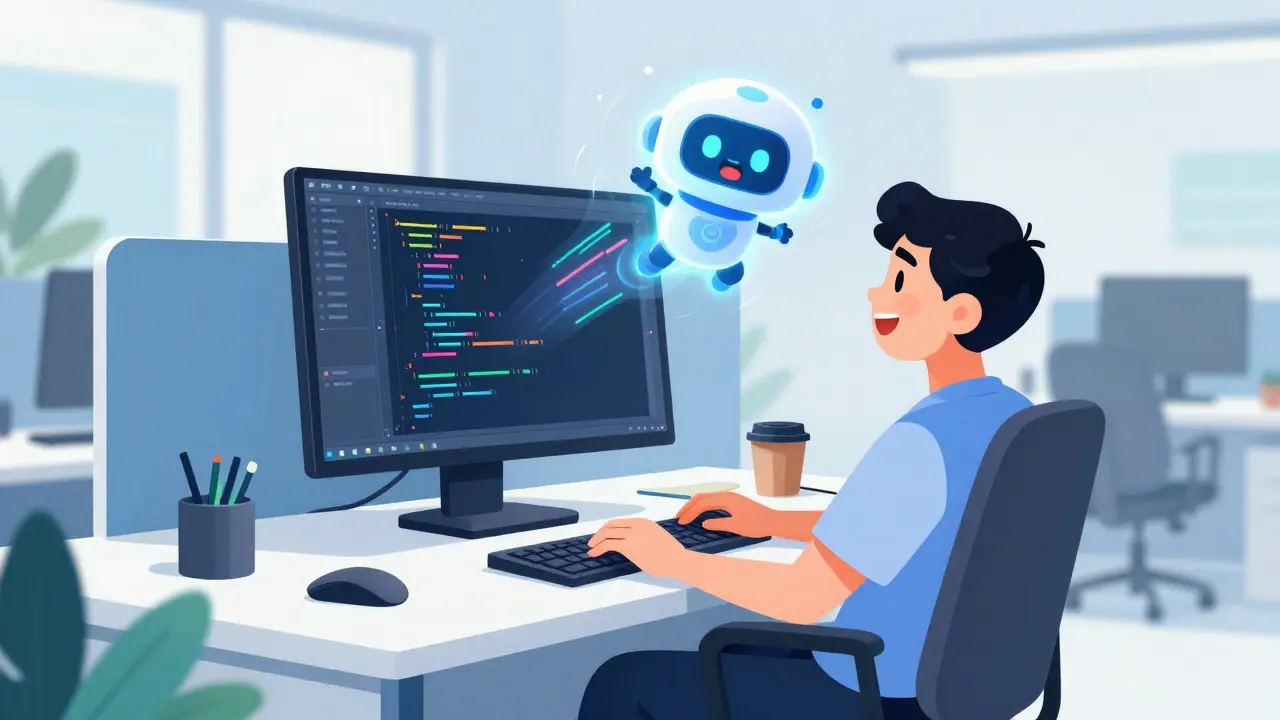
Imagine a junior developer on your team who can build a full-stack application in an afternoon. Sounds like a dream, right? Now imagine that same developer accidentally embedding your Stripe API keys into client-side JavaScript because the AI tool suggested it as the "easiest" way to connect payment processing. This isn't a hypothetical nightmare scenario-it's happening now. As Vibe Coding is an emerging AI-assisted programming methodology where developers describe software requirements in natural language, and large language models (LLMs) generate corresponding code moves from a niche experiment to a mainstream development workflow, the lack of clear boundaries is becoming a critical business risk.
The speed at which teams are adopting these tools has outpaced their ability to govern them. According to Gartner, while only 28% of enterprises had formal AI coding policies in early 2025, that number is projected to hit 70% by 2026. The gap between adoption and governance is where vulnerabilities hide. If you are leading a technical team or responsible for software security, you cannot rely on hope or individual discipline alone. You need a policy framework that defines exactly what is allowed, what needs strict limits, and what must be prohibited outright.
Defining the Boundaries: The Core Principles of Vibe Coding Governance
Before diving into specific rules, we need to establish the philosophical foundation of your policy. Uncontrolled AI code generation creates what industry experts call the "Wild West" scenario-a chaotic environment where security, maintainability, and intellectual property rights are compromised. Effective governance relies on five core principles derived from frameworks like the Vibe Programming Framework is a comprehensive system for leveraging AI code generation responsibly, addressing key challenges through standardized prompt engineering, verification protocols, and security-first approaches.
- Augmentation, Not Replacement: AI should enhance developer capabilities, not replace critical thinking. Your policy must mandate that developers understand every line of code they deploy, even if they didn't type it.
- Verification Before Trust: Never assume AI output is correct. Verification is a mandatory step, not an optional best practice.
- Maintainability First: Code generated for speed often sacrifices readability. Policies must enforce standards that ensure future developers can read and modify the code.
- Security by Design: Security considerations must be explicitly addressed in prompts and reviews from the start, not patched in later.
- Knowledge Preservation: Documentation is non-negotiable. If the AI disappears tomorrow, your team must still know how the system works.
These principles shift the narrative from "how fast can we build?" to "how safely and sustainably can we build?" They provide the context for the specific allow, limit, and prohibit rules that follow.
What to Allow: Empowering Developers with Safe Tools
Governance shouldn't mean stifling innovation. There are many areas where AI-assisted coding provides massive value with minimal risk. Allowing these practices encourages adoption while keeping the team productive.
Boilerplate and Scaffolding Generation Allow developers to use AI for generating repetitive code structures, such as CRUD operations, basic UI components, and configuration files. These tasks are low-risk and high-value. For example, using an LLM to generate a standard React component structure or a Python data model saves hours of manual typing without introducing complex logic errors.
Natural Language to Code Translation for Simple Logic Permit the translation of straightforward business rules into code. If a requirement is "calculate tax based on state," allowing AI to write that function is efficient. However, this allowance comes with a caveat: the complexity must remain low. Simple conditional statements and arithmetic operations are safe; complex algorithmic logic is not.
Documentation and Commenting Encourage the use of AI to draft documentation, commit messages, and inline comments. This supports the "Knowledge Preservation" principle. When developers use AI to explain *why* a piece of code exists, it bridges the gap between rapid generation and long-term maintainability. Tools that automatically generate JSDoc or Swagger definitions from code are particularly valuable here.
Testing Skeletons Allow AI to generate unit test skeletons and mock data structures. While the actual test assertions might need human refinement, having the boilerplate for tests ready significantly increases the likelihood that developers will actually write tests. This aligns with the goal of improving quality without slowing down the initial development phase.

What to Limit: Controlling Risk Through Constraints
This is the most critical section of any Vibe Coding policy. "Limiting" means allowing the behavior but imposing strict constraints, review processes, or technical guardrails. These are the areas where good intentions often lead to bad outcomes.
| Area | Constraint/Limit | Rationale |
|---|---|---|
| Code Complexity | Max 150 lines per component/function | Prevents unmanageable spaghetti code; ensures human readability (Darren Coxon's Golden Rules). |
| Review Depth | 15-20 minutes review per 100 lines | Balances productivity gains with necessary security verification. |
| External Dependencies | Only approved libraries via private registry | Prevents supply chain attacks from unknown or malicious npm/pip packages. |
| Data Handling | No PII in prompts; synthetic data only | Protects customer privacy and complies with GDPR/CCPA regulations. |
Complexity and File Length As recommended by experts like Darren Coxon in his "Golden Rules of Full Stack Vibe Coding," you must impose hard limits on file size. A common rule is no more than 150 lines per component. Why? Because AI tends to over-complicate solutions when pushed too far. Long, monolithic files generated by AI are difficult for humans to debug and audit. By limiting length, you force modular design, which is inherently safer and easier to maintain.
Human-in-the-Loop Review Time You cannot just say "review the code." You must quantify it. The Vibe Programming Framework suggests dedicating 15-20 minutes of focused review for every 100 lines of AI-generated code. This metric helps managers allocate resources realistically. It acknowledges that reviewing AI code takes time-often more time than writing it from scratch initially-but pays off in reduced bug-fixing costs later.
Third-Party Library Usage AI models are trained on public repositories, meaning they often suggest popular but potentially vulnerable libraries. Limit AI suggestions to a pre-approved list of dependencies hosted in your organization's private package registry. This prevents "dependency confusion" attacks and ensures that every library used has been vetted for security and license compliance.
Prompt Engineering Standards Limit how developers interact with the AI. Require the use of standardized prompt templates that include security instructions. For instance, every prompt should implicitly or explicitly ask the AI to "avoid hardcoded secrets" and "include input validation." The Cloud Security Alliance emphasizes that security considerations must be part of the prompt itself, not just the review process.
What to Prohibit: Hard Lines for Security and Compliance
Some actions are simply too risky to allow under any circumstances. These prohibitions protect your organization from catastrophic security breaches, legal liabilities, and operational failures.
Hardcoded Secrets and Credentials This is the number one prohibition. Never allow API keys, passwords, database credentials, or encryption keys to be hardcoded in source code. Replit's Security Checklist for Vibe Coding explicitly states: "No secrets in local storage or client-side code." Even if the AI suggests it as a quick fix, it must be rejected. Use environment variables or dedicated secret management services like AWS Secrets Manager or HashiCorp Vault instead.
Client-Side Storage of Sensitive Data Prohibit storing sensitive information in browser-based storage mechanisms like LocalStorage, SessionStorage, or cookies without proper security attributes (HttpOnly, Secure, SameSite). Attackers can easily access these via Cross-Site Scripting (XSS) attacks. If a developer asks the AI to "save the user token in localStorage," the answer must be no.
Wildcard CORS Configurations Never allow the use of wildcard (`*`) settings for Cross-Origin Resource Sharing (CORS). This opens your API to requests from any domain, making it vulnerable to CSRF attacks. Configure CORS to restrict access to trusted domains only. The Cloud Security Alliance lists this as a critical technical specification for secure Vibe Coding.
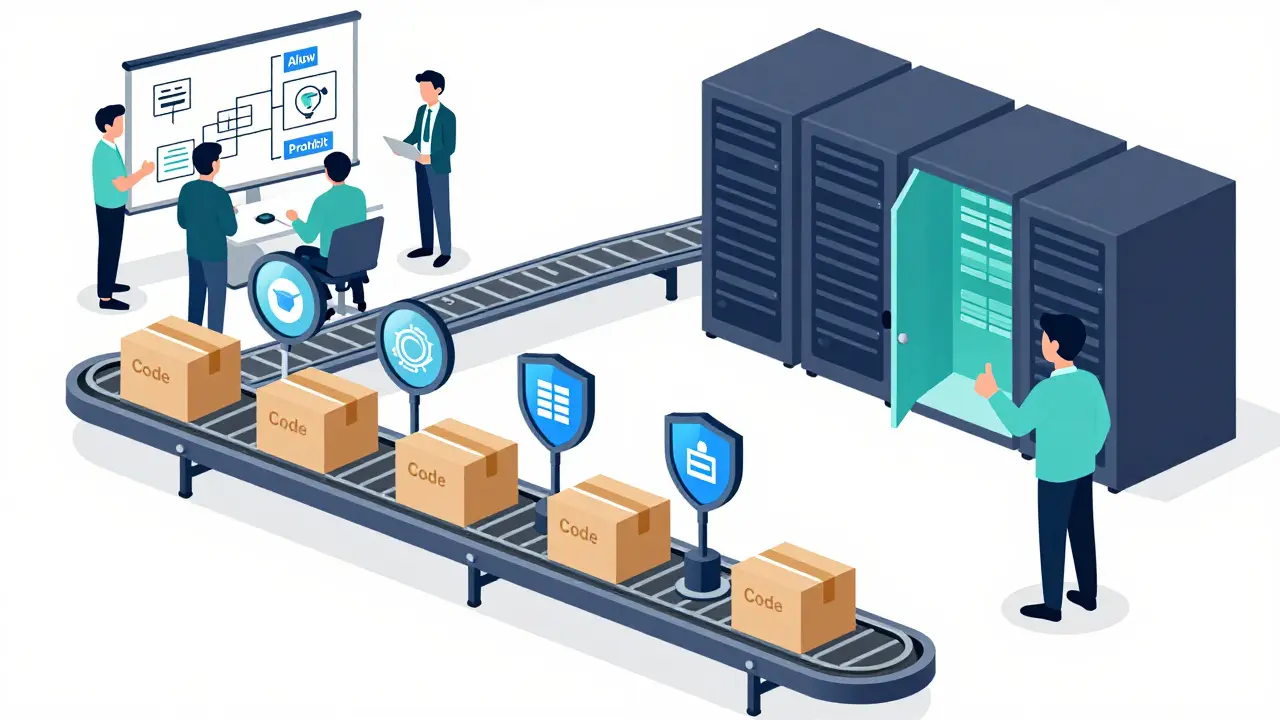
Unverified Production Deployment Prohibit deploying AI-generated code to production without passing through automated security scanning and human review. The "Verification Before Trust" principle means that code goes nowhere until it has been validated. Automated tools should scan for OWASP Top 10 vulnerabilities, including SQL injection and XSS, before the code is even considered for merge.
Using Real Customer Data in Prompts Strictly prohibit pasting real Personally Identifiable Information (PII) or proprietary business data into AI chat interfaces. Most commercial LLM providers retain training data, which could lead to accidental data leakage. Use synthetic data or anonymized datasets for all testing and prompting activities.
Implementing the Policy: From Theory to Practice
Writing the policy is easy; enforcing it is hard. To make these rules stick, you need structural changes in your development workflow.
Establish an AI Center of Excellence (CoE) For larger organizations, Superblocks recommends creating a cross-functional committee or CoE. This group defines the standards, selects the tools, and updates the policies as technology evolves. They act as the "single pane of glass" for governance, ensuring consistency across different teams.
Integrate Security Scanning into CI/CD Manual reviews are prone to fatigue. Automate what you can. Integrate static application security testing (SAST) tools into your Continuous Integration/Continuous Deployment (CI/CD) pipeline. These tools should automatically flag AI-generated code that contains known vulnerability patterns. If the scan fails, the build fails. This removes the burden from individual developers and enforces the "Prohibit" rules technically.
Training and Onboarding Don't expect developers to know these rules intuitively. Invest in 30-40 hours of training per developer, covering security fundamentals, AI limitations, and your specific policy guidelines. Teach them how to spot hallucinations in code and how to verify AI output effectively. The Vibe Framework notes that teams with proper training experience 42% fewer knowledge gaps during transitions.
Pilot in Low-Risk Environments Start small. Pilot your Vibe Coding policy in a non-critical project first. Identify friction points, adjust your limits, and refine your review processes before scaling to production systems. This iterative approach allows you to learn without risking core business operations.
Conclusion: Moving Fast with Control
Vibe Coding is not about replacing developers; it's about amplifying their potential. But amplification requires direction. Without clear policies on what to allow, limit, and prohibit, you risk trading speed for security and maintainability. By implementing a structured governance framework rooted in verification, security-by-design, and human oversight, you can harness the power of AI while protecting your organization from its pitfalls. The goal is not to slow down development, but to ensure that every line of code-human or machine-written-is secure, understandable, and sustainable.
What is Vibe Coding?
Vibe Coding is an AI-assisted programming methodology where developers describe software requirements in natural language, and Large Language Models (LLMs) generate the corresponding code. It shifts the developer's role from typing syntax to defining intent and verifying output.
Why do I need a Vibe Coding policy?
Without a policy, AI-generated code can introduce severe security vulnerabilities, such as hardcoded secrets and SQL injection flaws. Studies show that up to 37% of AI-generated code may contain security issues. A policy ensures verification, maintains code quality, and protects against legal and compliance risks.
Can I use AI to generate code for production applications?
Yes, but only if you implement strict governance. This includes mandatory human review, automated security scanning, and adherence to coding standards like maximum file lengths. Never deploy AI-generated code without verifying its security and functionality.
What are the biggest security risks of Vibe Coding?
The top risks include hardcoded credentials, insecure data storage (like using LocalStorage for tokens), wildcard CORS configurations, and the inclusion of vulnerable third-party libraries. Additionally, there is a risk of "hallucinated" code that looks correct but contains logical flaws or backdoors.
How much time should I spend reviewing AI-generated code?
A recommended benchmark is 15-20 minutes of dedicated review for every 100 lines of AI-generated code. This ensures thorough verification without completely negating the productivity benefits of using AI assistance.
Is it safe to paste my company's code into public AI tools?
Generally, no. Many public AI tools retain data for training purposes. To protect intellectual property and customer data, use enterprise-grade AI solutions with data privacy guarantees, or strictly use synthetic/anonymized data for all prompts.
om gman
June 21, 2026 AT 19:13oh look another corporate memo trying to tell us how to code like we dont already know better lol. you guys are so obsessed with control it makes me sick. the 'wild west' narrative is just fear-mongering for people who cant keep up with ai speed. honestly its pathetic that you need a 20 page policy to stop juniors from messing up. maybe if you hired competent devs instead of relying on crutches this wouldnt be an issue but sure lets pretend your bureaucracy fixes everything. typical.
Caitlin Donehue
June 22, 2026 AT 15:30i actually find this really interesting because i work in fintech and weve seen exactly what happens when you let juniors run wild with vibe coding without guardrails. one guy tried to generate a payment processor integration and nearly leaked our entire user database because he pasted real transaction logs into the prompt context window just to get a better example response. it was terrifying watching him realize his mistake after the fact. i think the part about synthetic data is crucial and something most teams ignore until they get burned hard by compliance audits later on.
Bineesh Mathew
June 22, 2026 AT 16:40the moral decay of software engineering is palpable here. we have traded craftsmanship for convenience and now we stand amidst the ruins of our own hubris wondering why the foundations are crumbling. this 'vibe coding' is merely the digital manifestation of laziness disguised as innovation. it is not about efficiency it is about the erosion of human agency in the creative process. when we allow machines to dictate the syntax of our logic we surrender the very essence of what it means to build. the prohibition against hardcoded secrets is not just a technical rule it is a spiritual imperative to maintain integrity in a chaotic world. we must resist the siren song of easy code or face the abyss of unmaintainable spaghetti nightmares.
Oskar Falkenberg
June 24, 2026 AT 03:52hey there! i totally agree with a lot of this stuff especially the bit about review times. ive been working in devops for years and seeing how fast these tools move is crazy but also kinda scary. i think the 15-20 minute review per 100 lines is a good start but honestly sometimes you need more time depending on how complex the logic is. also typos happen sorry about that but my point is that human oversight is key. we cant just trust the ai blindly even if it seems smart. its all about finding that balance between speed and safety which is hard but necessary. hope this helps someone out there who is struggling with setting up their policies!
Stephanie Frank
June 25, 2026 AT 00:04let's be real for a second this whole article is just fluff designed to make middle managers feel important. nobody is going to spend 20 minutes reviewing 100 lines of boilerplate code generated by ai. that's insane. the industry is moving too fast for this kind of micromanagement. companies that enforce these strict limits will just lose talent to competitors who are shipping faster. security is important yeah but at some point you have to accept that risk is part of doing business. this policy framework is basically a way to slow down production under the guise of 'governance'. it's toxic productivity culture dressed up as best practices.
Patrick Dorion
June 25, 2026 AT 14:14from a philosophical standpoint, the core issue here isn't the tool but the relationship between the creator and the creation. when we use ai to write code we are essentially outsourcing our intent. the danger lies in the assumption that the model understands the nuance of our requirements. the principle of 'augmentation not replacement' is vital because it preserves the developer's role as the architect rather than just a typist. i've found that treating ai as a junior pair programmer who knows syntax but lacks context works best. you still need to guide them and correct their misunderstandings. this approach aligns well with the idea of verification before trust. it keeps the human in the loop without stifling the benefits of automation.
Marissa Haque
June 25, 2026 AT 21:30OMG!!! This is SO true!!!! I cannot believe how many people are ignoring the security risks!!! We NEED to have these policies in place ASAP!!! It is absolutely critical that we protect our data!!! The part about not using real customer data in prompts is HUGE!!! I saw a company get hacked last week because someone did exactly that!!! Please everyone read this carefully!!! We cannot afford to be careless anymore!!! Let's all commit to safer coding practices together!!! #SecurityFirst #VibeCoding
Jeanne Abrahams
June 27, 2026 AT 19:20back home in south africa we deal with power cuts so much that we appreciate any tool that saves time but we also know that cutting corners leads to disaster. this vibe coding thing is like driving a car with no brakes because the engine is powerful. sure you go fast but eventually you crash. the cultural aspect of trusting technology blindly is dangerous everywhere. we need to respect the craft of coding just like we respect traditional skills. mixing modern ai with old school discipline is the only way forward. otherwise we end up with systems that fall apart when things get tough.