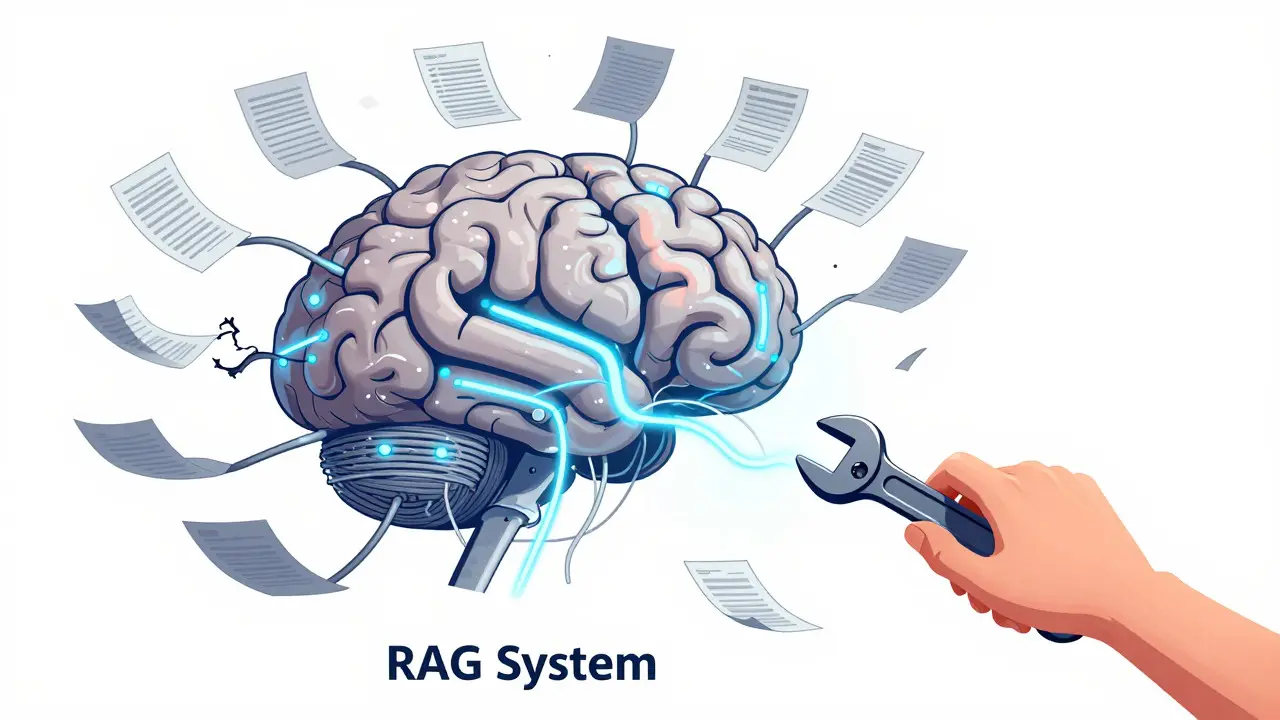
Your Retrieval-Augmented Generation (RAG) system works perfectly in testing. The answers are sharp, the citations are correct, and the latency is low. But six months after launch, your users start complaining. The responses feel generic. The retrieved documents miss the mark. You haven't changed a line of code, yet performance has quietly eroded.
This isn't a bug; it's a feature of static systems meeting dynamic reality. Without a mechanism to learn from real-world usage, even the best RAG pipelines degrade. The solution lies in human feedback loops. By closing the gap between user interaction and model refinement, you transform a static information retriever into a self-improving intelligence engine.
The Core Problem: Why Static RAG Fails in Production
Most organizations build RAG systems as one-off deployments. They index their knowledge base, tune the embedding model, and ship it. This approach ignores a critical reality: user intent evolves faster than any static dataset can accommodate.
According to Label Studio's 2024 analysis, approximately 67% of RAG system failures stem from poor retrieval quality. These aren't usually coding errors. They are relevance gaps. The system retrieves factually true documents that fail to address the specific nuance of the user's query. Traditional semantic similarity metrics often miss these subtleties because they prioritize keyword overlap or vector proximity over contextual utility.
When you lack a feedback mechanism, you are flying blind. You might notice a drop in customer satisfaction scores, but you won't know which queries caused the friction until it's too late. Human-in-the-loop mechanisms fix this by capturing exactly what went wrong and why, allowing the system to adjust its ranking logic continuously.
How Human Feedback Loops Actually Work
A human feedback loop isn't just a "thumbs up/thumbs down" button. That’s implicit feedback, and while useful for broad trends, it lacks the granularity needed for technical optimization. Effective loops require structured review processes.
The workflow typically follows three steps:
- Capture: The system logs the original query, the generated answer, the retrieved context chunks, and any automated metrics (like latency or confidence scores).
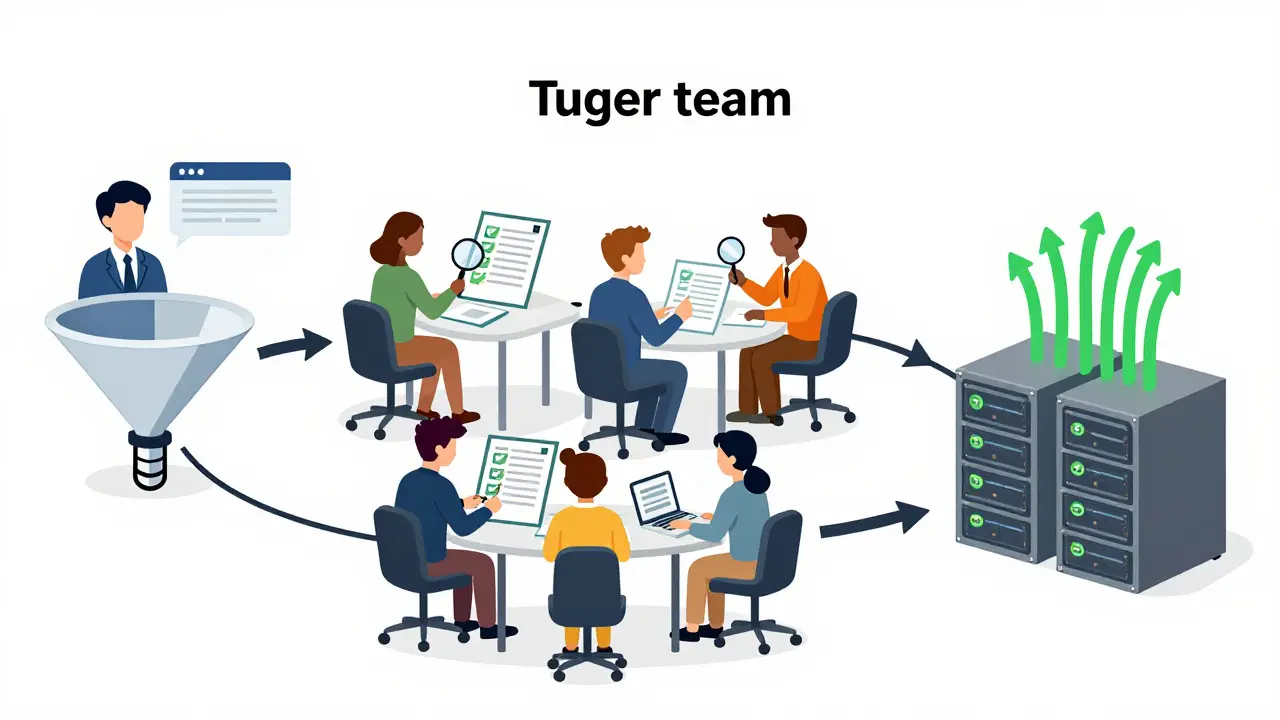
- Review: A human reviewer-often part of an "opinionated tiger team" matching your target user persona-evaluates the response. They don't just judge accuracy; they identify missing context or irrelevant noise.
- Alignment: This feedback is fed back into the ranking model. Using techniques like online learning, the system adjusts its weights to prioritize similar contexts for future queries.
Google Cloud’s 2025 optimization guide emphasizes that for this loop to be effective, the adaptation must happen quickly. Real-time adaptation requires minimum latency thresholds under 200ms to maintain user experience quality. If the feedback takes weeks to process, the business value evaporates.
The Pistis-RAG Framework: A Case Study in Precision
To understand the potential impact, look at the Pistis-RAG framework developed by researchers at Crossing Minds. Detailed in their July 2024 arXiv paper, this framework moves beyond simple document assessment to list-wide feedback integration.
Standard RAG systems often struggle with LLM sequencing preferences. Just because Document A is semantically similar doesn't mean the Large Language Model (LLM) will use it effectively if it appears third in a list of five. Pistis-RAG addresses this by training on over 15,000 human-labeled query-response pairs from public datasets like MMLU and C-EVAL.
| Metric | Standard RAG Baseline | Pistis-RAG (With Feedback) | Improvement |
|---|---|---|---|
| MMLU English Accuracy | 57.36% | 63.42% | +6.06% |
| C-EVAL Chinese Accuracy | 61.13% | 68.21% | +7.08% |
| Convergence Speed vs. RLHF | N/A | Faster | 18.3% faster convergence |
The results speak for themselves. By aligning the ranking model with human preferences rather than just vector distances, Pistis-RAG achieved significant accuracy gains. More importantly, it converged 18.3% faster than traditional Reinforcement Learning with Human Feedback (RLHF) approaches, making it a more efficient path to high-quality outputs.
Implementation Challenges and Resource Costs
If human feedback loops are so effective, why isn't everyone using them? The barrier is complexity. Braintrust’s 2025 industry survey of 127 RAG implementations found that feedback loop setups require approximately 35% more engineering resources initially compared to standard RAG deployments.
You face two main hurdles:
- Feedback Signal Processing: Cited by 67% of implementers as the most challenging aspect. Not all feedback is equal. A casual user’s click might be accidental, while a domain expert’s detailed critique is gold. Distinguishing signal from noise requires robust filtering algorithms.
- Metric Alignment: 58% of teams struggle here. You need to ensure that the human judgment translates correctly into mathematical adjustments for the vector database. If the alignment is off, you risk degrading performance instead of improving it.
There is also the human cost. Review fatigue is real. Google Cloud recommends using small, dedicated teams rather than crowdsourcing reviews to every employee. In their case studies, using carefully selected personas reduced implementation time by 47%. However, expect an initial operational overhead increase of around 40% during the first quarter, as noted by engineers deploying Label Studio’s frameworks in financial services.
Strategic Value Across Industries
The adoption of human feedback loops varies significantly by sector, driven largely by regulatory pressure and the cost of error.
In Financial Services, adoption leads the pack at 78%. Here, the stakes are high. A hallucinated interest rate or compliance citation can lead to massive liability. Forrester’s October 2025 analysis shows that firms in this sector are aggressively implementing feedback mechanisms to meet strict data governance requirements.
Healthcare follows closely at 65% adoption. Confident AI documented a healthcare client that achieved a 31.4% reduction in clinically inaccurate responses after implementing structured human review workflows. Medical reviewers spent an average of 47 seconds per response, providing targeted feedback that improved subsequent diagnostic queries. This level of precision is non-negotiable in patient-facing applications.
E-commerce sits at 72%, driven by the need to handle rapidly changing product inventories and nuanced customer service queries. In these dynamic environments, static knowledge bases become obsolete within days. Feedback loops allow the system to adapt to new product launches and shifting consumer language almost instantly.
Bias Risks and Guardrails
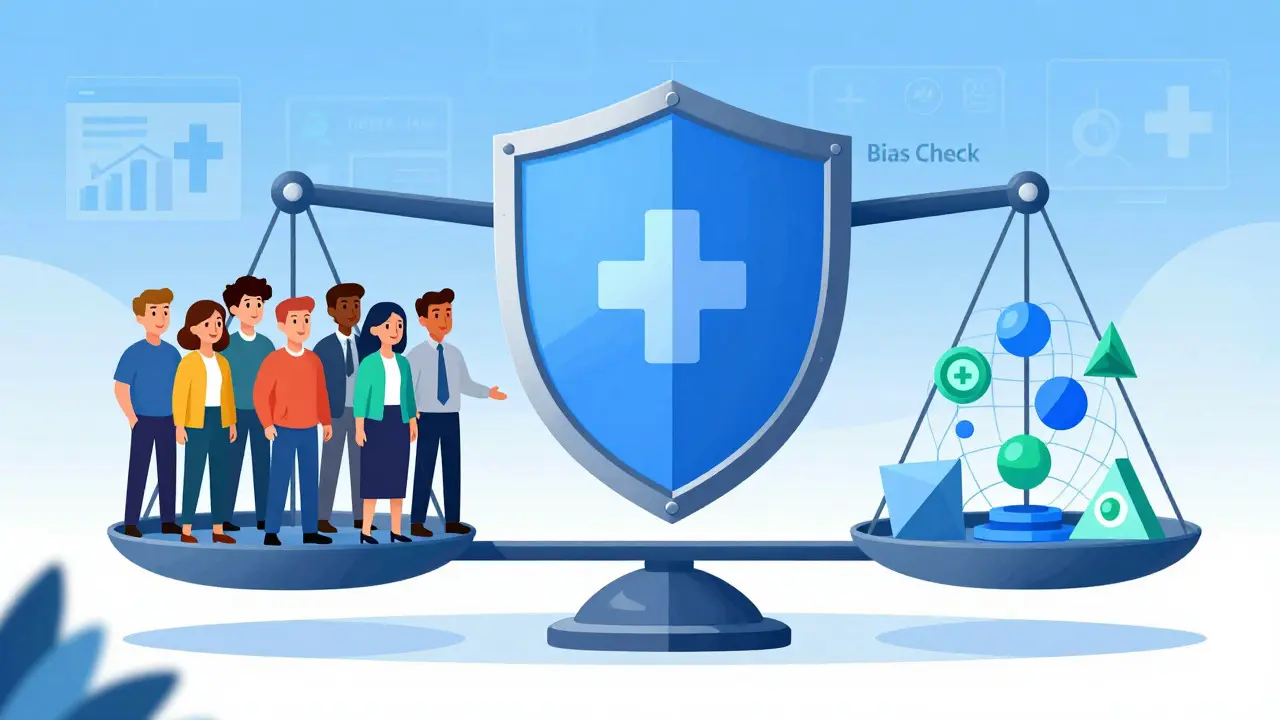
While human feedback improves relevance, it introduces a new risk: bias amplification. Dr. Emily Zhang of Stanford’s Human-Centered AI Institute warned in her June 2025 NeurIPS presentation that over-reliance on implicit user feedback without structured review can amplify existing biases present in user interactions.
MIT’s September 2025 study confirmed this, showing that unmitigated feedback loops can increase demographic bias by up to 22% in certain contexts. If your primary reviewers come from a homogeneous background, the system may optimize for their perspective while alienating others.
To mitigate this, you need diverse review panels and explicit bias-checking protocols. The EU’s 2025 AI Act mandates documented human oversight mechanisms for high-risk RAG applications, accelerating the need for these guardrails. Deloitte projects that regulatory compliance alone will drive an additional 25-30% adoption across regulated industries through 2027.
Getting Started: A Practical Checklist
If you're ready to implement a human feedback loop, don't boil the ocean. Start small and scale based on value.
- Select Your Tools: Consider platforms like Label Studio, Confident AI, or Braintrust. Label Studio offers robust community support with 87 new posts weekly on its forum, while Pistis-RAG provides strong open-source foundations for custom implementations.
- Define Your Personas: Recruit a small "tiger team" of reviewers who match your actual end-users. Mix technical and non-technical participants to capture diverse perspectives.
- Establish Metrics: Ensure your contextual precision exceeds 0.85 on a 0-1 scale, as recommended by Confident AI’s evaluation framework. Track false positive error identification rates, which human feedback can reduce by 42% compared to automated-only methods.
- Plan for Latency: Aim for sub-200ms feedback processing times to keep the user experience seamless.
- Monitor for Bias: Regularly audit your feedback data for demographic skew. Use standardized evaluation protocols, such as those being developed by the RAGBench consortium, to validate fairness.
By treating your RAG system as a living entity rather than a static deployment, you unlock continuous improvement. The initial investment in engineering resources and review infrastructure pays off in higher accuracy, lower complaint rates, and greater trust in your AI outputs.
What is the difference between implicit and explicit human feedback in RAG?
Implicit feedback includes actions like clicks, dwell time, or copy-pasting text, which suggest user satisfaction but lack detail. Explicit feedback involves direct ratings, corrections, or structured reviews where humans explicitly state what was right or wrong. Explicit feedback is far more valuable for fine-tuning ranking models because it provides clear signals about context relevance and answer quality.
How much does implementing a human feedback loop cost?
While there is no fixed price tag, Braintrust reports that implementation requires approximately 35% more engineering resources initially compared to standard RAG setups. Operational costs also rise due to reviewer time, though this is offset by reduced customer complaints and higher accuracy. Expect a 40% increase in operational overhead during the first quarter before efficiencies kick in.
Which industries benefit most from RAG feedback loops?
Financial services (78% adoption), e-commerce (72%), and healthcare (65%) lead adoption. These sectors face high costs for errors and operate in dynamic environments where knowledge changes frequently. Regulatory pressures, such as the EU AI Act, also drive adoption in finance and healthcare by mandating human oversight mechanisms.
Can human feedback loops introduce bias into my RAG system?
Yes. MIT research shows unmitigated feedback loops can increase demographic bias by up to 22%. This happens if the review panel is not diverse or if implicit feedback reflects societal prejudices. To prevent this, use diverse reviewer teams, implement bias-checking protocols, and rely on structured, explicit feedback rather than raw user behavior data.
What tools are available for implementing human feedback in RAG?
Leading tools include Label Studio, Confident AI, Braintrust, and the Pistis-RAG framework. Label Studio is popular for its community support and flexible labeling interface. Pistis-RAG offers advanced list-wide feedback alignment capabilities. Confident AI focuses on evaluation metrics and context-aware weighting. Choice depends on your technical stack and whether you prefer open-source or managed solutions.
Vishnu Vardhan Reddy M S
July 27, 2026 AT 18:58Oh wow, another article telling us that static systems fail in production. Groundbreaking stuff right there. I mean, who would have thought that if you don't update your data, it gets stale? Shocking.
Seriously though, the part about the 'opinionated tiger team' is hilarious. Like, we're just going to hire a bunch of people to sit around and judge AI answers all day? Sounds like my high school drama club but with more spreadsheets. The sarcasm is palpable when they say this isn't a bug, it's a feature. Yeah, because nothing says 'feature' like spending 35% more engineering resources just to make sure the bot doesn't hallucinate interest rates again.
Kyle Ware
July 28, 2026 AT 00:37look at the latency requirement here. sub 200ms for feedback processing is tight but doable if you cache properly. most people ignore the vector db optimization part and just throw more compute at it which is wrong. you need to align the embedding space first before you even think about ranking adjustments. also dont use crowdsourcing for the review phase as the post says. it creates noise that breaks the model faster than it helps. stick to domain experts
Iva Grekova
July 29, 2026 AT 02:53I actually found this really helpful! It’s nice to see someone break down why our RAG systems feel so... generic after a while. I’ve been struggling with that exact issue at work. The responses were great at first, then suddenly they started missing the point entirely.
The bit about implicit vs explicit feedback makes total sense now. We’ve been relying on thumbs up/down buttons, but honestly, nobody uses them unless they’re super angry or super happy. So we’re flying blind too. Maybe we should try setting up a small review team like they suggested. It seems like a lot of work upfront, but if it saves us from customer complaints later, it might be worth it!
Onyinyechi Nwosu
July 29, 2026 AT 03:53the bias part is scary. 22% increase in demographic bias if you are not careful. i always worry about this with ai. if the reviewers are all from one background the system will learn their biases and push them out to everyone else. it feels like we are trading one problem for another. accuracy goes up but fairness might go down. need to be very careful with who does the reviewing
Chandan Singh
July 29, 2026 AT 19:14Actually, the Pistis-RAG framework is overhyped. The improvement from 57% to 63% on MMLU is statistically insignificant given the variance in LLM evaluations. Most of these benchmarks are noisy anyway. The real issue is that human feedback loops are expensive and slow. You can achieve similar results with better prompt engineering and retrieval strategies without the overhead of a dedicated review team. The 35% resource increase cited by Braintrust is likely an outlier case where they didn't optimize their pipeline. Also, RLHF is not dead, it's just being misapplied here. People need to understand the difference between preference optimization and simple relevance ranking before jumping on this bandwagon.
Brannen Hall
July 30, 2026 AT 04:07another buzzword salad post. human feedback loops have been around since the internet was invented. amazon reviews are a feedback loop. why is this new? the article pretends this is some cutting edge tech but its just basic QA processes wrapped in fancy ai terminology. also the table shows minimal gains for the cost. probably not worth it for most companies unless they are in finance where lawyers force them to spend money. otherwise just let the users complain and fix it when it breaks. simpler and cheaper.
tiffany King
July 31, 2026 AT 22:25This is such a positive step forward for AI reliability! It’s exciting to see that we can make these systems smarter and more accurate over time. The idea of a self-improving intelligence engine sounds like something out of a sci-fi movie, but it’s happening right now! I love that healthcare is adopting this so quickly. Knowing that medical queries are getting better with every interaction gives me so much confidence in using these tools. Let’s keep pushing for better accuracy and trust!
Brenna Gonedrman
August 2, 2026 AT 19:54OMG this is HUGE!! I cant believe how much better RAG can get with just some human help. The numbers are crazy like +7% accuracy is massive!! And did you see the convergence speed?? 18% faster is insane!! This changes everything for us!! We need to start doing this NOW!! No more waiting for updates!! Just constant learning!! Its going to be so amazing when the bots finally understand what we really mean!! Yay for humans saving the day again!!
Courtney Wagstaff
August 2, 2026 AT 22:41Think of it like training a puppy. You can’t just set the rules once and walk away. You gotta correct the bad behavior every single time it happens, or else the dog thinks chewing the sofa is totally fine. That’s exactly what this feedback loop is doing. It’s giving the AI little treats when it gets it right and a gentle ‘no’ when it pulls nonsense from the void.
The thing about the ‘tiger team’ is kind of cute too. It’s like having a group of friends who roast your jokes until you get better at comedy. Sure, it’s awkward at first, and yeah, it takes extra time, but eventually, you stop bombing on stage. Plus, avoiding bias is like making sure your puppy doesn’t only listen to one person in the house. Gotta mix it up!