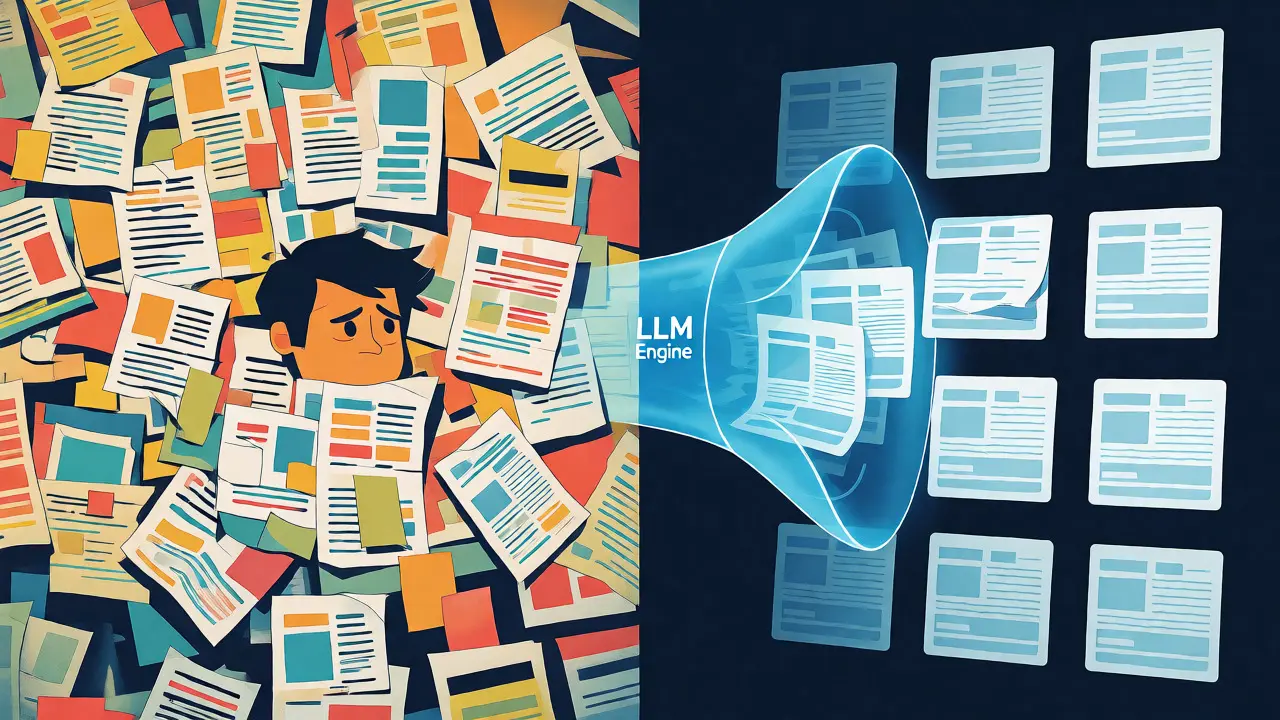
Imagine you’re a recruiter staring at a stack of 500 resumes for a single role. Half are beautifully designed PDFs, half are messy Word docs, and a few are just images of scanned pages from the nineties. You spend hours squinting, copy-pasting names into a spreadsheet, and trying to figure out if "Senior Software Engineer" at Company A is actually the same level as "Lead Developer" at Company B. It’s exhausting, error-prone, and honestly, kind of soul-crushing.
This is where Large Language Models (LLMs) change the game. They aren’t just chatbots; they are powerful engines that can read unstructured text and turn it into clean, structured data. By automating resume parsing and candidate screening, LLMs eliminate the manual grunt work, reduce bias, and let recruiters focus on what humans do best: talking to people.
The Shift from Keyword Matching to Contextual Understanding
For years, Applicant Tracking Systems (ATS) relied on rigid keyword matching. If your resume didn’t say "Python," you were out, even if you spent five years coding in Python under a different name or context. Traditional parsers looked for layout patterns-headers here, contact info there. But human resumes are chaotic. People use tables, columns, weird fonts, and inconsistent date formats.
LLM-powered resume parsing fixes this by understanding context. Instead of looking for a string like "Java," the model reads the bullet point: "Architected scalable backend services using Java Spring Boot." It understands that Java is a skill, Spring Boot is a framework, and architecture is a responsibility. This contextual awareness means fewer false negatives. You stop missing great candidates because their resume template was unusual.
It also levels the playing field. Humans often unconsciously favor visually polished resumes, assuming design equals competence. An LLM doesn’t care about your font choice. It extracts the facts-skills, experience, education-and puts them into a standard format. This reduces subjective bias and helps with Diversity, Equity, and Inclusion (DEI) goals by judging candidates on substance, not style.
How the Technical Pipeline Actually Works
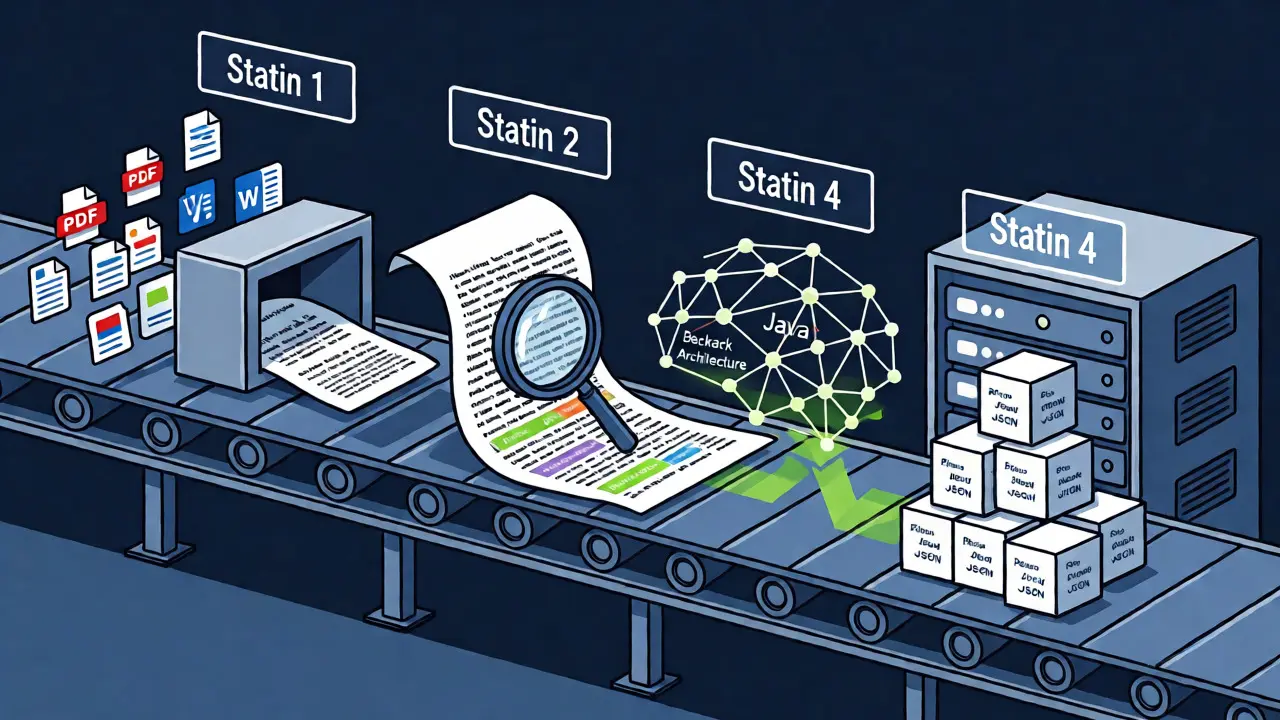
You might wonder how a blob of PDF text becomes a database entry. It’s not magic; it’s a multi-stage pipeline. Here’s what happens behind the scenes when a candidate applies:
- File Detection & Extraction: The system first identifies the file type. Is it a PDF? A .docx? An image? For PDFs and Docs, dedicated parsers extract raw text while keeping metadata like LinkedIn URLs. For images or scans, the system uses Optical Character Recognition (OCR) tools like OpenCV to convert pixels into text.
- Prompt Engineering: The clean text isn’t sent to the LLM raw. It’s wrapped in a specific prompt that tells the model exactly what to look for. Think of it as giving the AI a checklist: "Extract full name, email, phone, work history with dates, education, and skills. Output as JSON."
- LLM Processing: The prompt goes to an endpoint like Google Vertex AI or OpenAI’s API. The model processes the text, infers implicit skills (like leadership from "managed a team of five"), and normalizes job titles.
- Structured Output: The result is a strict JSON object. No more guessing. The data is ready to be plugged directly into your CRM or ATS.
Advanced setups use techniques like Low-Rank Adaptation (LoRA) fine-tuning. This tweaks a small part of the pre-trained model to understand specific industry jargon without retraining the whole thing, saving time and compute power.
Key Benefits for High-Volume Recruiting
Why switch? Because volume kills traditional methods. If you’re hiring for retail, customer service, or entry-level tech roles, you might get thousands of applications. Hiring more recruiters to handle the spike is expensive and slow. LLMs scale instantly.
| Feature | Legacy ATS / Manual Review | LLM-Powered System |
|---|---|---|
| Data Extraction Method | Keyword matching, rule-based regex | Contextual NLP, semantic understanding |
| Format Flexibility | Low; breaks on new templates | High; handles diverse layouts and images |
| Bias Potential | High; influenced by visual design | Lower; focuses on extracted content |
| Scalability | Limited by human hours or rigid rules | Scales with cloud compute resources |
| Implicit Skill Detection | Rarely possible | Common; infers skills from descriptions |
One major win is role normalization. Companies have wildly different titles. One firm’s "Growth Hacker" is another’s "Marketing Manager." LLMs map these to a consistent taxonomy. This allows you to filter candidates accurately across different employers, something keyword search struggles with.
Integrating LLMs into Your Existing Stack
You don’t need to rip out your current systems. Most implementations integrate LLMs into existing platforms like Salesforce, Workday, or Greenhouse. For example, some enterprises use Lightning Web Components (LWC) to build a custom interface within Salesforce. When a resume is uploaded, JavaScript extracts the text client-side, sends it to the LLM, and writes the results back to Salesforce custom objects. This keeps storage costs low by not storing original PDFs unnecessarily and ensures real-time updates.
Another approach uses cloud-native pipelines. Services like Datumo or RChilli combine proprietary parsers with LLM APIs. They handle the heavy lifting of language detection and routing. If a resume is in Spanish, the system detects it and routes it to a multilingual model or prompt. If a file is corrupted, it triggers a fallback queue for human review, ensuring nothing gets lost.
Downstream Applications: Beyond Just Parsing
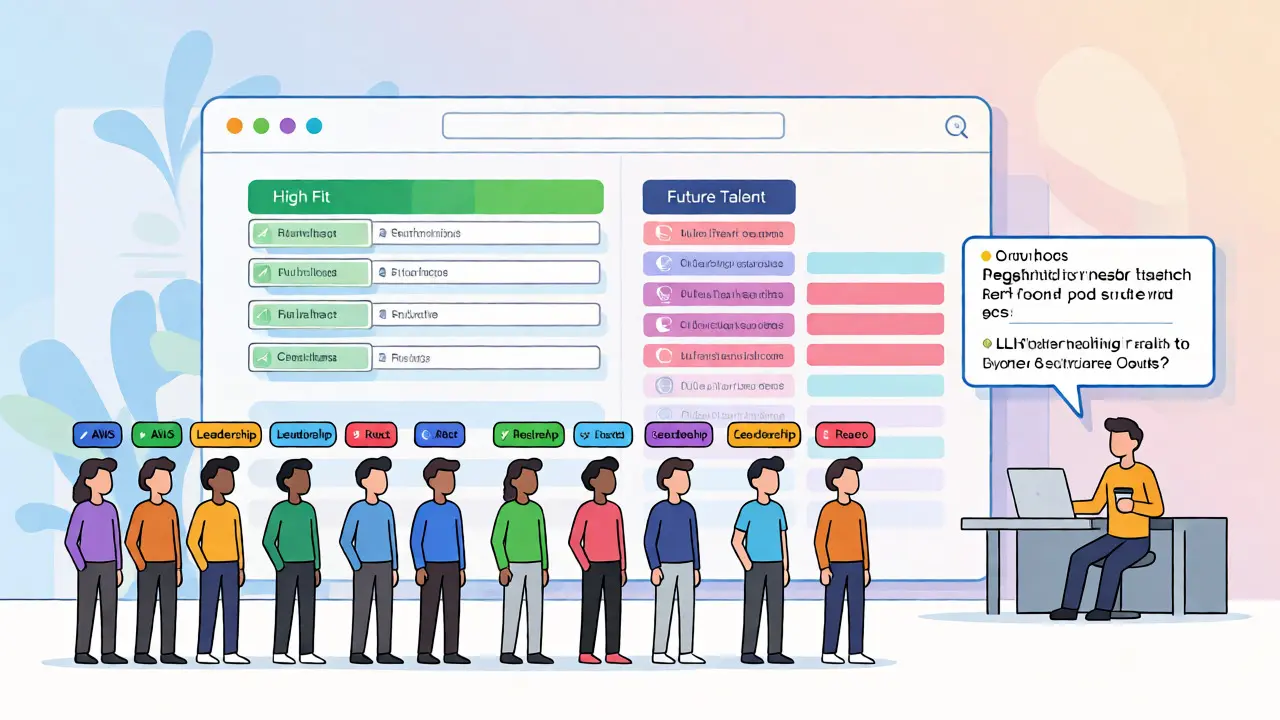
Once you have structured data, the real value unlocks. You can build powerful dashboards that let recruiters filter thousands of candidates in seconds. Want to see everyone with "AWS" skills and 3-5 years of experience in Texas? Done.
- Job Description Matching: Score each parsed resume against the specific job requirements. Rank candidates by fit score, not just recency.
- Talent Mapping: Tag candidates with skills for future roles. Did someone apply for a Senior Dev role but wasn’t hired? Tag them as "React Expert" for next quarter’s opening.
- Automated Outreach: Use the extracted data to personalize initial emails. Instead of "Dear Candidate," you can write, "Hi Sarah, I saw your work with Kubernetes at TechCorp..."
This transforms recruiting from a bottleneck into a strategic function. Recruiters stop being data-entry clerks and start being talent advisors.
Challenges and Pitfalls to Watch
It’s not all smooth sailing. LLMs depend on API availability and pricing. If OpenAI changes its rates or has downtime, your pipeline stalls. Also, prompt engineering is critical. A poorly written prompt leads to hallucinated data or missed fields. You need robust validation checks to ensure the JSON output matches the expected schema.
Multilingual support is another hurdle. Not all models handle every language equally well. You might need separate prompts or models for non-English resumes. And finally, privacy. Sending PII (Personally Identifiable Information) to third-party APIs requires careful compliance checks, especially under GDPR or CCPA. Many companies now use private instances or on-premise LLM deployments to keep data secure.
Frequently Asked Questions
Can LLMs completely replace human recruiters?
No, they augment them. LLMs excel at processing high volumes of unstructured data quickly and consistently. However, they lack empathy, cultural nuance, and the ability to assess soft skills during interviews. The ideal workflow uses LLMs for screening and parsing, leaving human recruiters to handle engagement, interviewing, and final decision-making.
How accurate is LLM-based resume parsing compared to traditional tools?
LLMs generally offer higher accuracy for complex, unstructured resumes because they understand context rather than just pattern matching. While traditional rule-based parsers fail on non-standard layouts, LLMs adapt. However, accuracy depends heavily on prompt quality and model tuning. Hybrid approaches that combine traditional parsing for simple fields and LLMs for complex inference often yield the best results.
What happens if a resume is an image or a scan?
Modern pipelines include an OCR (Optical Character Recognition) stage. Tools like OpenCV or specialized OCR APIs convert the image into text before sending it to the LLM. This allows the system to handle scanned documents, photos of resumes, or other image-based submissions effectively, though very low-quality scans may still require manual intervention.
Is my candidate data safe when using external LLM APIs?
This depends on the vendor agreement. Major providers like OpenAI and Google offer enterprise tiers that guarantee data privacy and zero retention policies. However, for highly sensitive roles, many organizations opt for self-hosted open-source models (like Llama 3) or private cloud deployments to ensure no PII leaves their internal network.
Do LLMs help reduce bias in hiring?
They can, but it’s not automatic. By stripping away visual formatting and focusing on extracted text, LLMs remove unconscious biases related to resume design. However, if the training data contains historical biases, the model might inherit them. Regular auditing of screening outcomes and careful prompt design are necessary to maximize bias reduction.