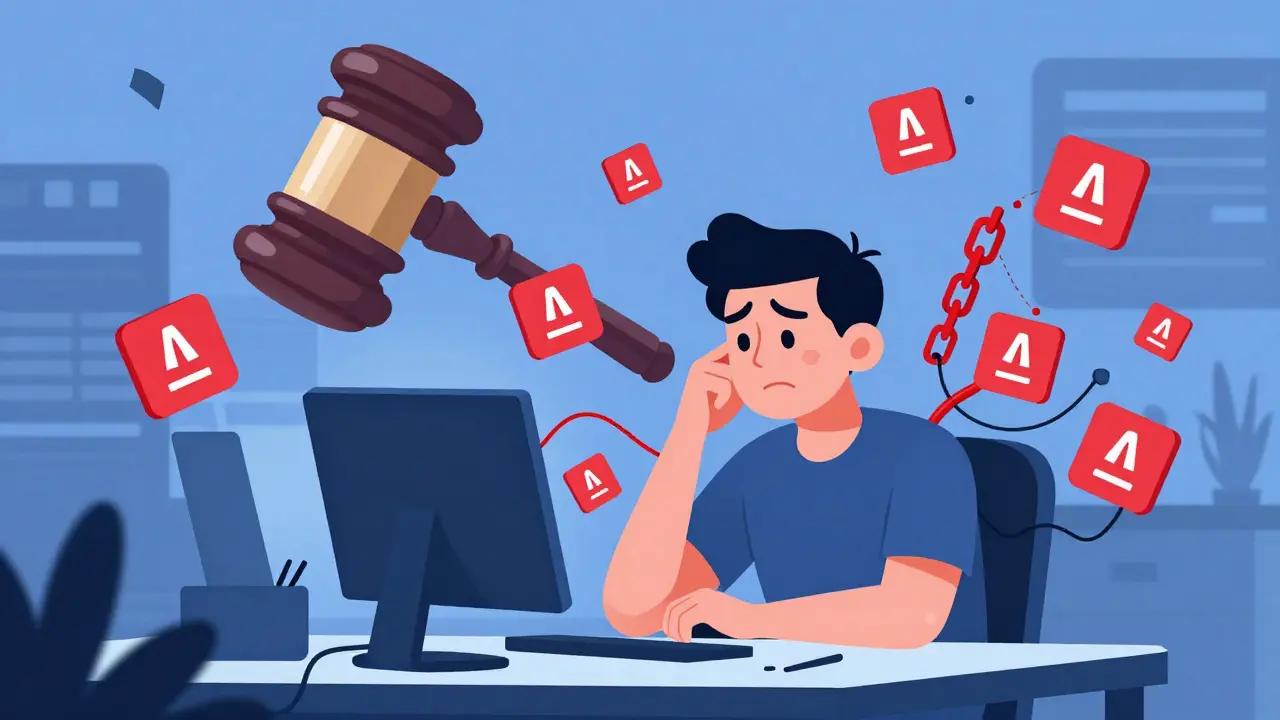
It is May 29, 2026. The days of wild west coding are officially over. If you are using AI-generated code in your workflow, the regulatory landscape has shifted beneath your feet. For years, developers treated AI assistants as harmless productivity boosters. Now, those same tools sit at the center of a complex web of international laws and state-level mandates. You might think that because you just use GitHub Copilot or similar tools for routine snippets, you are safe. That assumption could cost your company millions.
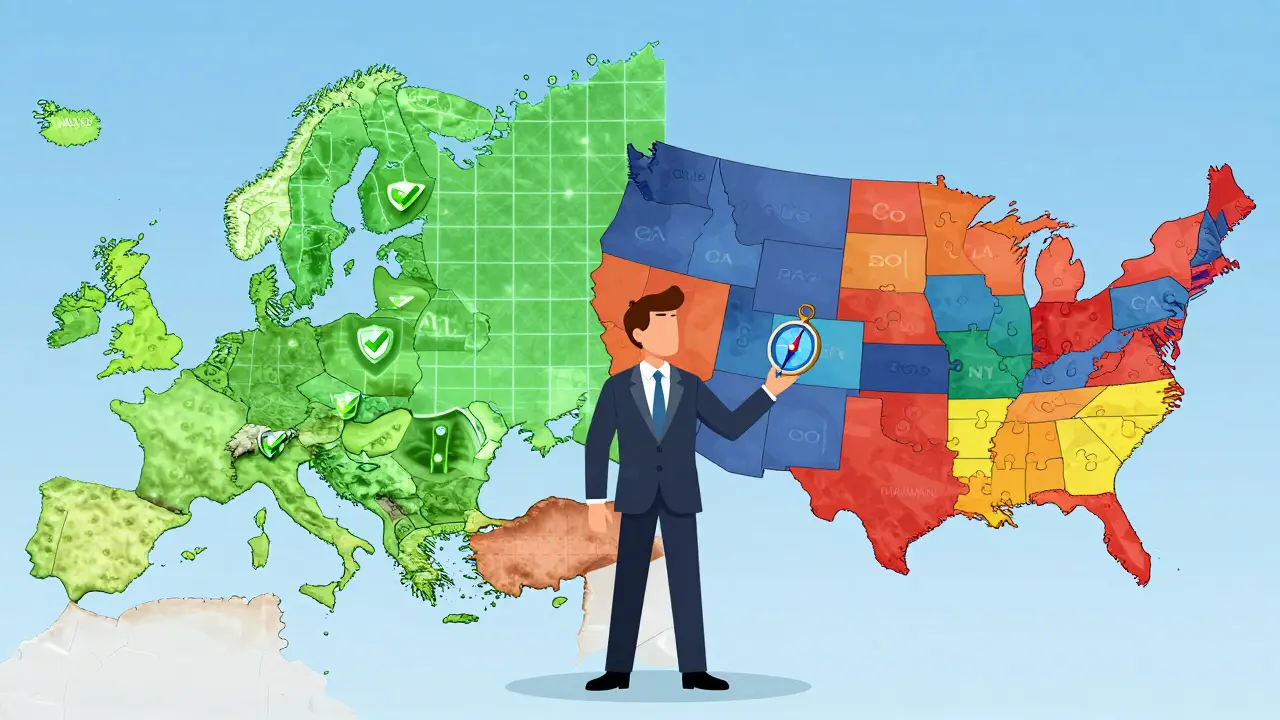
The core issue isn't whether AI writes better code; it's who is liable when that code fails, discriminates, or breaches security. By mid-2026, the European Union has moved from warning shots to active enforcement, while the United States has created a fragmented patchwork of state laws that demand precise navigation. Understanding this split is no longer optional for engineering leaders-it is a survival requirement.
The EU AI Act: The Global Benchmark Takes Effect
The most significant regulatory shift comes from Brussels. The EU AI Act, comprehensive legislation regulating artificial intelligence systems across the European Union reached its Phase Two enforcement milestone on August 2, 2026. This date activated Articles 8 through 15, which establish the high-risk AI compliance framework, along with Article 50 transparency requirements. For any organization operating in or selling to the EU, this is the new reality.
However, there is a critical nuance that many CTOs miss. Using AI for routine developer assistance-like auto-completing a function or debugging a script-typically does not trigger the "high-risk" obligations under Annex III. The EU AI Act targets specific use cases like worker management systems, critical infrastructure safety components, and regulated medical devices. If your AI tool is just helping a junior dev write a Python script for an internal dashboard, you likely aren't classified as high-risk.
But if that code is part of a system that evaluates employee performance, controls industrial machinery, or processes health data, the rules change instantly. In those scenarios, you must implement:
- Risk management systems tailored to the specific application.
- Data governance protocols ensuring training data quality.
- Technical documentation and automatic logging of decisions.
- Human oversight mechanisms where qualified personnel can intervene.
- Rigorous accuracy and robustness testing throughout the lifecycle.
The penalties for non-compliance are steep: up to €15 million or 3% of global annual turnover. Furthermore, Article 50 requires transparency for all AI-generated content. While this primarily applies to user-facing outputs, the spirit of the law encourages clear labeling of AI-assisted development artifacts in professional contexts.
US Regulatory Patchwork: State-by-State Survival Guide
While Europe moves with a single voice, the United States remains fragmented. There is no comprehensive federal AI law yet. Instead, you face a "patchwork of obligations" driven by aggressive state legislation. As of late 2025 and early 2026, several states have enacted laws that directly impact how AI-generated code is developed and deployed.
Colorado's AI Act, state legislation requiring reasonable care to avoid algorithmic discrimination and risk management policies became fully effective on June 30, 2026. It mandates that AI developers and deployers exercise reasonable care to prevent algorithmic discrimination. This means if your AI-generated code is used in hiring tools or credit scoring, you must conduct impact assessments and maintain detailed risk management programs. Colorado also requires statutory notices to individuals affected by these systems.
California, always a leader in tech regulation, introduced multiple measures effective January 1, 2026. The California AI Safety Act, legislation providing whistleblower protections for employees reporting AI risks protects employees who report critical safety concerns about AI models. More directly relevant to code generation, California’s AI Training Data and Transparency Laws require covered providers to publish summaries of their training data. This includes sources, data types, and how intellectual property was handled. Providers must also offer watermarks and latent disclosures on AI-generated content.
If you are building SaaS products that rely on AI code generation, California’s rules mean you need to prove your model wasn’t trained on scraped, copyrighted code without permission. Additionally, California prohibits discriminatory impacts through its Automated Decision Systems (ADS) regulations. Employers using AI-driven background checks or hiring algorithms face strict liability, including four-year data retention requirements.
New York has expanded its oversight beyond Local Law 144 with the RAISE Act, focusing on social media warnings and synthetic performer disclosures. Illinois and Utah have joined the fray with disclosure requirements for AI companions and therapeutic tools. The common thread? Transparency and accountability. You cannot hide behind "black box" algorithms anymore.
Enforcement Reality: Fines, Insurance, and Audits
Laws on paper mean little without enforcement. In 2026, enforcement is real and escalating. A coalition of 42 state attorneys general is coordinating actions against AI deployers. The Federal Trade Commission (FTC) has already begun fining companies for AI-related violations, proving that regulatory bodies are willing to act even without a unified federal statute.
Beyond government fines, the insurance market is reacting. Cyber insurance carriers now introduce "AI Security Riders." These riders condition coverage on documented AI security practices. If you lack a robust AI risk management program, insurers may deny claims or charge prohibitive premiums. This creates a financial imperative for compliance that operates independently of legal threats.
Financial services face the highest scrutiny. The US Treasury Department published an AI framework in February 2026, mapping NIST AI Risk Management Framework (RMF) principles into 230 operational control objectives. This framework covers model lifecycle governance, identity resolution, and data governance. For banks and fintechs using AI-generated code, aligning with this framework is essential to pass audits and maintain trust.

Practical Steps for Engineering Teams
How do you adapt your development process without slowing down innovation? Start with an audit. Baker Donelson recommends distinguishing between input risks (data scraping issues) and output risks (generated content failures). Map every instance of AI code generation in your stack.
- Classify Use Cases: Identify where AI-generated code interacts with high-risk domains. Is it used in HR tools? Medical devices? Critical infrastructure? If yes, apply full EU AI Act Annex III standards.
- Implement Transparency: Even if not legally required everywhere, label AI-assisted code in internal repositories. This builds a culture of accountability and simplifies future audits.
- Adopt NIST AI RMF: For US-based organizations, the NIST AI Risk Management Framework, voluntary framework for managing AI risks across the system lifecycle is the gold standard. It aligns with state laws and prepares you for potential federal legislation. Integrate its profiles, such as the Generative AI Profile (NIST-AI-600-1), into your CI/CD pipeline.
- Review Vendor Contracts: Ensure your AI tool providers comply with California’s transparency laws. Demand proof of training data provenance and watermarking capabilities.
- Train Developers: Educate your team on prompt hygiene and code review best practices. Human oversight remains a legal requirement in high-risk scenarios.
Remember, compliance is not a one-time project. It is an ongoing discipline. As regulators refine guidance throughout 2026, stay agile. Monitor updates from the European Commission, which plans to publish practical implementation guides this year. Watch for shifts in the EU timeline, as some industry groups push for a delay to 2027, though current law stands firm for August 2026.
Does the EU AI Act apply to all AI-generated code?
No. Routine developer assistance tools generally do not trigger high-risk obligations under Annex III. However, if the generated code is part of a system used for employment screening, critical infrastructure, or regulated medical devices, it falls under high-risk categories and requires full compliance with Articles 8-15.
What happens if I ignore California's AI transparency laws?
Non-compliance can lead to civil penalties, lawsuits from competitors or users, and increased scrutiny from state attorneys general. Covered providers must publish training data summaries and offer watermarks. Failure to do so exposes your company to significant legal and reputational risk.
Is there a federal AI law in the US by 2026?
As of May 2026, there is no comprehensive federal AI law. Regulation occurs at the state level, with Colorado, California, New York, and others enforcing their own statutes. The FTC enforces existing consumer protection laws regarding AI, but a unified federal framework has not yet passed Congress.
How does cyber insurance affect AI code usage?
Insurers increasingly require AI-specific security controls as a condition of coverage. Without documented AI risk management practices, you may face denied claims or much higher premiums. Treat AI governance as a financial necessity, not just a legal one.
Which framework should I use for AI risk management?
For US organizations, the NIST AI Risk Management Framework (AI RMF) is the recommended standard. It aligns with state laws and provides a structured approach to managing AI risks. The Generative AI Profile (NIST-AI-600-1) offers specific guidance for generative tools.
Steven Hanton
May 31, 2026 AT 03:17It is genuinely fascinating to observe how the regulatory landscape has evolved so rapidly. The distinction between routine developer assistance and high-risk applications under the EU AI Act is particularly nuanced. One must consider that while auto-completing a function may seem benign, the context of its deployment dictates the legal obligations. For instance, if such code integrates into a system managing critical infrastructure, the compliance requirements escalate significantly. This necessitates a thorough audit of all AI-generated artifacts within the organization's stack. It is not merely about avoiding fines but ensuring robust risk management protocols are in place. The fragmentation in the US regulatory environment adds another layer of complexity. Navigating state-specific laws like Colorado’s AI Act requires precise attention to detail. Organizations must remain agile to adapt to these shifting mandates effectively.
Kristina Kalolo
May 31, 2026 AT 04:44The section on cyber insurance riders is quite revealing regarding the financial implications of non-compliance. Insurers are clearly treating AI governance as a material risk factor. This shift indicates that compliance is no longer just a legal checkbox but a core business imperative. Companies lacking documented AI security practices will face substantial premium increases or coverage denials. It forces engineering leaders to prioritize transparency and accountability in their development workflows. The requirement for training data provenance under California law further underscores this trend. Developers can no longer rely on opaque models without understanding their underlying data sources. This level of scrutiny demands rigorous internal documentation and regular audits. Failure to adapt could result in severe operational and financial consequences.
Ashton Strong
May 31, 2026 AT 05:29I find it incredibly encouraging that frameworks like NIST AI RMF provide clear guidance for navigating these challenges. Adopting such standards can streamline the compliance process while fostering a culture of responsibility. It is wonderful to see organizations taking proactive steps to align with these best practices. The emphasis on human oversight remains crucial for maintaining trust and safety. By integrating these profiles into CI/CD pipelines, teams can ensure continuous compliance without stifling innovation. This approach balances regulatory demands with the need for agility in software development. It is a positive step toward sustainable and ethical AI integration.
ravi kumar
June 1, 2026 AT 21:37It is important to note that the practical steps outlined here are essential for long-term success. Classifying use cases accurately helps in applying the right level of scrutiny. Implementing transparency measures, even where not strictly required, builds a stronger foundation for future audits. Training developers on prompt hygiene ensures better quality outputs and reduces potential risks. These actions collectively contribute to a more resilient and compliant engineering environment.
Pamela Tanner
June 2, 2026 AT 18:03This is a comprehensive overview.