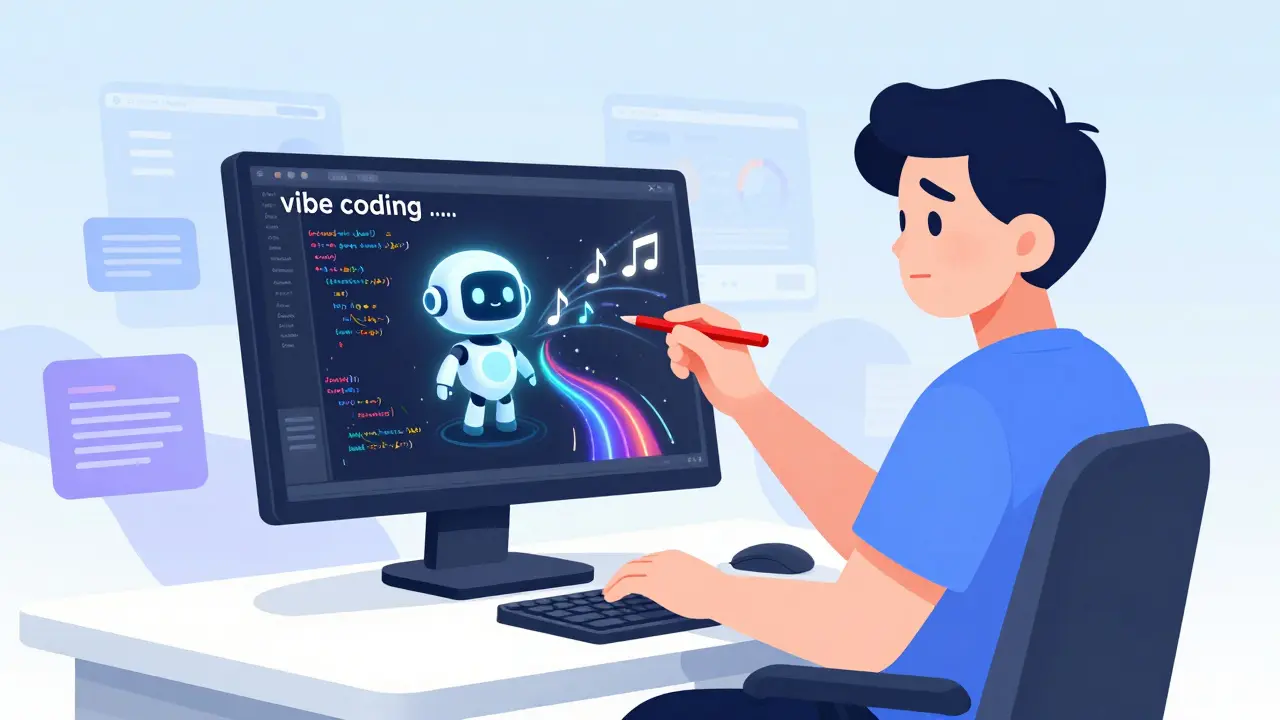
You type a sentence like "build me a dashboard that tracks user retention," hit enter, and suddenly your screen fills with working code. It looks good. It runs. But does it actually work the way you intended? This is the promise of vibe coding, a new approach to software development where developers rely heavily on natural language prompts and AI agents to generate entire applications based on intent rather than syntax. The term captures the shift from writing lines of code to curating the "vibe" or direction of an AI system. However, this freedom comes with a hidden cost: without strict oversight, vibe coding can produce fragile, insecure, or hallucinated code that looks professional but fails in production.
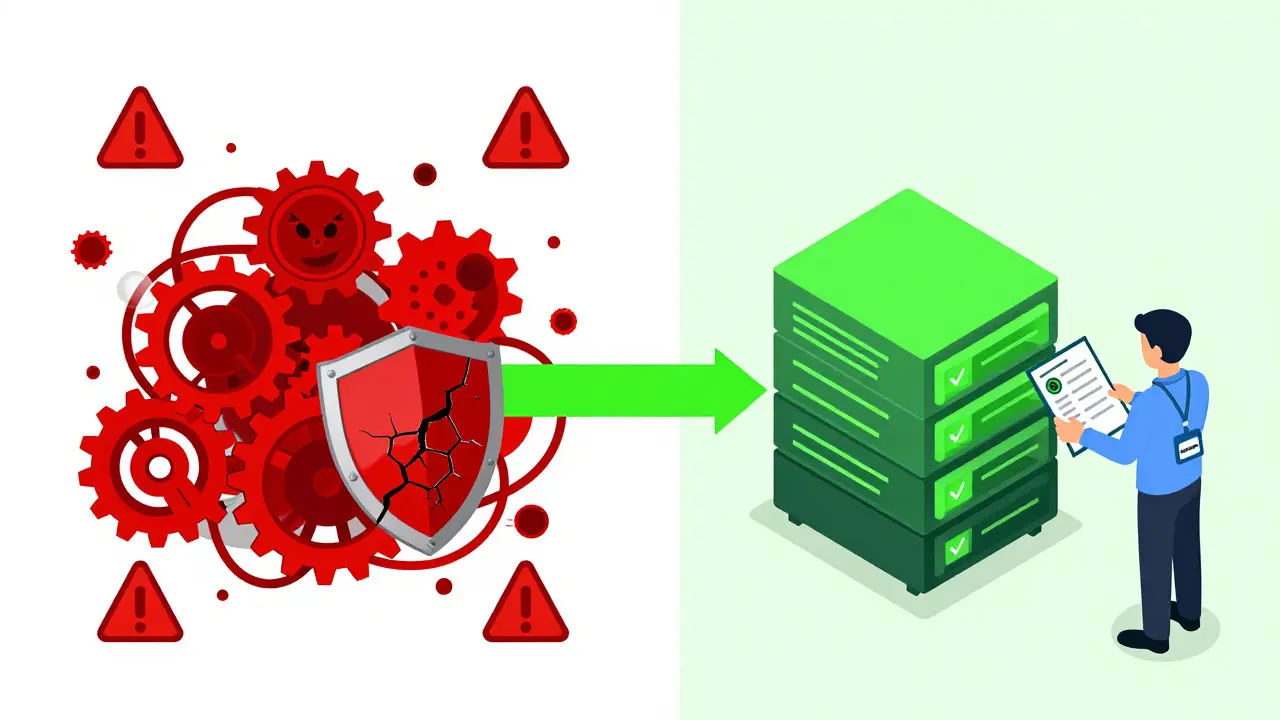
The solution isn't to stop using AI assistants. It's to implement robust human-in-the-loop (HITL) practices. HITL ensures that while the AI generates the bulk of the work, a human remains responsible for validation, security checks, and architectural decisions. In 2026, as AI coding tools become more autonomous, the difference between a successful project and a security nightmare often comes down to how well you integrate human judgment into the loop.
Why Vibe Coding Needs Human Oversight
Vibe coding relies on large language models (LLMs) to interpret high-level goals and translate them into executable logic. While these models are impressive, they lack true understanding of context, business rules, and security constraints. They predict the next likely token, not the safest or most efficient solution.
Consider a scenario where you ask an AI agent to "create a login page." The AI might generate a standard HTML form with JavaScript validation. It looks fine. But did it include CSRF protection? Does it hash passwords correctly before sending them to the server? Is it vulnerable to SQL injection if the backend isn't properly parameterized? The AI doesn't care about these risks unless explicitly prompted-and even then, it might miss subtle edge cases. This is why human oversight is non-negotiable. You need a developer who understands the implications of the code being generated, not just someone who can read it.
Without HITL practices, vibe coding becomes a game of Russian roulette. You might get lucky with simple scripts, but as projects grow in complexity, the likelihood of introducing critical bugs or vulnerabilities increases exponentially. The goal of HITL is to catch these issues early, before they reach production.
Core Principles of Human-in-the-Loop in AI Development
Implementing HITL effectively requires shifting your mindset from "coder" to "architect and reviewer." Here are the core principles that make this approach safe and effective:
- Intent Verification: Always verify that the AI's output matches your original intent. Did it solve the right problem?
- Security First: Treat all AI-generated code as untrusted until reviewed by a security-aware human.
- Modular Review: Break down complex prompts into smaller, manageable chunks. Review each module individually before integrating.
- Context Provision: Provide the AI with clear context, including existing codebases, design patterns, and security requirements.
- Continuous Feedback: Use errors and unexpected behaviors as feedback loops to refine your prompts and the AI's future outputs.
These principles ensure that you remain in control of the development process. The AI is a powerful tool, but you are the pilot. If you let the autopilot fly without monitoring instruments, you're inviting disaster.
Practical Steps to Implement HITL in Your Workflow
How do you actually put these principles into practice? Here’s a step-by-step guide to integrating HITL into your vibe coding workflow:
- Define Clear Boundaries: Start by defining what parts of the application are critical. Authentication, data storage, and payment processing should never be fully automated without rigorous review. Identify these areas upfront.
- Use Iterative Prompts: Instead of asking for an entire feature at once, break it down. Ask for the database schema first. Review it. Then ask for the API endpoints. Review them. Finally, ask for the frontend components. This modular approach makes it easier to spot inconsistencies.
- Automate Static Analysis: Integrate static analysis tools like ESLint, SonarQube, or Semgrep into your pipeline. These tools catch common errors and security vulnerabilities automatically, reducing the cognitive load on human reviewers.
- Manual Code Review: Assign a senior developer to review AI-generated code. Focus on logic correctness, security implications, and adherence to best practices. Don't just check for syntax errors; think about maintainability and scalability.
- Test Rigorously: Write unit tests and integration tests for every component. AI-generated code often lacks proper test coverage. Ensure that your tests validate both expected behavior and edge cases.
- Document Decisions: Keep a record of why certain AI outputs were accepted or rejected. This creates a knowledge base that helps improve future prompts and provides audit trails for compliance.
By following these steps, you create a safety net that catches mistakes before they become problems. The key is consistency. Make HITL a habit, not an afterthought.
Comparing Traditional Coding vs. Vibe Coding with HITL
| Aspect | Traditional Coding | Vibe Coding (No HITL) | Vibe Coding (With HITL) |
|---|---|---|---|
| Speed | Slow | Very Fast | Fast |
| Security Risk | Low (if reviewed) | High | Medium-Low |
| Maintainability | High | Low | Medium-High |
| Developer Role | Writer | Prompter | Architect & Reviewer |
| Error Detection | During Writing | After Deployment | Before Integration |
This table highlights the trade-offs involved. Vibe coding without HITL offers speed but sacrifices safety and quality. Adding HITL brings back much of the reliability associated with traditional coding while retaining significant efficiency gains. The developer's role shifts from typing code to guiding and validating the AI's output.
Common Pitfalls to Avoid
Even with the best intentions, many teams fall into traps when adopting vibe coding. Here are some common pitfalls to watch out for:
- Over-Trusting the AI: Assuming the AI always produces correct code is dangerous. Always verify critical logic manually.
- Lack of Context: Failing to provide enough context leads to generic or incorrect solutions. Include relevant documentation, existing code snippets, and business rules in your prompts.
- Neglecting Testing: AI-generated code often lacks comprehensive test coverage. Invest time in writing tests to ensure reliability.
- Ignoring Security: AI models may not be trained on the latest security vulnerabilities. Regularly scan code for known exploits and follow secure coding guidelines.
- No Documentation: Without documentation, maintaining AI-generated code becomes difficult. Document architecture decisions and key functionalities.
Avoiding these pitfalls requires discipline and a commitment to quality. Remember, the AI is only as good as the input it receives and the oversight it gets.
Building a Culture of Responsible AI Usage
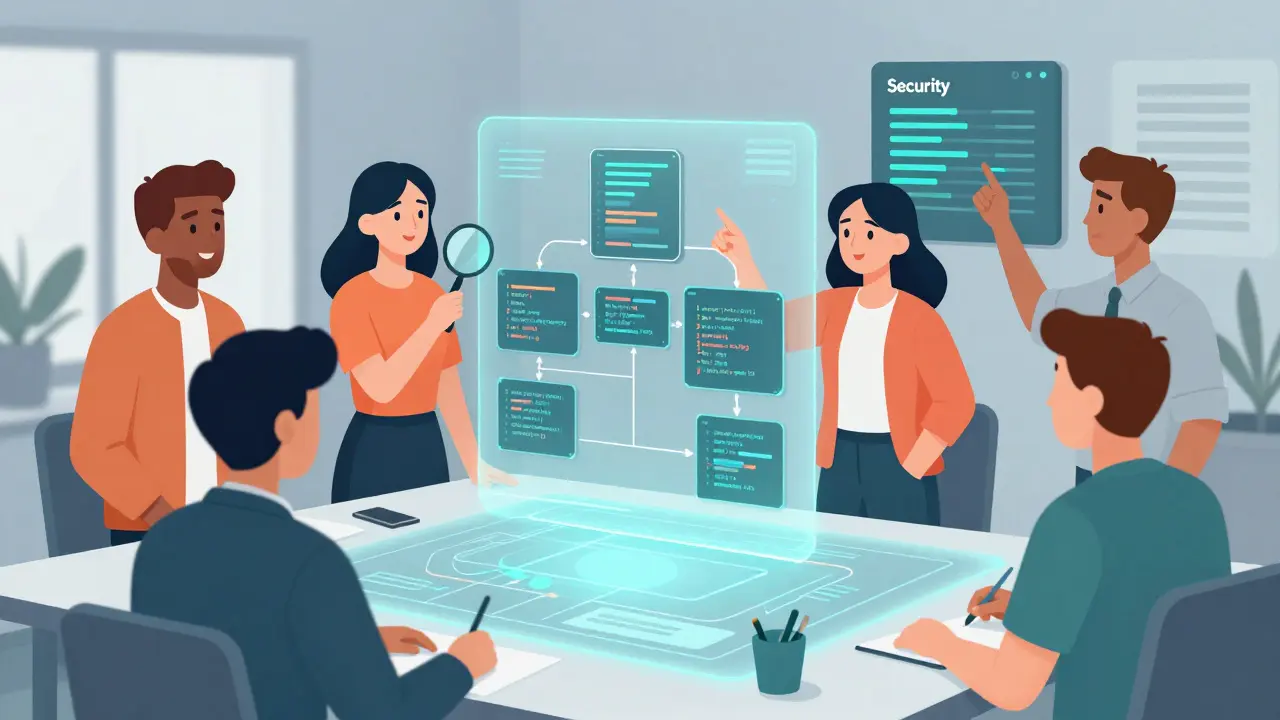
Implementing HITL practices isn't just about technical processes; it's also about culture. Teams need to embrace a mindset of responsibility and continuous learning. Encourage developers to share their experiences with AI-generated code, both successes and failures. Create forums for discussing best practices and emerging threats.
Training is essential. Ensure that all team members understand the limitations of AI models and the importance of human oversight. Provide resources on secure coding practices, testing methodologies, and architectural design. When everyone is aligned on the goals and methods, the transition to vibe coding becomes smoother and safer.
Ultimately, the goal is to leverage AI to enhance productivity without compromising safety. By embedding human judgment into every stage of the development process, you can enjoy the benefits of vibe coding while mitigating its risks. This balanced approach ensures that your applications are not only fast to build but also robust, secure, and maintainable in the long run.
What is vibe coding?
Vibe coding is a software development approach where developers use natural language prompts to guide AI agents in generating code. Instead of writing syntax manually, developers focus on defining the intent or "vibe" of the application, allowing the AI to handle the implementation details.
Why is human-in-the-loop important for vibe coding?
Human-in-the-loop (HITL) is crucial because AI models can produce code that appears correct but contains logical errors, security vulnerabilities, or inefficiencies. Human oversight ensures that the generated code aligns with business requirements, follows best practices, and is secure before deployment.
How can I start implementing HITL in my workflow?
Start by defining clear boundaries for AI usage, breaking down complex tasks into smaller modules, and integrating static analysis tools. Assign experienced developers to review AI-generated code, focusing on security and logic. Establish a routine of testing and documenting decisions to maintain quality and accountability.
What are the risks of vibe coding without HITL?
The primary risks include introducing security vulnerabilities, creating unmaintainable code, and encountering logical errors that go unnoticed until deployment. Without human oversight, there is no guarantee that the AI's output meets specific business needs or adheres to industry standards.
Can AI replace human developers entirely?
No, AI cannot replace human developers entirely. While AI can automate repetitive tasks and generate code quickly, it lacks the contextual understanding, creativity, and ethical judgment required for complex software engineering. Human developers are needed to define requirements, oversee quality, and ensure security.