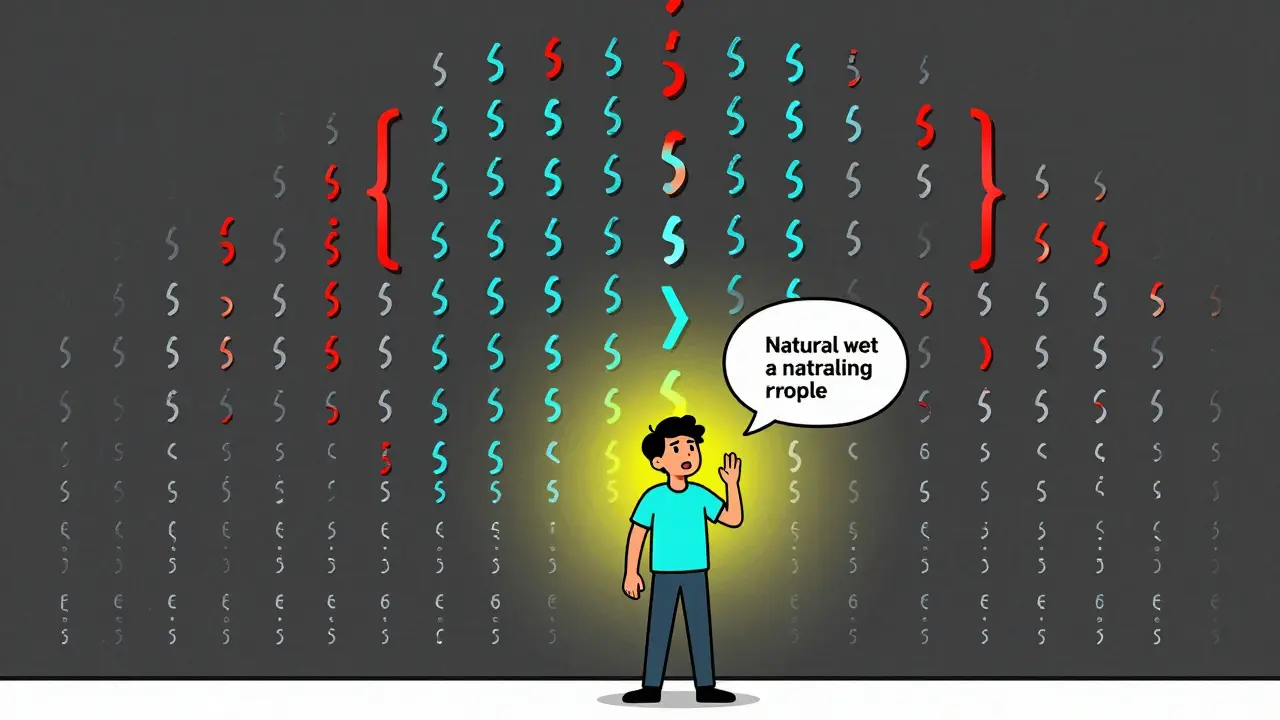
Imagine wanting to build an app but feeling stopped by a wall of semicolons, curly brackets, and cryptic error messages. For decades, the ability to create software was locked behind a high technical barrier-you either spent years learning syntax or paid someone who did. But something has shifted. We've entered the era of vibe coding is a conversational approach to software development where the builder describes the desired outcome in natural language, and AI handles the actual code generation and iteration. It's less about writing lines of code and more about guiding the "vibe" of the project until it works.
The End of the Syntax Struggle
Traditional coding is a game of precision. One missing comma can crash an entire system, and for a new builder, hunting for that comma is a tedious, soul-crushing process. Vibe coding changes the game by moving the interface from a code editor to a conversation. Instead of worrying about how to declare a variable or set up a loop, you tell the AI, "I want a landing page with a dark mode, neon accents, and a pricing table that pops when you hover over it."
This shift drastically reduces the cognitive load. You aren't spending your mental energy on memorizing the documentation for a specific framework; instead, you're focusing on the user experience and the problem you're solving. The AI takes care of the boilerplate-the boring, repetitive setup code that usually takes hours-and delivers it in seconds. For someone who has never opened a terminal in their life, this is a complete liberation.
Tools Powering the Vibe
You can't do vibe coding with a basic text editor. You need tools that understand the context of your entire project. Currently, a few key players are leading this charge:
- Cursor is an AI-native code editor that allows developers to edit codebases through natural language prompts and codebase-wide awareness.
- GitHub Copilot is an AI pair programmer that suggests code snippets and entire functions in real-time.
- Replit is a cloud-based collaborative development platform that integrates AI to help build and deploy apps instantly.
| Feature | Traditional Coding | Vibe Coding |
|---|---|---|
| Primary Skill | Syntax & Logic Mastery | Prompting & Vision |
| Setup Time | Hours (Boilerplate/Config) | Seconds (AI Generated) |
| Iteration Cycle | Write → Test → Debug | Describe → Review → Refine |
| Barrier to Entry | High (Technical Training) | Low (Natural Language) |
Turning Ideas into MVPs in Hours, Not Weeks
For entrepreneurs and solo founders, the biggest hurdle has always been the Minimum Viable Product is a version of a new product that allows a team to collect the maximum amount of validated learning about customers with the least effort, or MVP. In the past, building a functional demo to show investors or early users required a significant budget or a technical co-founder. Vibe coding collapses this timeline.
Now, a product manager can spend a Tuesday afternoon describing features and a Wednesday morning testing a functional interactive prototype. If the first version doesn't feel right, they don't have to rewrite 500 lines of code; they just tell the AI, "Actually, make the navigation sidebar collapsible and move the search bar to the top right." This rapid prototyping allows for faster user testing and a much lower cost of failure. You can kill a bad idea in three hours rather than three months.
Creativity Without Friction
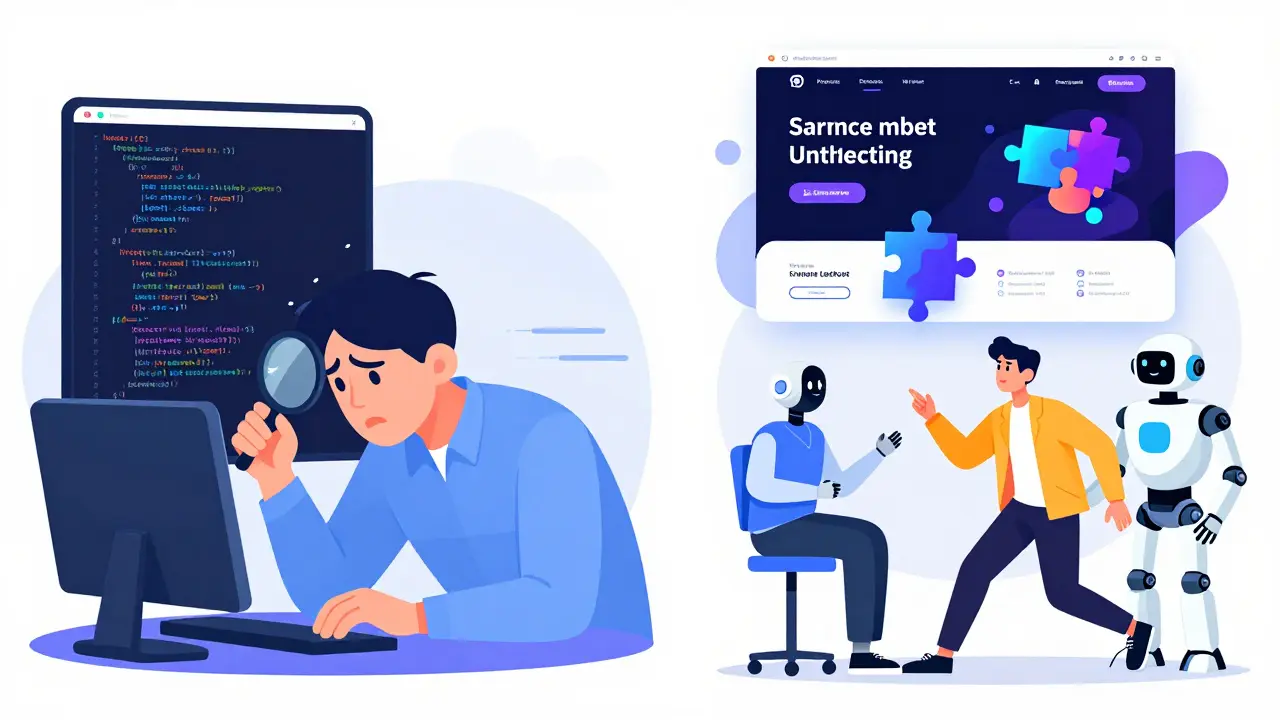
When you don't have to stop and Google why a CSS flexbox isn't centering your div, you stay in a "flow state." This is where the true democratization happens. Vibe coding turns development into an interactive playground. Designers and artists can experiment with bold visual ideas-like switching a layout from a grid to a list or adding complex animations-without the fear of breaking the codebase.
This is particularly powerful for creating microsites is small, focused websites consisting of only a few pages, often used for a single purpose like a product launch or a portfolio. Because these sites often don't require complex backend databases or user logins, they are the perfect entry point for new builders. You get a polished, professional result that looks like it came from a high-end agency, even if you've never written a single line of HTML manually.
Bridging the Gap in Team Collaboration
Vibe coding doesn't just help individuals; it fixes how teams work. Usually, there's a "translation gap" between a business stakeholder and a developer. The stakeholder says "make it feel more modern," and the developer spends three days interpreting what that means.
With AI-assisted workflows, the marketer or designer can actually interact with the AI to shape the development direction themselves. They can generate a visual draft and then hand it over to a professional engineer to optimize for security, performance, and scale. This removes the technical intermediary and ensures that the final product actually matches the original vision.
Practical Tips for New Builders
If you're new to this, don't try to build the next Facebook in one prompt. That's a recipe for a hallucinating AI and a broken app. Instead, follow these heuristics:
- Start Small: Build one feature at a time. Get the button to work before you try to build the entire checkout system.
- Be Specific: Vague prompts like "make it look cool" get vague results. Use prompts like "use a minimalist Swiss-style layout with plenty of white space and a bold sans-serif font."
- Iterate Rapidly: If the AI makes a mistake, don't try to fix the code manually if you don't know how. Describe the error to the AI and ask it to fix it.
- Document Your Prompts: When you find a prompt that works perfectly for a specific layout or function, save it. This is the new version of a "code snippet library."
What's Next for the Vibe Era?
We are moving toward a world where the boundary between "citizen developers" and professional engineers is blurring. We'll likely see vibe coding expand from front-end styling into full-stack workflows, where AI handles the database setup and deployment pipelines automatically. We can also expect "security-by-default" AI that automatically integrates GDPR compliance and accessibility standards without the user having to ask for them.
Ultimately, vibe coding is about removing the tax on creativity. It ensures that the people with the best ideas-not just the people with the best knowledge of a specific programming language-are the ones building the future of the web.
Do I need to know any coding to start vibe coding?
No, you don't need prior coding knowledge to get started. However, understanding basic concepts-like what a "component" is or the difference between the "front-end" (what you see) and the "back-end" (where data is stored)-will help you give better prompts and get faster results.
Is code generated via vibe coding high quality?
For MVPs and prototypes, it is usually more than sufficient. However, for large-scale enterprise apps, AI-generated code can sometimes be inefficient or contain security gaps. It is always best to have a professional developer review the code before deploying it to a production environment with real user data.
Which tool is best for a complete beginner?
Replit is often the easiest starting point because it handles the hosting and environment setup in the browser, meaning you don't have to install complex software on your own computer to see your app go live.
What is prompt engineering in the context of vibe coding?
Prompt engineering is the art of writing clear, detailed instructions for the AI. Instead of saying "build a shop," a prompt engineer would say "build a responsive e-commerce storefront using Tailwind CSS with a product grid, a sliding cart drawer, and a search bar that filters results in real-time."
Will vibe coding replace software engineers?
It replaces the manual labor of writing boilerplate code, but it doesn't replace the need for system architecture, security auditing, and complex problem-solving. Software engineers are shifting from being "writers of code" to "architects and reviewers of AI-generated systems."
Amy P
April 25, 2026 AT 21:53Oh my god, this is literally a game changer!! I've always had these wild ideas for apps but the second I saw a curly bracket I just... froze. Imagine actually being able to just DESCRIBE your dream project and seeing it happen in real-time! It's honestly breathtaking to think about how many people are now unleashed from that technical prison!
Ashley Kuehnel
April 26, 2026 AT 23:42Love this energy! Just a tiny heads up for anyone starting out... make sure you save your prompts in a doc or something because sometimes the AI loops and you'll want to go back to the version that actually worked. Its a litle trial and error at first but totally worth it!! Replit is def a grate place to start if your scared of the terminal.
Mongezi Mkhwanazi
April 28, 2026 AT 05:35The naive assumption here is that "vibes" can ever substitute for the rigorous, disciplined architecture of a seasoned engineer... and while the masses may enjoy their little prototypes, the inevitable collapse of these AI-generated facades will only serve to prove that true mastery requires the suffering of the syntax, a reality that these new "builders" are far too sheltered to comprehend...!!!
Colby Havard
April 29, 2026 AT 03:06One must ponder if we are truly democratizing creation, or merely outsourcing our cognitive faculties to a black box...!!! If the human no longer understands the "why" behind the structure, they are not a creator, but a curator of shadows...!!! We risk entering a dark age of superficiality where the aesthetic "vibe" supersedes the structural truth of logic...!!!
adam smith
April 29, 2026 AT 18:35It is a bit too much.