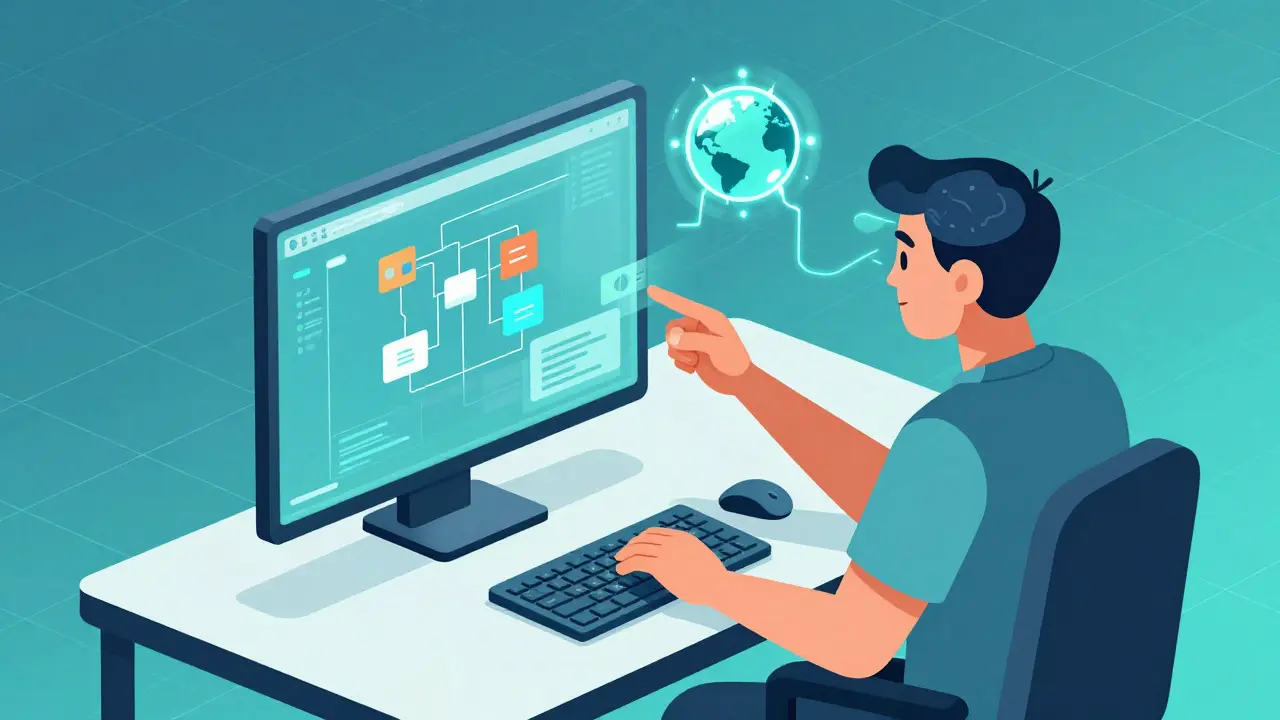
Have you ever tried to force an old workflow onto a new technology and felt the friction immediately?
That’s exactly what happens when development teams try to apply traditional management strategies to vibe coding. By March 2026, this methodology has moved past the novelty phase. Teams aren't just using AI assistants anymore; they are orchestrating output through natural language instructions rather than manual syntax entry. But shifting your organization to this model requires more than just handing out access to better Large Language Models (LLMs). It demands a fundamental overhaul of how we train, tool, and incentivize our engineers.
Understanding the Reality of Vibe Coding in 2026
Before we talk about managing the change, we need to agree on what is actually changing. Vibe coding is a development approach where developers interact with AI systems through natural language conversations to direct code generation and architectural decisions. In the past, we defined productivity by lines of code written. Today, the metric is "lines of logic directed" and verified.
This shift isn't cosmetic. It changes the developer role from an author to an architect and auditor. When a developer uses a model like Claude 3.7 or GPT-o3-mini, they aren't typing functions. They are negotiating requirements with an engine that can hallucinate if pushed too far. The "vibe" refers to the feedback loop-the conversation between human intent and machine execution. If that loop breaks due to poor prompting or lack of oversight, the project derails instantly.
The Three Pillars of Adoption
Successful implementation relies on three non-negotiable pillars. Without these, you aren't doing vibe coding; you're just gambling with AI-generated scripts.
- Mental Model Shift: Moving away from perfectionism to iterative refinement. The first draft is never the final draft. It's a prototype meant to be rejected or edited.
- Context Management: Recognizing that AI has memory limits. A long-running session causes confusion. You need disciplined processes for resetting context and documenting state externally.
- Governance & Quality: Since the AI writes the code, humans must write the tests. Verification becomes the primary job function, not creation.
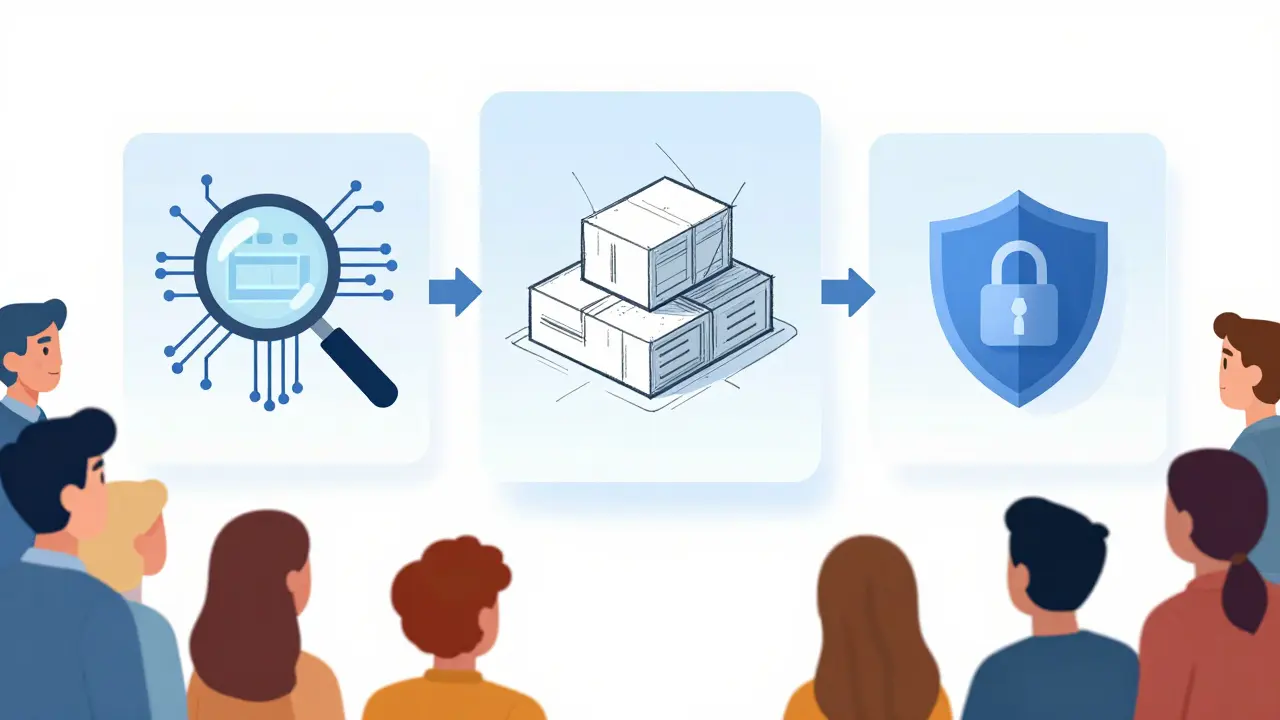
Designing Your Training Curriculum
If you expect your team to master this tomorrow, you are setting them up for failure. We looked at industry standards from 2025 and found that generic "AI literacy" courses aren't enough. You need specialized training that bridges the gap between legacy coding knowledge and AI orchestration.
Module 1: Advanced Prompt Engineering
Prompting is no longer asking nicely. It's about structural precision. Effective training teaches developers to craft context-rich prompts that specify constraints, data types, and error handling before generating a single line of code. Research suggests that the quality of the prompt dictates the quality of the output. A vague request yields a generic solution; a detailed brief yields architecture you can ship.
Module 2: The Two-Pass Methodology
Instructors must teach the concept of the two-pass workflow. Pass one creates a rough skeleton-a prototype to surface design questions. Pass two refines that code into a production-ready state. This prevents developers from trying to get "perfect" code in one go, which is the number one cause of wasted token usage and burnout.
Module 3: Audit and Verification Protocols
Perhaps the most critical skill is knowing what you cannot verify. AI can introduce subtle bugs that pass a quick glance. Training must cover rigorous testing protocols, specifically focusing on edge cases that the AI might overlook because they fall outside its training distribution. Developers need to learn how to spot patterns of laziness in the generated code.
Tooling the Ecosystem
Talking about tools often gets boring quickly, but the choice of platform determines whether your team scales or stalls. You cannot do serious vibe coding on a chat interface alone. You need environments that support file separation, version history, and persistent memory.
| Environment Type | Primary Use Case | Best Practice Requirement |
|---|---|---|
| Chat Interface (e.g., Web UI) | Rapid prototyping, brainstorming logic flows | Save sessions frequently; export code immediately |
| IDE Integration (e.g., Copilot Workspace) | Daily development, file-level edits | Ensure context window doesn't exceed token limits |
| Specialized Platforms (e.g., Refact.ai) | Full project lifecycle, agent-based testing | Utilize modular code generation; separate files per component |
Version control tools like Git remain essential infrastructure. In a vibe coding setup, Git commits serve as "save points." When the AI introduces an error that cascades across a module, you need the ability to revert instantly. Furthermore, commit messages should track *what changed in logic*, not just syntax. This preserves institutional knowledge even as the code evolves rapidly.
Documentation also shifts. README files must be living documents updated after every significant iteration. Ask your team to instruct the AI to update documentation automatically when changing functionality. This keeps the "source of truth" synchronized with the codebase.
Structuring Incentives for New Behaviors
What motivates a developer to stop writing C++ manually and start directing an AI? If you measure velocity solely by story points completed, you'll encourage rushing. You need to change the reward system to match the new way of working.
The most compelling incentive is the reduction in repetitive cognitive load. Developers are tired of boilerplate. Vibe coding offloads the tedious typing, allowing them to focus on complex system architecture. Highlight this benefit: "You spend less time fighting syntax errors and more time solving business problems." This reduces burnout significantly.
A secondary incentive is professional advancement. Mastering these tools makes a developer more marketable. Create career paths that recognize "AI Orchestration" as a senior competency. Promote those who build effective internal libraries of prompts and reusable components, rather than just those who write the most raw code.
Finally, reward quality over quantity. The organization should celebrate successful iteration cycles-where a feature went from idea to validated prototype faster than the historical average. This acknowledges the speed advantage of the methodology without sacrificing stability.
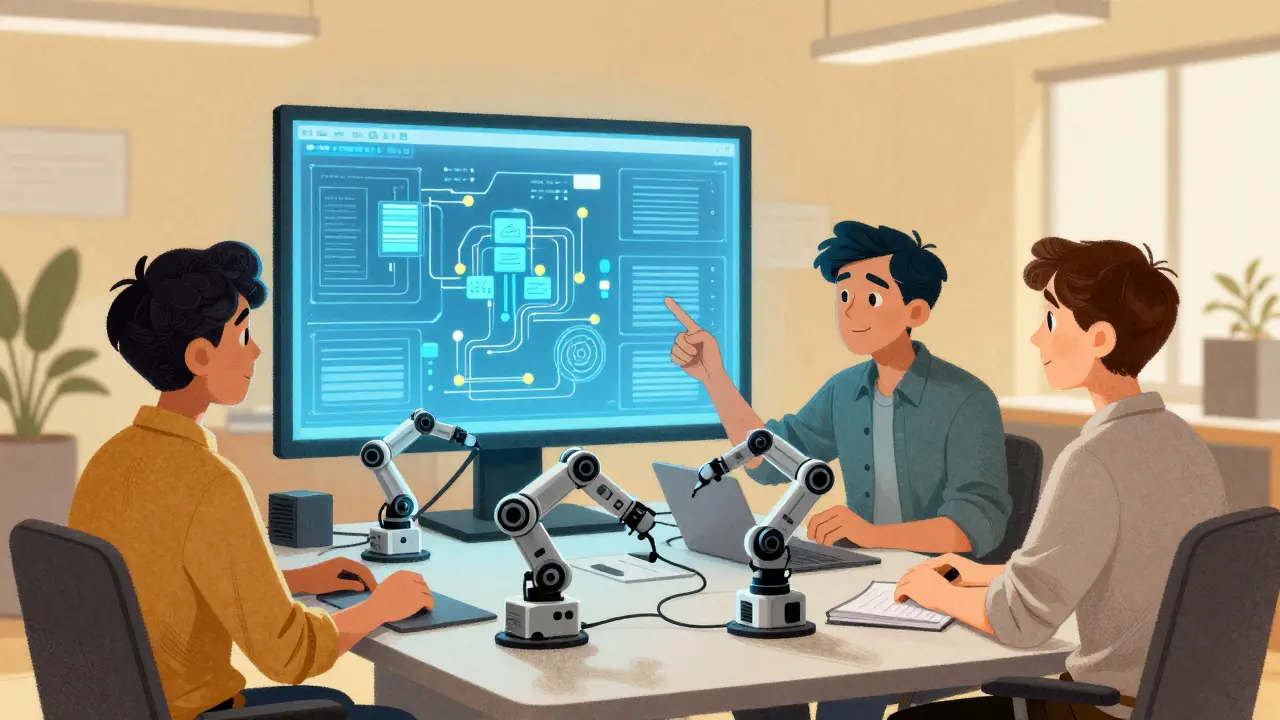
Navigating the Human Friction
Even with great tools and training, resistance creeps in. Some veteran developers view this as "cheating" or fear losing their edge. Others worry about security risks inherent in sharing proprietary logic with external models.
To address this, establish clear guardrails. Define which data can be sent to public models and which must stay on private, enterprise instances. Clarifai's analysis suggests treating AI as a conversation partner, not a genie. This distinction helps reframe the risk: you are having a discussion with a highly capable intern who needs supervision, not handing over the keys to your bank account to a stranger.
Also, address the fear of obsolescence. Show them the evidence: teams using vibe coding are scaling capacity, meaning fewer layoffs and more high-value projects available to tackle. Make it clear that the goal is augmentation, not replacement.
How does vibe coding impact code maintenance?
Maintenance requires stricter documentation practices. Because code changes happen rapidly, you must mandate that the AI updates comments and documentation simultaneously with code changes. Using modular file structures prevents context bloat and makes refactoring easier.
Is vibe coding secure for proprietary logic?
Security depends on the platform used. Enterprise-grade implementations utilize private models or sandboxed environments where your code does not leak into the public training set. Always configure data retention policies to zero-retention mode.
Can junior developers succeed with this approach?
Yes, but it requires mentorship. Juniors can produce functional prototypes quickly, but they may lack the experience to identify bad architecture generated by AI. Pair programming where a senior engineer reviews the AI output is crucial during the learning phase.
Next Steps for Implementation
You now have the framework to move forward. Start small. Pick a single pilot project where the stakes are low. Equip the team with the necessary platforms, preferably those offering agent-based capabilities for autonomous testing. Set a timeline for weekly reviews where the focus is on the quality of the AI's reasoning, not just the output.
Remember, the goal isn't to eliminate the developer from the loop. It's to elevate their role. If you execute the training and incentive alignment correctly, you will see a measurable jump in iteration speed. Keep measuring. Keep adjusting the prompts. And above all, maintain the discipline to review what the machine produces, no matter how fast it arrives.
Rakesh Kumar
March 30, 2026 AT 18:43The friction described here is absolutely palpable in every major office I visit lately. We are standing at a precipice where the old guard refuses to let go of manual typing while the new wave dives headfirst into orchestration. It creates a culture war within the engineering department that management completely ignores until things break. You cannot simply hand out API keys and expect harmony. The psychological barrier is heavier than the technical hurdle in almost every case. I have seen senior devs cry over their legacy codebases being automated away in a day. It is a dramatic shift in identity that requires immense support systems to navigate successfully.
Bill Castanier
March 31, 2026 AT 19:57Your point about the psychological impact resonates deeply with my own experience on large teams. Syntax entry was once the baseline for competence assessment but it feels obsolete now. We need to reframe what constitutes value creation for our staff immediately. The transition period requires patience from leadership and adaptability from staff. Both sides often blame each other for the resulting slowdown in deployment velocity.
Ronnie Kaye
April 1, 2026 AT 23:28Sure vibe coding is just prompt engineering wrapped in marketing fluff until the models inevitably hallucinate your entire database away. Everyone acts like the sky is falling when autocomplete gets too smart but really it is just copy pasting on steroids. Stop pretending this changes anything fundamental about software engineering principles or reliability standards. We still debug the same way even if we do not type the characters ourselves manually.
Flannery Smail
April 3, 2026 AT 09:45I think you are ignoring the massive overhead of verification costs when using these tools indiscriminately. Traditional review processes scale differently and removing human keystrokes does not remove the need for logic validation. The industry keeps swinging pendulums and this one looks like it is heading for a crash landing soon enough. People forget that AI generated code often follows insecure patterns baked into its training data sets. We need to trust our own intuition more than algorithmic suggestions right now.
Emmanuel Sadi
April 4, 2026 AT 00:05You people are pathetically holding onto manual labor like it gives you meaning when the machines clearly win. The only reason juniors struggle is because you refuse to stop protecting your outdated skillset and gatekeeping tools. Look at how fast the prototypes get built compared to your legacy spaghetti pile. Ignorance is not a virtue when the company pays you for shipping results regardless of the tool used. Wake up and accept that your keyboard skills are less relevant than your brain function.
Chuck Doland
April 5, 2026 AT 08:59While the sentiment regarding automation efficiency is noted, one must carefully examine the structural implications of such rapid transitions. The discourse surrounding mental model shifts often overlooks the requisite institutional memory required for true audit effectiveness. Without rigorous documentation protocols, the very benefits of speed are negated by future maintenance nightmares. Developers accustomed to line-by-line construction struggle immensely when their role pivots to high-level architecture without intermediate steps. We observe that failure rates increase when organizations attempt full migration overnight rather than through phased integration strategies. The cognitive load shifts from syntax recall to contextual management which is a fundamentally different skill set requiring dedicated curriculum development. Teams that neglect this educational investment will find themselves debugging AI errors at a pace slower than manual coding would have allowed. Furthermore, security boundaries must be redrawn constantly as external models access internal logic flows during generation phases. Leadership must understand that incentives drive behavior and measuring lines of code directs attention away from system integrity entirely. It is imperative that verification becomes the primary metric for promotion rather than volume of commit history alone. Cultural resistance is natural but can be mitigated through transparent communication channels regarding job evolution. We must prioritize augmenting human potential rather than threatening replacement narratives which breed unnecessary hostility. Security concerns regarding proprietary data leakage remain valid and require enterprise-grade isolation mechanisms always. Finally, remember that tool selection dictates workflow success and generic chat interfaces cannot sustain complex project lifecycles. Governance frameworks must evolve alongside the technology stack itself. Continuous adaptation is the only constant in this shifting landscape of modern software engineering practice.
Wilda Mcgee
April 7, 2026 AT 08:23This comprehensive view of the ecosystem really shines a light on where the real bottlenecks actually live for us. I found the section on modular file structures especially vibrant and useful for our upcoming refactor projects next quarter. Pairing seniors with juniors helps bridge that gap in architectural judgment beautifully for everyone involved. We saw huge improvements when we started treating documentation as a living thing rather than an afterthought. It makes the whole vibe feel much safer and more trustworthy for the team overall.
Madeline VanHorn
April 9, 2026 AT 08:08Real developers know that code quality comes from deep understanding not magic boxes spitting out text. If you rely on prompts you are not building anything lasting and you should be ashamed of taking shortcuts like this. The best teams do not use crutches because they understand the logic perfectly already. This trend is dumbing down the field and making us all dependent on servers we do not control fully.
Glenn Celaya
April 9, 2026 AT 22:24the problem is ur boss wont believe u cant code without ai anymore so u gotta fake it till u make it im guessing lol but seriously the testing part is insane cause u dont know what u r missing sometimes
Chris Atkins
April 11, 2026 AT 18:05Thanks for putting this together and helping clarify the path forward for many confused teams.