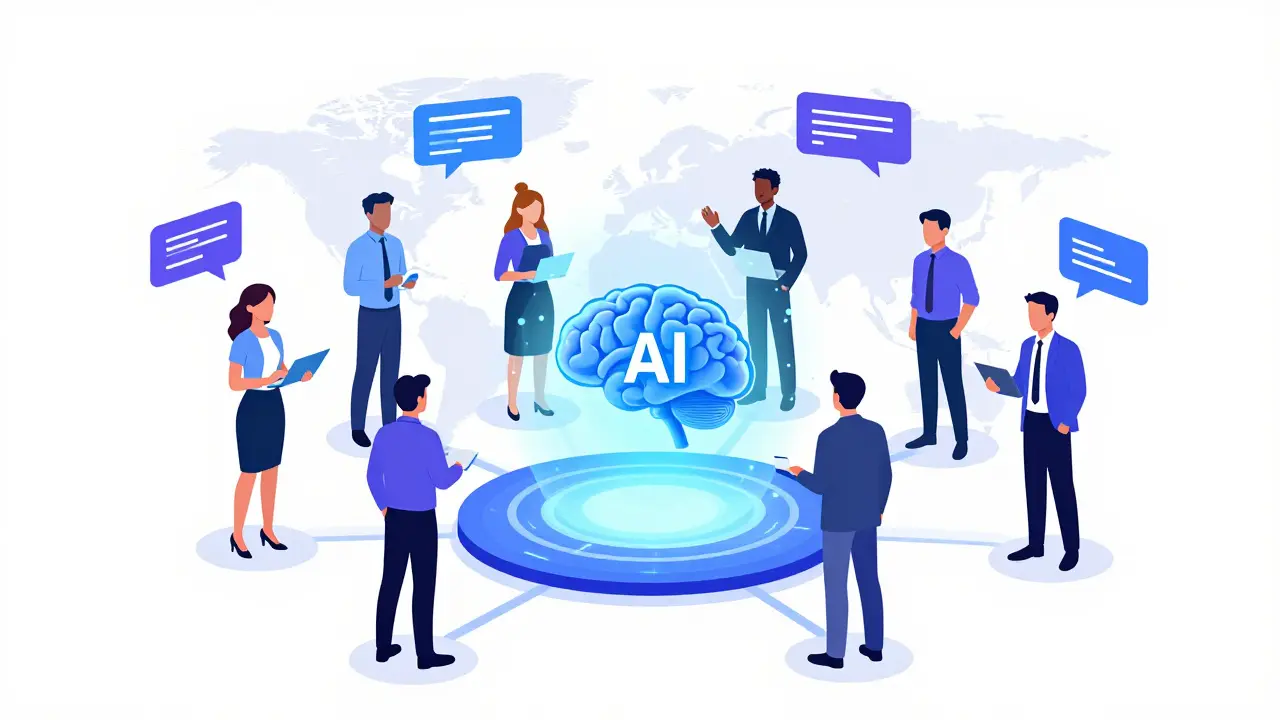
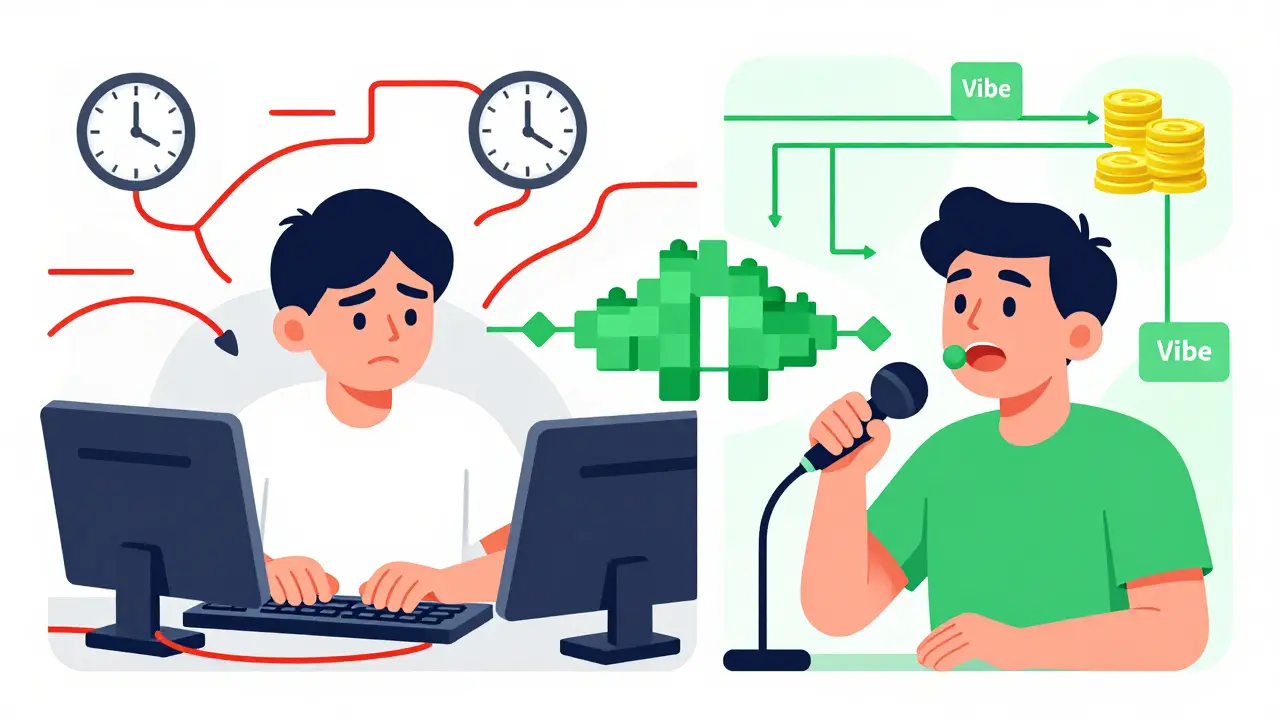
Imagine telling your computer to "build a dashboard that tracks user retention" and watching it appear on your screen in minutes. This isn't science fiction anymore. It's vibe coding, a new way of building software using natural language and voice instead of typing every line of code. For global teams working across different time zones, this shift is changing everything. You don't just write code faster; you think about problems differently.
Traditional programming often feels like a bottleneck. Developers spend hours debugging syntax errors or formatting files. With vibe coding, artificial intelligence handles the heavy lifting of writing the actual code. You focus on the logic and the goal. This article breaks down how distributed organizations are using this method to ship products faster, save money, and work better together.
What Is Vibe Coding?
Vibe coding is a development approach where you describe what you want in plain English (or any other language) rather than writing complex commands. Tools powered by generative AI listen to your instructions or read your text prompts. They then generate the necessary code, test it, and integrate it into your project.
Think of it as having a highly skilled junior developer sitting next to you who never sleeps and knows every programming language. You say, "Create a login page with OAuth support," and the tool writes the HTML, CSS, and backend logic. You review it, tweak it if needed, and move on. The key difference from older AI tools is the context awareness. Modern systems understand your entire project structure, not just the single file you are looking at.
This method relies on advanced speech recognition and large language models. It turns coding into a conversation. Instead of fighting with semicolons and brackets, you discuss features, architecture, and fixes. This reduces mental fatigue and keeps developers in their "flow state" longer.
Why Distributed Teams Need This Now
Global teams face unique challenges. When your designer is in Berlin, your engineer is in Bangalore, and your product manager is in San Francisco, communication breaks down easily. Time zone differences mean waiting days for simple clarifications. Technical jargon creates barriers between roles.
Vibe coding solves these issues by creating a shared language. Everyone speaks natural language. A non-technical stakeholder can draft a prototype feature without needing to know Python or JavaScript. An engineer can explain a technical constraint in plain terms that anyone understands. This bridges the gap between departments.
Consider the impact on speed. In traditional setups, a feature request might take weeks to go from idea to deployment. With vibe coding, that timeline shrinks to days or even hours. Y Combinator CEO Garry Tan has noted that some teams see productivity increases of up to 100 times compared to old methods. While "100x" sounds extreme, the real-world result is clear: small teams can now do the work that used to require dozens of engineers.
Real-World Use Case: Netlify’s HR Transformation
To see vibe coding in action, look at what Netlify did. Their People team needed custom internal tools for human resources. Buying expensive SaaS software didn't fit their specific needs. Building it traditionally would have taken months and required hiring more developers.
Instead, they used vibe coding. Jasmine, a member of the Netlify team, built an onboarding tool using natural language prompts. This tool helped new hires in 12 different countries get started quickly. They didn't have to wait for someone in the same time zone to help them set up accounts or answer basic questions.
The results were significant:
- Cost Savings: The team saved over $10,000 annually by avoiding SaaS subscriptions.
- Efficiency: New hires could engage with the product immediately, reducing manual process hours.
- Focus: HR staff spent less time on routine tasks and more on strategic people management.
This example shows that vibe coding isn't just for hardcore programmers. It empowers other departments to build solutions tailored to their exact needs. It democratizes software creation within an organization.
How Vibe Coding Changes Team Dynamics
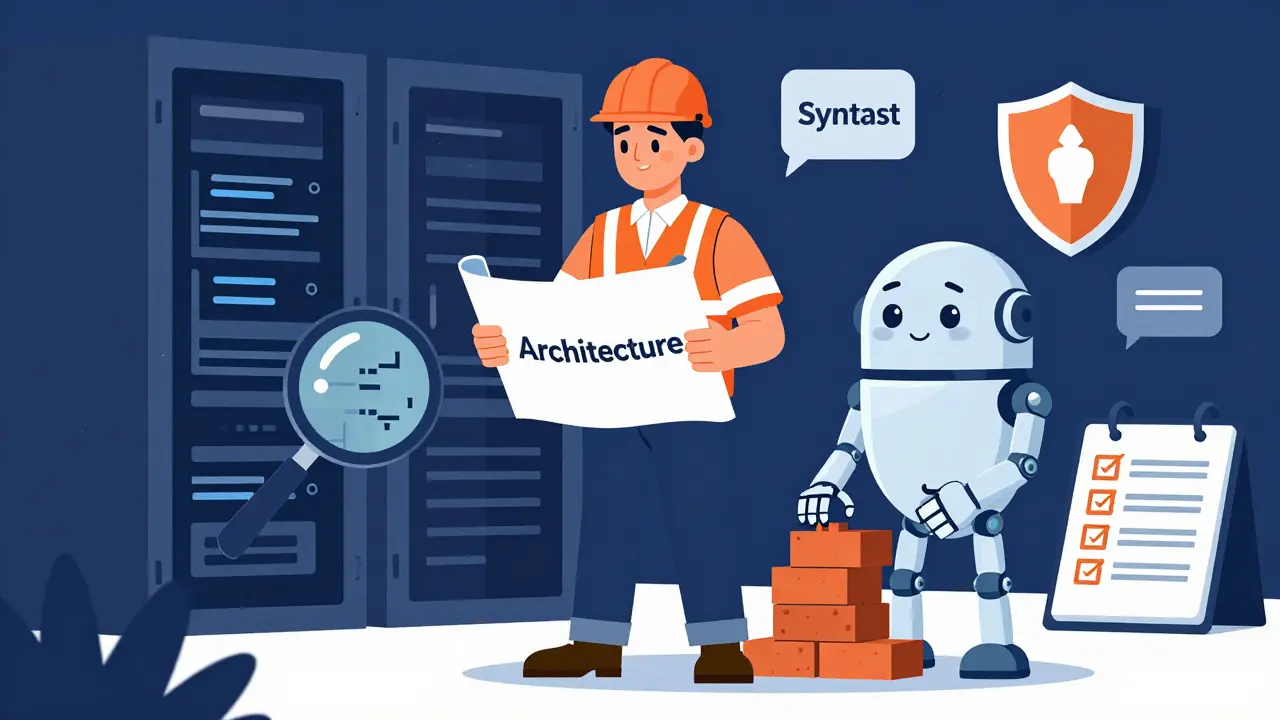
When AI writes the code, the role of the human developer changes. You stop being a typist and start being an architect. Code reviews shift focus. Reviewers no longer waste time checking for consistent indentation or variable naming conventions. The AI handles that automatically.
Instead, humans focus on system-level thinking. Is this feature secure? Does it scale well? Does it meet the user's real needs? This elevates the quality of discussion. Managers spend less time translating between design specs and engineering tickets. They align on intent and outcomes.
Design conversations become more technical because designers can see how their ideas translate into code instantly. Technical decisions become more user-centered because developers spend less time on implementation details and more time on user experience. This creates a tighter feedback loop. You can iterate on a feature, show it to a stakeholder, and refine it all in one afternoon.
Technical Requirements for Success
Vibe coding doesn't work in a vacuum. To get the most out of it, your infrastructure needs to support seamless access to data. AI models need context to generate useful code. If your data is siloed across different servers or requires complex permissions to access, the AI will struggle.
Organizations need a consolidated data environment. Think of it as a global namespace where authorized users and AI agents can find the information they need safely. Real-time file sharing is essential. Your team in London must see the same code base as your team in Tokyo, instantly.
Version control becomes even more critical. You need to track not just human changes but also AI-generated suggestions. This provides auditability. If something goes wrong, you need to know whether a human wrote that line of code or if the AI suggested it. Tools that preserve this history help maintain trust and quality standards.
| Aspect | Traditional Coding | Vibe Coding |
|---|---|---|
| Input Method | Manual typing of syntax | Natural language/voice prompts |
| Developer Role | Writer of code | Reviewer and architect |
| Speed | Weeks to months per feature | Hours to days per feature |
| Barrier to Entry | High (requires deep syntax knowledge) | Low (requires logical thinking) |
| Code Review Focus | Style, syntax, bugs | Architecture, security, logic |
Pitfalls and How to Avoid Them
Vibe coding is powerful, but it's not magic. There are risks. One major pitfall is over-reliance on AI output. Just because the code runs doesn't mean it's optimal or secure. Developers must still validate every suggestion. The responsibility for quality remains with the human team.
Another issue is context loss. If you don't provide enough background to the AI, it might generate generic code that doesn't fit your specific business rules. Always give detailed prompts. Describe the edge cases. Explain the user journey.
Security is also a concern. Be careful about feeding sensitive proprietary data into public AI models. Use enterprise-grade tools that keep your data private. Ensure your team understands which information is safe to share with AI assistants.
Finally, don't ignore documentation. It's tempting to skip docs when code generation is so fast. But future-you (and your colleagues) will thank you for keeping records. Vibe coding tools can actually help here by generating documentation alongside the code. Use that feature.
Getting Started with Vibe Coding
If you want to try vibe coding in your organization, start small. Pick a low-risk project, like an internal tool or a prototype. Choose a platform that supports natural language interactions, such as Wispr Flow or similar AI-integrated IDEs.
Train your team on prompt engineering. Teach them how to ask clear, specific questions. Encourage experimentation. Create a psychologically safe space where trying new methods is welcomed, even if it fails initially. Measure your progress. Track how long tasks take before and after adopting vibe coding. Use those metrics to justify broader adoption.
Remember, the goal isn't to replace developers. It's to amplify their capabilities. By removing tedious tasks, you free up your best talent to solve harder problems. That's how global teams truly ship faster.
Is vibe coding suitable for beginners?
Yes, vibe coding lowers the barrier to entry significantly. Beginners can create functional applications by describing their ideas in plain language. However, they still need to learn basic logic and how to review the generated code to ensure it works correctly.
Does vibe coding replace professional developers?
No, it changes their role. Developers shift from writing syntax to designing systems and reviewing AI output. The need for strong architectural skills and problem-solving abilities actually increases, even if the amount of manual typing decreases.
How does vibe coding affect code quality?
If used correctly, it can improve consistency. AI tools follow style guides strictly. However, humans must remain vigilant for logical errors or security vulnerabilities. Quality depends on the developer's ability to critique and guide the AI effectively.
What tools are best for vibe coding?
Look for integrated development environments (IDEs) with advanced AI plugins. Tools like Wispr Flow offer voice-to-code capabilities. Other options include GitHub Copilot, Cursor, or Replit Agent, which allow natural language prompting for code generation and refactoring.
Can vibe coding handle complex enterprise projects?
It can, but it requires careful management. For large projects, break tasks into smaller modules. Ensure the AI has access to the full context of the codebase through proper indexing. Human oversight is crucial for integrating AI-generated components into a cohesive whole.