
We are standing at a crossroads. By mid-2026, Generative AI is technology capable of creating original text, images, audio, and code from minimal prompts has moved past the novelty phase. It is now embedded in healthcare diagnostics, legal research, creative industries, and government services. But with this rapid integration comes a pressing question: who benefits, and who gets left behind? The promise of GenAI lies not just in its ability to generate content, but in its potential to democratize expertise. If we get the ethics wrong, however, we risk cementing existing inequalities into digital infrastructure that will be hard to undo.
The core issue isn't just about preventing bad actors from using AI to create deepfakes or spread misinformation-though that is critical. It’s about structural fairness. Are the models trained on data that represents the whole world, or just a privileged subset? Who controls the compute power required to run these massive systems? And how do we ensure accountability when an algorithm makes a life-altering decision? As we look toward the future, the focus must shift from pure capability to equitable access and positive global impact.
The Digital Divide: Beyond Hardware
When we talk about equitable access, most people think of internet connectivity or owning a smartphone. That was the first wave of the digital divide. The second wave, driven by generative AI, is far more subtle and dangerous. It’s an intelligence divide.
Access to high-quality generative AI tools requires significant computational resources. Training large language models (LLMs) demands thousands of GPUs and vast amounts of energy. This creates a natural monopoly where only a handful of tech giants and wealthy nations can afford to build frontier models. Meanwhile, smaller countries, local communities, and independent developers are forced to rely on APIs provided by these central powers. This dependency strips them of sovereignty over their own technological destiny.
Consider the implications for education. In wealthy districts, students might have access to personalized AI tutors that adapt to their learning style in real-time. In under-resourced areas, if such tools exist, they may be limited, outdated, or biased against non-standard dialects. If we don’t actively intervene, AI won’t just reflect the gap between rich and poor; it will widen it exponentially. True equitable access means open-source alternatives, subsidized compute credits for developing regions, and policies that treat advanced AI as a public utility rather than a luxury good.
Bias in the Mirror: Data Representation
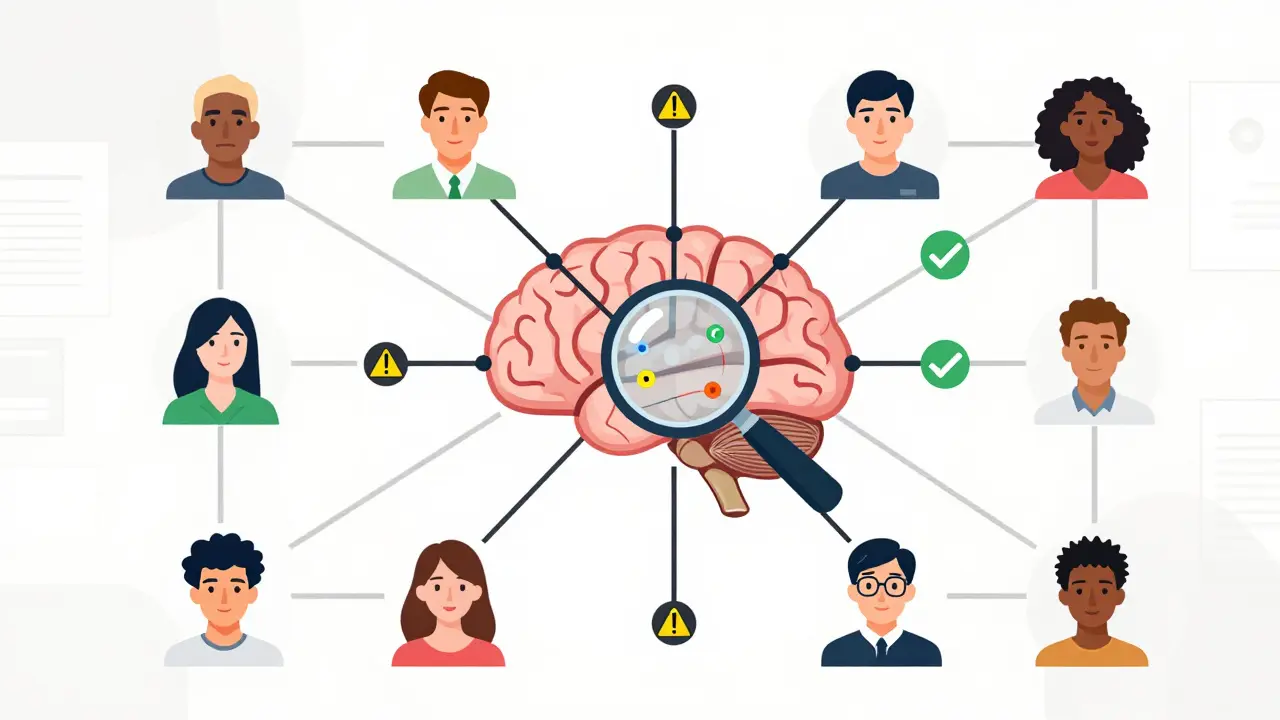
Generative AI learns from the data we feed it. If that data is skewed, the output will be too. This is not a bug; it’s a feature of statistical learning. The problem arises when historical biases-racism, sexism, colonialism-are encoded into the model’s weights and then amplified at scale.
Take hiring algorithms as an example. If a company uses an AI tool to screen resumes, and that tool was trained on decades of hiring data from a male-dominated industry, it will likely penalize resumes containing words associated with women’s organizations or gaps in employment often taken by caregivers. This isn’t hypothetical. We’ve seen this happen. The result is a feedback loop where discrimination becomes automated and hidden behind the veil of "algorithmic neutrality."
To combat this, we need proactive bias mitigation strategies. This involves:
- Diverse Datasets: Intentionally curating training data that includes underrepresented groups, languages, and cultures.
- Regular Audits: Conducting third-party audits before deployment to check for disparate impacts across demographic groups.
- Inclusive Teams: Building development teams that reflect the diversity of the users they serve. You cannot fix what you cannot see.
Transparency is key here. Companies should publish model cards that detail the data sources, known limitations, and performance metrics across different subgroups. This allows users to make informed decisions about whether the tool is appropriate for their context.
Global Frameworks and Governance
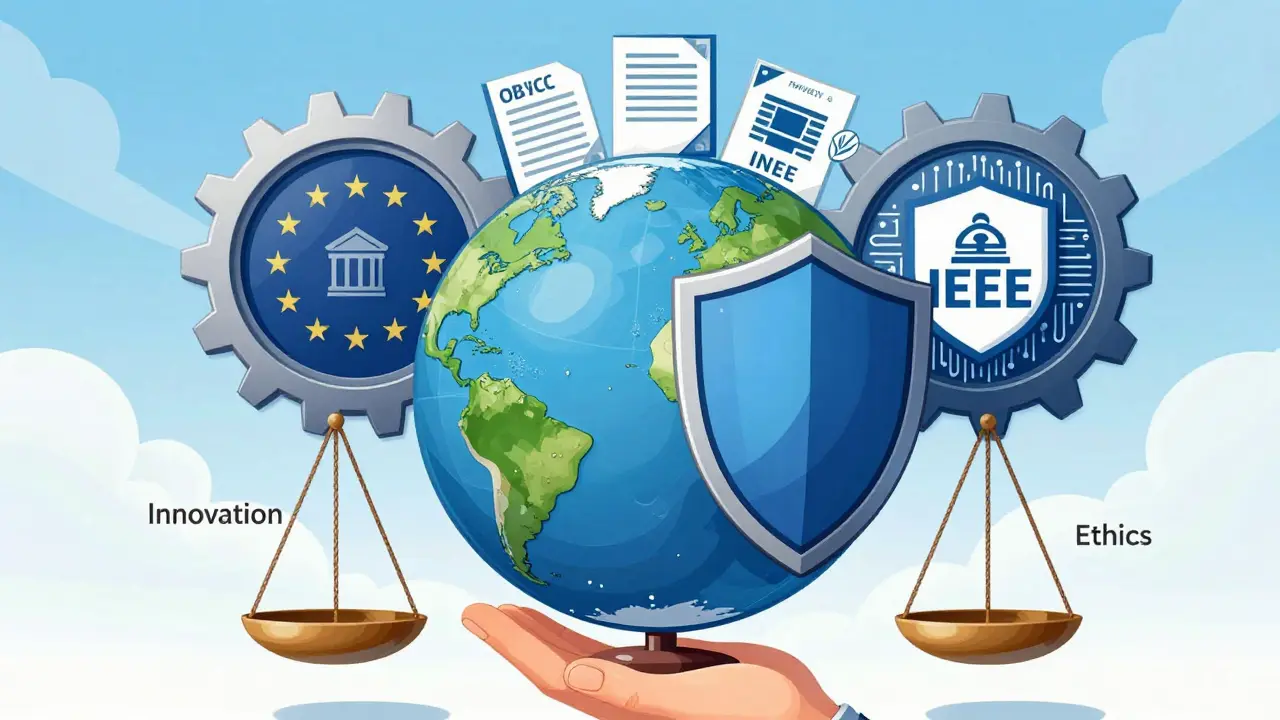
National borders don’t stop data flows, so ethical AI requires international cooperation. By 2026, several major frameworks have emerged to guide responsible development. These aren’t just theoretical documents; they are shaping legislation and corporate policy worldwide.
| Framework | Origin | Key Focus Areas | Enforcement Mechanism |
|---|---|---|---|
| EU AI Act | European Union | Risk-based approach, transparency, fundamental rights | Legal penalties, market bans |
| OECD AI Principles | OECD Member Countries | Inclusive growth, sustainable development, trustworthiness | Policy guidance, national implementation |
| IEEE Ethically Aligned Design | IEEE Global Initiative | Human values, privacy, safety, accountability | Industry standards, best practices |
The European Union’s AI Act is perhaps the most influential, taking a risk-based approach. High-risk applications, like those used in law enforcement or critical infrastructure, face strict conformity assessments. The OECD principles, adopted by over 40 countries, emphasize inclusive growth and well-being. Meanwhile, the IEEE provides technical guidelines for engineers to embed ethics directly into the design process.
However, fragmentation remains a challenge. Different regions have different cultural values regarding privacy and free speech. A model deemed acceptable in one country might violate human rights in another. We need interoperable standards that allow for local adaptation while maintaining a baseline of global safety and fairness.
Intellectual Property and Creator Rights
One of the most contentious issues in generative AI is intellectual property (IP). Most large models were trained on scraped data from the internet, including copyrighted works by artists, writers, and journalists. Many creators feel their work was used without consent or compensation to train competitors.
This raises serious questions about sustainability. If creators cannot earn a living from their work because AI can replicate it instantly, who will produce the original content in the first place? We risk a hollowed-out creative economy.
Solutions are emerging. Some platforms are implementing opt-in mechanisms where creators can choose whether their work is included in training sets. Others are exploring micro-licensing models, where small payments are made to rights holders whenever their style or content influences an AI output. Blockchain technology could play a role here, providing transparent trails of attribution and royalty distribution.
For businesses, this means shifting from a "scrape everything" mindset to a "curate responsibly" strategy. Partnering directly with publishers, stock photo agencies, and individual creators ensures legal compliance and builds trust. Transparency in training data provenance is no longer optional; it’s a business imperative.
Misinformation and Deepfakes
The ability to generate photorealistic videos and convincing audio clones poses a direct threat to democratic processes and social cohesion. Deepfakes can be used to defame individuals, manipulate stock markets, or sway elections. According to recent reports, a significant majority of non-consensual synthetic media targets women, highlighting the gendered nature of this abuse.
Fighting misinformation requires a multi-layered defense:
- Detection Tools: Developing robust algorithms that can identify synthetic media based on artifacts invisible to the human eye.
- Watermarking: Embedding cryptographic watermarks in AI-generated content to signal its origin.
- Media Literacy: Educating the public on how to spot fake news and verify sources.
- Platform Responsibility: Social media companies must enforce strict moderation policies and label AI-generated content clearly.
Regulations are catching up. Laws in various jurisdictions now require clear disclosure when users interact with AI agents or view synthetic media. This transparency helps preserve trust in digital communications.
Accountability and Human Oversight
Who is responsible when an AI system causes harm? Is it the developer, the deployer, the user, or the algorithm itself? Current legal frameworks struggle with this ambiguity. The concept of "black box" AI-where even the creators don’t fully understand how a decision was reached-complicates accountability further.
We need clear lines of responsibility. The EU AI Act mandates human oversight for high-risk systems. This doesn’t mean a human needs to approve every single output, but there must be meaningful control points where humans can intervene, correct errors, and halt operations if necessary.
Organizations should establish AI ethics boards composed of diverse stakeholders, including ethicists, legal experts, and community representatives. These boards can review use cases, assess risks, and provide guidance on ethical dilemmas. Incident response plans should be in place to address harms quickly and transparently.
Privacy in the Age of Generative AI
Generative AI models can inadvertently memorize sensitive information from their training data. There have been instances where models leaked personal identifiable information (PII) or confidential business data when prompted. This poses severe privacy risks.
Data minimization is crucial. Developers should use techniques like differential privacy, which adds noise to datasets to prevent individual records from being reconstructed. Federated learning allows models to be trained on decentralized devices without sharing raw data, preserving user privacy.
Users deserve control over their data. Opt-in consent mechanisms and easy-to-use deletion requests should be standard. Transparency reports detailing how data is collected, used, and protected help build trust.
Building an Inclusive Future
Achieving equitable access and positive global impact requires sustained effort from all sectors. Governments must invest in digital infrastructure and education. Tech companies must prioritize ethics over speed-to-market. Civil society must advocate for marginalized voices.
We also need to consider environmental impact. Training large models consumes enormous amounts of energy and water. Green AI initiatives aim to reduce this footprint through efficient algorithms and renewable energy sources. Sustainability is part of the ethical equation.
Finally, let’s remember that technology is a tool, not a destiny. The future of generative AI is not predetermined. It will be shaped by the choices we make today. By centering equity, transparency, and human dignity, we can harness the power of AI to solve some of our greatest challenges-from climate change to disease-while ensuring that the benefits reach everyone, not just a few.
What is equitable access in the context of Generative AI?
Equitable access means ensuring that all individuals and communities, regardless of geographic location, socioeconomic status, or background, have the opportunity to benefit from AI technologies. This involves addressing barriers like cost, compute power, language bias, and digital literacy to prevent a widening intelligence divide.
How can organizations mitigate bias in AI models?
Organizations can mitigate bias by using diverse and representative training datasets, conducting regular third-party audits for disparate impacts, building inclusive development teams, and implementing transparency measures like model cards that disclose performance metrics across different demographic groups.
What are the main international frameworks for AI ethics?
Key frameworks include the EU AI Act, which takes a risk-based regulatory approach; the OECD AI Principles, focused on inclusive growth and trustworthiness; and the IEEE Ethically Aligned Design guidelines, which provide technical standards for embedding human values into AI systems.
How does Generative AI impact intellectual property rights?
Generative AI often trains on copyrighted material without explicit permission, raising concerns about fair use and creator compensation. Solutions include opt-in licensing mechanisms, micro-royalty payments, and blockchain-based attribution systems to ensure creators are recognized and paid for their contributions.
What is the role of human oversight in responsible AI?
Human oversight ensures that AI systems remain aligned with human values and can be corrected when they fail. For high-risk applications, regulations require meaningful human control, allowing operators to intervene, halt operations, and take responsibility for outcomes, thereby enhancing accountability and safety.
Why is transparency important in AI development?
Transparency builds trust and enables accountability. By disclosing how AI models are trained, what data they use, and their known limitations, developers allow users to make informed decisions. It also facilitates external scrutiny, helping to identify biases, security vulnerabilities, and ethical concerns early.
How can we combat misinformation generated by AI?
Combating AI-generated misinformation requires a combination of detection tools, cryptographic watermarking of synthetic content, robust platform moderation policies, and widespread media literacy education to help the public identify and verify authentic information.
What is the environmental impact of Generative AI?
Training large AI models consumes significant amounts of electricity and water for cooling data centers. To mitigate this, the industry is moving toward "Green AI" practices, including developing more energy-efficient algorithms, using renewable energy sources, and optimizing hardware usage to reduce carbon footprints.