You probably remember the first time you saw a deepfake or an AI-generated image that looked too real to be fake. It was unsettling, maybe even impressive. But while we were busy debating the ethics of hyperrealism, something bigger was happening behind the scenes in Hollywood and Madison Avenue. Generative AI isn't just making pretty pictures anymore; it's rewriting how movies are made, from the first spark of an idea to the final color grade. If you're a filmmaker, marketer, or content creator, ignoring this shift is like refusing to use digital cameras because film felt more authentic. The question isn't whether AI will touch your workflow-it already has. The question is how you'll use it without losing your creative soul.
The New Reality of Script Drafting
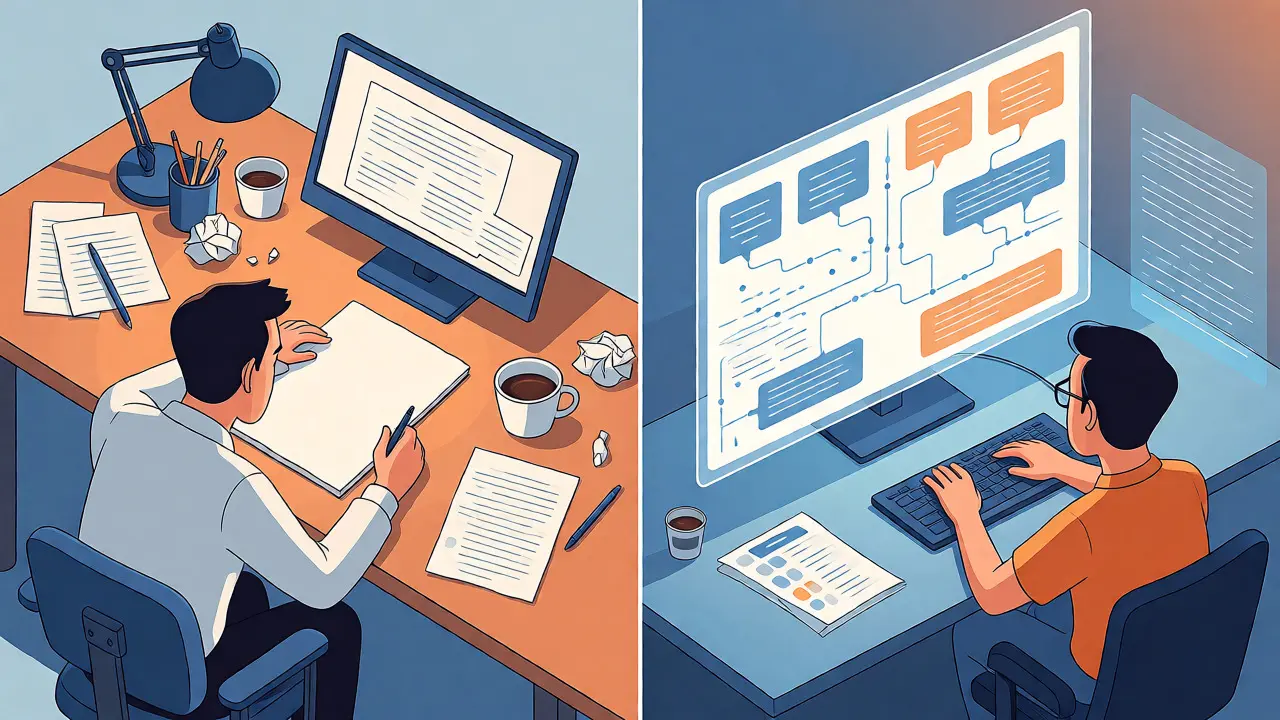
Let’s be honest: staring at a blank page is painful. For years, writers relied on intuition, coffee, and sheer stubbornness to get words down. Now, large language models (LLMs) have changed the game. Tools powered by architectures similar to GPT-4 Turbo allow for massive context windows-up to 128,000 tokens-which means an AI can "read" an entire script outline and suggest dialogue that fits specific character voices. This doesn't mean robots are winning Oscars anytime soon. In fact, a UCLA study in 2025 found that human-written scripts still outperform AI drafts by 27% in emotional engagement metrics. Audiences feel the difference when a joke lacks subtext or a tragedy feels mechanical.
But here’s where it gets interesting. Writers aren't using AI to replace their voice; they’re using it as a brainstorming partner. You can feed a logline into a model and ask for ten different plot twists, then pick the one that surprises you. Or, you can paste a scene and ask the AI to rewrite it from the villain’s perspective. This iterative process accelerates ideation significantly. According to MLQ.ai’s 2025 report, 73% of media professionals now use GenAI for initial script ideation. However, there’s a catch. About 44% of those users report increased revision cycles because AI tends to "hallucinate" narrative logic-creating connections that sound plausible but fall apart under scrutiny. The key is treating AI output as a rough sketch, not a finished painting.
Visualizing Stories with AI Storyboards
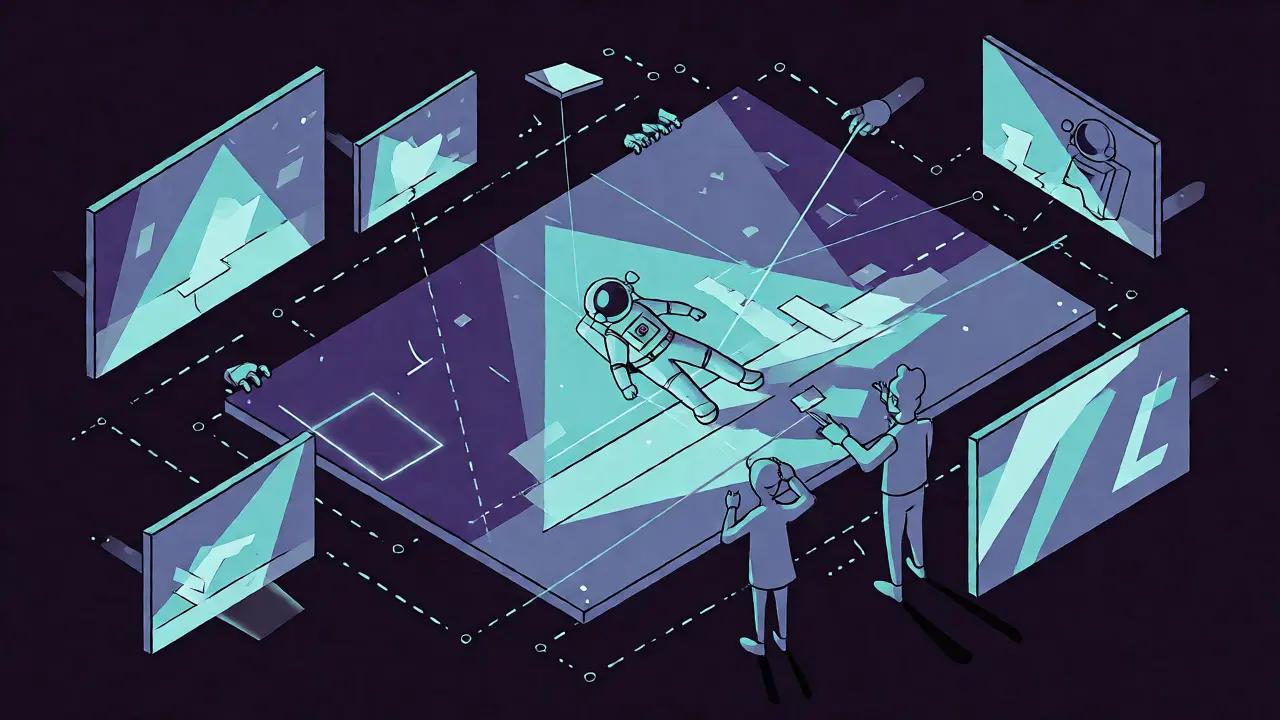
Pre-production used to be a bottleneck. Hiring illustrators to create storyboards took weeks and cost thousands. Today, text-to-image and text-to-video generators have collapsed that timeline. Platforms like RunwayML’s Gen-3 and OpenAI’s Sora allow creators to generate cinematic visuals directly from text prompts. Imagine typing "a lone astronaut walking on Mars during a dust storm, cinematic lighting, wide shot" and getting a usable storyboard frame in seconds. This democratizes filmmaking, allowing non-experts to visualize complex ideas before spending money on sets and actors.
| Tool Name | Max Clip Length | Resolution Support | Best Use Case | Pricing Model |
|---|---|---|---|---|
| Sora | Up to 60s (v2.0) | 1080p+ | Cinematic realism, physics simulation | Enterprise/Invite-only tiers |
| RunwayML Gen-3 | ~20s per clip | High-definition | Rapid prototyping, style transfer | $15/user/month (Standard) |
| Kling AI | Up to 3 mins | HD | Longer sequences, continuity focus | Freemium/Credit-based |
| Stable Diffusion | Static/Image-to-Video | Variable | Concept art, open-source customization | Open Source/Local GPU |
The challenge with these tools isn't quality; it's consistency. Calibraint’s March 2025 analysis revealed that current GenAI tools fail continuity tests 63% of the time. That means if you generate a character in one shot, they might look slightly different in the next-different eye color, wrong jacket, inconsistent lighting. For storyboards, this is manageable because you’re looking for composition and mood. But for final cuts, you’ll need heavy manual correction. One Reddit user, 'AnimationGuru2025', noted that AI-generated sequences often require 70% manual cleanup to maintain visual coherence. So, use these tools to pitch ideas quickly, not to ship final products without human oversight.
Revolutionizing Post-Production Workflows
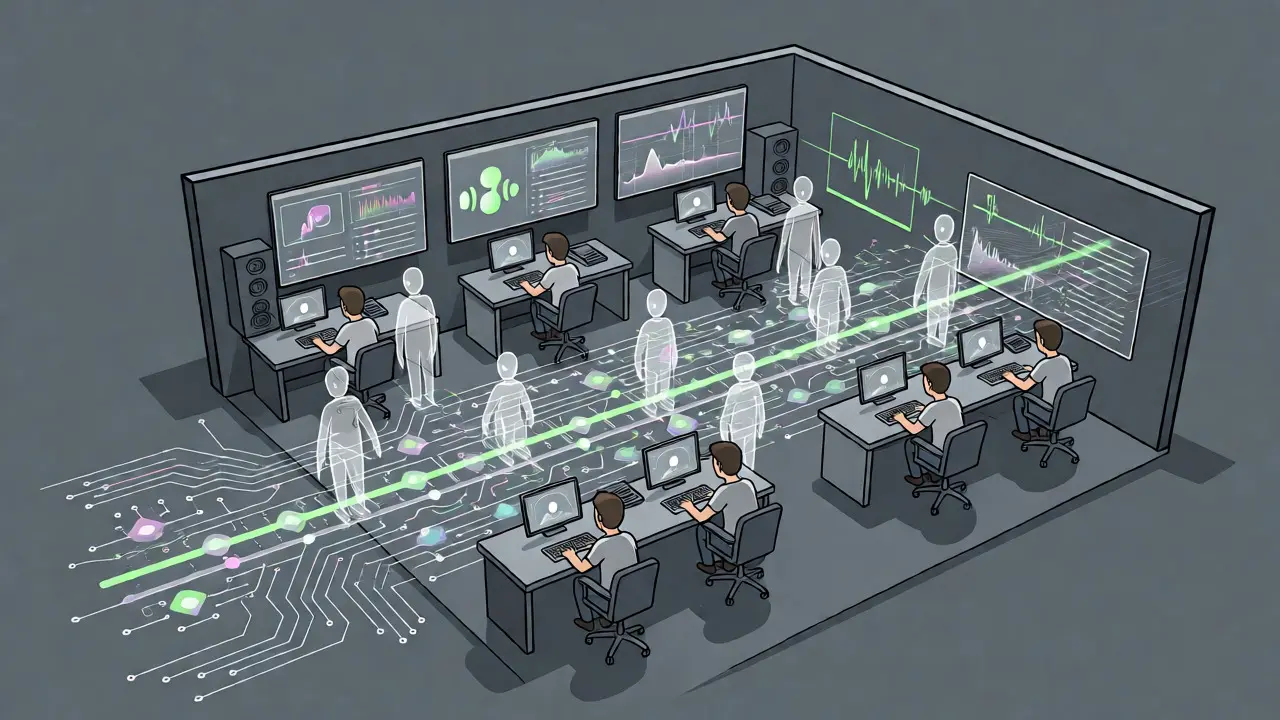
If pre-production is about creation, post-production is about refinement-and that’s where AI shines brightest. Traditional editing involves hours of scrubbing through footage, tagging metadata, and syncing audio. TwelveLabs’ multimodal search technology, developed over four years, allows editors to find specific moments using natural language queries. Instead of searching for "Scene 4, Take 2," you can type "the moment the protagonist cries in the rain" and jump straight to the clip. This eliminates the manual metadata tagging that previously consumed 30-40% of post-production time.
Voice synthesis has also hit a tipping point. Eleven Labs’ voice synthesis achieves 98.5% human-likeness scores according to MIT benchmarks. This has massive implications for localization. Warner Bros. Discovery reported an 80% faster captioning and dubbing process for their Max streaming content using Google Cloud AI. Suddenly, dubbing a show into ten languages isn't a six-month project; it’s a weekend task. However, experts warn about the "uncanny valley" effect. Andy Beach, speaking at Streaming Media Connect 2025, noted that while efficiency is up, premium content still suffers when AI voices lack the subtle emotional nuances of human actors. For high-stakes drama, human voice actors remain irreplaceable. For explainer videos or background narration? AI is already good enough.
Ethical Landmines and Copyright Concerns
We can’t talk about AI in media without addressing the elephant in the room: copyright. Who owns a script written by a human but refined by an AI? Who owns a video generated from a prompt inspired by copyrighted films? The U.S. Copyright Office issued guidance in January 2025 stating that AI-generated content without meaningful human modification lacks copyright protection. This creates a risky landscape for studios investing millions in AI-heavy productions. If you can’t own it, can you monetize it?
Furthermore, there’s the issue of training data. Many models were trained on scraped internet data, including copyrighted images and scripts, often without permission. The pending U.S. Supreme Court decision in Andersen v. Stability AI (expected mid-2025) could set a precedent for whether this constitutes fair use. Until then, companies like Adobe are playing it safe with Firefly, which uses only licensed training data. For brands, this matters. Using a tool with unclear provenance could lead to legal headaches later. Always check the terms of service. Are you buying a license for commercial use, or just a personal hobbyist pass?
How to Implement AI Without Losing Your Mind
So, how do you actually start? Don’t try to automate everything at once. Start small. Pick one pain point in your workflow-maybe it’s generating thumbnail variations, drafting social media captions, or creating placeholder voiceovers. Here’s a practical roadmap:
- Start with Ideation: Use LLMs for brainstorming titles, loglines, or scene descriptions. Keep the output raw and edit heavily.
- Prototype Visually: Use RunwayML or Leonardo.Ai for concept art and storyboards. Expect to spend time fixing inconsistencies.
- Automate Tedious Tasks: Let AI handle noise reduction, basic color grading suggestions, or transcript generation.
- Maintain Human Control: Never let AI make final creative decisions. You are the director; AI is the assistant.
Training requirements vary. Basic proficiency takes 15-20 hours, but mastering prompt engineering for consistent visual styles takes 80+ hours. Budget accordingly. Also, consider integration. Most enterprise media companies prioritize AI tools that integrate with existing ecosystems like Adobe Creative Cloud. Standalone tools are great for freelancers, but teams need seamless workflows.
The Future Is Hybrid, Not Automated
By 2026, we’ll see real-time collaborative AI tools, where multiple creatives work simultaneously with AI assistants. Disney piloted this in Q1 2025. We’ll also see standardized provenance frameworks, helping us track what’s human-made versus machine-generated. But don’t expect robots to take over storytelling. As Dr. Lars Konzack from the University of Copenhagen warns, AI operates as autonomous simulations detached from real referents. It mimics emotion but doesn’t feel it. That gap is where human creativity lives.
The most successful projects will be those that embrace "human-AI co-creation." Think of AI as a super-powered intern who works 24/7 but needs constant supervision. Use it to accelerate timelines (Deloitte estimates 30-70% speedups) and reduce costs (25-60% savings), but keep the creative vision firmly in human hands. The technology is ready. The question is, are you?
Can I copyright a movie made entirely with generative AI?
Currently, no. The U.S. Copyright Office states in its January 2025 guidance that AI-generated content lacking meaningful human modification does not qualify for copyright protection. To secure rights, significant human creative input must be demonstrable in the selection, arrangement, or modification of the AI outputs.
Which AI tool is best for beginners in video production?
For beginners, RunwayML offers a user-friendly interface with a standard plan starting at $15/month. It provides intuitive controls for text-to-video generation without requiring extensive technical knowledge. Synthesia is another strong option for simple avatar-based videos, requiring only a web browser.
Does AI replace human editors in post-production?
No, AI augments rather than replaces human editors. While AI automates tedious tasks like metadata tagging and basic cuts, human editors provide the narrative pacing, emotional timing, and creative judgment that AI currently lacks. Studies show human-edited content retains higher audience engagement.
What are the main limitations of AI in scriptwriting?
The primary limitations are a lack of genuine emotional depth and tendency toward "hallucinations" in narrative logic. A UCLA study indicated AI scripts lag 27% behind human ones in emotional engagement. Additionally, AI struggles with maintaining long-term narrative coherence beyond short segments without heavy human intervention.
How much does it cost to implement AI in a media studio?
Costs vary widely. Individual subscriptions range from $5 to $15 per month per user. Enterprise solutions involving custom fine-tuning and API integrations can increase costs by 30-50%. However, Deloitte reports these investments typically yield 25-60% cost reductions in production workflows due to accelerated timelines.