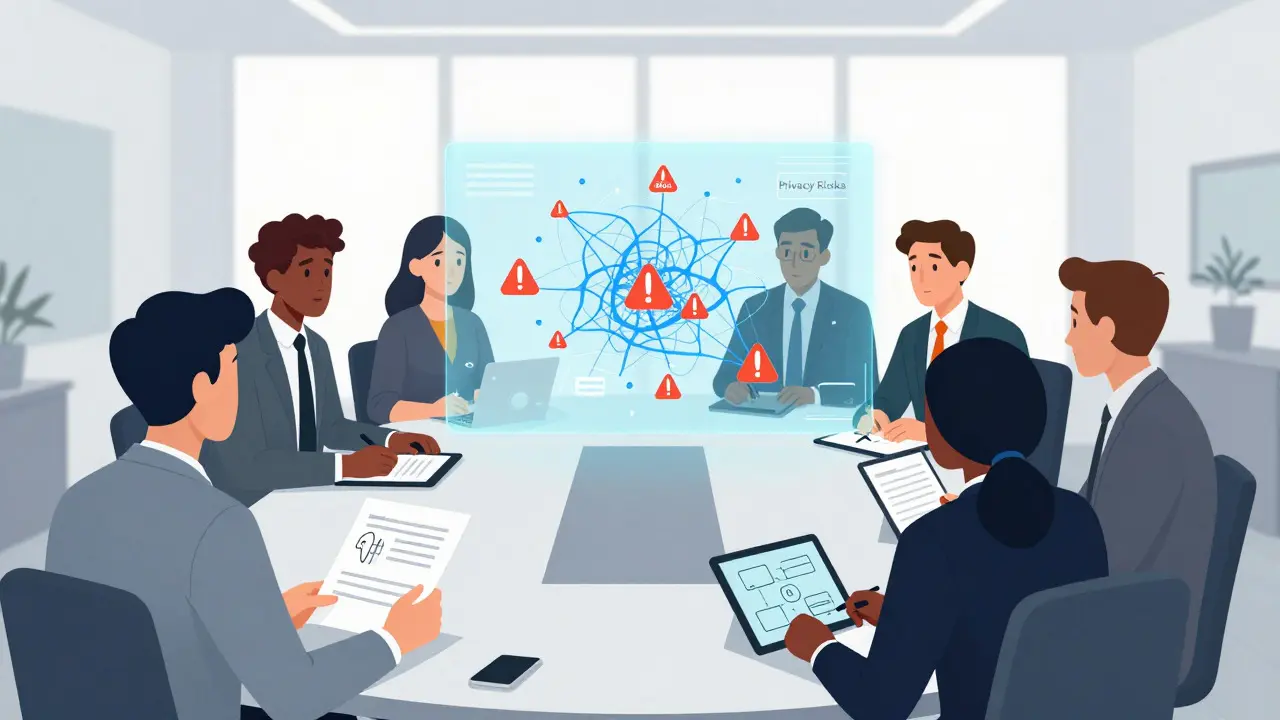
Imagine launching a hiring tool that promises to save your HR team hundreds of hours. It scans resumes, ranks candidates, and flags the "best" fits in seconds. But three months later, you discover the system systematically downgraded applicants from women’s colleges because it was trained on historical data where men dominated leadership roles. The damage isn’t just legal; it’s reputational, cultural, and financial. This scenario isn’t hypothetical-it’s the exact kind of blind spot an AI Ethics Board is designed to catch before code goes live.
As of mid-2026, AI is no longer a futuristic concept but a daily operational reality for most enterprises. Yet, governance hasn't kept pace with innovation. While 77% of executives believe their teams can make ethical AI decisions independently, implementation often falls short. An AI Ethics Board-sometimes called an AI Ethics Committee or Advisory Board-is the structural fix for this gap. It is a specialized governance entity formed within organizations to provide oversight, guidance, and expertise on ethical considerations related to artificial intelligence development and deployment.
Why Your Organization Needs an AI Ethics Board Now
The window for voluntary compliance is closing. Regulatory pressure is mounting globally. The EU AI Act, fully effective in 2026, mandates ethics oversight for high-risk AI systems. In the US, NIST’s AI Risk Management Framework (v1.1, February 2025) explicitly recommends ethics boards as critical governance components. Even more telling, 62% of Fortune 500 companies had established formal AI ethics oversight structures by Q2 2025, up from just 28% in 2022.
This isn’t about checking a box. It’s about risk mitigation and value creation. Organizations with robust AI ethics governance see 22% fewer regulatory compliance issues, according to KPMG’s 2025 global study. More importantly, they protect brand trust. When consumers know a company has a dedicated body reviewing AI fairness and transparency, confidence in that brand increases. Conversely, ethical missteps lead to fines, lawsuits, and talent flight. An AI Ethics Board serves as the institutional mechanism to operationalize core principles: fairness, transparency, accountability, privacy, and security.
Core Responsibilities: What Does the Board Actually Do?
An AI Ethics Board is not a rubber stamp. It is an active participant in the development lifecycle. Based on frameworks from Harvard DCE and BigDataFramework.org, the board’s work revolves around six key functions:
- Defining Ethical Frameworks: Creating clear guidelines that address bias, transparency, and accountability specific to your industry context.
- Policy Development: Drafting organizational policies that translate abstract principles into actionable rules for engineers and product managers.
- Risk Assessment: Conducting pre-deployment audits to identify potential ethical pitfalls, such as data privacy violations or algorithmic discrimination.
- Consultation: Serving as a sounding board for teams facing ethical dilemmas during development.
- Oversight and Auditing: Regularly reviewing deployed AI systems to ensure they continue to perform ethically over time.
- Diversity Enforcement: Ensuring the board itself-and the teams it oversees-reflect diverse backgrounds to prevent groupthink.
For example, if your finance team wants to deploy an AI credit scoring model, the board doesn’t just ask, "Is it accurate?" They ask, "Does it disproportionately reject minority applicants? Is the decision logic explainable to regulators? What happens if the model fails?" These questions force developers to consider societal impact, not just technical performance.
Structuring the Board: Composition and Expertise
A common mistake is filling the board solely with lawyers or HR professionals. While legal compliance is crucial, AI ethics requires technical literacy. As Diligent.com notes, "AI can process data, but it lacks moral reasoning." You need people who understand both the code and the consequences.
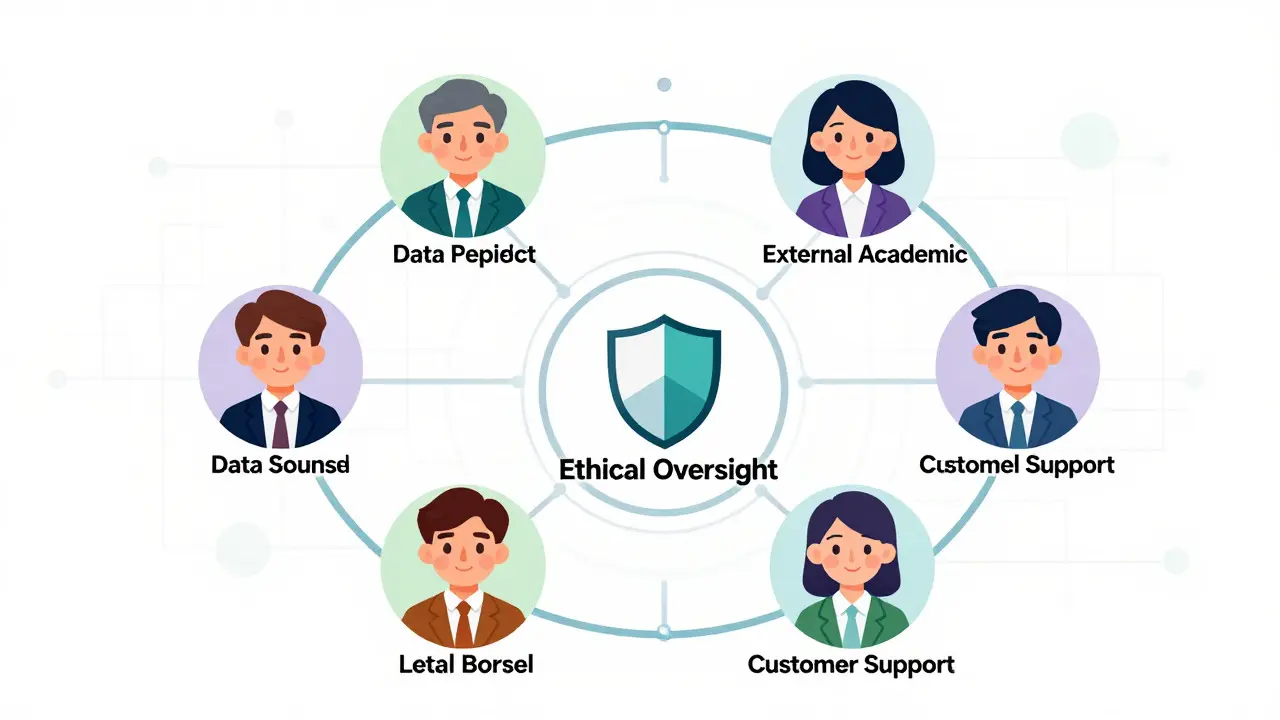
Effective boards blend internal expertise with external independent perspectives. A typical high-performing structure includes:
- Internal Leaders: CIO, Head of Data Science, Chief Compliance Officer, CHRO, and Legal Counsel. They bring context about company culture and operational constraints.
- External Experts: Academics specializing in AI ethics, civil society advocates, and industry consultants. They provide unbiased scrutiny and broader societal perspective.
- Cross-Functional Representatives: Members from marketing, customer support, and frontline operations. They highlight real-world user impacts that executives might miss.
Deloitte’s 2025 analysis emphasizes that boards must include members with diverse backgrounds to address a wide range of ethical considerations. If your board only consists of white male engineers, you’re likely missing critical biases in your models. Diversity isn’t just a social good; it’s a quality control measure.
Implementation Roadmap: From Charter to Action
Setting up an AI Ethics Board takes time and resources. Shelf.io’s implementation data shows a learning curve of 6-9 months. Here’s how to approach it step-by-step:
- Define the Mission (Weeks 1-4): Draft a charter that clearly states the board’s purpose, scope, and authority. Does it have veto power? Can it halt a product launch? Clarity here prevents future conflicts.
- Recruit Members (Weeks 5-14): Identify candidates with the right mix of technical, ethical, and business expertise. Ensure diversity in gender, race, discipline, and background.
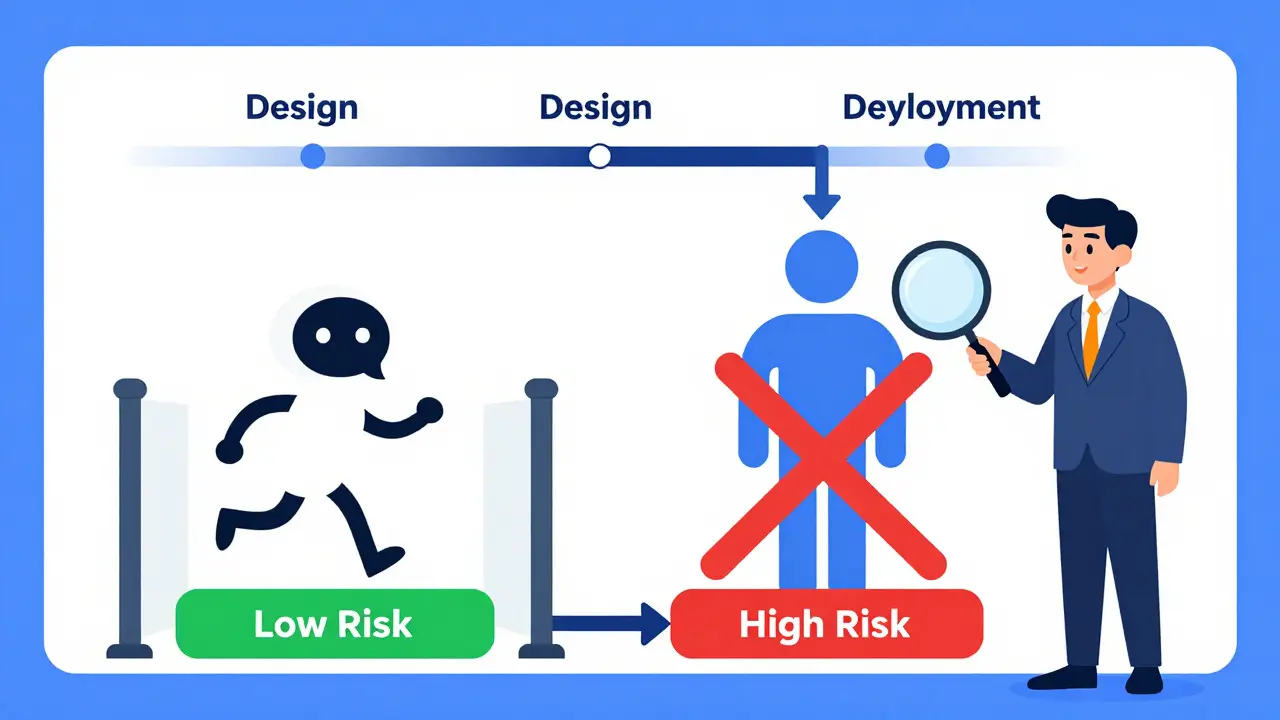
- Establish Scope and Processes (Weeks 15-20): Define which projects require board review. Not every AI tool needs full scrutiny. Create a tiered system based on risk level (e.g., low-risk chatbots vs. high-risk medical diagnostics).
- Engage Early (Ongoing): Integrate the board into the development lifecycle early. Don’t wait until the product is built. Involve them during the design phase to shape ethical requirements upfront.
Common challenges include securing executive buy-in (reported in 68% of attempts) and defining clear escalation paths (lacking in 42% of early-stage boards). To overcome this, tie the board’s success to measurable outcomes like reduced compliance incidents or improved customer trust scores.
Overcoming Common Pitfalls
Many boards fail because they become symbolic rather than substantive-a practice critics call "ethics washing." To avoid this, ensure the board has real teeth. Dr. Timnit Gebru, former co-lead of Google’s Ethical AI team, advocates for boards with "real power to halt deployments, not just advisory roles."
Another pitfall is slowing down innovation too much. Shelf.io documents cases where boards delayed product launches by 30-45 days. Balance is key. Use a risk-based approach: fast-track low-risk tools while subjecting high-risk systems to rigorous review. Also, remember that responsibility for decision-making ultimately rests with directors and executive leadership, as noted by NACD Fellow Richard Leibert. The board advises; leaders decide.
| Feature | Traditional Ethics Committee | AI Ethics Board |
|---|---|---|
| Primary Focus | General corporate conduct, human rights | Algorithmic bias, data privacy, model transparency |
| Technical Expertise | Low or none | High (data scientists, ML engineers) |
| Review Frequency | Annual or incident-driven | Continuous, integrated into SDLC |
| Authority Level | Advisory | Often includes veto power for high-risk AI |
| Regulatory Driver | General labor/civil rights laws | EU AI Act, NIST AI RMF, sector-specific regs |
Cost-Benefit Analysis: Is It Worth the Investment?
Let’s talk money. Implementation costs average $150,000-$500,000 annually for mid-sized enterprises, according to Phenom.com’s 2024 HR technology analysis. This covers member stipends, training, software tools for auditing, and administrative overhead. For many CFOs, this looks like a cost center with unclear ROI.
However, the cost of inaction is higher. A single major AI scandal can result in millions in fines and lost revenue. Consider the alternative: without a board, you rely on individual developers to self-police. With complex algorithms and opaque training data, human error is inevitable. An AI Ethics Board provides systematic oversight. Furthermore, ethical AI is becoming a competitive advantage. 65% of adopters cite talent attraction as a driver. Top tech talent prefers working for companies with strong governance structures.
Industry adoption varies significantly. Financial services (89%) and healthcare (82%) lead due to strict regulations. Retail (58%) and manufacturing (52%) lag, often viewing AI ethics as optional. This gap presents an opportunity: early movers in these sectors can build trust and market share by demonstrating responsible AI use.
Future Trends: Standardization and Integration
The landscape is evolving rapidly. By 2027, we expect greater standardization. The April 2025 update to ISO/IEC 23894:2023 provides the first international standard specifically addressing AI risk management, mandating oversight bodies for ethical AI development. Additionally, 63% of S&P 500 companies now include AI ethics metrics in their annual ESG disclosures, signaling integration into broader corporate reporting.
Look out for SEC requirements expected in Q3 2026, which may mandate public companies to disclose AI governance structures. This will push even reluctant firms to establish formal boards. Meanwhile, professionalization is growing: Diligent.com’s certification program for "AI Ethics & Board Oversight" has trained over 12,000 directors since Q1 2025. This creates a pool of qualified candidates, making board formation easier.
Long-term, 92% of technology leaders view dedicated ethics oversight as essential for sustainable AI innovation. The question isn’t whether you need an AI Ethics Board, but how quickly you can build one effectively.
What is the difference between an AI Ethics Board and a traditional compliance committee?
A traditional compliance committee focuses on adhering to existing laws and regulations, often retrospectively. An AI Ethics Board proactively addresses emerging ethical dilemmas inherent in AI technologies, such as algorithmic bias and explainability. It requires deep technical expertise to understand how AI models work and where risks lie, whereas compliance committees typically rely on legal interpretation. Additionally, AI Ethics Boards are integrated into the development lifecycle, providing continuous feedback, unlike periodic compliance audits.
Does an AI Ethics Board slow down product development?
It can, if not structured correctly. Shelf.io reports delays of 30-45 days in some cases. However, this delay is often minimal compared to the cost of fixing a flawed product post-launch. To mitigate slowdowns, implement a risk-tiered review process. Low-risk applications (like internal recommendation engines) can undergo light-touch reviews, while high-risk systems (like hiring or lending tools) receive rigorous scrutiny. Early engagement of the board during the design phase also prevents costly rework later.
Who should sit on an AI Ethics Board?
An effective board blends internal and external perspectives. Internally, include leaders from data science, IT, legal, HR, and compliance. Externally, recruit academics, ethicists, and civil society representatives. Crucially, ensure diversity in gender, race, and professional background to avoid blind spots. The board should be large enough to cover all necessary expertise but small enough to remain agile-typically 7-12 members.
How much does it cost to set up an AI Ethics Board?
For mid-sized enterprises, annual costs range from $150,000 to $500,000. This includes compensation for external experts, training programs, software for AI auditing, and administrative support. Initial setup takes 6-9 months. While this is a significant investment, it pales in comparison to potential regulatory fines, litigation costs, and reputational damage from ethical failures. Many organizations view it as insurance against catastrophic risk.
Can an AI Ethics Board stop a product launch?
It depends on the board’s charter. Best practices, advocated by experts like Dr. Timnit Gebru, suggest granting the board veto power over high-risk deployments. Without this authority, the board becomes merely advisory, and its recommendations may be ignored under business pressure. Successful implementations at companies like Microsoft and IBM feature boards with direct reporting lines to the CEO and explicit authority to halt problematic projects.
What are the key regulatory drivers for AI Ethics Boards in 2026?
The primary drivers are the EU AI Act (fully effective 2026), which mandates oversight for high-risk AI, and NIST’s AI Risk Management Framework (v1.1, Feb 2025). Additionally, anticipated SEC requirements in Q3 2026 may force public companies to disclose AI governance structures. Industry standards like ISO/IEC 23894:2023 also mandate establishment of oversight bodies. These regulations shift AI ethics from voluntary best practice to legal necessity.
How do I avoid "ethics washing" with my AI Ethics Board?
Ethics washing occurs when a board exists only for PR purposes without real influence. To avoid this, ensure the board has substantive authority, including veto power. Publish regular reports on ethical assessments and actions taken. Integrate board findings into executive performance metrics. Finally, maintain independence by including external members who are not beholden to internal political pressures. Transparency and accountability are key to credibility.
Patrick Dorion
July 23, 2026 AT 21:28the problem with most of these boards is they are treated as a PR stunt rather than a functional part of the engineering lifecycle. you need actual veto power or it's just theater. i've seen too many companies put together a committee of lawyers and hr folks who don't understand how a neural net actually learns bias from training data. if the board can't stop a launch because the model is garbage, then you haven't solved anything. you just created a paper trail for when things go wrong.
Caitlin Donehue
July 24, 2026 AT 22:00i feel like this is becoming mandatory pretty fast anyway. with the eu ai act kicking in fully next year, it's not really a choice anymore for anyone doing high-risk stuff. it feels like we are finally catching up to the reality that code has consequences. kind of scary to think about all the tools that have been running wild without oversight so far.
Stephanie Frank
July 26, 2026 AT 18:25another way to say 'we need more meetings' lol. every startup thinks they are google and need an ethics board. meanwhile they can't even fix their basic login page. let's focus on making products that work before we start pretending to be philosophers. most of these boards are just rich people playing dress up while the actual engineers do the heavy lifting.
Marissa Haque
July 27, 2026 AT 05:43Oh my gosh! This is such a crucial point!!! I cannot stress enough how important diversity is on these boards!!! If you only have white male engineers looking at the data, you are literally blind to half the problems!!! It is absolutely terrifying how often this happens!!! We need real voices from marginalized communities involved in the design phase!!! Not just as a checkbox but as actual decision makers!!!
Keith Barker
July 27, 2026 AT 19:53ethics is subjective. what one person sees as bias another sees as optimization. putting a board in charge just adds bureaucracy. the market will correct itself eventually. if your product sucks people wont use it. simple as that. no need for committees.
Lisa Puster
July 27, 2026 AT 19:54typical globalist nonsense trying to regulate innovation. american companies lead the world in tech because we dont have these silly bureaucratic hurdles. europe wants to slow us down with their acts and frameworks. we should just build faster and let the best algorithms win. diversity quotas on boards are just political correctness ruining efficiency. keep it simple and profitable.