
The Hidden Price Tag of 'Chat-to-Code'
You’ve heard the hype. You’ve seen the demos. A founder types a few sentences into a chat window, and suddenly, a fully functional application appears on their screen. This is vibe coding, defined as the practice of building software applications through natural language conversational interfaces rather than traditional manual coding. It sounds like magic, but magic doesn’t pay the server bills. As we move deeper into 2026, the novelty of vibe coding has worn off for serious builders, replaced by a more pressing question: how much does this actually cost?
Many developers assume that because these platforms offer generous free tiers, the transition to production will be cheap. The reality is starkly different. Between opaque credit systems, exploding token usage during debugging, and the hidden costs of backend infrastructure, your monthly bill can spiral out of control before you even launch your first feature. If you are planning to adopt vibe coding tools for your startup or team, understanding the financial architecture behind these platforms is just as critical as understanding the code they generate.
Decoding the Pricing Models: Credits, Tokens, and Flat Fees
The biggest shock for new users isn't the price tag itself; it's the unpredictability of it. Unlike traditional software subscriptions where $20 gets you the same features every month, vibe coding platforms charge based on consumption. However, "consumption" means different things to different providers, creating a fragmented landscape that makes budgeting a nightmare.
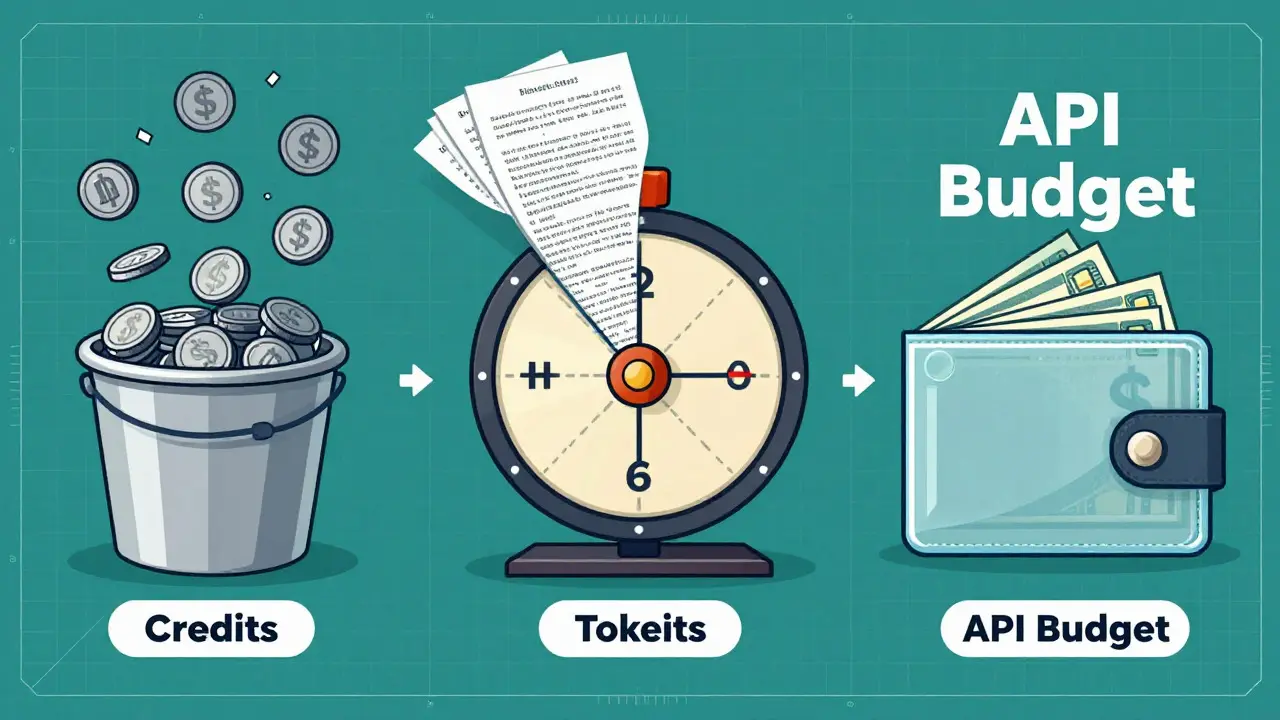
There are three dominant pricing structures you need to know:
- Credit-Based Systems: Used by platforms like Lovable and v0. You buy a bucket of credits. Some actions (like generating a simple button) cost one credit; others (like building a complex dashboard with data binding) might cost ten. The problem? Most platforms don’t clearly state how many credits specific tasks consume until you’ve already spent them. Lovable’s Pro plan at $25/month includes 100 monthly credits plus daily rollovers, but if you hit a snag and iterate five times to fix a bug, those credits vanish fast.
- Token-Based Allocation: Platforms like Bolt.new measure usage in tokens (chunks of text processed by the AI). Their Pro plan offers 10 million tokens for $18/month. Sounds generous, right? Not when you consider that a single complex prompt response can consume hundreds of thousands of tokens. One developer reported burning through 10 million tokens in just three days while building a multi-page app. Once you exceed your limit, the overage fees are steep-often jumping to $200+ for the next tier.
- API Access Budgets: Tools like Cursor provide a dollar-based API budget (e.g., $20 for Pro at $16/month). This money is spent on underlying models like Claude Sonnet or Gemini. While more transparent, it still requires constant monitoring. If you leave an agent running overnight to refactor code, you could wake up to a depleted budget.
The key takeaway here is that iteration kills budgets. In traditional coding, fixing a typo costs nothing. In vibe coding, asking the AI to "try again" or "fix this layout" consumes resources. Every time you refine a prompt, you are paying for compute power.
| Platform | Entry Plan Cost | Pricing Model | Included Allowance | Overage Risk |
|---|---|---|---|---|
| Lovable | $25/mo | Credits | 100 monthly + 5 daily | High (Opaque per-action cost) |
| Bolt.new | $18/mo | Tokens | 10 Million Tokens | Very High (Steep jumps after limit) |
| Cursor | $16/mo | API Budget | $20 API Credit | Medium (Predictable spend cap) |
| v0 | $20/mo | Credits | Tiered ($5-$30) | Medium (Frontend only) |
| GitHub Copilot | $10/mo | Flat Fee | Unlimited Completions | Low (Best for assistance, not generation) |
The Backend Blind Spot: Why Frontend Generators Aren't Enough
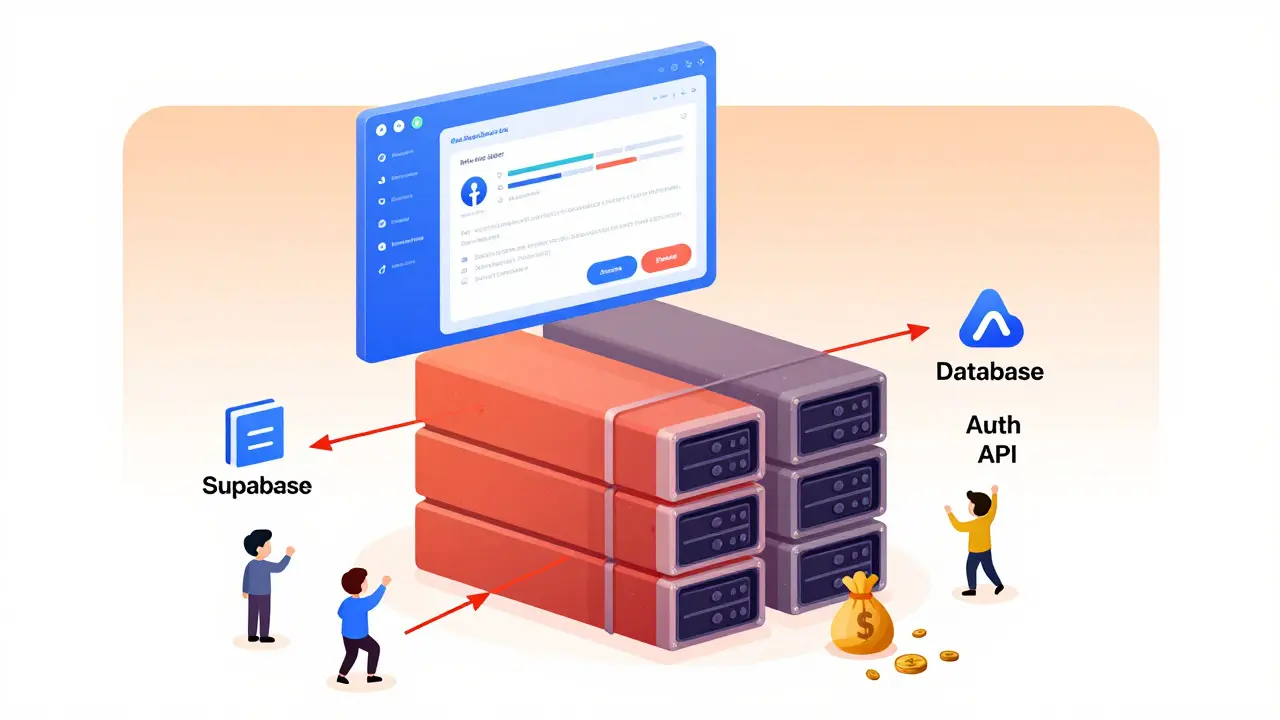
Here is the trap most non-technical founders fall into: they assume that because the AI built the visual interface, the application is complete. It isn’t. Most vibe coding platforms, particularly frontend-focused ones like v0 and early-stage Bolt.new projects, generate the user interface but lack persistent data storage, authentication, or server-side logic.
To make your app functional, you need to connect it to a backend service. This introduces a second layer of costs that is rarely included in the vibe coding platform’s subscription. You will likely need to integrate services like Supabase or Firebase for database management and user authentication.
While Supabase offers a free tier, it has limits on active users and bandwidth. As soon as your MVP gains traction, you’ll be looking at $25-$50/month for a basic backend setup. When combined with your vibe coding tool license, your total monthly overhead quickly doubles. For example, using Lovable ($25) plus Supabase ($25) puts you at $50/month before you write a single line of custom business logic. If you use Cursor ($16) alongside a self-hosted database, you might save on licensing but incur higher DevOps maintenance costs.
This distinction is crucial for budgeting. If you are building a static portfolio site, a frontend generator is sufficient. If you are building a SaaS product with user accounts, payments, and dynamic data, you must budget for the full stack. Ignoring the backend cost is the number one reason startups see unexpected cash flow issues in their first quarter.
Team Scaling: Per-User vs. Unlimited Seats
If you are working solo, the individual plans mentioned above are manageable. But what happens when you bring on a co-founder or hire a junior developer? The pricing models diverge significantly here.
Most platforms, including Cursor and v0, use a per-seat model. Adding a team member means adding another $16-$30 to your monthly bill. For a small team of five, this adds up to $80-$150/month just for licenses. However, some platforms recognize the collaborative nature of vibe coding and offer unlimited seat options. Lovable’s Business plan, for instance, charges $42/month for unlimited users. While this is more expensive than a single Pro seat, it becomes incredibly cost-effective as your team grows beyond two people.
Consider the "cost per developer" metric. With Cursor, each developer needs their own API budget. If two developers are iterating heavily, you might need two Pro plans ($32 total) plus potential overages. With Lovable’s Business plan, both developers share the pool of resources under one $42 fee. For teams focused on rapid prototyping and collaboration, the unlimited seat model often provides better ROI, provided you manage the shared credit pool wisely.
Hidden Costs: Browser Compatibility and Support
Budgeting isn’t just about direct software costs; it’s also about efficiency losses caused by technical limitations. One often-overlooked factor is browser compatibility. Many vibe coding platforms rely on advanced JavaScript features and WebAssembly modules that are best supported in Chromium-based browsers like Chrome or Edge. Firefox and Safari users often report beta-level functionality or slower performance. If your team uses MacBooks with Safari as their default browser, you may face friction that slows down development, effectively increasing the "time cost" of your project.
Support quality also varies wildly. Base44 offers live chat on all paid plans, which can save hours of troubleshooting time. Cursor, on the other hand, relies primarily on community forums and email support for its Pro tier. For a non-technical founder, being stuck on a bug for three days because there’s no live support is a significant hidden cost. Factor in the value of your time when choosing between a cheaper tool with poor support and a slightly more expensive one with immediate help.
Strategic Recommendations for 2026
So, how do you build a realistic budget? Start by defining your project scope. Are you building a simple landing page or a complex data-driven application? Use this framework to estimate your monthly costs:
- Prototype Phase (Month 1): Stick to free tiers. GitHub Copilot ($0 if student, otherwise $10) or Lovable’s free credits are enough to validate your idea. Expect to spend $0-$10.
- MVP Development (Months 2-3): Upgrade to a Pro plan. Budget $20-$40/month for the vibe coding tool. Add $25-$50/month for backend services (Supabase/Firebase). Total: ~$50-$90/month.
- Production & Scale (Month 4+): Move to Team/Business plans. Budget $40-$100/month for licenses depending on team size. Increase backend costs to $50-$150/month as traffic grows. Total: ~$100-$250+/month.
Avoid the temptation to chase the cheapest option. A $10 tool that runs out of credits halfway through a major feature build is more expensive than a $25 tool that lets you finish the job. Prioritize platforms with transparent usage dashboards. By mid-2026, most major providers have committed to real-time credit tracking, so choose those that offer visibility into your spending.
Finally, remember that vibe coding is an accelerator, not a replacement for engineering discipline. The most cost-effective users are those who learn to write precise prompts, reducing the need for iterative fixes. Invest time in learning how to communicate with the AI effectively-it’s the best way to keep your budget under control.
Is vibe coding really cheaper than hiring a developer?
For very small projects or prototypes, yes. A solo founder can build an MVP for under $100/month using tools like Lovable or Bolt.new, whereas hiring a junior developer costs thousands per month. However, for complex, scalable applications, vibe coding tools often require additional backend services and debugging time, narrowing the cost gap. It is best viewed as a force multiplier for existing developers rather than a complete replacement for professional engineering teams.
Which vibe coding platform has the most predictable pricing?
GitHub Copilot offers the most predictable pricing at a flat $10/month with unlimited completions, making it ideal for coding assistance. For full application generation, Cursor’s API budget model ($16/month with a $20 credit cap) is relatively transparent compared to the opaque credit systems of Lovable or the volatile token counts of Bolt.new. However, no platform guarantees fixed costs for large-scale projects due to the variable nature of AI processing.
Do I need to pay for backend services if I use a vibe coding tool?
In most cases, yes. Most vibe coding platforms focus on generating the frontend (user interface). To store user data, handle logins, or process payments, you need a backend database and authentication service. Services like Supabase or Firebase typically start with free tiers but will cost $25-$50/month once your application moves beyond a simple demo stage.
How can I reduce my monthly costs on vibe coding platforms?
The most effective strategy is improving your prompt engineering skills. Clear, detailed prompts reduce the need for iterative corrections, which consume the majority of credits or tokens. Additionally, monitor your usage daily to avoid surprise overage fees. Consider using unlimited-seat plans like Lovable’s Business tier if you are working with a team, as this often lowers the per-user cost compared to individual Pro subscriptions.
Are free tiers sufficient for building a production-ready app?
Generally, no. Free tiers are designed for evaluation and simple prototypes. They often lack access to the most powerful AI models, have strict rate limits, and may include watermarks or limited export options. For any application intended for public use or commercial purposes, you will need to upgrade to a paid plan to ensure reliability, speed, and adequate resource allocation.