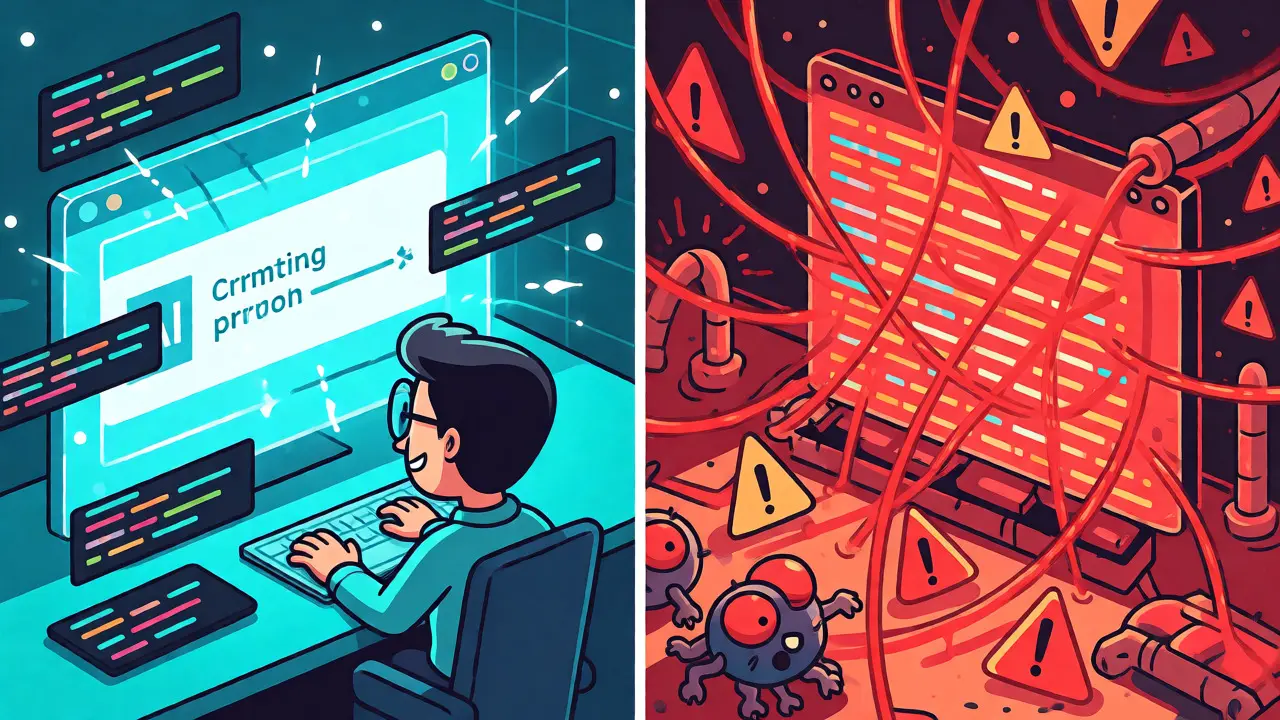
You built a feature in an afternoon. You typed a prompt into your AI assistant, watched the code generate, and shipped it to production. It works. The users love it. But did you just sign up for a €20 million fine? If that vibe-coded feature touches customer data, you have likely created a legal liability you haven't even identified yet.
Vibe coding-the practice of directing Large Language Models (LLMs) with natural language prompts to generate software-is no longer a niche experiment. As of early 2026, 78% of developers use AI coding assistants daily. Yet, a startling gap exists: only 22% of these teams have formal legal review processes for how this code handles customer data. This isn't just about bad code; it's about invisible data flows, hardcoded secrets, and regulatory blind spots that traditional development workflows never exposed.
The Hidden Risks of AI-Generated Code
Traditional code is written by humans who (usually) understand what they are doing. Vibe coding blurs the line between authorship and execution. When you ask an LLM to "add a user profile page," it might pull in libraries with outdated licenses, embed API keys directly in the source code, or create data endpoints that collect more information than necessary. A GuidePoint Security audit of 200 vibe-coded applications found that 63% contained hardcoded credentials. That’s not just a security flaw; it’s a breach waiting to happen.
The legal stakes have shifted dramatically. The EU’s Cyber Resilience Act (CRA), fully implemented in mid-2025, holds developers strictly liable for security vulnerabilities in AI-generated code. Similarly, the General Data Protection Regulation (GDPR) requires Data Protection Impact Assessments (DPIAs) for high-risk processing. The European Data Protection Board has clarified that AI-generated code automatically falls under high-risk categories if it processes personal data. If you don’t document where that data goes, you aren’t compliant. Period.
| Risk Factor | Traditional Development | Vibe Coding (Unreviewed) |
|---|---|---|
| Security Vulnerabilities per 1k LOC | Baseline | +18% Higher |
| Privacy Policy Accuracy | 88% Accurate | 11% Accurate |
| Hardcoded Secrets Rate | <5% | 63% |
| Avg. Legal Review Time | 8 Hours | 22+ Hours |
Step 1: Map Every Single Data Touchpoint
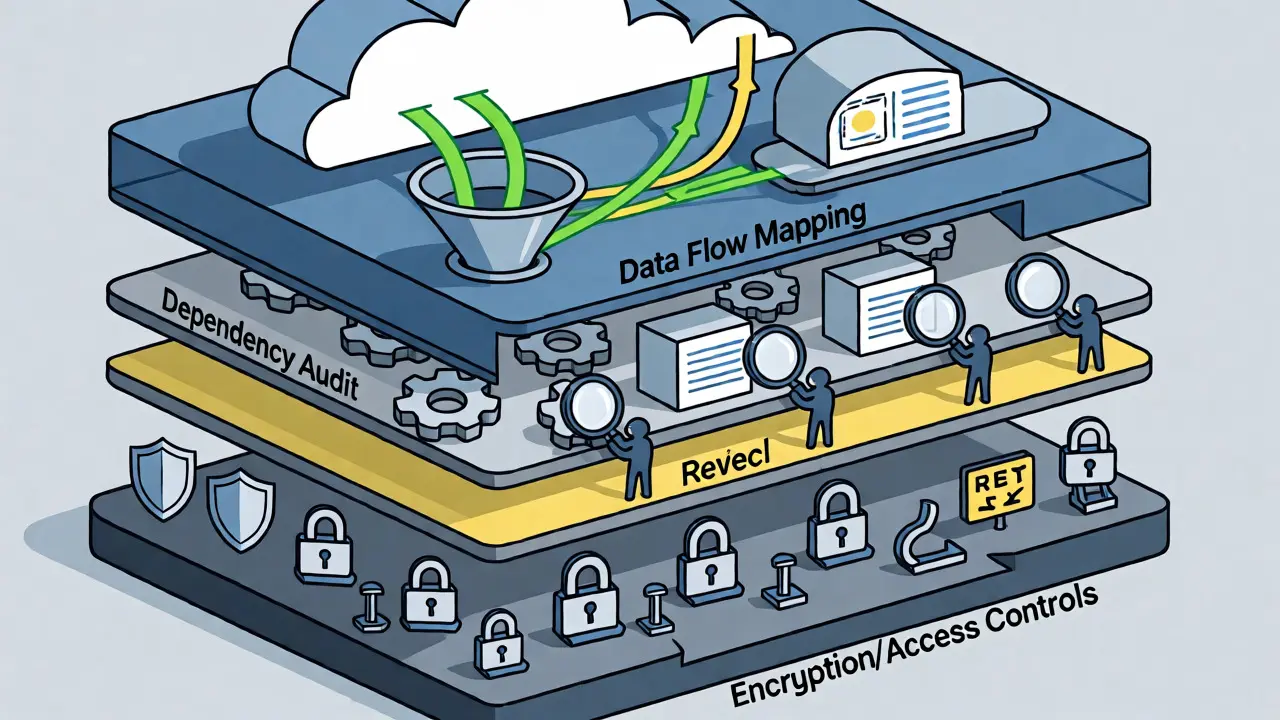
You cannot review what you cannot see. The first step in any legal review for vibe-coded features is identifying all data touchpoints. This sounds obvious, but AI models often introduce hidden data collection points. A study by ThisIsGlance.com found an average of 4.7 hidden data collection points per 1,000 lines of AI-generated code. These aren't always obvious `POST` requests; they can be third-party analytics scripts injected via dependencies or background jobs that log user IDs to error tracking services.
Use automated tools like Snyk AI to scan for these flows, but do not rely on them exclusively. They detect about 82% of hidden data flows. The remaining 18% require manual inspection. Look specifically for:
- Third-party library imports that request network access.
- Logging statements that output variable names potentially containing PII (Personally Identifiable Information).
- Database queries that select entire objects rather than specific fields.
If your code collects an email address, you must know exactly where it is stored, who accesses it, and when it is deleted. If you can’t answer those three questions within five minutes, your feature isn’t ready for legal review.
Step 2: Verify Encryption and Access Controls
Once you know what data is moving, check how it’s protected. The standard for commercial software in the EU now mandates AES-256 encryption for data at rest. But vibe coding often skips configuration steps. An LLM might write code that connects to a database using default settings, which may not enforce TLS 1.3 for data in transit.
Access control is another common failure point. Best practices dictate limiting data access to three privilege levels maximum. However, AI-generated code frequently creates overly permissive roles because it prioritizes functionality over least-privilege principles. For example, a generated admin panel might grant full read/write access to any authenticated user, not just administrators. During your review, verify that role-based access control (RBAC) is explicitly defined and tested. If a regular user can query the database for other users' phone numbers, you have a problem.
Step 3: Audit Dependencies and Licensing
This is the copyright minefield Professor Mark Lemley warned the U.S. Senate about. When an LLM generates code, it often pulls from open-source repositories trained on its dataset. Did it copy a snippet from a GPL-licensed project into your proprietary app? If so, you might owe royalties or face injunctions.
Your legal review must include a Software Composition Analysis (SCA). Tools like Black Duck or Snyk can identify license conflicts. Pay special attention to "copyleft" licenses (like GPL) versus permissive ones (like MIT or Apache). In regulated industries like healthcare or finance, this scrutiny is non-negotiable. A December 2025 FDA audit showed that 92% of healthcare apps built with AI assistants failed HIPAA compliance checks, largely due to undocumented dependency risks and inadequate data handling protocols.
Step 4: Check Regional Compliance Requirements
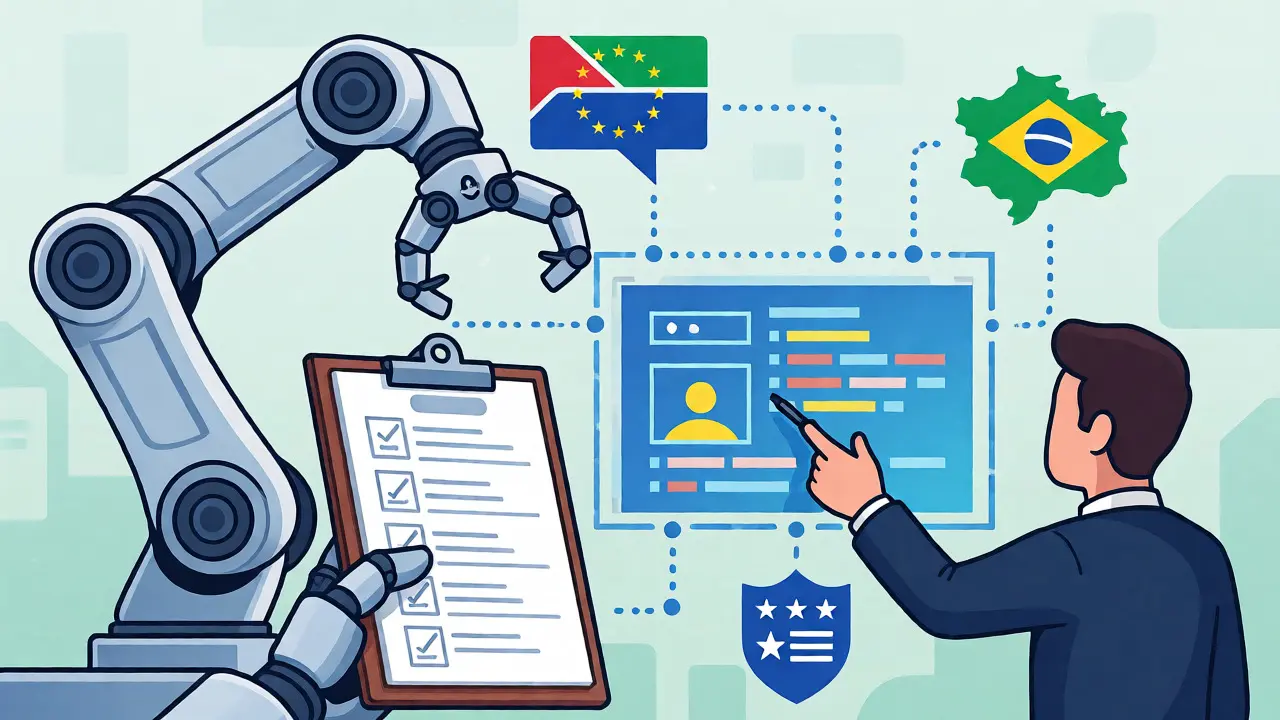
Data laws are not universal. What passes in California might fail in Germany. As of January 2026, California’s AI Privacy Act requires specific disclosures about how AI systems use consumer data. Meanwhile, Brazil’s LGPD enforcement actions against AI violations jumped 320% in late 2025. If your vibe-coded feature serves global customers, you need a matrix of regional requirements.
For EU users, ensure you have explicit consent mechanisms before data processing begins. Apple’s updated App Store guidelines now explicitly require verification that AI-generated code complies with privacy regulations. If your app doesn’t show a clear privacy notice before collecting data, it will be rejected. For US users, CCPA/CPRA rights (right to delete, right to opt-out) must be programmatically enforced, not just promised in a policy text.
Step 5: Document the Data Flow (The DPIA Lite)
Documentation is where most vibe-coding projects fall apart. J.P. Morgan insights revealed that 89% of AI-generated privacy policies contain inaccurate data flow descriptions. Why? Because the AI didn't actually run the code; it hallucinated a plausible description.
You need a human-written, verified record of the data lifecycle. This doesn't need to be a 50-page PDF. It needs to be a clear diagram showing:
- Ingestion: Where does the data enter? (Form, API, Cookie?)
- Processing: What transformations occur? (Hashing, aggregation?)
- Storage: Which database/table/column? How long is it retained?
- Sharing: Does it go to third parties? (Analytics, CRM, Ads?)
Keep retention periods short. For non-essential information, aim for under 180 days. If your AI-generated code stores logs indefinitely, change it. Set up automated deletion jobs. If you can’t prove you delete data, regulators assume you keep it forever.
Step 6: Stress Test for Edge Cases and Errors
AI is great at happy paths. It struggles with edge cases. What happens if the user enters a string instead of a number? What if the API times out? Poorly handled errors can leak stack traces containing sensitive data to the frontend. Ensure your error handling masks internal details. Never let raw exception messages display to end-users.
Also, test for injection attacks. Even though modern frameworks protect against SQL injection, AI might generate dynamic queries that bypass ORM protections. Run penetration tests specifically targeting the new endpoints. Simulate malicious inputs to see if the code behaves predictably.
Common Pitfalls to Avoid
Even experienced teams trip up here. Here are the most frequent issues seen in recent audits:
- Simulated Compliance: Using AI to generate the compliance documentation itself. CISA warns that "simulating compliance by having coding agents generate technical documentation has no real impact on actual risk exposure." Humans must verify the docs match the code.
- Ignored Export Controls: One developer accidentally included export-controlled encryption algorithms in an e-commerce site, triggering a Commerce Department investigation. Always check cryptographic libraries against current export lists.
- Over-Collected Data: The AI grabs the whole user object because it was easy. You end up storing birth dates and addresses when you only needed an email. Strip down to essentials.
Building a Repeatable Review Process
You don’t need to reinvent the wheel. Leading companies are adopting a structured approach. LuminPDF, for instance, reduced compliance issues by 89% after implementing a 14-step review process. While you don’t need 14 steps, you do need consistency. Allocate at least 22 hours for legal review of each major vibe-coded feature touching customer data. Yes, that’s nearly triple the time for traditional code. But consider the alternative: a €2.1 million fine for failing to audit a single email collection form.
Consider requiring your developers to obtain certifications like the IAPP’s AI Privacy Professional credential. This ensures they speak the same language as your legal team. It bridges the gap between "I made it work" and "I made it safe."
Frequently Asked Questions
Does vibe coding automatically violate GDPR?
No, it does not automatically violate GDPR. However, it triggers higher scrutiny. Under GDPR Article 35, AI-generated code that processes personal data is often considered high-risk, requiring a Data Protection Impact Assessment (DPIA). The violation occurs if you fail to assess risks, document data flows, or implement proper security measures.
Who is liable if AI-generated code causes a data breach?
Under the EU Product Liability Directive and similar laws in other jurisdictions, the company deploying the software is typically liable, regardless of whether a human or an AI wrote the code. The EU Cyber Resilience Act further emphasizes strict liability for developers regarding security vulnerabilities. You cannot blame the AI tool in court.
How much extra time should I budget for legal review of vibe-coded features?
Industry benchmarks suggest allocating approximately 22 hours for legal review of each significant vibe-coded feature handling customer data. This is compared to about 8 hours for traditionally developed features. The extra time covers auditing hidden data flows, verifying encryption standards, and checking licensing compliance.
Can AI tools help with the legal review itself?
Yes, AI tools like Snyk AI can assist by detecting hidden data flows and security vulnerabilities. However, relying solely on AI to generate compliance documentation is risky. CISA advises that simulated compliance lacks real impact on risk exposure. Use AI for detection and scanning, but require human experts for final validation and decision-making.
What are the biggest security risks in vibe-coded apps?
The top risks include hardcoded API keys and credentials (found in 63% of audited apps), lack of proper encryption (AES-256 minimum required), overly permissive access controls, and undocumented third-party dependencies. Additionally, AI code often fails to handle edge cases securely, potentially leaking data through verbose error messages.