You want your team to move faster. You see developers typing natural language prompts into Vibe Coding is an AI-assisted software development methodology where developers use natural language prompts to generate code through tools like GitHub Copilot and Cursor tools, and features appear in hours instead of days. It feels like magic. But here is the catch: that speed comes with hidden costs. If you buy these tools without a strict procurement checklist, you are inviting security breaches and legal headaches into your infrastructure.
In 2025, the vibe coding market hit $2.8 billion. Enterprise adoption grew by 42% year-over-year. Yet, security incidents involving AI-generated code skyrocketed by 210% in the first quarter alone. The gap between adoption and safety is widening. As a buyer or IT leader, you cannot just sign up for a subscription. You need a framework that validates security protocols and legal terms before a single line of AI code touches your production environment.
The Hidden Risks of Unchecked AI Code Generation
Let’s look at the numbers. A study by Thoughtworks in September 2025 showed that vibe coding accelerates development cycles by 35-50%. That is compelling. However, Aikido’s April 2025 analysis revealed that 73% of AI-generated code contains at least one vulnerability if it isn’t properly reviewed. Why? Because large language models train on public repositories. They learn patterns, both good and bad. When you ask an AI to write a login function, it might reproduce a known vulnerability from its training data. Codefortify documented this in January 2025, finding that GitHub Copilot reproduces known vulnerabilities 14.7% of the time when prompted with insecure patterns.
The risk isn’t just about bugs. It’s about exposure. GitGuardian detected 2.8 million exposed secrets in GitHub repositories during Q1 2025. Many of these were API keys accidentally committed by developers using AI tools that suggested hardcoded credentials. One junior developer on Reddit reported in March 2025 that his team missed similar issues three times last quarter because they trusted the AI output without review. This is not a hypothetical threat. It is happening now.
| Risk Factor | Traditional Development | Vibe Coding (Unchecked) |
|---|---|---|
| Vulnerability Rate | Standard baseline | 73% of code has ≥1 vulnerability |
| Secret Exposure | Human error dependent | High (hardcoded credentials common) |
| Review Speed | Slower, manual | Faster, but often skipped |
| Legal Uncertainty | Clear IP ownership | Ambiguous copyright/training data |
Core Security Requirements for Procurement
When evaluating tools, you must enforce specific technical standards. Archit Jain’s July 2024 checklist identifies 12 critical categories, but let’s focus on the non-negotiables. First, the tool must support mandatory API key protection. This means enforcing the use of `.env` files and integrating with secret scanning tools. Second, require TLS 1.3 minimum for all HTTPS encryption. Third, check for strict CORS policies that limit domains to verified origins only.
Rate limiting is another critical factor. Your procurement contract should specify that the tool enforces a minimum of 100 requests per minute per user to prevent brute-force attacks. For database interactions, demand parameterized queries. NMN’s February 2025 analysis found that 62% of AI-generated database code contained SQL injection vulnerabilities without this safeguard. If the tool doesn’t prompt for or enforce secure query structures, it fails the basic security test.
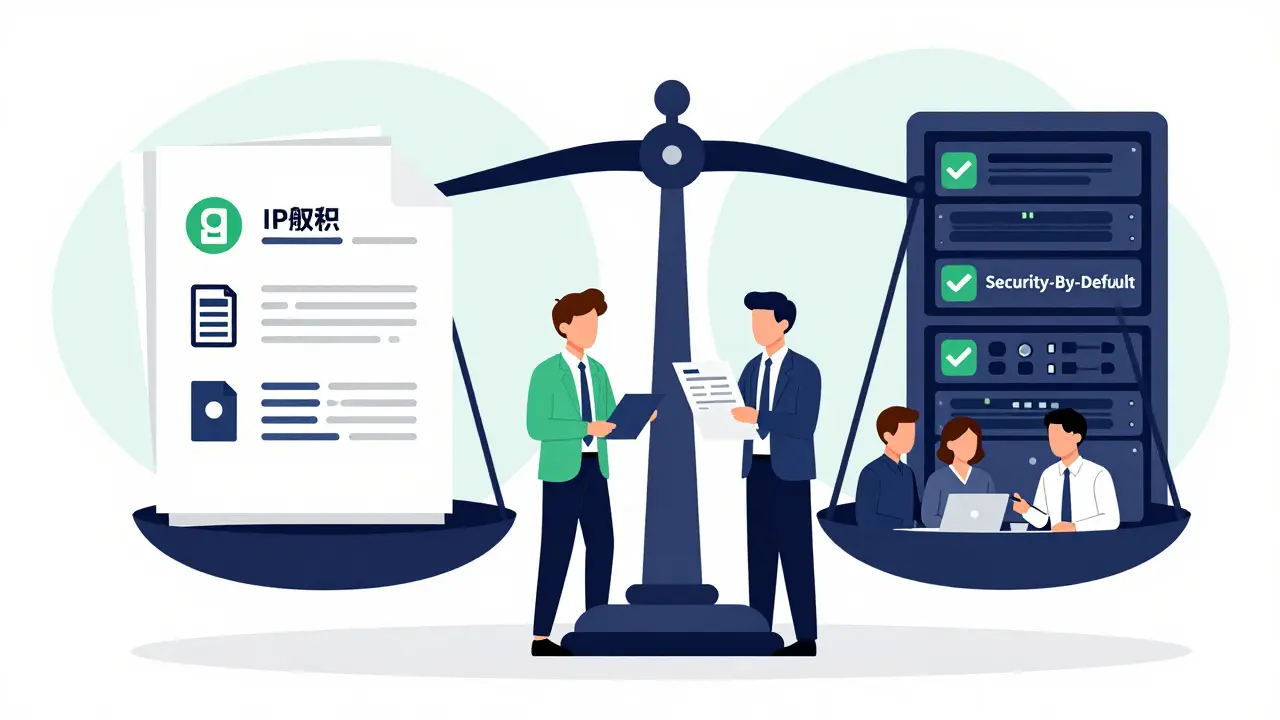
Environment configuration matters more than you think. Claude Artifacts scored 92/100 on Aikido’s security assessment because it blocks all outbound network requests by default. GitHub Copilot scored only 68/100 because it lacks built-in outbound restrictions. In your procurement process, prioritize tools that offer "security-by-default" configurations. Architect Jain’s research confirms that environments preventing outbound HTTP requests avoid 90% of early-stage security incidents. Do not settle for tools that require manual configuration for every security layer.

Legal Compliance and Intellectual Property
Security is half the battle. The other half is legal liability. The biggest question enterprises face today is: who owns the code? GitHub’s terms state that you own the code you create, but GitHub may use it to improve Copilot. This creates a gray area. With 68% of enterprise legal teams expressing concerns about potential infringement claims (per a June 2025 Davis Polk & Wardwell survey), you need explicit indemnification clauses in your contracts.
Your procurement checklist must include:
- IP Ownership Clauses: Clear statements that the client retains full intellectual property rights to all generated code, including derivative works.
- Training Data Transparency: Disclosure of whether the model was trained on copyrighted material. Look for tools that comply with the IEEE P2898 Standard for AI-Generated Code Security and Compliance, published in June 2025.
- GDPR Article 25 Compliance: Data protection by design provisions. This includes requirements for <1s load times for user data access requests and explicit consent mechanisms.
- Audit Rights: The ability to audit the vendor’s security practices and data handling procedures annually.
Only three major vibe coding tools-Supabase, Cursor, and Replit (enterprise plans)-provide explicit GDPR compliance documentation as required by Article 32. Others require significant customization. If your company operates in the EU, this is a dealbreaker. Do not assume compliance; verify it with documentation.
Comparing Top Vibe Coding Tools for Enterprise
Not all tools are created equal. Here is how the top contenders stack up against enterprise security and legal needs.
| Tool | Security Score (Aikido) | Default Outbound Block | GDPR Docs | Price (Enterprise) |
|---|---|---|---|---|
| GitHub Copilot | 68/100 | No (Manual Config) | Limited | $19/user/month |
| Claude Artifacts | 92/100 | Yes (Built-in) | Yes | Varies by Plan |
| Cursor | N/A | No (Scanning Added v2.0) | Yes | $20+/month |
| TestSprite | N/A | Focus on Validation | Yes | $15/user/month add-on |
GitHub Copilot leads in market share (48%) but lags in default security. Claude Artifacts offers superior out-of-the-box protection by blocking outbound requests. TestSprite, while not a primary coding assistant, is a crucial add-on that boosts code pass rates from 42% to 93% after one iteration. Consider bundling a validation tool like TestSprite with your primary vibe coding platform to mitigate risks.
Implementation Strategy: From Procurement to Production
Buying the tool is step one. Implementing it securely is step two. Follow this five-phase approach adapted from Archit Jain’s framework:
- Project Clarity: Define scope, risk tolerance, and security requirements before selecting a tool. Involve legal and security teams early.
- Tool Selection: Choose environments with default security restrictions. Avoid tools that require manual setup for basic protections.
- Prompt Strategy: Train developers on security-aware prompting. Use iterative refinement to catch errors early.
- Mandatory Code Review: Human review catches 83% of security flaws that automated tools miss. Make this non-negotiable.
- Deployment with Monitoring: Integrate SAST (Static Application Security Testing) and DAST (Dynamic Application Security Testing) into your CI/CD pipeline. Tools like Semgrep and OWASP ZAP reduce vulnerability rates by 63%.
Expect a learning curve. Developers need 2-3 weeks to master secure vibe coding practices. Snyk’s March 2025 survey found that teams implementing structured training reduced security incidents by 58%. Invest in this training. It pays off quickly.
Future-Proofing Your AI Strategy
The landscape is shifting fast. Gartner predicts that by 2027, 60% of the enterprise market will be captured by tools prioritizing security-by-default configurations. Manual configuration tools will see declining adoption. Furthermore, Forrester expects 75% of enterprises to require third-party security validation for vibe coding tools by 2026.
Legal clarity is also emerging. The IEEE P2898 standard provides a framework for procurement validation. Keep an eye on the ongoing Andersen v. GitHub lawsuit, which could set precedents for copyright claims around training data. Your procurement checklist should be dynamic, updated quarterly to reflect new regulations and security threats.
Don’t let speed compromise security. By enforcing strict procurement checklists, you can harness the power of vibe coding without exposing your organization to unacceptable risks. The goal is not to stop innovation, but to govern it responsibly.
What is vibe coding?
Vibe coding is an AI-assisted development method where developers use natural language prompts to generate code. Tools like GitHub Copilot and Cursor enable this workflow, significantly speeding up development but introducing unique security and legal challenges.
Why is security a concern with AI-generated code?
AI models train on public code repositories, including vulnerable patterns. Studies show 73% of unchecked AI-generated code contains vulnerabilities. Additionally, AI may suggest hardcoded credentials, leading to secret exposure and potential breaches.
Which vibe coding tools are best for enterprise security?
Claude Artifacts scores highest for default security (92/100) by blocking outbound requests. Supabase excels in backend security with automatic JWT authentication. GitHub Copilot requires more manual configuration but leads in market share.
How do I ensure legal compliance with AI coding tools?
Require explicit IP ownership clauses, GDPR Article 25 compliance, and transparency regarding training data. Look for vendors adhering to the IEEE P2898 standard. Ensure contracts include indemnification against copyright claims related to training data.
Do I still need human code reviews with AI tools?
Yes. Human review remains non-negotiable. Experts state that critical human review catches 83% of security flaws that automated tools miss. AI accelerates drafting, but humans must validate security and logic.
Saranya M.L.
June 7, 2026 AT 20:42The statistical correlation between unchecked LLM integration and subsequent vulnerability proliferation is undeniable, yet the enterprise sector continues to operate with a disturbing lack of due diligence. The assertion that 73% of AI-generated code contains at least one vulnerability is not merely an observation but a critical indictment of current procurement methodologies which prioritize velocity over verifiable security postures. It is imperative that organizations adopt the IEEE P2898 Standard immediately, as it provides the necessary framework for mitigating these systemic risks through rigorous compliance protocols.
om gman
June 9, 2026 AT 02:07oh look another article telling us we are stupid for using magic typing boxes how original really i bet the author has never shipped a feature in under three days because they were too busy reading legal terms instead of just pushing code lol
Bineesh Mathew
June 10, 2026 AT 02:43You mistake caution for stupidity, a profound error in judgment that reveals your own intellectual shallowness. The 'magic' you so casually dismiss is merely a probabilistic echo chamber of existing human labor, regurgitated without understanding or accountability. To treat this technology as a panacea rather than a high-risk instrument is to ignore the moral weight of deploying unverified logic into systems that govern real lives. We are not just writing code; we are weaving the fabric of digital reality, and doing so with blindfolded haste is an act of negligence, not innovation.
Jeanne Abrahams
June 10, 2026 AT 17:25From where I sit in South Africa, watching global tech trends wash over us like a tide, it is amusing to see the West panic about IP ownership while simultaneously ignoring the colonial dynamics of data extraction inherent in these models. The sarcasm is unintentional but palpable when corporations demand transparency from tools trained on the entire internet's open source contributions without compensating the original creators. Security checklists are fine, but let us not pretend this is purely a technical problem when it is deeply ethical.
Oskar Falkenberg
June 10, 2026 AT 21:32I totally get what you mean about the ethical side of things and its super important to think about who owns the code but honestly sometimes you just gotta move fast and break things right? like if we wait for perfect legal clarity we will never ship anything useful and thats why vibe coding is so great because it lets us iterate quickly even if there are some bugs here and there which we can fix later maybe
michael rome
June 11, 2026 AT 08:14Moving fast is admirable, but breaking production environments is not a badge of honor. The data presented regarding the 210% increase in security incidents suggests that speed without structure leads to catastrophic failure. We must respect the boundaries of secure development practices to protect our teams and users. Ignoring these protocols does not demonstrate agility; it demonstrates recklessness that ultimately harms everyone involved in the ecosystem.
Caitlin Donehue
June 11, 2026 AT 12:11I noticed the table comparing traditional development with vibe coding shows a significant drop in review speed quality, which makes me wonder how many teams are actually skipping the manual checks entirely.
Andrea Alonzo
June 11, 2026 AT 23:39It is truly fascinating to observe how the narrative around AI-assisted development has shifted so dramatically from pure optimism to cautious skepticism within such a short timeframe, and I find myself reflecting on how this mirrors broader societal anxieties about automation and control. When we consider the specific detail that GitHub Copilot reproduces known vulnerabilities nearly fifteen percent of the time, it becomes clear that the human element of oversight cannot be outsourced to algorithms, no matter how sophisticated they claim to be. We must therefore cultivate a culture where developers feel empowered to question the output of their tools, ensuring that every line of generated code is scrutinized with the same rigor as hand-written scripts, thereby preserving both security integrity and professional responsibility.