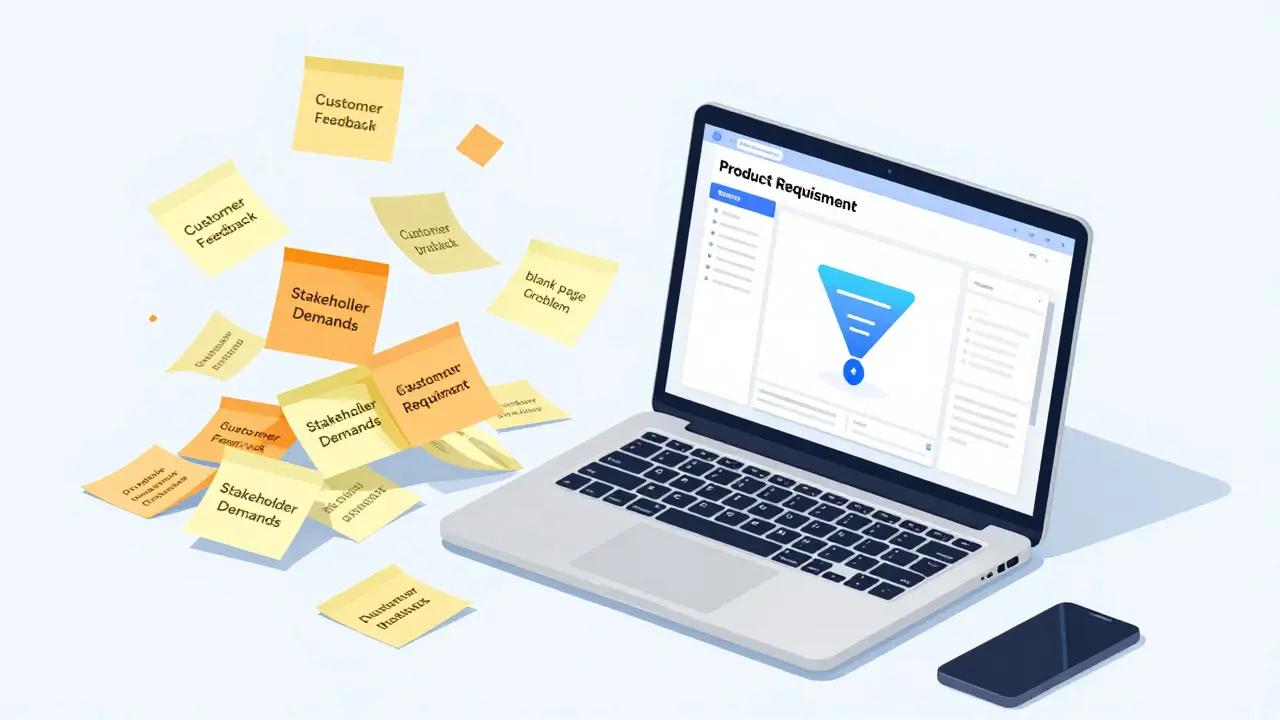
The blank page used to be a product manager’s worst enemy. You know the feeling: you have hours of customer feedback, stakeholder demands, and technical constraints swirling in your head, but staring at an empty document feels paralyzing. In 2026, that paralysis is largely gone. Generative AI is technology that uses large language models to create text, code, and structured data from prompts, transforming how we write Product Requirement Documents (PRDs), build roadmaps, and draft user stories. It’s not just about typing faster; it’s about shifting your role from administrative drafter to strategic decision-maker.
If you are still manually writing every acceptance criterion or guessing feature impact based on gut feeling, you are leaving efficiency on the table. The industry has moved past the hype cycle. As of mid-2026, 61% of product managers are actively using AI tools, reporting efficiency gains of 25-30% in their daily workflows. This article breaks down exactly how to leverage these tools for PRDs, roadmaps, and user stories without losing your human edge.
From Blank Page to Structured Framework: AI for PRDs
Writing a comprehensive Product Requirement Document (PRD) is tedious. It requires balancing business goals, technical feasibility, and user needs into a coherent narrative. Generative AI solves the "blank page problem" by generating complete first-pass drafts in seconds. Tools like Notion AI and Zeda.io allow you to input a brief concept-such as "a dark mode feature for our mobile app targeting night-shift workers"-and receive a structured outline including background, success metrics, and functional requirements.
However, there is a critical distinction to make here. These AI-generated drafts are not final documents. They are structural frameworks. Your job shifts from writing to evaluating. When an AI generates a PRD, it often misses nuanced edge cases specific to your legacy system or unique customer segment. Use the AI output as a checklist rather than a script. For instance, if the AI suggests standard authentication flows, you must verify if those flows align with your company’s specific security compliance standards, such as GDPR or HIPAA.
This "framework-first" approach saves time but also improves quality. By having a full structure immediately, you can spot gaps earlier. If the AI omits a section on data privacy because your prompt didn’t mention it, that omission highlights a blind spot in your initial thinking. You catch these issues before handing the doc off to engineering, reducing revision cycles later.
Predictive Prioritization: Moving Beyond HiPPO Bias
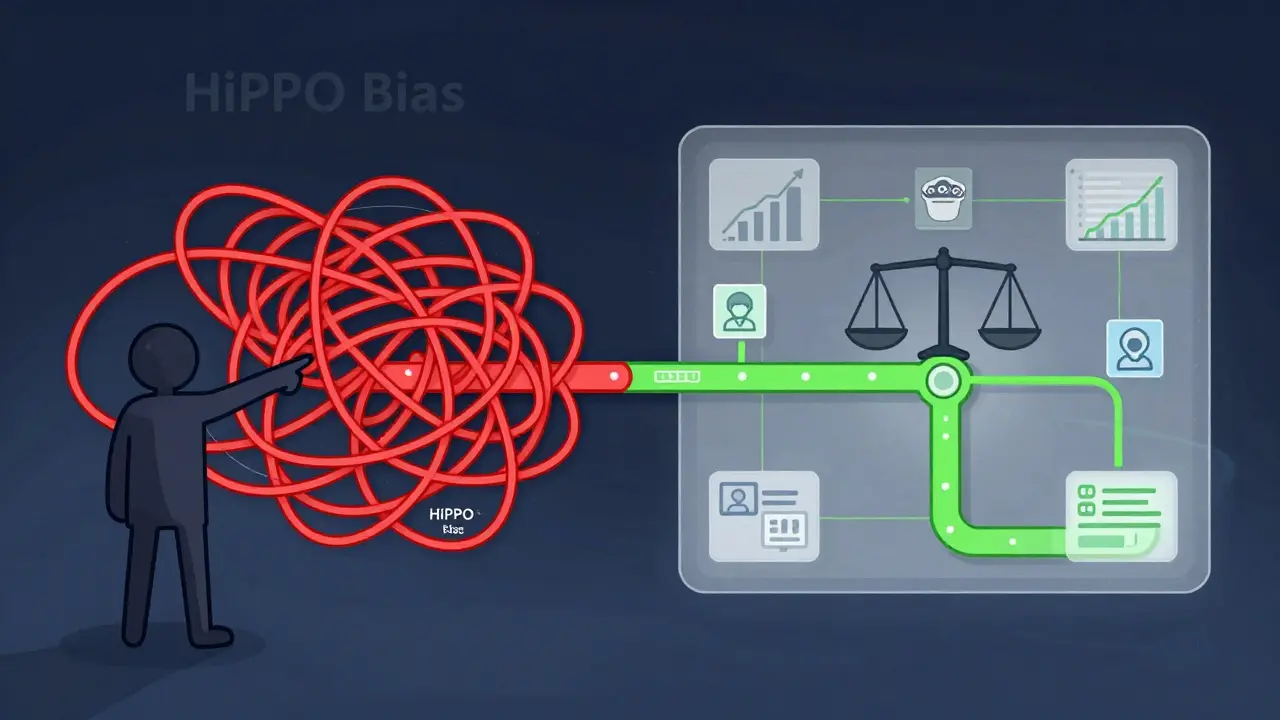
Roadmapping has historically been political. We’ve all seen features get pushed to the top of the backlog not because they drive value, but because the Highest Paid Person’s Opinion (HiPPO) demanded them. Generative AI, combined with machine learning, introduces an objectivity layer that challenges this bias.
Companies like Intuit have deployed machine learning models trained on years of historical feature launch data. These systems analyze proposed features and provide predicted impact scores. If a PM predicts a new dashboard widget will increase retention by 10%, but the ML model-based on similar past launches-predicts only 3%, the system flags this discrepancy. This isn’t about replacing human judgment; it’s about correcting overconfidence and anchoring biases.
Tools like Bagel AI take this further by connecting qualitative signals (sales calls, support tickets) to quantitative business context (revenue impact, churn risk). Instead of asking "How many users requested this?", you can now ask, "Which revenue-generating deals are at risk if we delay this feature?" This shifts the conversation from subjective importance to measurable business exposure.
| Aspect | Traditional Method | AI-Enhanced Method |
|---|---|---|
| Data Source | Subjective estimates, anecdotal feedback | Historical launch data, CRM metrics, support ticket volume |
| Bias Risk | High (HiPPO, recency bias) | Low (algorithmic correction, though model bias exists) |
| Speed | Weeks of debate and scoring | Minutes for initial score generation |
| Focus | Feature count and effort | Revenue impact and churn mitigation |
Automating the Grunt Work: User Stories and Acceptance Criteria
User stories follow a rigid format: "As a [user type], I want [capability], so that [business value]." Writing dozens of these for a single feature is repetitive and drains creative energy. Generative AI excels at this template-based generation. You can feed a high-level requirement into a tool like Jira Product Discovery or even ChatGPT, and it will generate a suite of user stories along with discrete, testable acceptance criteria.
The real value here is consistency. Human writers often vary the granularity of acceptance criteria, leading to confusion during QA testing. AI ensures every story meets the same structural standard. For example, Renaissance Re reported that using AI-assisted discovery helped ensure teams "do the right things, in the right order," focusing on work that delivers tangible benefits.
But beware of "hallucinated" logic. AI might generate a user story that sounds plausible but ignores a critical business rule. Always review the generated stories for logical completeness. Ask yourself: "Does this story cover error states? Does it account for internationalization?" Use the AI to handle the volume, but keep your hand on the wheel for validity.
Tool Landscape: Choosing the Right AI Partner
The market for AI-powered product management tools has matured significantly by 2026. You don’t need one tool to do everything; you need a stack that fits your workflow.
- General Purpose (ChatGPT, Gemini): Best for brainstorming, quick draft generation, and summarizing meeting notes. Low implementation cost, but lacks context about your specific product history.
- Integrated Platforms (Jira Product Discovery, Aha!): Ideal for teams already embedded in the Atlassian or Aha! ecosystems. They bridge discovery and delivery, ensuring AI-generated ideas flow directly into execution tickets without context loss.
- Specialized Intelligence (Zeda.io, Bagel AI): Designed specifically for product intelligence. Zeda.io offers automated tagging of customer feedback and cohort segmentation. Bagel AI focuses on decision management, linking feedback to revenue impact.
- Strategic Alignment (Craft.io): Excellent for connecting OKRs to roadmap items. Fannie Mae, for instance, uses Craft.io to automate the analytical framework between strategic goals and execution tasks.
If you are starting from scratch, general-purpose tools offer the lowest barrier to entry. If you are scaling a mature product team, specialized platforms that integrate with your CRM and support systems provide deeper insights.

The Evolving Skill Set: What AI Can’t Do
There was fear that AI would replace product managers. The reality is different. AI commoditizes technical execution and documentation. This means soft skills have become more valuable, not less.
To succeed in 2026, you need to understand "AI physics." This doesn’t mean coding neural networks. It means understanding how models learn, where they fail, and what biases they encode. You must grasp data ethics, as you are now directing decisions influenced by algorithmic recommendations. If an AI prioritizes a feature that disproportionately affects a vulnerable customer segment negatively, you are responsible for catching that.
Negotiation, storytelling, and stakeholder management are now your primary differentiators. AI can write the PRD, but it cannot convince the CFO to fund the initiative. It can predict feature impact, but it cannot navigate the office politics required to align sales and marketing on the launch message. Focus your energy on these human-centric activities.
Implementation Checklist for 2026
Ready to integrate generative AI into your product workflow? Follow these steps to avoid common pitfalls:
- Audit Your Data Infrastructure: AI tools like Bagel AI or Zeda.io require clean data. Ensure your CRM, support tickets, and feedback loops are integrated and tagged consistently.
- Start with Documentation: Begin by using AI for low-risk tasks like drafting release notes or user stories. Build trust in the tool’s accuracy before applying it to strategic prioritization.
- Define Prompt Standards: Create a library of standardized prompts for your team. Consistency in prompts leads to consistency in outputs. Share best practices across your product organization.
- Establish Human-in-the-Loop Protocols: Mandate that no AI-generated PRD or roadmap item goes to engineering without human review. Define who signs off and what criteria they check against.
- Monitor for Bias: Regularly audit AI-driven prioritization decisions. Compare AI predictions against actual post-launch results to refine your models and correct systematic errors.
The transition to AI-augmented product management is not optional anymore. High-performing teams adopt these tools 45% more frequently than lower-performing ones. By leveraging generative AI for drafting and predictive analytics for decision-making, you free up your most valuable resource: your time. Spend less time writing and more time building products that truly matter.
Is AI replacing product managers?
No. AI is automating administrative tasks like documentation and data analysis, which actually increases the value of human skills like negotiation, strategy, and ethical judgment. Product managers are shifting from being writers to being strategic directors of AI-assisted workflows.
What is the best AI tool for writing PRDs in 2026?
For most teams, Notion AI or Zeda.io are excellent choices for generating structured PRD drafts. If you are deeply embedded in the Atlassian ecosystem, Jira Product Discovery integrates seamlessly with your existing workflow. The best tool depends on your current tech stack and data infrastructure.
How does AI help with roadmap prioritization?
AI uses predictive analytics to compare proposed features against historical launch data. It provides objective impact scores, reducing bias from senior executives (HiPPO effect) and helping teams focus on features with proven potential for revenue growth or churn reduction.
Are AI-generated user stories accurate?
They are structurally accurate but may lack contextual nuance. AI excels at formatting and consistency but can miss specific business rules or edge cases. Always have a human review AI-generated user stories for logical completeness and alignment with technical constraints.
What skills do product managers need in the age of AI?
Beyond traditional product skills, PMs now need "AI physics" knowledge-understanding how models learn and fail. Strong soft skills like storytelling, negotiation, and stakeholder management are increasingly critical as technical execution becomes commoditized by AI.