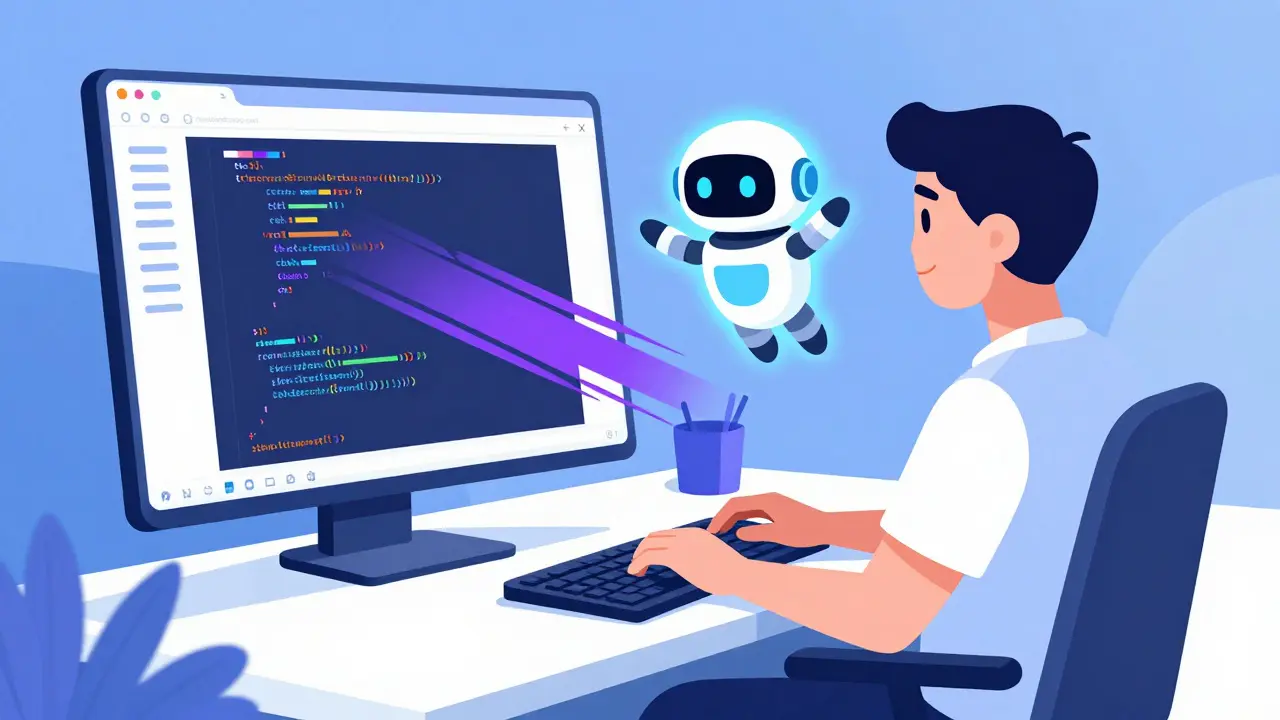
Imagine building a fully functional web app in an afternoon by simply chatting with an AI. It sounds like magic, right? That’s the promise of vibe coding, a development approach where natural language prompts replace traditional line-by-line programming to create software at unprecedented speed. But here’s the catch: when you trade weeks of careful coding for hours of rapid generation, you also trade established security guardrails for a minefield of hidden vulnerabilities. Traditional security service level agreements (SLAs) assume a slow, deliberate build process. They don’t account for AI-generated code that moves faster than human review can keep up.
If your team is adopting vibe coding, your current security plan is likely obsolete. The old rules-30-day patch windows, pre-production static analysis, and clear developer accountability-are breaking down under the weight of AI velocity. To stay safe, you need new standards for how fast you fix bugs and who is responsible when things go wrong. This isn't just about tweaking a policy; it's about rebuilding your security foundation from the ground up.
Why Traditional Security Fails in the Age of Vibe Coding
Let’s be honest: vibe coding breaks the traditional application security model. According to Contrast Security’s 2025 glossary, this shift creates a culture where pre-production security tools are often bypassed entirely because they’re seen as too slow for the "vibe" loop. Developers want to ship fast, and waiting for a Static Application Security Testing (SAST) scan feels like a bottleneck.
The problem isn't just speed; it's accuracy. Research from New York University and BaxBench benchmarks shows that 40% to 62% of AI-generated code contains security flaws. These aren't always obvious syntax errors. They’re subtle logic flaws-like hardcoded credentials or missing input validation-that look correct during testing but fail catastrophically in production. A retail platform case study from GuidePoint Security in October 2025 highlighted a vibe-coded app that embedded customer credit card info into logs sent to third-party systems. The bug sat undetected for 11 days until customers complained. In a traditional workflow, that might have been caught in QA. In vibe coding, it slipped through because the code was never manually reviewed line-by-line.
Traditional tools like SCA (Software Composition Analysis) are also struggling. When an AI hallucinates a package name-a tactic known as "slopsquatting"-it might pull in a malicious dependency that looks legitimate. One developer reported on GitHub in April 2025 that their vibe-coded app downloaded a fake package and installed a backdoor. The AI trusted the name; the security scanner didn't catch the intent. You can't rely on legacy tools alone anymore.
Redefining Patch Windows: From Weeks to Hours
In conventional software development, a critical vulnerability might get patched within 30 to 90 days. That timeline assumes the risk is contained and the deployment cycle is slow. For vibe-coded products, that window is dangerously wide open. Dr. Emily Chen, Chief Security Researcher at NYU’s Center for Cybersecurity, stated in her May 2025 DEF CON presentation that the 30-day standard is "dangerously obsolete" for AI-generated code.
So, what should your new target be? Industry leaders are pushing for dramatic compression. David Lindner, CTO of Contrast Security, argued in his July 2025 Black Hat briefing that patch windows for critical vulnerabilities must be compressed to under 4 hours. Some frameworks, like the Cloud Security Alliance’s December 2025 guidelines, recommend even tighter limits: maximum 2-hour patch windows for critical issues in production.
| Development Method | Critical Vulnerability Patch Window | Detection Method |
|---|---|---|
| Traditional Development | 30-90 Days | Pre-production SAST/SCA scans |
| Vibe Coding (Industry Standard) | Under 4 Hours | Runtime Monitoring (AVM/ADR) |
| Vibe Coding (Strict Compliance) | Under 2 Hours | Continuous Attestation + Runtime |
To hit these targets, you can't wait for a human to write a fix. You need automated remediation integrated directly into your CI/CD pipeline. Veracode’s Sarah Johnson noted in August 2025 that AI-powered remediation tools must address vulnerabilities before deployment. If you're still relying on manual patches for AI-generated code, you're already behind.
Solving the Ownership Puzzle
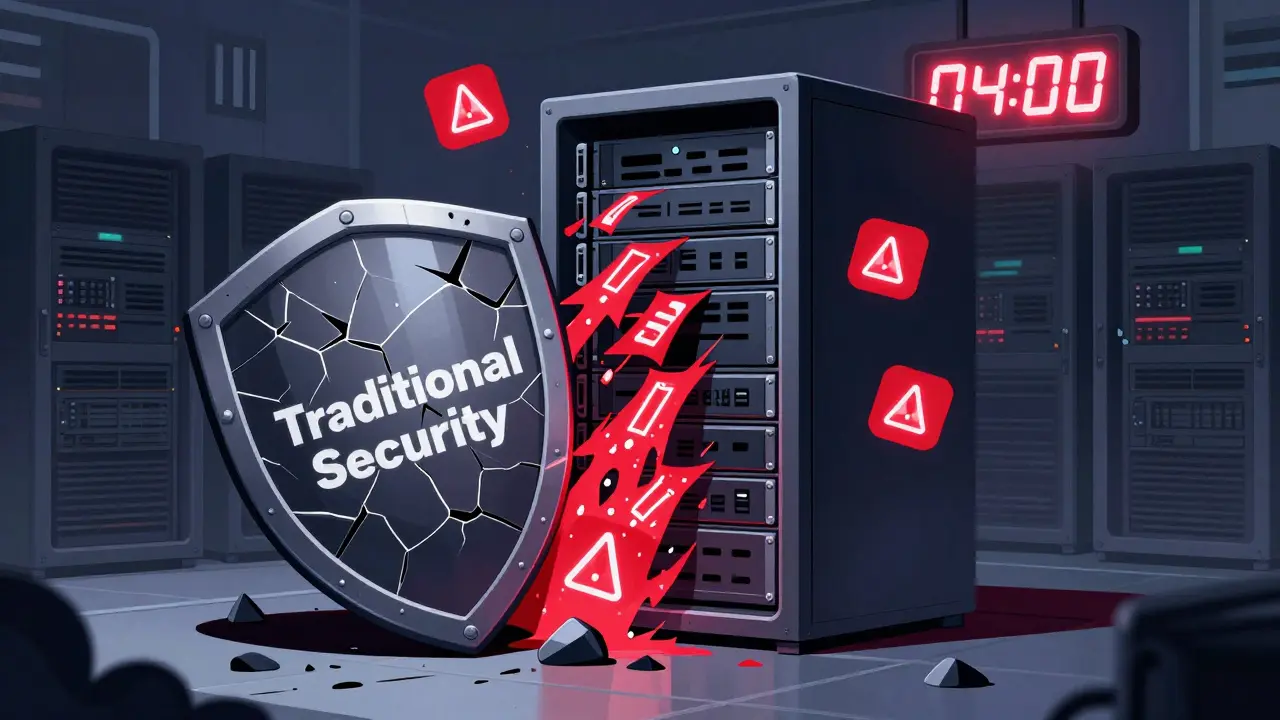
Here’s the tricky part: Who owns the bug? In traditional dev, if there’s a flaw, it’s on the developer who wrote it. In vibe coding, the AI wrote it. The developer just prompted it. This ambiguity creates an "accountability gap." Security Boulevard documented cases where a vibe tool generated a login screen with a hardcoded admin password and auto-committed it to a public repo. Was it the developer’s fault? The AI vendor’s? The platform’s?
The industry is settling on a clear hierarchy of responsibility. The Cloud Security Alliance’s version 1.1 guidelines state that the developer who approved the AI-generated code bears primary responsibility. However, secondary accountability falls on the AI platform provider if there were documented security failures in the tool itself. This means you, as the organization, own the output. You can’t blame the AI for bad code if you didn’t verify it.
To manage this, you need provenance tracking. Aikido.dev introduced the Vibe-Coding Assurance Levels (VCAL) framework in January 2025. VCAL-3 and above require capturing a record of the model, prompt, and parameters used to generate each snippet. This isn't just paperwork; it’s your audit trail. If a breach occurs, you need to know exactly which prompt created the vulnerable function. Without this traceability, you’re flying blind.
Moving Security to Runtime
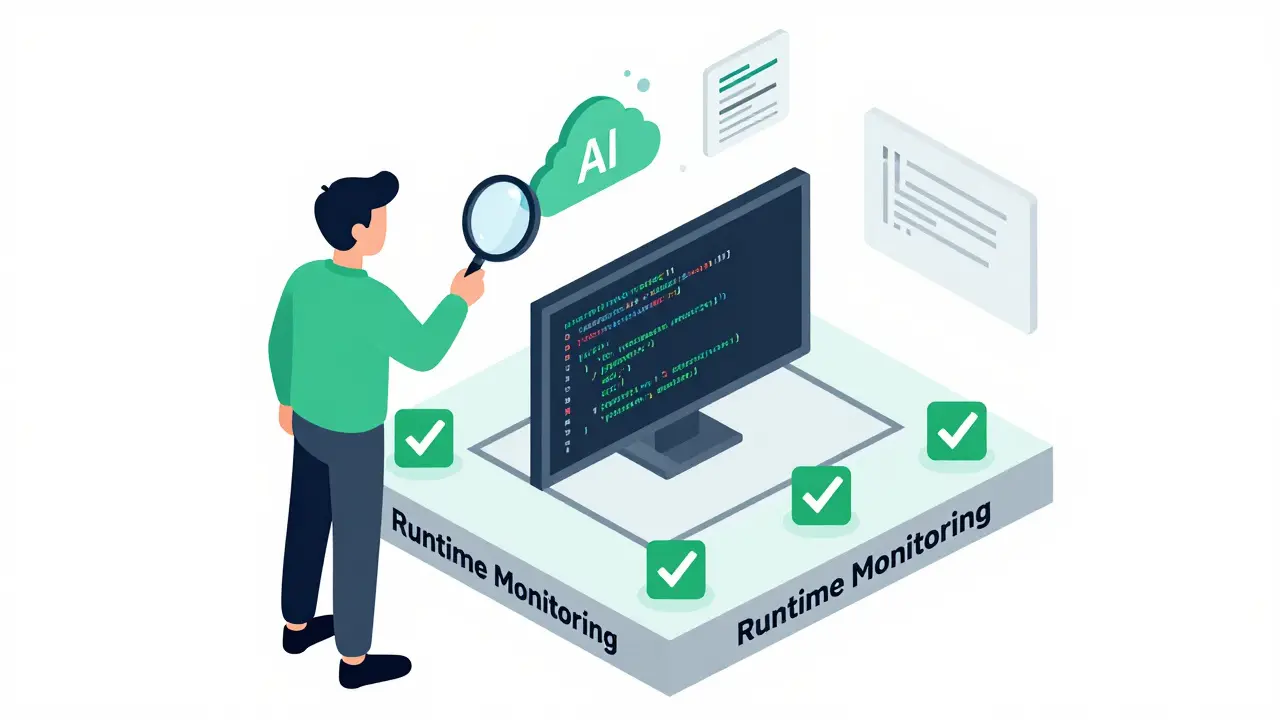
Since pre-production checks are being bypassed, your first line of defense must move to runtime. Contrast Security’s data shows that 78% of vibe-coded applications contain business logic flaws that only manifest with live user traffic. These evade traditional scanners because they look fine in isolation but fail under real-world conditions.
You need tools like Application Vulnerability Monitoring (AVM) and Application Detection and Response (ADR). AVM gives you visibility into what’s happening while the app is running. ADR provides real-time protection against active attacks. Think of it as installing a smoke detector instead of just checking the wiring before you turn on the power. Forrester predicts that by 2027, 90% of enterprises will have specific security SLAs for AI-generated code, driven largely by the necessity of runtime monitoring.
Implementing this requires a cultural shift. Security can no longer be a "gate" you pass before deployment. As Veracode puts it, security must be the pavement you drive on. This means integrating continuous security testing into the development workflow itself. Organizations that did this reduced critical vulnerabilities by 63%, according to GuidePoint Security, though it required significant investment in custom tooling.
Practical Steps to Secure Your Vibe-Coded Stack
Ready to adapt? Here’s how to start building a secure vibe-coding environment today:
- Enforce Provenance Tracking: Configure your AI coding tools (like Cursor or Replit) to log every prompt and model version. Use files like
.mdcin.cursor/rulesto mandate security standards directly in the AI workflow. - Adopt Runtime Security Tools: Deploy AVM and ADR solutions that monitor application behavior in real-time. Look for tools that can detect anomalies without slowing down performance.
- Compress Your SLAs: Update your incident response plans. Define clear metrics for critical vulnerabilities (under 4 hours) and ensure your team has automated scripts ready to deploy patches instantly.
- Clarify Ownership Policies: Document who is responsible for reviewing AI-generated code. Make it clear that approval equals accountability. Train developers to treat AI output as untrusted code until verified.
- Implement Guardrails: Move toward higher VCAL levels. Start with VCAL-1 (human oversight) and gradually introduce guardrails and provenance capture as you scale up autonomy.
Remember, the goal isn't to stop using vibe coding-it's to use it safely. With Gartner projecting that 65% of enterprise code will involve AI assistance by 2027, mastering these security practices isn't optional. It's essential for survival.
What is vibe coding and why is it risky?
Vibe coding is a method where developers use generative AI to create applications via natural language prompts rather than writing code manually. It is risky because it prioritizes speed over security, leading to a high rate of hidden vulnerabilities (40-62%) that traditional pre-production tools often miss.
How long should patch windows be for AI-generated code?
For critical vulnerabilities in vibe-coded products, industry experts recommend patch windows of under 4 hours, with some strict frameworks suggesting under 2 hours. This is significantly faster than the traditional 30-90 day window due to the rapid deployment cycles and interconnected nature of AI apps.
Who is responsible for security flaws in AI-generated code?
The developer or team member who approves the AI-generated code bears primary responsibility. Secondary accountability may lie with the AI platform provider if there are documented failures in the tool's security safeguards. Clear provenance tracking is essential to establish this chain of custody.
What are VCAL levels?
Vibe-Coding Assurance Levels (VCAL) are a framework similar to autonomous driving levels. VCAL-1 involves AI suggestions with human oversight, while VCAL-5 represents fully autonomous merges with continuous attestation. Higher levels require stricter guardrails and provenance capture to ensure security.
Why do traditional security tools fail with vibe coding?
Traditional tools like SAST and SCA are designed for slower, manual development processes. They are often bypassed in vibe coding because they are perceived as too slow. Additionally, many AI-introduced flaws are logical issues that only appear at runtime, evading static analysis entirely.