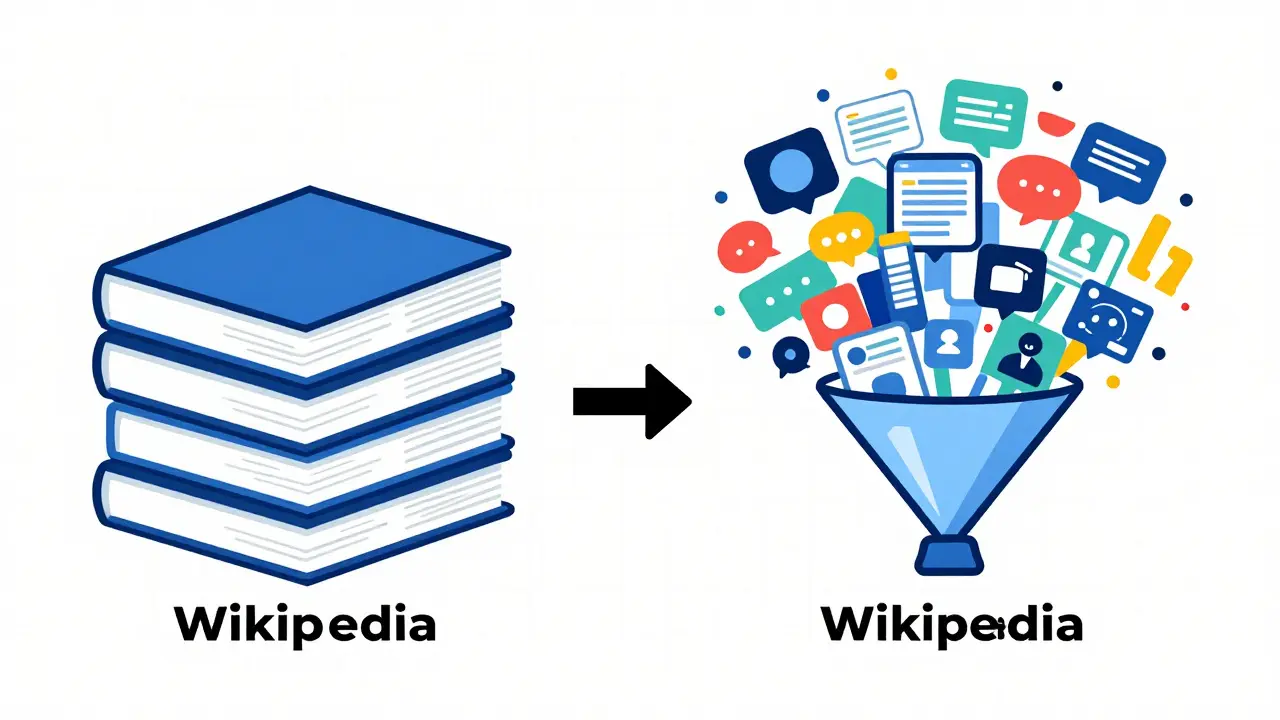
Have you ever wondered why an AI can write a poem about your morning coffee but fails to understand a simple joke? The answer isn't just in the code; it's in the NLP datasets that feed the machine. We often talk about algorithms as if they are magic spells, but behind every Large Language Model (LLM) is a mountain of text. This text ranges from carefully curated encyclopedia entries to messy, chaotic web forums. Understanding this evolution-from structured Wikipedia articles to massive web-scale corpora-is key to grasping how modern AI actually works.
The Foundation: Why Data Beats Code
In the early days of Natural Language Processing (NLP), researchers focused heavily on rules and logic. You would tell a computer exactly what a noun was and how sentences should be structured. But human language is too messy for rigid rules. Today, we rely on statistical learning. The model doesn't "know" grammar; it has seen enough examples to guess the next word with high probability. This shift made data the most critical asset in AI development.
NLP datasets serve as the foundational infrastructure for developing, training, and evaluating machine learning models that interpret and process human language. Without high-quality data, even the most sophisticated neural network is useless. Think of it like cooking: you can have the best chef in the world, but if your ingredients are rotten, the meal will taste bad. In AI, the "ingredients" are tokens-words or sub-words extracted from text sources.
From Clean Encyclopedias to Noisy Blogs
Not all data is created equal. Early NLP models relied on clean, structured sources. Wikipedia is a free online encyclopedia written collaboratively by volunteers, providing structured, factual text across millions of topics. It became a gold standard for training because it offers coherent, well-written prose with clear topical organization. Datasets derived from Wikipedia, such as WikiText, contain millions of words that help models learn general knowledge and logical flow.
However, Wikipedia alone isn't enough. It lacks the casual tone, slang, and emotional nuance of everyday human communication. To bridge this gap, researchers turned to other sources:
- Project Gutenberg provides an extensive collection of over 50,000 public domain books in various languages. This helps models understand historical context and complex narrative structures.
- The Blog Authorship Corpus contains over 681,000 blog posts from nearly 20,000 bloggers, totaling 140 million English words. This resource is valuable for stylistic analysis and understanding informal writing styles, though it raises privacy concerns.
- The Yelp Open Dataset includes nearly 7 million reviews for over 150,000 businesses with associated metadata. This is crucial for sentiment analysis and understanding consumer opinions.
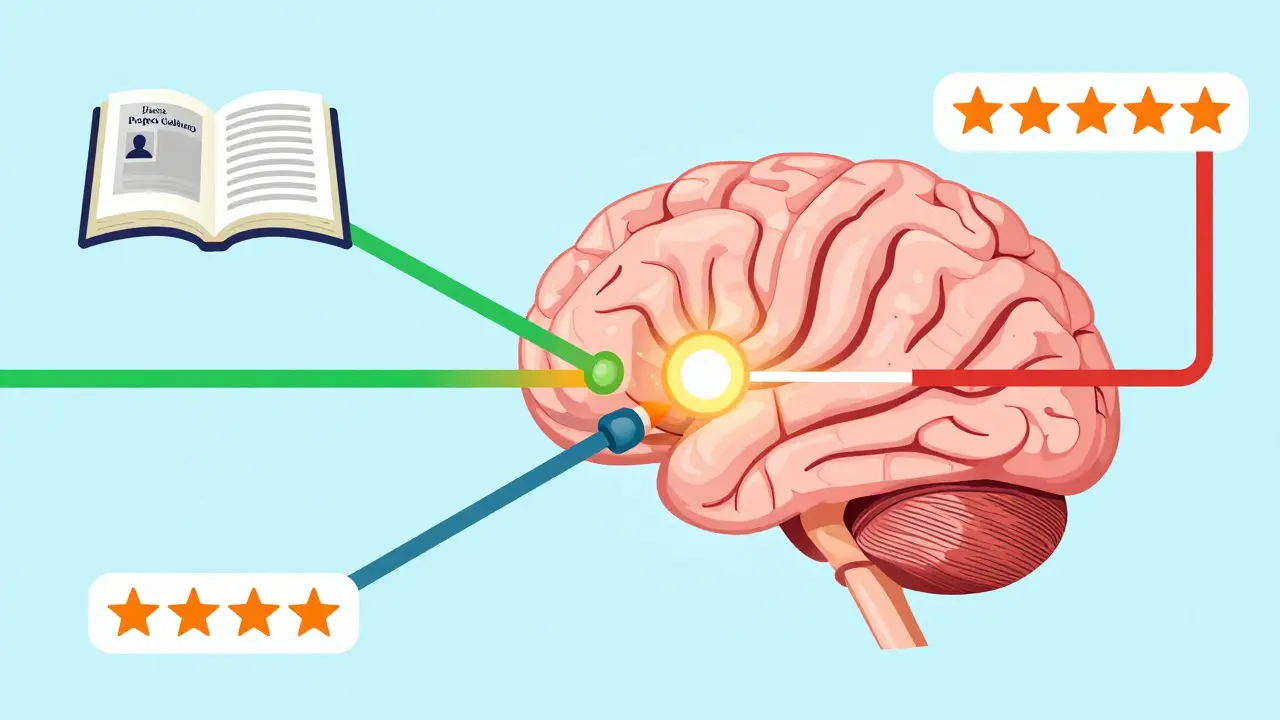
Each source adds a different flavor to the model's "brain." Wikipedia teaches facts; Project Gutenberg teaches storytelling; blogs teach voice; and reviews teach opinion.
The Rise of Web-Scale LLM Corpora
As models grew larger, so did their appetite for data. Modern Large Language Models require trillions of tokens to train effectively. This led to the creation of web-scale corpora-massive collections of text scraped from the entire internet. These datasets include news articles, social media posts, forum discussions, and code repositories.
Hugging Face is a leading platform hosting thousands of open-source datasets, models, and applications for natural language processing. It has become the central hub for the NLP community, offering vast, varied datasets readily available for public use. Other major repositories include Kaggle, GitHub, and Papers with Code. These platforms democratize access to data, allowing researchers worldwide to experiment with different subsets of information.
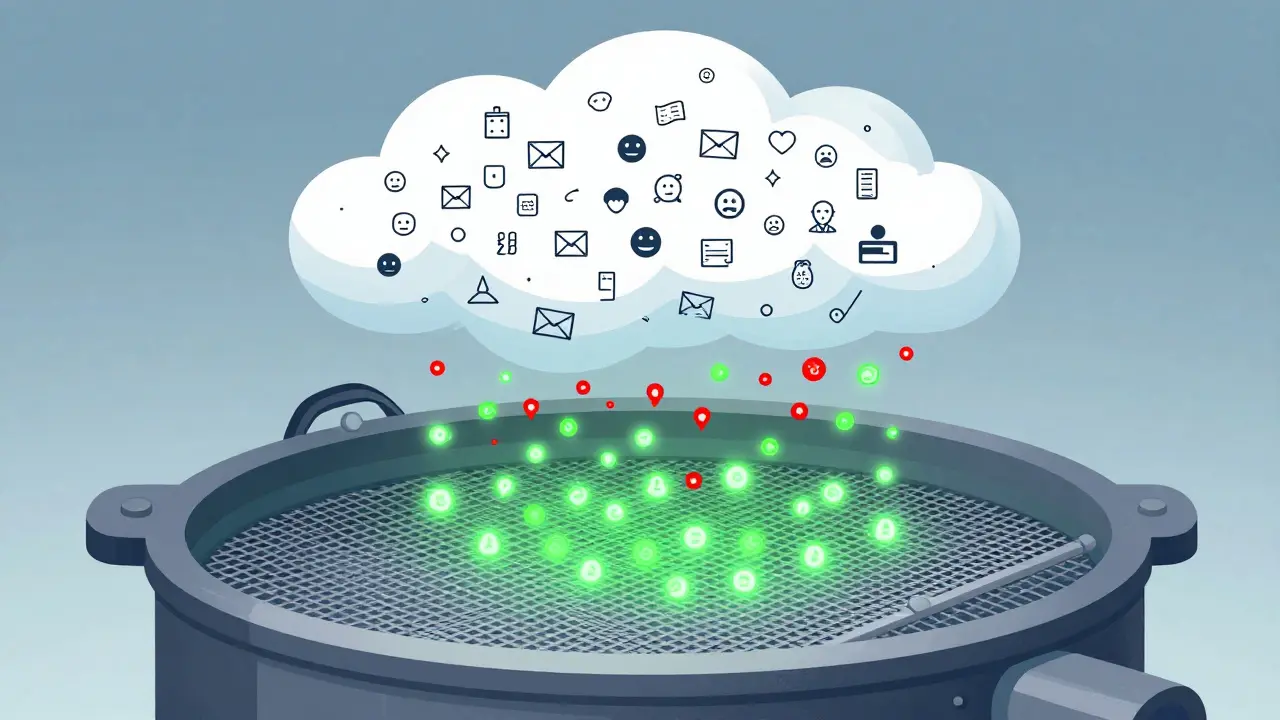
The scale of these corpora is staggering. For example, the Common Crawl dataset captures billions of web pages. While this volume allows models to learn rare patterns and diverse contexts, it also introduces noise. Web-scale data contains spam, hate speech, and inaccuracies. Cleaning this data is a significant challenge, requiring sophisticated filtering techniques to ensure the model learns useful rather than harmful content.
Specialized Tasks Require Specialized Data
General language understanding is only one part of NLP. Specific tasks require targeted datasets. Here’s how different domains utilize specialized data:
| Task | Dataset Name | Key Characteristics | Primary Use Case |
|---|---|---|---|
| Sentiment Analysis | Stanford Sentiment Treebank (SST) | Phrase-level annotations | Fine-grained emotion detection |
| Named Entity Recognition | CoNLL 2003 | Benchmark for entities like persons, organizations | Information extraction |
| Natural Language Inference | MultiNLI | Diverse genres, entailment labels | Reasoning and logic evaluation |
| Speech Recognition | LibriSpeech | ~1,000 hours of audiobook audio | Audio-to-text transcription |
| Misinformation Detection | Fake News Dataset | Labeled real vs. fake articles | Fact-checking systems |
For instance, the Stanford Sentiment Treebank (SST) distinguishes itself by providing sentiment annotations at the phrase level, not just the sentence level. This allows models to understand nuanced emotions within a single statement. Similarly, CoNLL 2003 remains a standard benchmark for Named Entity Recognition (NER), helping models identify names, dates, and locations in text.
Speech and Audio: Expanding Beyond Text
NLP isn't just about reading; it's also about listening. Speech recognition datasets play an expanding role as voice-based interfaces become ubiquitous. LibriSpeech contains almost 1,000 hours of English speech segmented by topics from audiobooks. It is an ideal tool for training models to convert spoken language into text accurately.
Other notable audio datasets include:
- TIMIT features recordings of over 600 unique American-English speakers reading phonetically rich passages. This is essential for acoustic-phonetic studies.
- Spoken Wikipedia Corpora comprises Wikipedia articles narrated in English, German, and Dutch with hundreds of hours of aligned audio. This supports multilingual research and cross-lingual transfer learning.
- Noisy Speech Database presents parallel datasets of clean and noisy speech recordings. This helps models perform better in real-world, challenging conditions.
The diversity of speakers, accents, and background noises in these datasets ensures that speech-to-text models are robust and inclusive.
Ethical Considerations and Data Quality
With great data comes great responsibility. The quality and ethics of datasets directly impact model behavior. If a dataset contains biased language, the model will likely reproduce those biases. For example, if historical texts in Project Gutenberg reflect outdated gender roles, a model trained primarily on them might generate stereotypical content.
Researchers must consider several criteria when selecting datasets:
- Relevance: Does the data match the target task?
- Diversity: Does it cover various demographics, dialects, and topics?
- Annotation Quality: Are the labels accurate and consistent?
- Privacy: Does the data respect user consent and anonymity?
- Documentation: Is there clear guidance on usage and limitations?
The Datasets library represents a significant community infrastructure advancement, standardizing end-user interfaces, versioning, and documentation across the NLP ecosystem. By providing a lightweight front-end for both small and internet-scale corpora, it facilitates responsible data usage and reproducibility in research.
The Future: Curated vs. Raw Data
As we move forward, the trend is shifting towards higher-quality, curated data rather than just raw volume. While web-scale corpora provide breadth, specialized datasets provide depth. Future models will likely combine both approaches: using broad web data for general language understanding and fine-tuning on high-quality, task-specific datasets for precision.
This hybrid approach allows AI to be both versatile and accurate. It enables capabilities like pattern identification, trend detection, and sentiment extraction from large text collections through advanced text mining techniques. Ultimately, the role of datasets extends beyond initial training to continuous evaluation, fine-tuning, and safety assessment.
What is the difference between Wikipedia-derived datasets and web-scale corpora?
Wikipedia-derived datasets, like WikiText, consist of structured, factual, and relatively clean text with clear topical organization. They are excellent for teaching models general knowledge and logical coherence. Web-scale corpora, on the other hand, include diverse internet sources such as social media, forums, and news sites. They provide breadth and variety, capturing casual language, slang, and multiple perspectives, but require more cleaning due to noise and potential bias.
Why are specialized datasets important for NLP tasks?
Specialized datasets allow models to excel in specific areas. General web data may not contain enough examples of rare medical terms, legal jargon, or nuanced sentiment expressions. Datasets like the Stanford Sentiment Treebank or CoNLL 2003 provide precise annotations that help models learn fine-grained distinctions, improving accuracy in tasks like emotion detection or entity recognition.
How do speech datasets contribute to NLP?
Speech datasets enable models to process spoken language, which is crucial for voice assistants and accessibility tools. Datasets like LibriSpeech and TIMIT provide aligned audio and text transcriptions, helping models learn pronunciation, accent variations, and phonetic patterns. Multilingual sets like Spoken Wikipedia Corpora further enhance cross-lingual capabilities.
What role does Hugging Face play in the NLP ecosystem?
Hugging Face serves as a central repository for open-source NLP resources. It hosts thousands of datasets, pre-trained models, and applications, making it easier for developers and researchers to access, share, and collaborate on NLP projects. Its standardized libraries simplify the process of loading and preprocessing data for both small and large-scale experiments.
Are there ethical concerns with using large-scale datasets?
Yes, significant ethical concerns exist. Large-scale datasets may contain biased, offensive, or private information. If models are trained on this data without proper filtering, they can perpetuate stereotypes or violate user privacy. Researchers must prioritize data quality, diversity, and transparency, ensuring that datasets are annotated correctly and used responsibly.