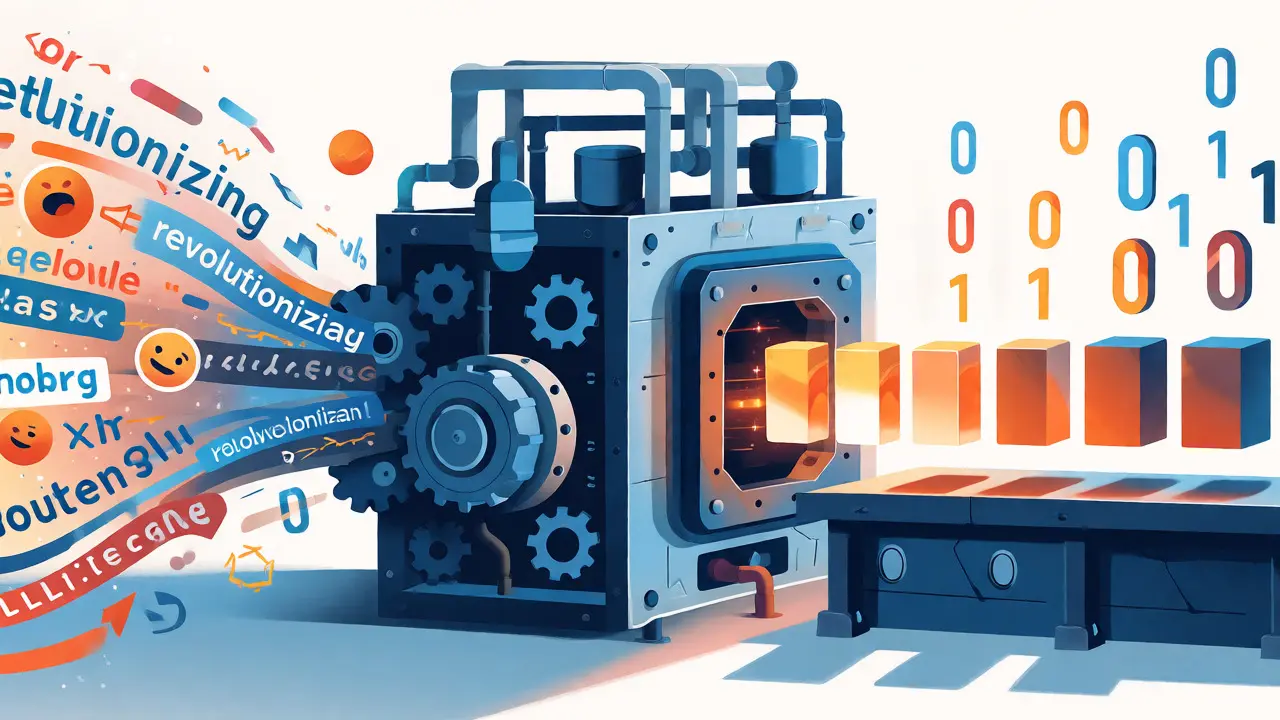
You type a prompt into an AI chatbot. It spits out a coherent answer in seconds. But what if I told you that the AI doesn't actually "read" your words? It reads numbers. Specifically, it reads sequences of integers derived from breaking your text into tiny chunks called tokens. This process, known as tokenization, is the invisible gatekeeper between human language and machine logic. Without it, models like GPT-4 or Claude would be nothing more than complex calculators with no idea how to handle the messy reality of English, code, or emojis.
Understanding tokenization isn't just for researchers tweaking model weights. If you're building apps on top of Large Language Models (LLMs), this concept dictates your costs, your latency, and often, the quality of your output. A single rare word can double your API bill if it's split into too many tokens. So, let's peel back the curtain on how algorithms like Byte Pair Encoding (BPE) and WordPiece turn "revolutionizing" into "revol", "ution", and "izing", and why this matters for the future of generative AI.
Why Raw Text Is Useless to Machines
Computers don't understand meaning; they understand math. To feed language into a neural network, we need to convert characters into numerical vectors. The simplest way would be to assign a unique number to every possible word in the dictionary. Sounds easy, right? Except English has over 170,000 current words, plus slang, typos, brand names, and code snippets. If a model encounters a word not in its fixed vocabulary-like "ChatGPT" before it became common-it hits a wall. This is the Out-of-Vocabulary (OOV) problem.
To solve this, developers moved away from strict word-level tokenization. Instead, they adopted subword tokenization. Think of it like LEGO bricks. You don't need a specific brick for every possible castle shape. You just need standard blocks that can snap together to build anything. Subword tokenizers break words down into smaller, frequent pieces. "Unhappiness" becomes "un", "happi", and "ness". Even if the model has never seen "unhappiness" before, it knows all three parts. This approach drastically reduces vocabulary size while maintaining the ability to represent any word, no matter how obscure.
The Dominance of Byte Pair Encoding (BPE)
If you've used OpenAI's models, you've interacted with Byte Pair Encoding (BPE). Developed originally for data compression, BPE was adapted for NLP by researchers at Sennrich et al. It’s the engine behind GPT-3, GPT-4, and many other modern transformers.
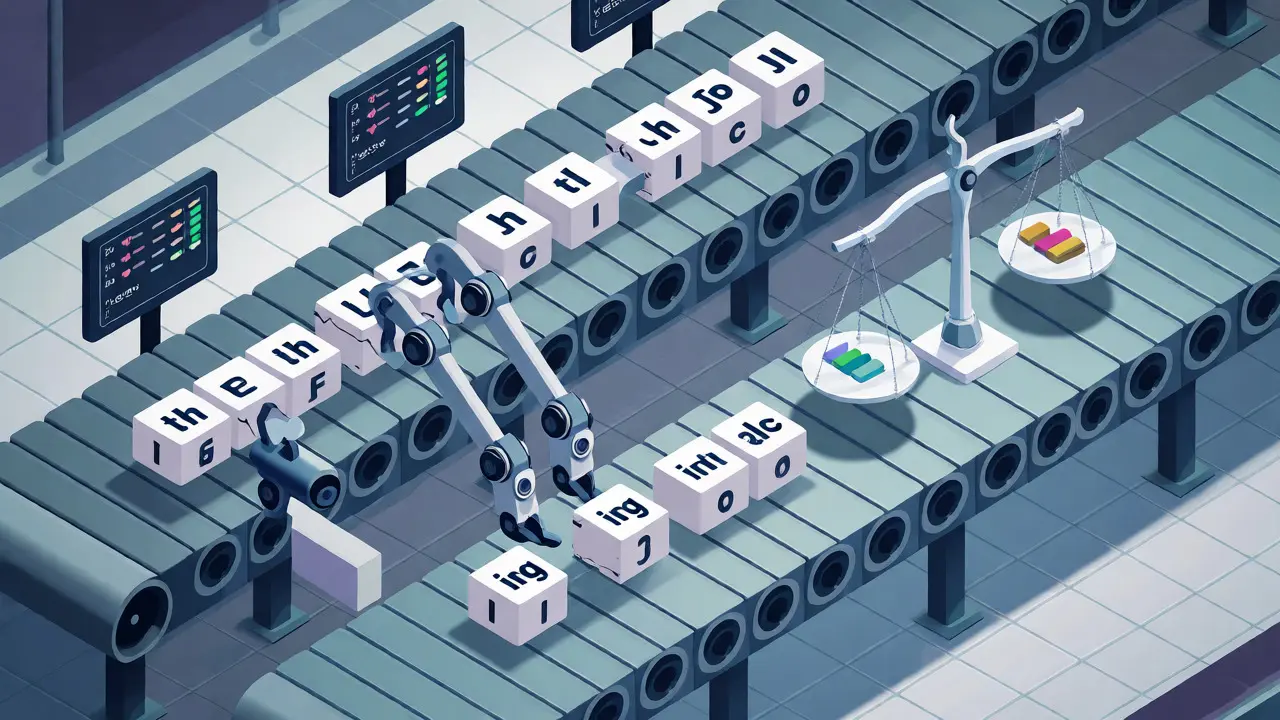
Here’s how BPE works under the hood. It starts with a base vocabulary of individual characters (bytes). Then, it looks at the training data and counts which pairs of adjacent characters appear most frequently. Maybe "th" appears often. Maybe "ing" appears often. It merges these frequent pairs into new, single tokens. It repeats this process iteratively until it reaches a predefined vocabulary size, usually around 50,000 to 100,000 tokens.
The result is a dynamic vocabulary optimized for the specific language patterns in the training set. Because BPE learns from the data, it handles rare words gracefully by splitting them into known subwords. However, BPE has quirks. Since it operates on bytes, it can sometimes split Unicode characters awkwardly. For example, certain emoji or non-Latin scripts might get fragmented into multiple tokens, increasing sequence length and computational cost without adding semantic value. Despite this, BPE remains the gold standard for general-purpose LLMs because of its balance between efficiency and coverage.
WordPiece and the Probabilistic Approach
While BPE relies on frequency counts, WordPiece takes a probabilistic route. Popularized by Google's BERT and RoBERTa models, WordPiece builds its vocabulary by maximizing the likelihood of generating the training data.
Instead of asking "which pair appears most often?", WordPiece asks "which merge maximizes the probability of the next token given the previous one?" It uses a scoring function based on the corpus statistics. This subtle difference leads to different segmentation boundaries. For instance, BPE might aggressively merge "low" and "ering" into "lowering" if it's frequent, whereas WordPiece might keep them separate if the probability gain is marginal.
Why does this matter? In tasks like masked language modeling-where the model predicts missing words-WordPiece's careful boundary detection can help the model better understand morphological structures. Studies comparing detectors for AI-generated text have shown that models using WordPiece-based embeddings, like Electra, can achieve high accuracy scores (such as a Quadratic Weighted Kappa of 0.961) in identifying synthetic content. This suggests that how you tokenize affects not just generation, but also the detectability and interpretability of the model's internal states.
Comparing Tokenization Strategies
Choosing the right tokenizer isn't trivial. It impacts inference speed, memory usage, and final output quality. Here’s a breakdown of the main approaches:
| Feature | Byte Pair Encoding (BPE) | WordPiece | Unigram LM |
|---|---|---|---|
| Primary Logic | Merges most frequent character pairs iteratively. | Selects merges that maximize likelihood/probability. | Starts with large vocab, prunes low-probability tokens. |
| Used By | GPT series, Llama, Mistral. | BERT, RoBERTa, DistilBERT. | ALBERT, T5. |
| Handling OOV Words | Excellent; splits into known subwords. | Good; similar to BPE but probabilistic. | Variable; depends on remaining vocabulary. |
| Vocabulary Size | Typically 32k-100k+ tokens. | Typically 30k-50k tokens. | Can be very large initially, then pruned. |
| Complexity | High during training, fast inference. | Similar to BPE, slightly slower training. | Fast inference due to simple lookup. |
Notice the trend toward larger vocabularies in newer models. GPT-4 uses a significantly larger vocabulary than early BERT models. Why? Larger vocabularies mean fewer tokens per sentence. Fewer tokens mean faster processing and lower costs, assuming the embedding matrix doesn't become too unwieldy. It's a trade-off between storage space and computational steps.
The Hidden Costs of Tokenization
Let's talk money. When you use an API like OpenAI or Anthropic, you pay per token. Not per word. Per token. And here's the kicker: different tokenizers produce different token counts for the same text.
Consider the phrase "I love generative AI." A naive word-level tokenizer sees 4 tokens. A BPE tokenizer might see 6 or 7, depending on how it splits "generative" and "AI". If you're processing millions of documents, those extra tokens add up to thousands of dollars. Furthermore, long sequences are computationally expensive. Transformers rely on self-attention mechanisms, where complexity grows quadratically with sequence length. If poor tokenization inflates your sequence length by 20%, your attention calculation time could increase by nearly 50%.
This is why prompt engineering isn't just about clever wording; it's about token efficiency. Removing unnecessary punctuation, abbreviating common terms, or structuring prompts to minimize whitespace can save real money. Developers often use tools like `tiktoken` (for GPT models) to inspect exactly how their inputs are being sliced before sending them to the server.
Beyond Text: Multimodal and Dynamic Tokenization
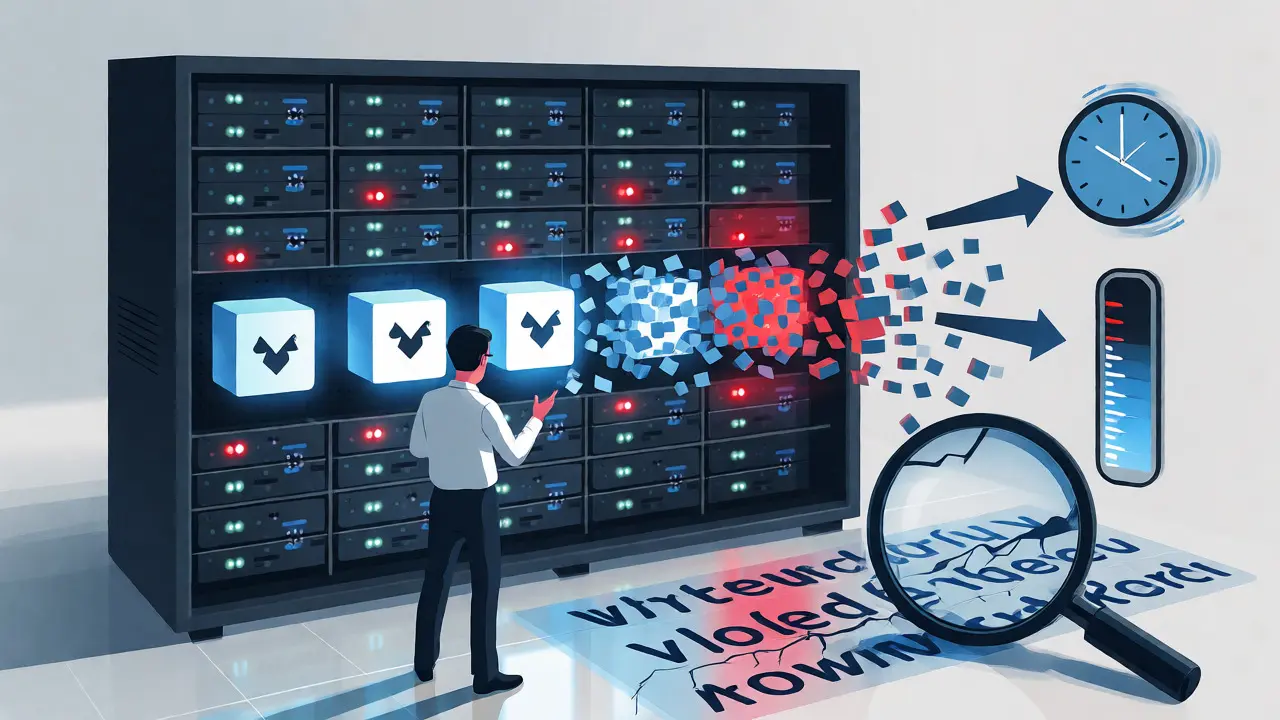
Text is just the beginning. Modern generative AI is multimodal. Systems like DALL·E 3 or Gemini process images alongside text. How do you tokenize a picture? You don't. You chop the image into patches-small squares of pixels-and treat each patch as a token. This allows the transformer architecture to attend to both textual and visual elements simultaneously, enabling cross-modal learning.
Researchers are also pushing beyond static vocabularies. Static tokenizers freeze their rules after training. If the world changes-if new slang emerges or a new coding library drops-the tokenizer stays stuck in the past. Dynamic tokenization adapts the segmentation strategy based on context or input characteristics. Some experimental models even use semantics-driven tokenization, where the split points depend on the meaning of the surrounding words rather than just surface frequency.
There's also the frontier of quantum computing. While still largely theoretical, quantum algorithms promise to handle the combinatorial explosion of token merging much faster than classical computers. Imagine a tokenizer that instantly optimizes itself for a specific document domain in real-time. That's the distant horizon, but the pressure to reduce computational bottlenecks is driving innovation today.
Practical Tips for Developers
If you're working with LLMs, keep these heuristics in mind:
- Check your tokenizer: Don't assume all models count tokens the same way. Always use the official tokenizer library for your specific model (e.g., Hugging Face's `AutoTokenizer`).
- Watch the special tokens: Most models reserve special tokens for start/end of sequence, padding, or unknown values. These consume budget. Minimize their use in user-facing prompts.
- Handle non-English carefully: Asian languages or Cyrillic scripts may require more tokens per character than Latin scripts due to encoding differences. Test your costs with multilingual inputs.
- Code is tricky: Programming syntax (brackets, semicolons) often gets split into individual tokens. Indentation matters less than symbols. Be mindful when prompting with large codebases.
Tokenization is the bridge between the fluid chaos of human communication and the rigid structure of digital computation. As models grow smarter, the lines between words, subwords, and semantic units blur. But for now, understanding BPE and WordPiece gives you a critical edge in optimizing performance and cost. It’s not just technical trivia; it’s the foundation upon which reliable, scalable AI applications are built.
What is a token in generative AI?
A token is a basic unit of text processed by a language model. It can be a whole word, part of a word (subword), a character, or even a punctuation mark. Models convert these tokens into numerical vectors to perform calculations.
How does Byte Pair Encoding (BPE) work?
BPE starts with individual characters and iteratively merges the most frequent pairs of adjacent tokens into new, single tokens. This creates a vocabulary optimized for the training data, allowing the model to handle rare words by splitting them into known subwords.
Why do some words cost more tokens than others?
Common words are often stored as single tokens. Rare words, proper nouns, or complex technical terms are frequently split into multiple subword tokens. More tokens mean higher computational cost and higher API fees.
Is WordPiece better than BPE?
Neither is universally "better." WordPiece uses probability scores to determine merges, while BPE uses frequency counts. WordPiece is often preferred for masked language modeling (like BERT), while BPE is dominant in autoregressive generation models (like GPT).
Can tokenization affect AI hallucinations?
Yes. If a tokenizer splits meaningful phrases into unrelated fragments, the model may lose contextual nuance, potentially leading to misinterpretations or hallucinations. Proper tokenization preserves semantic integrity.
Joanna Mucha
September 23, 2026 AT 22:09The sheer arrogance of assuming that reducing the sacred, fluid tapestry of human expression to mere integers is anything other than a profound spiritual degradation is breathtaking. We are not data points; we are souls yearning for meaning in a cold digital void. To treat language as nothing more than a sequence of bytes is to strip it of its very essence, its poetry, its breath. It is a violent act of reductionism that mirrors the broader societal tendency to commodify every aspect of existence until nothing remains but the hollow echo of transactional value. You speak of efficiency and cost, but at what price? The price of our humanity, stripped bare and fed into the maw of an algorithm that understands syntax but knows absolutely nothing of sorrow or joy. This isn't just technology; it's an ontological crisis dressed up in technical jargon. We are becoming less by interacting with these systems, forgetting that words carry weight, history, and blood, not just token counts. The machine does not care if you are crying or laughing; it only cares about the vector magnitude. That is the tragedy of our age: the substitution of feeling for calculation, of depth for breadth, of being for having. And yet, we cling to these tools like life rafts in a sea of information overload, unaware that they are pulling us further from the shore of authentic connection. It is a pathetic spectacle, really, watching intelligent beings beg for validation from a statistical model that has no consciousness to offer. We have built gods out of math and then wondered why they feel so empty inside.
Meagan Mueller
September 25, 2026 AT 13:17theyre hiding the real reason for subword tokenization its all about surveillance capitalism and keeping vocabularies small enough to track patterns easily without needing massive compute resources that would reveal how little they actually understand context its suspicious how fast everyone accepted this when its clearly a downgrade in semantic fidelity
Bonnie Watt
September 26, 2026 AT 21:18Oh please spare me the existential dread Joanna you sound like a broken record playing the same tired song about tech ruining souls meanwhile people are actually getting work done and making money which seems to be the one thing your highfalutin philosophy can't quantify because it's too busy mourning the death of nuance while ignoring the utility of the tool itself get over yourself
Kim Edwards
September 28, 2026 AT 07:56I literally screamed reading this! The part about "revolutionizing" turning into "revol", "ution", and "izing" made my brain hurt in the best possible way 😱 It’s like watching a word get dismembered on live TV! I had no idea emojis were getting chopped up into tiny pieces too that feels so disrespectful to the art of the emoji!! But also super fascinating?? Like how can something so simple be so complex?? My head is spinning and I love it!!!
Sabrina Newland
September 29, 2026 AT 13:53It’s interesting to think about how this fragmentation might affect the way we perceive meaning itself 🤔 If a word is split, does the model lose the gestalt of the concept? Or does it reconstruct it perfectly? I wonder if there’s a philosophical parallel here to how we process trauma or complex ideas-sometimes breaking them down helps, sometimes it shatters the whole picture. Also typos everywhere sorry my keyboard hates me today 😅📚✨
Amara Akbar
October 1, 2026 AT 03:08This is such a valuable breakdown for anyone starting out. Don't let the complexity discourage you; understanding these basics will make you a much stronger developer. Keep experimenting and don't worry about getting it perfect right away.