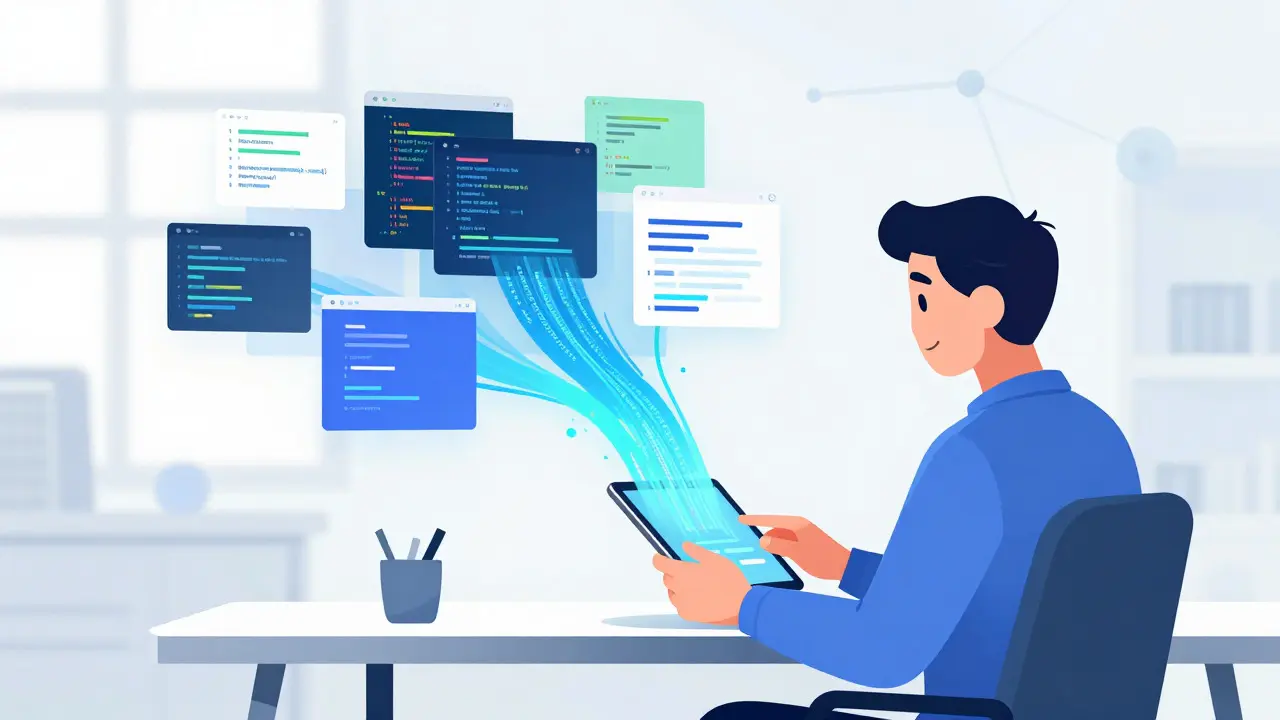
Imagine validating a complex checkout flow or testing a new user onboarding sequence in just three hours. Not weeks. Not days. Three hours. This isn't science fiction; it is the reality of vibe coding, a prompt-driven methodology that allows product managers to build functional application prototypes using natural language and generative AI without writing traditional code.
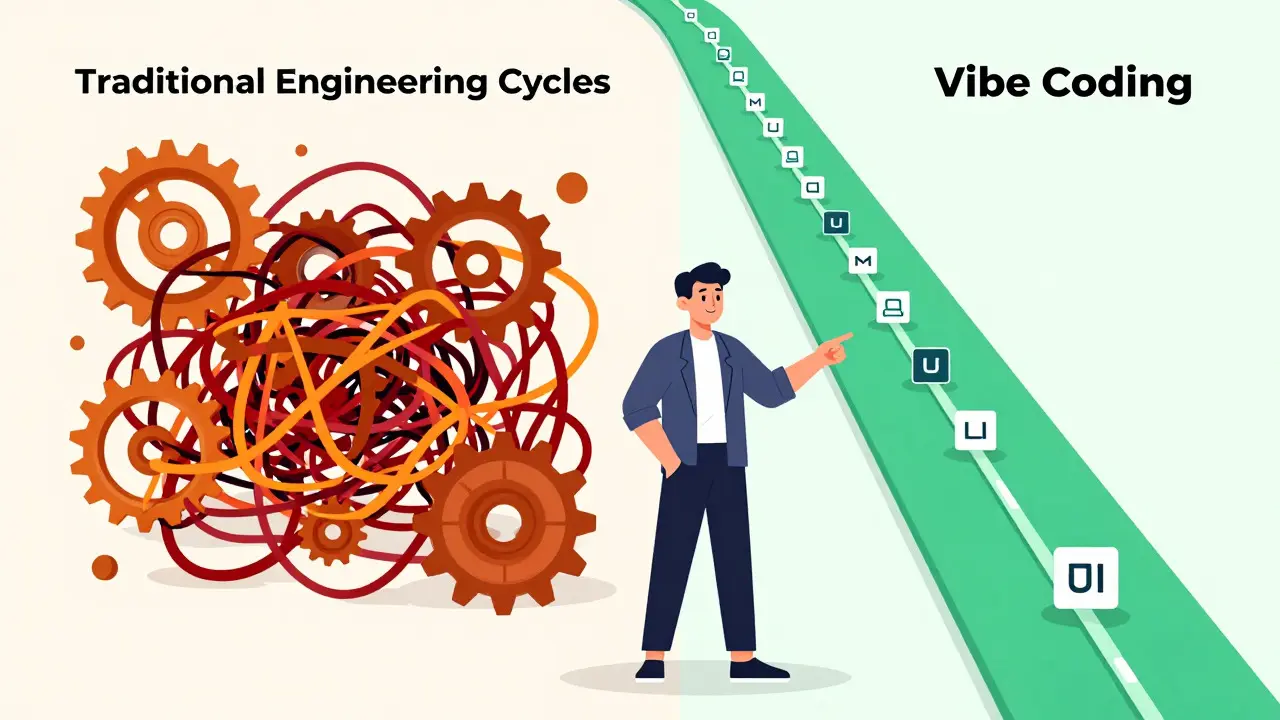
Gone are the days when you had to wait for engineering cycles to test a hypothesis. With vibe coding, you describe what you want, and the AI builds it. But here is the catch: speed brings risk. If you rush into production with an AI-generated prototype, you might create more problems than you solve. The key lies in knowing how to use these tools for validation while keeping your technical debt under control.
What Is Vibe Coding?
Vibe coding emerged around 2023-2024 as large language models (LLMs) like GPT-4 and Claude 3 became sophisticated enough to translate human intent into working code. It is not about becoming a developer overnight. It is about democratizing prototyping. As Andrew Ng, founder of DeepLearning.AI, noted in a May 2024 Stanford lecture, this approach allows product managers to "validate hypotheses at the speed of thought rather than the speed of engineering cycles."
The core workflow relies on a cycle of prompting, prototyping, and refining. You input a description of functionality, the AI generates an initial implementation, and you iterate through natural language feedback until the prototype meets your needs. Platforms like Wisary AI and Lovable have built ecosystems specifically for this, integrating no-code frontend builders with cloud backends like Firebase.
Unlike static mockups created in Figma or Adobe XD, vibe coding produces interactive, functional applications. Users can click buttons, fill out forms, and navigate flows. This means you can gather real behavioral data early in the process, rather than relying on assumptions about how users will interact with a visual design.
Why Product Managers Should Care
The value proposition is clear: speed and insight. According to McKinsey, generative AI can reduce overall product time-to-market by 5% and increase productivity by 40%. GetProductPeople analyzed 150 PM workflows and found that vibe coding reduces initial prototype creation time from 2-4 weeks to just 2-4 hours.
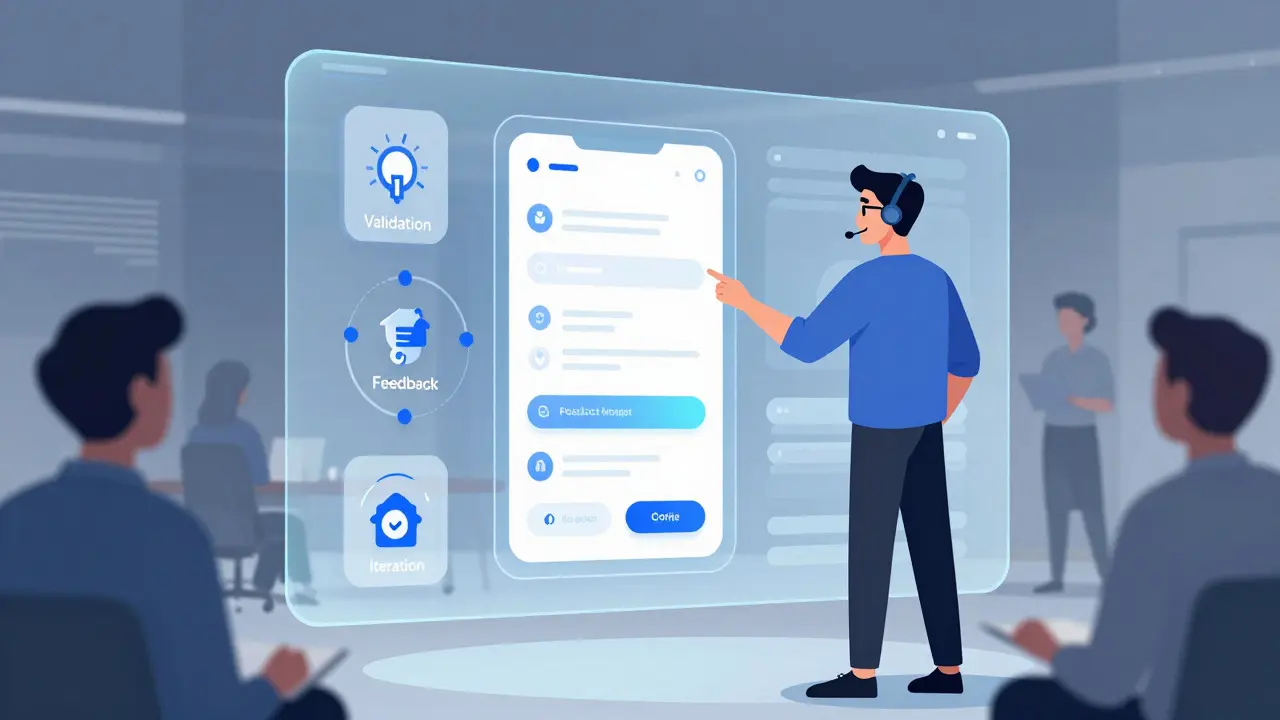
This speed enables rapid iteration. You can test multiple variations of a feature in a single afternoon. Instead of debating which direction to take in a meeting, you can show stakeholders two working versions and let them decide based on actual interaction. This shifts conversations from theoretical preferences to data-driven decisions.
However, the benefits come with caveats. Martin Fowler, Chief Scientist at ThoughtWorks, warned in June 2024 that "the real risk isn't the quality of the AI-generated code itself, but the false confidence it creates." A working prototype is not a production-ready solution. Mistaking one for the other leads to significant rework later.
The Vibe Coding Workflow: Step-by-Step
Successful product managers do not just type random prompts and hope for the best. They follow a structured process. Based on analysis of top-performing PMs, here is how to implement vibe coding effectively:
- Define the Problem Statement: Start with a clear articulation of the user, their need, and the benefit. Write down success metrics, including two leading indicators and one activation metric. Without this clarity, the AI has no direction.
- Gather UX Inspiration: Look at platforms like Dribbble or existing competitors to understand current UI patterns. Use this inspiration to inform your prompts, ensuring the output aligns with user expectations.
- Draft the PRD with Acceptance Criteria: Use an LLM like Claude or GPT to draft a Product Requirements Document (PRD). Include Given-When-Then acceptance criteria. This acts as the contract between your vision and the AI's execution.
- Prompt Iteratively: Feed the requirements into your vibe coding platform. Do not expect perfection in the first pass. Refine through dialogue. Ask the AI to explain its logic, suggest improvements, or flag potential issues.
- Troubleshoot Systematically: When bugs appear, check system consoles first. Add debugging logs if necessary. Take screenshots to provide context to the AI. Explain the user flow in detail to help the AI understand the intended behavior.
Wisary’s case studies show that PMs who follow this structured workflow reduce prototype-to-specification misalignment by 68% compared to those who skip formal specification steps. Discipline matters, even when the tool feels magical.
Tools of the Trade
The vibe coding landscape is evolving rapidly. Several platforms have emerged, each with distinct strengths:
| Platform | Key Strength | Best For | Integration Focus |
|---|---|---|---|
| Wisary AI | Specification alignment and dependency mapping | Complex enterprise concepts requiring strict adherence to specs | Technical documentation and architecture review |
| Lovable | Cross-functional collaboration and template remixing | Teams needing to maintain consistency with established UI patterns | Design systems and team workspaces |
| Firebase Studio | Google Cloud ecosystem integration | Projects already leveraging Google Cloud services | Cloud backend services and authentication |
Lovable, for instance, allows PMs to "remix" from existing product templates, which helps maintain brand consistency. Wisary focuses heavily on recording technical dependencies to ensure that the prototype aligns with the final specification. Firebase Studio offers deep integration with Google’s infrastructure, making it ideal for teams already invested in that ecosystem.
Pitfalls and How to Avoid Them
Vibe coding is powerful, but it is not foolproof. Andrej Karpathy, former Director of AI at Tesla, publicly acknowledged the debugging challenges, noting he often resorts to "pasting error messages back to the AI or making random tweaks to fix bugs." This highlights a critical limitation: AI-generated code can be opaque and difficult to debug without deep technical knowledge.
Here are the main risks and how to mitigate them:
- False Confidence: A working prototype does not mean the architecture is sound. Always assume the code is disposable unless reviewed by engineers. Use it for validation, not deployment.
- Compliance Issues: In regulated industries like healthtech or fintech, AI-generated code may miss critical security or privacy requirements. One healthtech PM spent three weeks refining a prototype only to find it violated HIPAA compliance during engineering handoff. Restrict vibe coding to internal tools or non-sensitive data in these sectors.
- Technical Debt: GitHub’s 2024 Octoverse Report found that AI-generated code requires 3.2x more maintenance effort than human-written code in complex systems. If you plan to transition a prototype to production, budget for significant refactoring.
To combat these issues, Supernova.io recommends four guardrails: rigorously define "done" criteria, champion dedicated review time, insist on shared design foundations, and proactively audit prototypes before sharing them widely.
Industry Adoption and Future Trends
Adoption is accelerating. Gartner reported in August 2024 that 62% of Fortune 500 product organizations now have formal vibe coding guidelines, up from 18% in Q1 2024. However, adoption varies by industry. E-commerce companies embrace it for customer-facing testing (73% adoption), while fintech firms restrict it to internal tools due to compliance concerns (87% restriction rate).
Looking ahead, we are seeing trends toward "Agentic DevOps," where AI agents manage workflows from development to deployment, and "Multimodal Vibe Design," incorporating voice, gestures, and sketches for more intuitive prototyping. Google Cloud’s November 2024 update to Firebase Studio introduced "blueprint approval" functionality, requiring PMs to validate architectural decisions before generation, addressing earlier concerns about technical debt.
Vibe coding is not replacing engineers. It is empowering product managers to speak the language of development, bridging the gap between idea and execution. By mastering this workflow, you can validate ideas faster, reduce waste, and deliver products that truly meet user needs.
Is vibe coding suitable for building production-ready applications?
Generally, no. While vibe coding excels at creating functional prototypes for validation, the generated code often lacks the robustness, security, and scalability required for production. GitHub reports that AI-generated code requires significantly more maintenance effort. Use vibe coding for early-stage testing and concept validation, then hand off to engineers for production implementation.
What are the best tools for vibe coding in 2026?
Top platforms include Wisary AI for specification alignment, Lovable for cross-functional collaboration and template-based design, and Firebase Studio for Google Cloud integration. The choice depends on your specific needs, such as whether you prioritize design consistency, technical documentation, or cloud ecosystem compatibility.
How can I avoid technical debt when using vibe coding?
Implement strict guardrails. Define clear "done" criteria, require engineering reviews before any prototype moves beyond validation, and treat AI-generated code as disposable drafts. Regularly audit prototypes for architectural soundness and compliance, especially in regulated industries.
Does vibe coding replace the need for developers?
No. Vibe coding empowers product managers to prototype independently, but developers remain essential for building scalable, secure, and maintainable production systems. The goal is collaboration, not replacement. Engineers bring expertise in architecture and optimization that AI currently lacks.
What industries are most likely to adopt vibe coding?
E-commerce and consumer apps lead adoption due to lower regulatory barriers and high demand for rapid iteration. Fintech and healthtech are more cautious, often restricting vibe coding to internal tools or non-compliant areas due to strict security and privacy requirements.