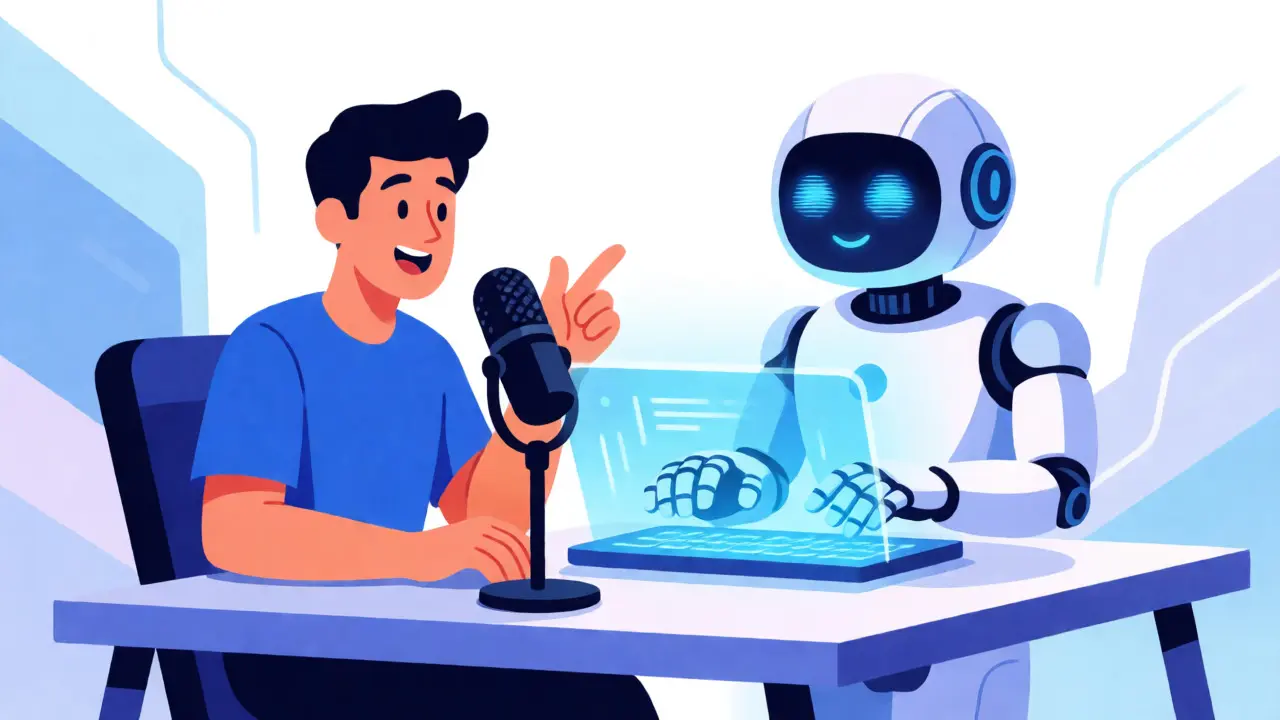
Imagine building a fully functional app over a weekend without writing a single line of code by hand. Sounds like science fiction? For many developers in 2026, it’s just Tuesday morning. This is the promise of vibe coding, a development style where you talk to an AI, describe what you want, and let the machine handle the syntax. But here is the catch: while the speed is intoxicating, the resulting codebases often look like digital spaghetti.
If you are wondering whether this trend is a fleeting hype cycle or the new standard for software creation, you aren’t alone. Recent data from Y Combinator’s 2025 batch revealed that 25% of founders built nearly their entire codebases using AI-generated code. That is a massive shift. Yet, as any seasoned engineer will tell you, shipping fast and shipping right are two very different things. Let’s break down exactly where vibe coding shines, where it fails miserably, and how to use it without wrecking your project.
What Actually Is Vibe Coding?
At its core, vibe coding is a workflow where natural language prompts drive code generation instead of manual syntax entry. You focus on the intent-"make the button turn blue when clicked"-and the AI handles the implementation details. It relies heavily on Large Language Models (LLMs) that understand context, not just commands. Unlike traditional programming, where you obsess over curly braces and memory management, vibe coding lets you think in concepts.
This approach emerged from the widespread adoption of tools like Cursor, GitHub Copilot, and Replit Agent. The mechanism is simple: you prompt, the AI generates, you run, and if it breaks, you paste the error back into the chat. It is iterative, conversational, and surprisingly effective for getting ideas out of your head and onto the screen. But does "effective" mean "production-ready"? Not always.
The Undeniable Pros: Speed and Accessibility
Let’s start with the good stuff because the advantages are real and tangible. If you have ever spent three days setting up a boilerplate React application, you know the pain. Vibe coding slashes that time to minutes.
- Blazing Fast Prototyping: One developer reported creating a flashcard app with animations and persistent storage in hours, not weeks. Traditional development requires requirement gathering, architecture planning, and documentation. Vibe coding skips most of that. You build, test, and refine immediately.
- Lower Barrier to Entry: You don’t need to be a senior backend engineer to build a MVP. Designers, product managers, and entrepreneurs can now create functional prototypes. This democratizes development, allowing non-technical team members to participate directly in the build process.
- Cognitive Relief: Writing code manually consumes mental energy. By offloading syntax to AI, you free up brainpower for logic and user experience. You stop worrying about
undefined is not a functionand start focusing on whether the feature actually solves the user’s problem. - Rapid Iteration: Changing direction is cheap. Want to swap the database? Ask the AI. Want to change the UI theme? Prompt it again. In traditional dev, these changes might require refactoring dozens of files. Here, it is a conversation away.
For side projects, hackathons, or validating a business idea, this speed is unbeatable. If you are testing a concept, why spend months perfecting code that might get thrown away anyway?
The Hidden Costs: Security, Debt, and Chaos
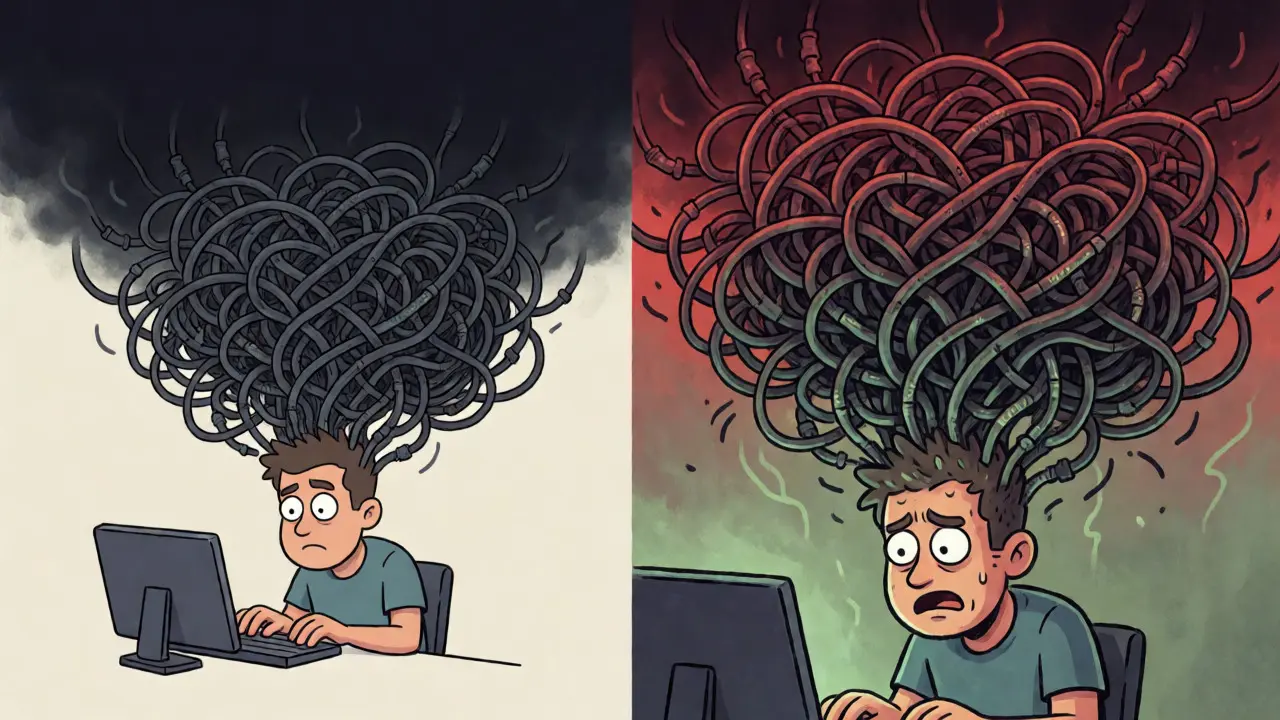
Now for the reality check. While vibe coding gets you to "done" quickly, "done" doesn’t always mean "good." The downsides are significant, especially as your project grows beyond a few hundred lines of code.
Security Nightmares: AI models are notorious for introducing vulnerabilities. They love hardcoding credentials. You might paste a snippet with an API key straight into production, only to find out later that attackers scan public repositories for such mistakes. Furthermore, AI often skips input validation. Without proper sanitization, your app becomes an open door for injection attacks. Access control is another weak point; quick-and-dirty code rarely implements robust authentication, leaving sensitive actions exposed.
Technical Debt Accumulation: Have you ever tried to debug code you didn’t write? Now imagine debugging code you didn’t even read. AI-generated code can be messy. It obscures business logic and hides flaws that careful design would have prevented. When something breaks, tracing the root cause is harder than writing the fix manually. Documentation is usually nonexistent. If you leave the project for six months, you’ll likely forget why you made certain decisions. The code becomes the only source of truth, and code is terrible at explaining "why."
Scalability Issues: What works for ten users might collapse under ten thousand. AI rarely considers edge cases, performance tuning, caching strategies, or distributed system patterns. It optimizes for making the current request work, not for handling future load. Microsoft engineers have noted that AI-generated projects struggle with long-term maintainability, making them poor fits for enterprise-grade software.
| Attribute | Vibe Coding | Traditional Coding |
|---|---|---|
| Speed to MVP | Hours/Days | Weeks/Months |
| Code Quality | Inconsistent | Structured & Reviewable |
| Security Posture | High Risk (Manual Audit Needed) | Secure by Design |
| Learning Curve | Low (Prompt Engineering) | High (Syntax & Logic) |
| Maintainability | Poor (Black Box Effect) | High (Documented Intent) |
When to Use It (And When to Run Away)
So, should you abandon your IDE and just chat with a bot? Not quite. Context matters. IBM highlights that while vibe coding excels at creativity, it struggles with precision and scalability. Here is a practical guide on where to draw the line.
Use Vibe Coding For:
- Prototypes and MVPs: If you need to show investors a working demo, do it fast. No one cares about your unit tests during a pitch.
- Side Projects: Building a personal dashboard or a tool for yourself? Go wild. The low stakes make it safe to experiment.
- Brainstorming: Use AI to generate multiple approaches to a problem. See which one feels right, then implement it properly.
- Hackathons: Time is your enemy. Vibe coding is your best friend.
Avoid Vibe Coding For:
- Enterprise Software: If hundreds of people depend on your app, you need structure, not vibes.
- Financial Systems: Handling money requires precision. A hallucinated decimal point can cost millions.
- Long-Term Products: If you plan to maintain the code for years, you need readable, documented, and tested code.
- Complex Architectures: Microservices, event-driven systems, and heavy concurrency require human oversight. AI currently lacks the holistic view needed for these designs.

The Hybrid Approach: Best of Both Worlds
The smartest developers in 2026 aren’t choosing between vibe coding and traditional engineering-they’re blending them. Think of AI as a junior developer who types incredibly fast but needs constant supervision.
Start with vibe coding to scaffold your project. Generate the initial components, routes, and basic logic. Then, switch to traditional mode. Refactor the code. Add type safety. Write unit tests. Implement security checks. Document the architecture. This hybrid workflow captures the speed of AI generation while maintaining the quality of human engineering.
Consider implementing a "review gate." Never merge AI-generated code without reading it. Ask yourself: Does this make sense? Is it secure? Could I explain this to another developer? If the answer is no, rewrite it. Your goal isn’t just to have code; it’s to have code you understand and trust.
Final Thoughts
Vibe coding is not a replacement for software engineering; it’s a catalyst. It removes the friction between idea and execution, allowing you to iterate faster than ever before. But remember, speed without stability is chaos. As you adopt this methodology, keep your eyes open. Respect the complexity of your system. And never let the convenience of automation blind you to the fundamentals of good code.
Is vibe coding suitable for beginners?
Yes, absolutely. It lowers the barrier to entry significantly. Beginners can build functional apps without mastering complex syntax first. However, they must learn to read code eventually to debug issues effectively.
Can vibe coding replace professional developers?
No. While it automates syntax generation, it doesn't replace architectural thinking, security auditing, or strategic decision-making. Professionals use it to boost productivity, not to eliminate their role.
What are the biggest risks of vibe coding?
The main risks are security vulnerabilities (like hardcoded keys), lack of documentation, accumulating technical debt, and poor scalability. These issues become critical when moving from prototype to production.
How do I manage technical debt in vibe-coded projects?
Regularly refactor AI-generated code. Add comments, enforce consistent styling, and write tests. Treat the initial output as a draft, not the final product. Periodic code reviews are essential.
Does vibe coding work for large teams?
It can be challenging. Different developers may prompt differently, leading to inconsistent code styles. Teams need strict conventions and shared guidelines to prevent fragmentation.
Vishnu Vardhan Reddy M S
September 3, 2026 AT 15:08oh wow another article telling us that ai will save us but also ruin us simultaneously how convenient for the content mill machine
i mean sure vibe coding is fast if you define "fast" as "writing code i don't understand and praying it doesn't explode in production at 3am on a friday" because let's be real nobody actually reads the output they just hit run and hope for the best like a slot machine but with more stack traces
the part about security nightmares is hilarious because it implies we ever had good security practices to begin with we were already hardcoding api keys in github gists back when we thought writing our own auth was a flex so now we just have an llm hallucinating bad security patterns instead of humans doing it manually
and yes technical debt is accumulating faster than my student loans which is saying something considering i took out those loans in 2014 thinking crypto would pay them off by 2016
but hey at least now i can spend my cognitive energy worrying about whether the button should be blue or teal rather than why my variable scope is broken which is progress right maybe not really but it feels nice to pretend
anyway great post very balanced very neutral very safe very reddit approved i'm sure everyone who commented here has never once pasted code without reading it into their main branch
keep vibing folks while you still have jobs
Kyle Ware
September 4, 2026 AT 14:10spot on regarding the hybrid approach. treat the ai as a junior dev who needs constant supervision. this mindset shift saves projects from becoming unmaintainable spaghetti.
Iva Grekova
September 5, 2026 AT 22:40this is such a grounded take honestly i've been using cursor for my side projects and the speed is genuinely addictive especially for scaffolding things i'd otherwise procrastinate on forever
but yeah the debugging part hits hard when you realize you have no idea why the state isn't updating and you didn't even write the logic yourself it feels like being gaslit by your own computer
definitely agree with the point about prototypes vs enterprise stuff though trying to maintain a vibe-coded app long term without refactoring is basically asking for pain later down the line
Onyinyechi Nwosu
September 6, 2026 AT 04:39exactly this i stopped feeling guilty about using ai for boilerplate once i accepted that it’s just a tool not a replacement for understanding what i’m building
Chandan Singh
September 8, 2026 AT 02:24Actually, the premise of this article misses the fundamental economic reality of software development in 2026. The bottleneck was never syntax generation; it was always requirements clarification and system integration. Vibe coding does not solve these problems; it merely shifts the error surface from syntactic errors to semantic misalignments.
When you prompt an LLM, you are introducing a stochastic element into a deterministic system. This creates non-reproducible builds unless you pin every single dependency and model version, which defeats the purpose of 'vibing'. Furthermore, the claim that 25% of YC founders use AI-generated code ignores survivorship bias. We do not hear about the 75% who failed because their MVPs collapsed under the weight of unhandled edge cases that a human engineer would have anticipated during the design phase.
Security is not just about hardcoded keys. It is about the inability to reason about data flow when the control flow is opaque. If you cannot trace the execution path through the generated code, you cannot audit it for vulnerabilities like race conditions or improper privilege escalation. This is not a minor inconvenience; it is a structural flaw in the methodology.
Moreover, the 'hybrid approach' suggested is essentially just traditional development with extra steps. You still need to read the code, refactor it, and test it. The time saved in initial generation is often lost in the subsequent cleanup phase, leading to a net-zero productivity gain for complex systems. For simple CRUD apps, sure, go ahead. But for anything requiring high reliability, vibe coding is a liability, not an asset.
Finally, the democratization argument is flawed. Non-technical users may build prototypes, but they lack the intuition to know when the prototype is fundamentally flawed architecturally. They ship bugs that senior engineers would catch in code review, pushing the cost of failure downstream to maintenance teams who did not consent to inheriting this chaos.
Brannen Hall
September 9, 2026 AT 00:55lol okay professor calm down with the essay. most people just want to make an app that works without crying over semicolons. complexity is the enemy of shipping. if it works it works. stop gatekeeping.