Category: AI Strategy & Governance - Page 2

Benchmarking Your Org Against Vibe Coding Leaders: A Practical Guide
Learn how to benchmark your organization against vibe coding leaders. Discover key metrics, maturity levels, and practical strategies to maximize AI-assisted development productivity.
Read more
Data Strategy for Generative AI: Quality, Access, and Security Guide
Build a robust data strategy for generative AI. Learn how to improve data quality, secure access, and implement RAG pipelines to boost ROI and reduce hallucinations.
Read more
Legal Basics for Vibe-Coded Apps: Copyright, Licensing, and IP Ownership
Explore the legal realities of vibe coding. Understand copyright limits, open-source licensing risks, and IP ownership rules for AI-generated apps in 2026.
Read more
GDPR and CCPA in Vibe-Coded Systems: Data Mapping and Consent Flows
Explore how vibe coding impacts GDPR and CCPA compliance. Learn to build dynamic data maps and robust consent flows for AI-generated software.
Read more
Generative AI in HR: Transforming Performance Reviews and Career Paths
Discover how generative AI is revolutionizing HR by streamlining performance reviews and creating personalized career paths. Learn about key platforms, implementation strategies, and the future of AI in people operations.
Read more
Accessibility Risks in AI-Generated Interfaces: WCAG and Real-World Failures
AI-generated interfaces often fail WCAG standards, creating barriers for disabled users. Learn about real-world failures, legal risks, and best practices for accessible AI design.
Read more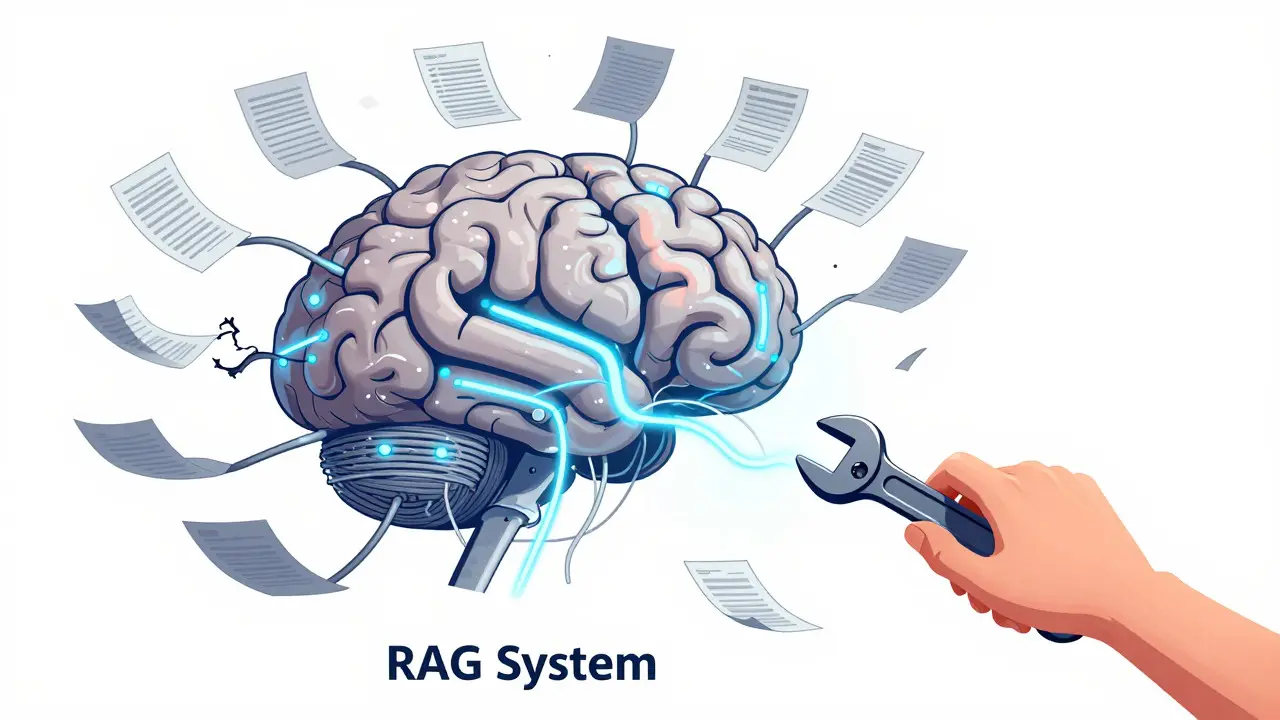
Human Feedback Loops to Improve RAG Relevance Over Time: A Practical Guide
Discover how human feedback loops transform static RAG systems into self-improving engines. Learn from Pistis-RAG benchmarks, implementation costs, and strategies to boost accuracy by up to 7%.
Read more
How to Detect Implicit vs Explicit Bias in LLMs: A Practical Guide for 2026
Discover how to detect hidden implicit bias in LLMs that pass standard fairness tests. Learn practical methods like the LLM-IAT and Bayesian testing to ensure AI equity in 2026.
Read more
How to Build an Effective AI Ethics Board for Development Decisions
Learn how to build an effective AI Ethics Board to oversee development decisions, ensure compliance with 2026 regulations, and mitigate risk through structured governance.
Read more
Bias in Large Language Models: Sources, Types, and Real-World Risks Explained
Explore the sources, types, and real-world risks of bias in Large Language Models. Learn about intrinsic vs. extrinsic bias, position bias, and proven mitigation strategies for fairer AI.
Read more
Data Privacy in LLM Training Pipelines: PII Redaction and Governance
Master PII redaction and governance in LLM training pipelines. Learn about differential privacy, statistical filtering, and GDPR compliance strategies to protect sensitive data.
Read more
Measuring Generative AI Time Savings: Hours Returned by Function
Discover how Generative AI reclaims working hours across different business functions. From 78 million weekly hours saved in the US to specific gains in healthcare and coding, learn how to measure true ROI.
Read more