Category: AI Strategy & Governance - Page 3

Cost per Action vs Cost per Token: Which LLM Pricing Model Fits Your Workflow?
Cost per token dominates LLM pricing today, but cost per action is emerging as a simpler, more predictable alternative. Learn which model fits your workflow-and how to cut your AI costs now.
Read more
Optimization Levers for LLM Costs: Prompt Length, Batching, and Caching
Learn how prompt length, batching, and caching can slash LLM costs by up to 80% without sacrificing quality. Real-world examples from 2025 show how companies cut AI bills by focusing on usage patterns-not just hardware.
Read more
Checkpoint Averaging and EMA: Stabilizing Large Language Model Training
Checkpoint averaging and EMA stabilize large language model training by combining model snapshots to improve performance and reduce variance - delivering 1-2% gains with minimal overhead. Now standard for models over 1B parameters.
Read more
How to Prompt for Accuracy in Generative AI: Constraints, Quotes, and Extractive Answers
Learn how to use constraints, role prompts, and extractive techniques to reduce AI hallucinations and get accurate, reliable answers from generative AI tools. No fluff - just practical methods backed by real research.
Read more
Document Re-Ranking to Improve RAG Relevance for Large Language Models
Document re-ranking improves RAG systems by filtering retrieved documents with deep semantic analysis, reducing hallucinations and boosting accuracy in large language model responses. It's essential for high-stakes applications like healthcare and legal AI.
Read more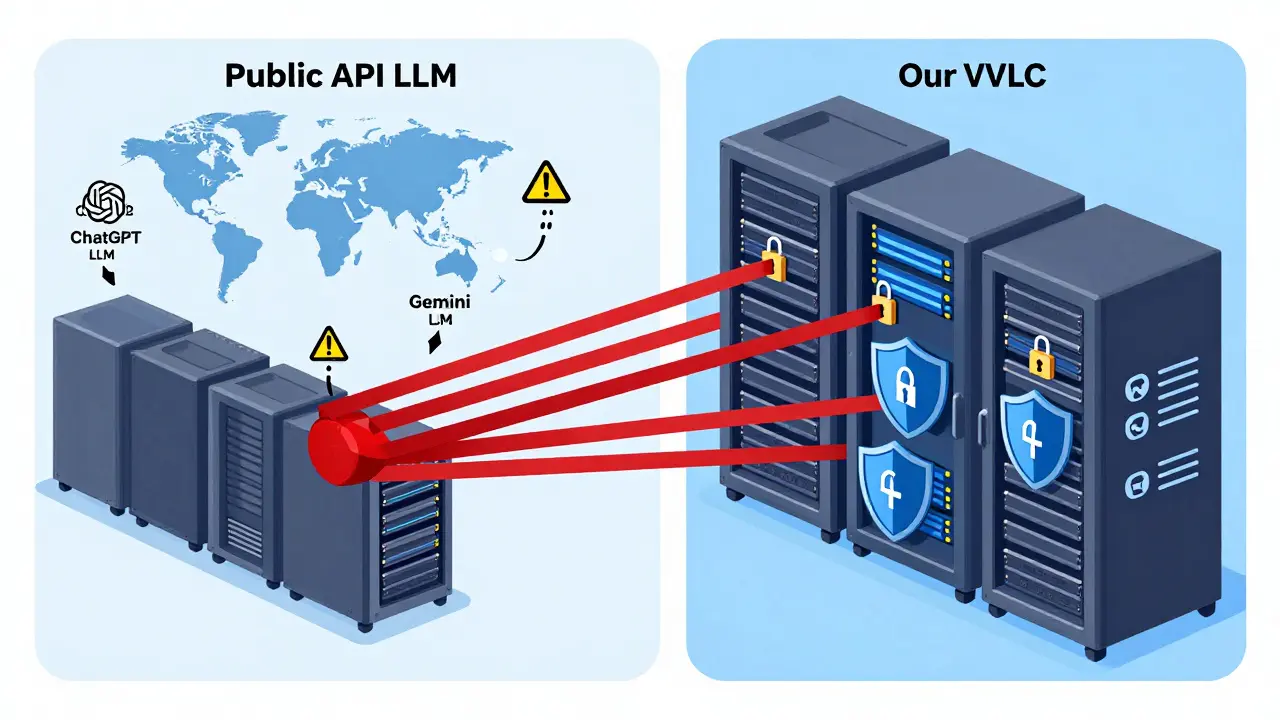
Security Posture Differences: API LLMs vs Private Large Language Models
Public API LLMs like ChatGPT expose your data to third parties, risking compliance and IP theft. Private LLMs keep data inside your cloud, giving you control, audit trails, and regulatory compliance. For regulated industries, the choice isn't optional.
Read more
Infrastructure Requirements for Serving Large Language Models in Production
Serving large language models in production requires specialized hardware, smart software, and careful cost planning. This guide breaks down what you actually need - from VRAM and GPUs to quantization and scaling - to run LLMs reliably at scale.
Read more
Choosing Opinionated AI Frameworks: Why Constraints Boost Results
Opinionated AI stacks cut through complexity by enforcing clear workflows, not endless options. Data shows they deliver faster results, higher user satisfaction, and lower costs - if chosen wisely.
Read more
Enterprise RAG Architecture for Generative AI: Connectors, Indices, and Caching
Enterprise RAG architecture combines data connectors, hybrid indices, and intelligent caching to deliver fast, accurate, and scalable generative AI for corporate use. Learn how to connect live data, build efficient search indexes, and cut latency by 80% with semantic caching.
Read more
Why Large Language Models Hallucinate: Probabilistic Text Generation in Practice
Large language models hallucinate because they predict text based on patterns, not facts. This article explains why probabilistic generation leads to convincing lies - and how businesses are fixing it.
Read more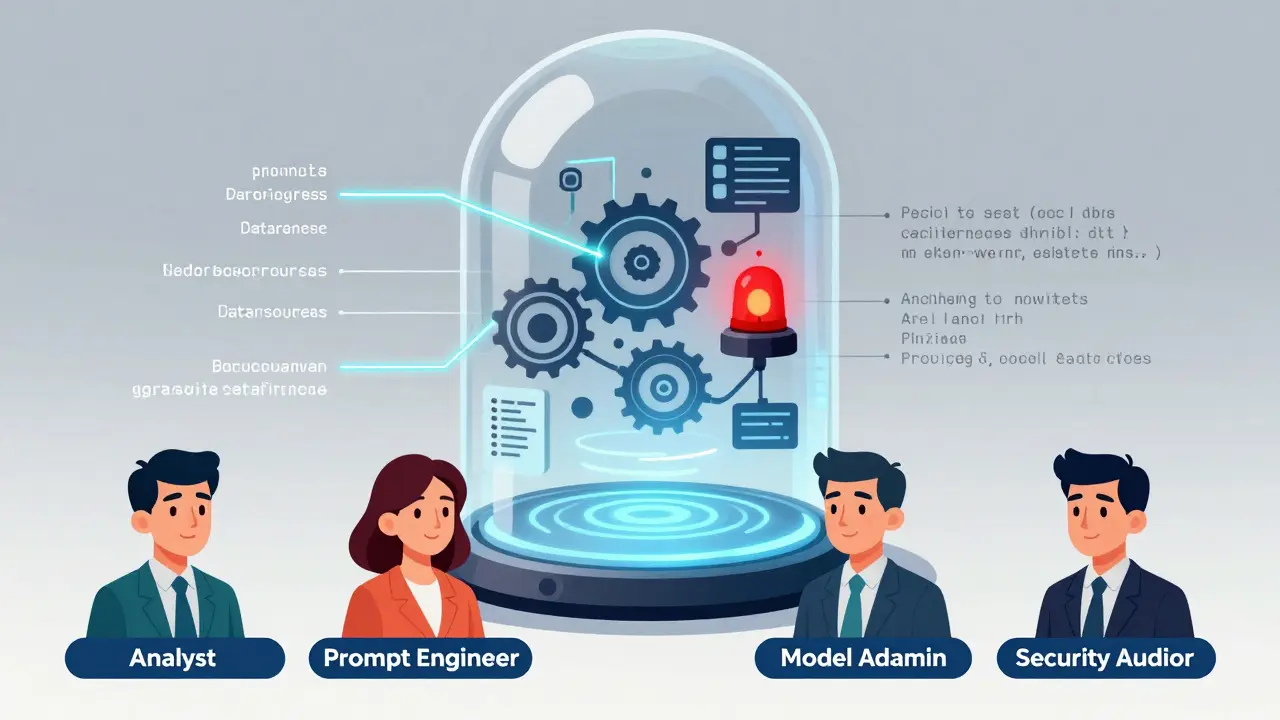
Access Controls and Audit Trails for Sensitive LLM Interactions
Access controls and audit trails are critical for securing sensitive LLM interactions. Without them, organizations risk data leaks, regulatory fines, and loss of trust. Learn how to implement them effectively in 2026.
Read more
Estimating Inference Demand to Guide LLM Training Decisions
Accurately forecasting LLM inference demand helps teams decide which models to train, how much infrastructure to buy, and when to scale. This guide breaks down the methods, tools, and real-world impact of demand-driven training decisions.
Read more