Category: AI Technology - Page 3

Stop Vibe Coding: Anti-Pattern Prompts That Break LLM Security
Stop letting vague AI prompts break your code. Learn which anti-pattern prompts cause security flaws in vibe coding and how to fix them.
Read more
Sales and Generative AI: Battlecards, Call Summaries, and Objection Handling
Discover how generative AI transforms sales with dynamic battlecards, automated call summaries, and smarter objection handling. Learn implementation tips, costs, and pitfalls.
Read more
Safety Tuning vs Capability Loss: The Fairness Tradeoff in LLMs
Discover why fine-tuning LLMs for better performance often reduces safety. Learn practical strategies to balance capability gains with fairness and reliability.
Read more
Retraining After Compression: How to Restore LLM Accuracy Without Full Fine-Tuning
Learn how to restore accuracy in compressed LLMs without expensive full retraining. Discover methods like local reconstruction, EoRA, and prompt-based recovery.
Read more
Cross-Attention in Encoder-Decoder Transformers: How LLMs Condition Outputs
Discover how cross-attention enables encoder-decoder transformers to condition outputs on input context. Learn the mechanics, architecture, and multimodal applications.
Read more
How Non-Developers Use Vibe Coding to Launch Real Applications
Discover how non-developers are using vibe coding to build real apps. Learn about top platforms like Knack and Replit, practical workflows, and common pitfalls.
Read more
Localization and Accessibility in Vibe-Coded Interfaces: A Practical Guide
Discover how vibe coding impacts accessibility and localization. Learn practical strategies to ensure AI-generated interfaces are inclusive and globally ready.
Read more
Hardware Constraints Limiting Large Language Model Scaling
Discover the physical hardware constraints limiting LLM scaling, from GPU memory bottlenecks and power demands to interconnect speeds. Learn why adding more GPUs doesn't always mean faster results.
Read more
Memory-Augmented Transformers: How External Stores Fix LLM Amnesia
Discover how Memory-Augmented Transformers solve LLM amnesia with external stores. Learn about Titans, MemGPT, and persistent knowledge architectures.
Read more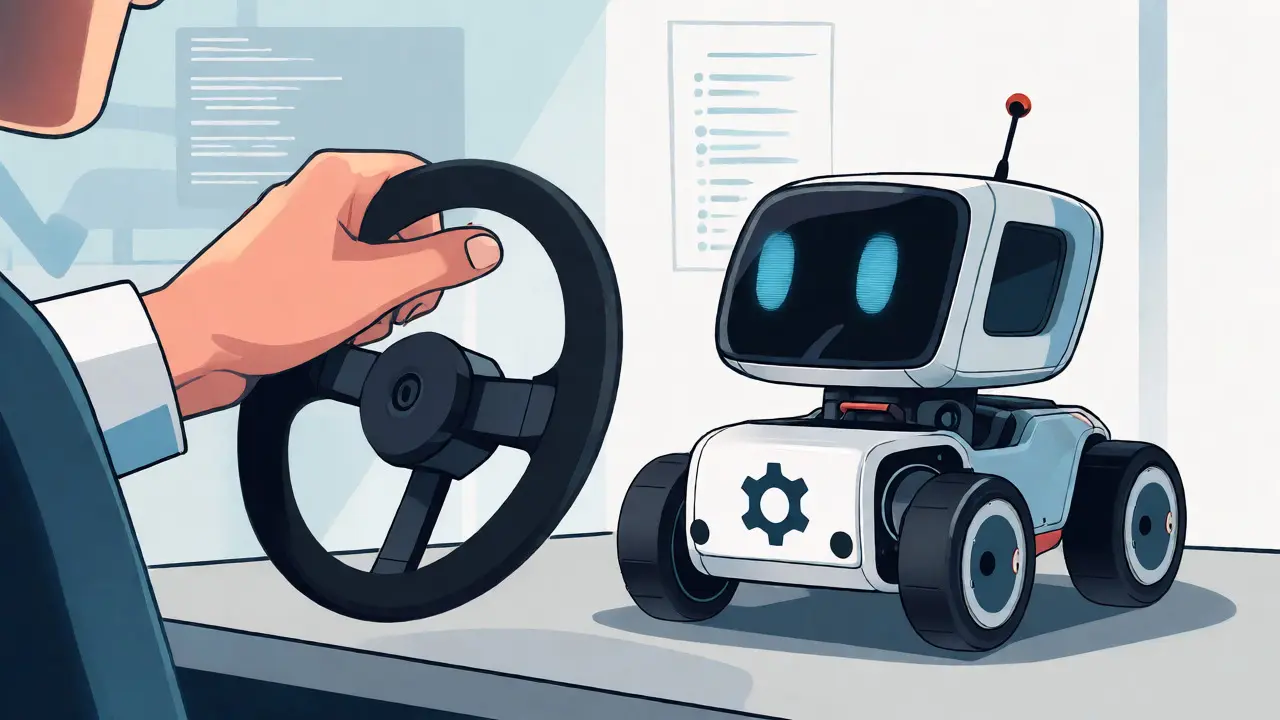
Levels of Autonomy in LLM Agents: From L1 to L4 Explained
Understand the L1 to L4 framework for LLM agent autonomy. Learn how control shifts from human operators to autonomous systems, and discover practical strategies for implementing higher levels of AI independence safely.
Read more
Low-Latency Models for Realtime Vibe Coding in the IDE
Discover how low-latency AI models enable realtime vibe coding in the IDE. Learn why sub-50ms response times boost developer flow, compare top tools like Cursor and Tabnine, and optimize your hardware for seamless AI-assisted development.
Read more
Toolformer-Style Self-Supervision: How LLMs Learn to Use Tools
Discover how Toolformer teaches LLMs to use tools via self-supervision. Learn why small models with APIs beat big ones, and explore its limits.
Read more